Choosing a filter element material is not a matter of picking the most expensive alloy or copying the housing material. The filter media may be thin, porous, welded, creased, sintered or repeatedly cleaned, so it can experience a more demanding combination of chemistry, temperature and stress than a solid pipe or vessel made from the same nominal grade.
Direct Answer: How Should You Select a Filter Element Material?
Select a filter element material from the worst credible combination of process fluid, contaminants, concentration, temperature, pressure differential, cleaning chemicals, exposure time and fabrication condition. Then verify that the alloy is available in the required media form and that the support, weld filler, end caps, connections and seals are compatible with the same duty.
A practical filter element material selection follows six checks:
- Process chemistry: list the main fluid, water content, pH, chlorides, sulfur compounds, oxidizers, reducers and trace contaminants.
- Temperature and time: record normal, start-up, shutdown, cleaning and upset temperatures, plus whether exposure is continuous or intermittent.
- Mechanical duty: define operating pressure, maximum differential pressure, flow direction, vibration, thermal cycling and unsupported span.
- Media and fabrication: confirm whether the design needs woven mesh, sintered mesh, metal fiber felt, wedge wire, notch wire, perforated plate or a welded combination.
- Cleaning and maintenance: include steam, backwash, ultrasonic cleaning, acid, alkali, solvent and passivation steps rather than checking process fluid alone.
- Verification: specify the exact grade or UNS/EN designation, material certificate, traceability, inspection and any agreed compatibility or performance test.
If any of these inputs is unknown, the responsible answer is a shortlist with conditions—not an unconditional material approval.
Why “Stainless Steel” Is Not a Complete Specification
Stainless steel depends on a chromium-rich passive film for corrosion resistance, but that film is not immune to damage. Outokumpu’s corrosion guidance identifies chemistry, pH, temperature, surface finish, design, fabrication, contamination and maintenance as interacting factors. Chlorides are especially important because they can promote pitting and crevice corrosion; temperature, low pH and oxidizing additions can increase the risk.
This matters for filters because they naturally contain crevices, narrow flow paths, deposits and welded joints. A media sheet can trap salts or process residue during shutdown. A seal groove can create stagnant conditions. A contaminated or heat-tinted weld may behave differently from clean base metal. Material selection therefore has to cover the finished element, not only a catalog alloy name.
Filter Element Material Comparison Table
Use this table to create a shortlist. It is not a chemical-compatibility guarantee, and the exact grade and product form must still be confirmed.
| Material family | Why engineers consider it | Important limits to verify | SINFT product forms where the family is confirmed |
|---|---|---|---|
| SS304 / 304L | Economical general-purpose stainless option for many compatible fluids and moderate environments | Chlorides, low pH, crevices, cleaning chemistry, weld condition and temperature | Pleated cartridges, sintered mesh, fiber felt, backwash elements, wedge/notch wire, baskets and custom assemblies, depending on form |
| SS316 / 316L | Molybdenum-bearing stainless option commonly shortlisted where improved localized-corrosion resistance is needed; 316L is often selected for welded fabrication | It is not chloride-proof; confirm concentration, temperature, deposits, shutdown and cleaning conditions | Broadly available across SINFT’s stainless steel product range |
| 310S | High-chromium, high-nickel stainless grade considered for elevated-temperature oxidation duties | Gas composition, thermal cycling, sulfur/carburizing conditions, mechanical strength and media availability | Custom assemblies and selected high-temperature media, subject to fabrication review |
| Duplex stainless steel | Higher strength and useful resistance to stress-corrosion cracking in appropriate environments | Exact duplex grade, weld procedure, heat input, phase balance, temperature range and product-form availability | Custom assemblies; availability depends on wire, sheet, support and welding route |
| Hastelloy alloy | Nickel-based corrosion-resistant family for selected aggressive chemical duties | “Hastelloy” is a family, not one grade; specify grade, concentration, temperature, impurities and weld filler | Sintered mesh, fiber felt, backwash, wedge/notch wire and custom forms where confirmed |
| Inconel alloy | Nickel-chromium family considered for selected corrosion and high-temperature duties | Specify exact grade; oxidation, aqueous corrosion and mechanical requirements differ by grade | Sintered mesh, fiber felt and custom forms where confirmed |
| Monel alloy | Nickel-copper family considered for particular reducing media, alkali and marine-related duties | Aeration, oxidizing contaminants, galvanic coupling, exact grade and fabrication route | Sintered mesh and custom forms where confirmed |
| Titanium | Considered for many chloride-bearing and seawater duties because of its stable oxide film | Reducing acids, dry chlorine, crevice conditions, galvanic coupling, ignition risk in some gas duties, temperature and grade | Fiber felt, backwash, wedge/notch wire and custom forms where confirmed |
| FeCrAl | Iron-chromium-aluminum media considered when high-temperature oxidation is the dominant requirement | Not a universal liquid-corrosion upgrade; verify atmosphere, thermal cycling, brittleness, joining and cleaning | Selected sintered metal fiber felt and custom high-temperature media |
| Nickel | Selected for specific chemical or high-temperature media requirements | Exact nickel grade, strength, impurities, process chemistry and joining method | Selected fiber felt and custom media |
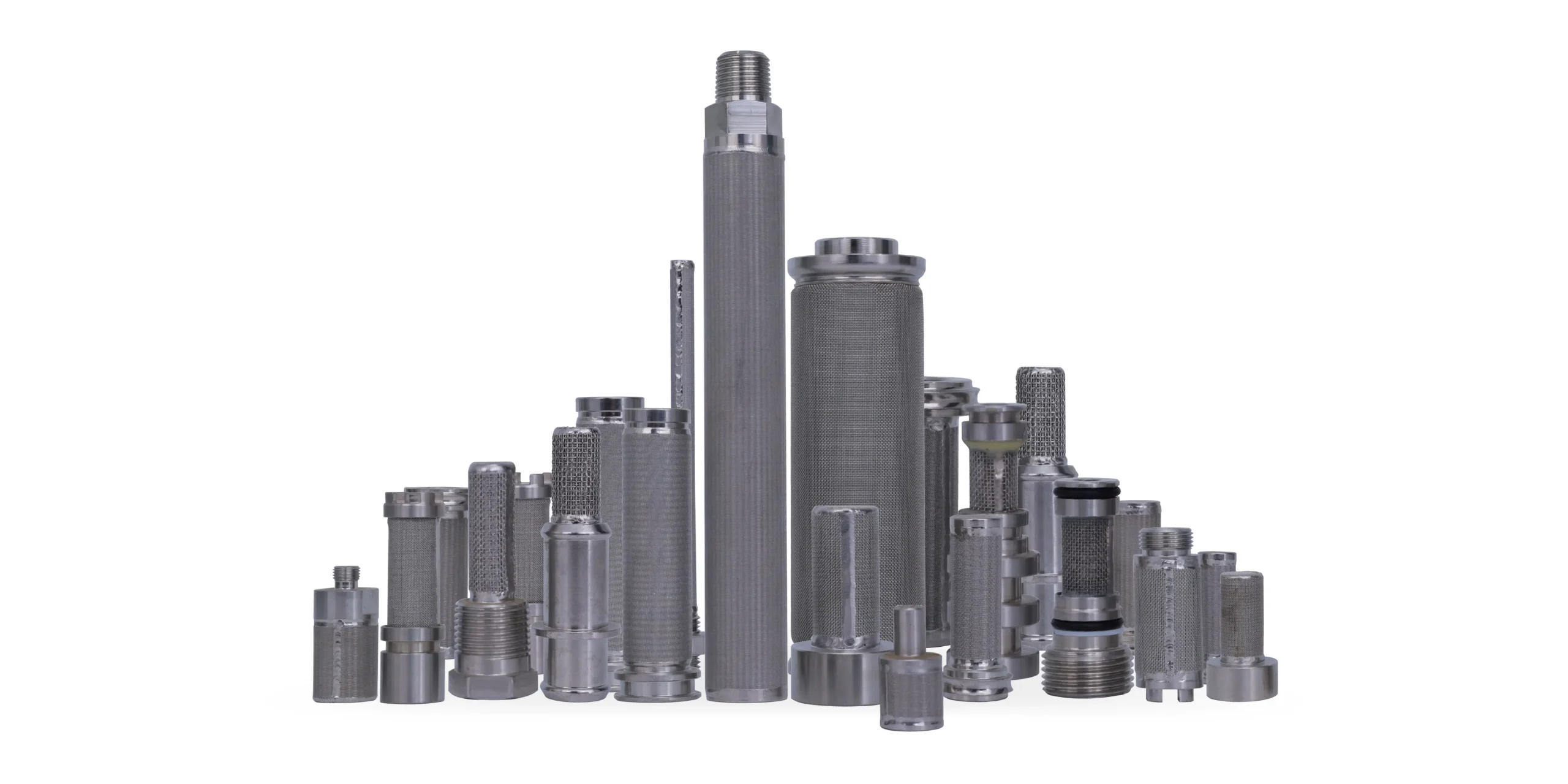
SS304, SS316L and Duplex Stainless Steel
SS304 is usually the baseline economic option, while SS316L is commonly shortlisted when the process needs a molybdenum-bearing grade and welded fabrication. Neither should be approved from the word “water,” “oil” or “chemical” alone. Water can contain chlorides or oxidizing biocides; an oil system can contain water, acidic degradation products or cleaning residues; a chemical stream can change concentration during evaporation or shutdown.
Use the separate SS304 vs SS316L filter element guide for that detailed comparison. For this broader selection, the important point is to ask whether either standard austenitic grade provides enough margin under the real temperature, crevice and cleaning conditions.
Duplex stainless steel can offer higher strength and improved resistance to stress-corrosion cracking in suitable services. Outokumpu’s duplex overview notes both the strength advantage and the need to match corrosion resistance to a specific grade. For a filter element, availability can be the limiting factor: the required duplex grade must exist as the correct wire, sheet, support and filler, and the welding route must preserve the intended microstructure. A duplex housing does not automatically mean a fine porous filter medium can be made from the same grade.
Hastelloy, Inconel and Monel: Specify the Exact Alloy
Trade names identify alloy families, not interchangeable materials. A purchase request that says only “Hastelloy filter,” “Inconel mesh” or “Monel cartridge” leaves the key engineering decision unresolved.
Haynes International’s corrosion-resistant alloy portfolio separates multiple HASTELLOY grades for different combinations of reducing acids, oxidizing chemicals, chlorides, localized corrosion and fabrication. That is why process concentration, temperature and impurities must be supplied before a grade is chosen.
The same rule applies to INCONEL. Special Metals lists multiple INCONEL alloys with different compositions and intended service. For example, its INCONEL alloy 625 bulletin discusses resistance to pitting and crevice corrosion as well as high-temperature oxidation, but that does not make every INCONEL grade equivalent to 625 or suitable for every fluid.
MONEL is a nickel-copper family. Special Metals’ MONEL alloy 400 bulletin documents resistance in many reducing media, while also showing that compatibility remains environment-specific. Confirm aeration, oxidizing contaminants, galvanic contact and cleaning chemistry before selecting it for a filter assembly.
Titanium for Chloride and Seawater Duties
Titanium is often considered when chloride-bearing water or seawater makes standard stainless grades difficult to justify. The International Titanium Association attributes titanium’s seawater corrosion resistance to a tenacious, self-repairing titanium-oxide film.
That benefit still requires boundary checks. Titanium grade, temperature, oxygen availability, crevice geometry, reducing conditions and galvanic contact with other metals all matter. It also has to be available in the required porous or fabricated form. A titanium wedge-wire or backwash element, for example, involves different forming and welding considerations from a titanium fiber-felt disc. Specify the complete assembly and do not mix a titanium media with unsuitable supports or fasteners by default.
FeCrAl for High-Temperature Filtration
FeCrAl media belongs in the shortlist when high-temperature oxidation resistance is the primary problem, especially for hot gas or process duties suited to metal fiber felt. Kanthal’s FeCrAl guidance explains that an adherent aluminum-oxide scale supports high-temperature oxidation resistance.
Do not convert that advantage into a general claim that FeCrAl is “more corrosion resistant” than stainless steel in every liquid. An alloy optimized for hot oxidizing environments may not be the correct answer for an aqueous acid, chloride solution or chemical-cleaning cycle. Confirm the actual atmosphere, temperature, thermal cycles, deposits, joining method and required flexibility.
Match the Alloy to the Filter Media and Product Form
The best theoretical alloy is not useful if it cannot be manufactured into the required pore structure, slot, pleat or welded assembly. Material selection and product selection must be made together.
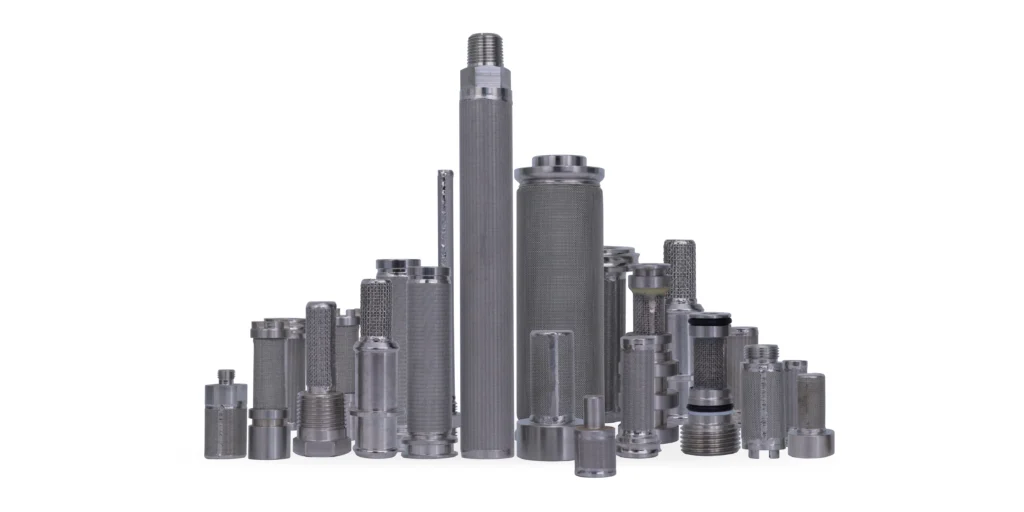
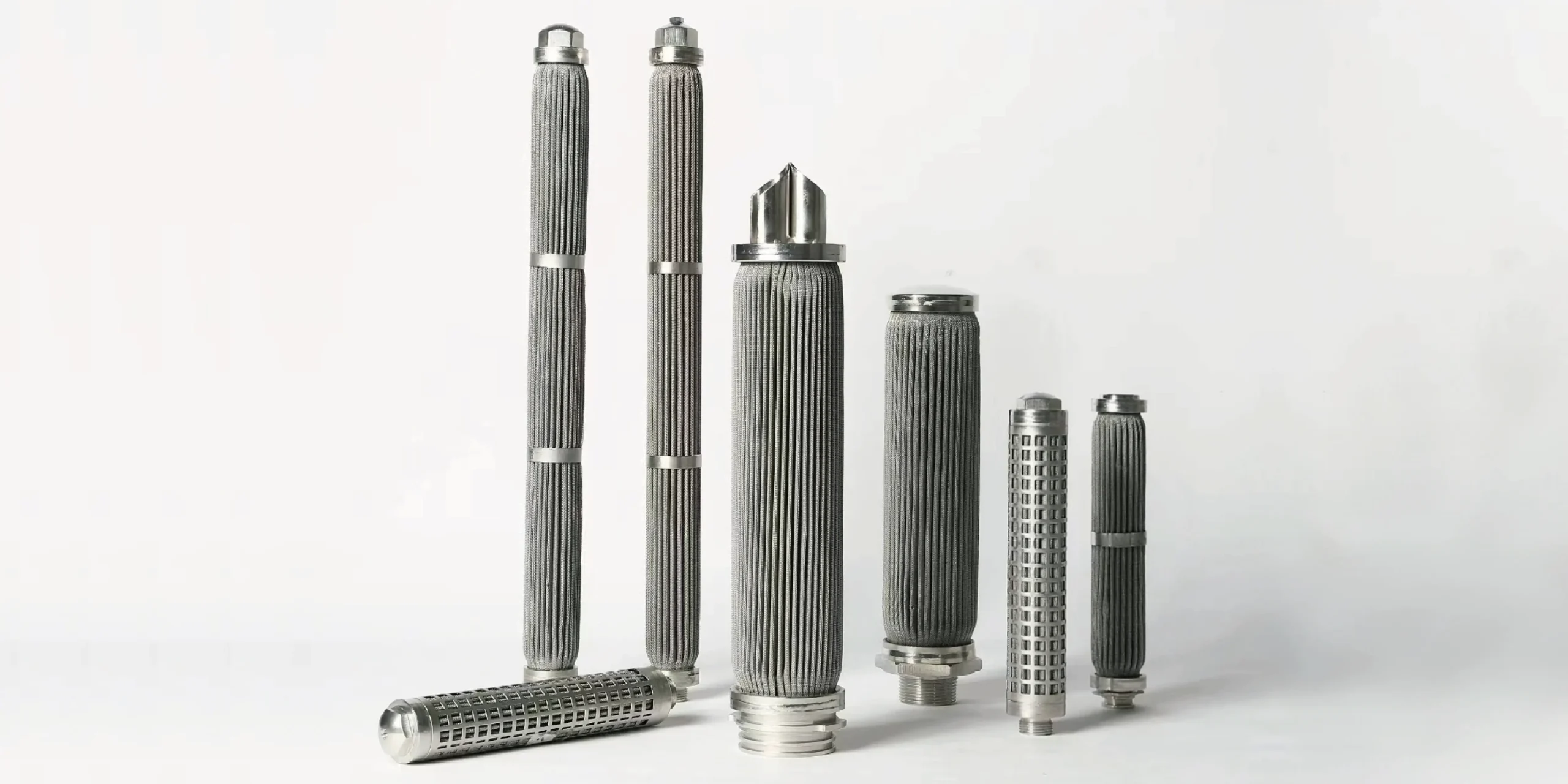
- Pleated filter cartridges can use woven wire mesh, sintered mesh or sintered metal fiber felt. SINFT confirms SS304, SS316, SS316L and special-alloy options, subject to media and fabrication review.
- Sintered mesh filter elements have confirmed SS304, SS316, SS316L, Hastelloy, Monel and Inconel options. Layer availability, diffusion bonding and weld procedure still depend on the selected alloy.
- Sintered fiber felt filters have the widest confirmed media list: SS304, SS316L, FeCrAl, Hastelloy, Inconel, nickel and titanium, depending on grade and construction.
- Backwash filter cartridges have confirmed SS304, SS316, SS316L, titanium, Hastelloy and special-alloy routes. Reverse-load strength and contaminant release remain separate checks.
- Wedge-wire filters and notch-wire filters have confirmed stainless, titanium and Hastelloy options, but profile-wire and support availability must be reviewed.
- Basket filters and tube strainers are commonly supplied in SS304, SS316 or SS316L, with other metals reviewed against the plate, mesh, rim, handle and welding route.
Review the Complete Wetted Assembly
A filter element can fail even when the main media alloy was selected correctly. Review every part exposed to the process or cleaning fluid:
- filtration media and protective mesh;
- center core, outer guard and perforated support;
- end caps, adapters, threaded parts, flange and handle;
- weld filler, braze or diffusion-bonded joint;
- seal, gasket, adhesive or polymer component;
- fasteners and any contact with the housing;
- surface condition, pickling, passivation and residual contamination.
Mixed metals can create a galvanic couple. A polymer seal can become the temperature or chemical limit before the metal. A weld filler can have a different corrosion response from the base alloy. A narrow crevice at an end cap can retain concentrated residue. Write the bill of materials and joining method into the technical review rather than accepting “all stainless” as a complete answer.
Select by Operating Environment
Chloride-Bearing Water and Seawater
Record chloride concentration, temperature, pH, oxygen, disinfectants, stagnation time, deposits and cleaning method. SS316L may offer an improvement over SS304 but is not automatically safe in warm, concentrated or crevice-prone chloride service. Higher-alloy stainless, duplex, titanium or a nickel alloy may enter the shortlist depending on the complete condition and available product form.
For water-treatment equipment, start with the duty and then review the water-treatment filter application and the relevant product construction.
Acids, Alkalis, Solvents and Mixed Chemicals
Provide the exact chemical name, concentration, temperature, water content, dissolved gas and expected impurities. “Acid resistant” or “chemical service” is not enough. A material that performs well in a reducing acid can behave differently when oxidizing contamination is present. Batch transitions and cleaning solutions may be more aggressive than the production fluid.
For a chemical or refinery duty, use the petrochemical filter application as the process entry point, then select the filter construction and alloy together.
Hot Gas, Steam and Thermal Cycling
Separate wet corrosion from dry high-temperature oxidation. Identify oxygen, sulfur, carbon, halogens, ash and condensate, and include the temperature at which condensation occurs. SS310S, FeCrAl, Inconel or another high-temperature alloy may be considered, but media strength, creep, thermal expansion, oxide formation and weld life must be reviewed for the actual cycle.
Hydraulic Oil and Lubrication Systems
Oil alone may not control compatibility. Water ingress, additive chemistry, acidic degradation, varnish, cleaning solvent and seal compatibility can drive the decision. For most compatible oil duties, stainless steel may be sufficient, but the hydraulic filter element application should be paired with pressure, collapse-load and cleanliness requirements.
Food, Beverage and Clean-Process Duties
Check both product fluid and sanitation cycle. Temperature, chloride-bearing cleaners, caustic concentration, acid rinse, steam and incomplete drainage can change the corrosion risk. Surface finish, weld cleanup, passivation, cleanability and documentation may be as important as the base alloy.
Cleaning Can Change the Correct Material
The chosen alloy must survive every approved cleaning cycle without losing pore geometry, weld integrity or surface condition. Include chemical concentration, temperature, exposure time, number of cycles, rinse quality and drying method.
Backwash and ultrasonic cleaning add mechanical loading. Acid or alkaline cleaning adds chemistry. Steam adds temperature and thermal cycling. Passivation can help restore a clean passive condition on suitable stainless steel, but it does not turn the wrong grade into a compatible one. See the stainless steel filter element passivation guide for the distinction between cleaning, pickling and passivation.
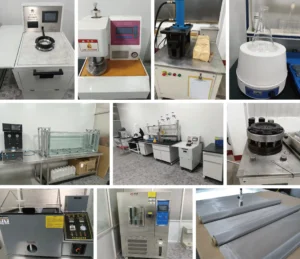
After a material or cleaning change, agree how the finished element will be checked. SINFT can combine dimensional inspection with relevant methods described in the filter element testing methods guide, depending on construction and order requirements.
Warning Signs That the Current Material May Be Wrong
Investigate the material, surface condition and operating history when you see:
- rust staining, pits or attack concentrated at welds and crevices;
- repeated leakage at an end cap or connection;
- media embrittlement, cracking or distortion after cleaning;
- unexplained pressure-drop increase that remains after cleaning;
- metallic contamination or discoloration in the filtrate;
- rapid failure after a chemistry, temperature or sanitation change;
- acceptable base media but damaged seals, support or weld filler;
- large batch-to-batch differences without material traceability.
Do not diagnose corrosion from a photograph alone. Preserve the failed element, record service time and process history, identify the attack location, and compare the actual material against the purchase specification and certificate.
RFQ Checklist for Filter Element Material Selection
Send the following information when requesting a material recommendation or quotation:
- Main fluid, gas, steam or polymer.
- Full chemical composition, concentration, pH and known impurities.
- Chloride, sulfur, oxidizer and water content where relevant.
- Normal, design, cleaning and upset temperatures.
- Operating pressure, maximum differential pressure and flow direction.
- Flow rate, viscosity and contaminant description.
- Required micron rating or slot size and whether the rating is nominal or absolute.
- Preferred media: woven mesh, sintered mesh, fiber felt, wedge wire, notch wire or open to review.
- Cleaning method, chemical, concentration, temperature, duration and expected cycle count.
- OD, ID, length, end connection, seal position and housing fit.
- Existing material and observed failure mode, if this is a replacement.
- Required alloy designation, material certificate, traceability and inspection records.
- Drawing, old sample, photos or part number.
- Prototype and production quantity.
This data lets the manufacturer separate three questions: which alloy is chemically suitable, which material form can be manufactured, and which finished assembly can meet the hydraulic and mechanical duty.
How SINFT Can Help
SINFT manufactures stainless steel filter elements and selected special-alloy elements from drawings, samples, housing dimensions and operating data. The available alloy depends on the product form, media, pore or slot requirement, welding route, quantity and verification requirement.
For a replacement element, SINFT can review dimensions, end connections, seals, flow direction and the existing failure pattern before proposing a material and construction. For a new design, the review can compare pleated, sintered mesh, fiber felt, backwash, wedge-wire, notch-wire or basket formats. The custom filter manufacturer service is the correct commercial route when the assembly does not match a standard configuration.
Send the process data and drawing through the technical inquiry form. A responsible quotation should name the proposed material and product construction, list assumptions and identify any data still required before final approval.
Frequently Asked Questions
Is SS316L always better than SS304 for a filter element?
No. SS316L is commonly selected for improved localized-corrosion resistance and welded fabrication, but the correct choice depends on chemistry, temperature, crevices, cleaning and cost. Some duties are suitable for SS304, while more aggressive conditions can exceed both grades.
Is SS316L suitable for seawater filtration?
Do not approve it from the word “seawater” alone. Temperature, oxygen, flow, deposits, crevices, chlorination and shutdown conditions affect risk. Duplex, higher-alloy stainless, titanium or nickel alloys may need evaluation.
When should I consider Hastelloy instead of stainless steel?
Consider a specific HASTELLOY grade when complete process data shows that standard stainless grades lack sufficient corrosion margin in an aggressive chemical environment. The grade, not only the family name, must be specified and available in the required filter-media form.
Is Inconel only for high-temperature filters?
No. Different INCONEL grades address different combinations of high-temperature strength, oxidation and aqueous corrosion. Select the exact grade against the real service rather than treating INCONEL as one material.
When is titanium a good filter material?
Titanium is often evaluated for chloride-bearing water and seawater duties. It still requires review of grade, temperature, oxygen, crevice conditions, reducing media, galvanic contact and the available media or welded construction.
Why use FeCrAl filter media?
FeCrAl fiber media is considered when high-temperature oxidation resistance is a primary requirement. It should not be treated as a universal replacement for stainless steel in liquid chemical service.
Must every wetted part use the same alloy?
Not always, but every material combination must be intentional. Check the media, support, end fittings, weld filler, fasteners, housing contact and seal for corrosion compatibility, galvanic risk, temperature and fabrication.
What document confirms the filter material?
Ask for the agreed material certificate or mill test report, grade designation and batch traceability. Define whether the certificate covers only raw media or also the other critical wetted components. Spectrometry or other checks may be agreed when appropriate.
Can a failed filter element be copied in a better material?
Often, but first identify why the old element failed. A material upgrade will not correct an unsupported span, reversed flow, excessive differential pressure, incompatible seal, poor weld geometry or ineffective cleaning cycle.
Final Thoughts
The safest filter element material selection starts with the operating environment and ends with a verified finished assembly. Define chemistry, temperature, load and cleaning; select an exact alloy that is available in the required media form; then check supports, welds, fittings, seals and documentation. If the process data is incomplete, treat the result as a conditional shortlist and resolve the missing inputs before purchase.