A certificate marked “316L” can still leave the purchasing risk unresolved. You need to know which component it covers, whether the reported heat or lot follows the delivered filter, and whether the document contains actual test results or only a declaration. Before approving an order, define the required material evidence and the traceability path from incoming metal to finished element.
Direct Answer: What Should a Filter Element Material Certificate Prove?
A filter element material certificate should identify the material specification and grade, document type, manufacturer or issuing organization, heat or lot reference, relevant reported results, and the product or component covered. Its value depends on traceability: the certificate reference must connect to the raw material, production records and delivered filter. It confirms material-related evidence only; it does not by itself prove filtration efficiency, dimensions, weld integrity, pressure strength, cleanliness or process compatibility.
For a simple wire-mesh disc, one raw-material record may cover most of the metallic product. A welded cartridge can contain filter media, support mesh, perforated core, guard, end fittings and filler metal. Your purchase specification should therefore state which components require documented material identity instead of requesting one vague “certificate for the filter.”
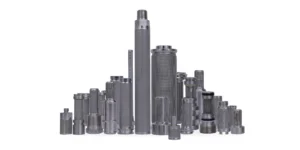
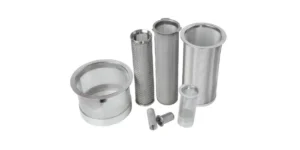
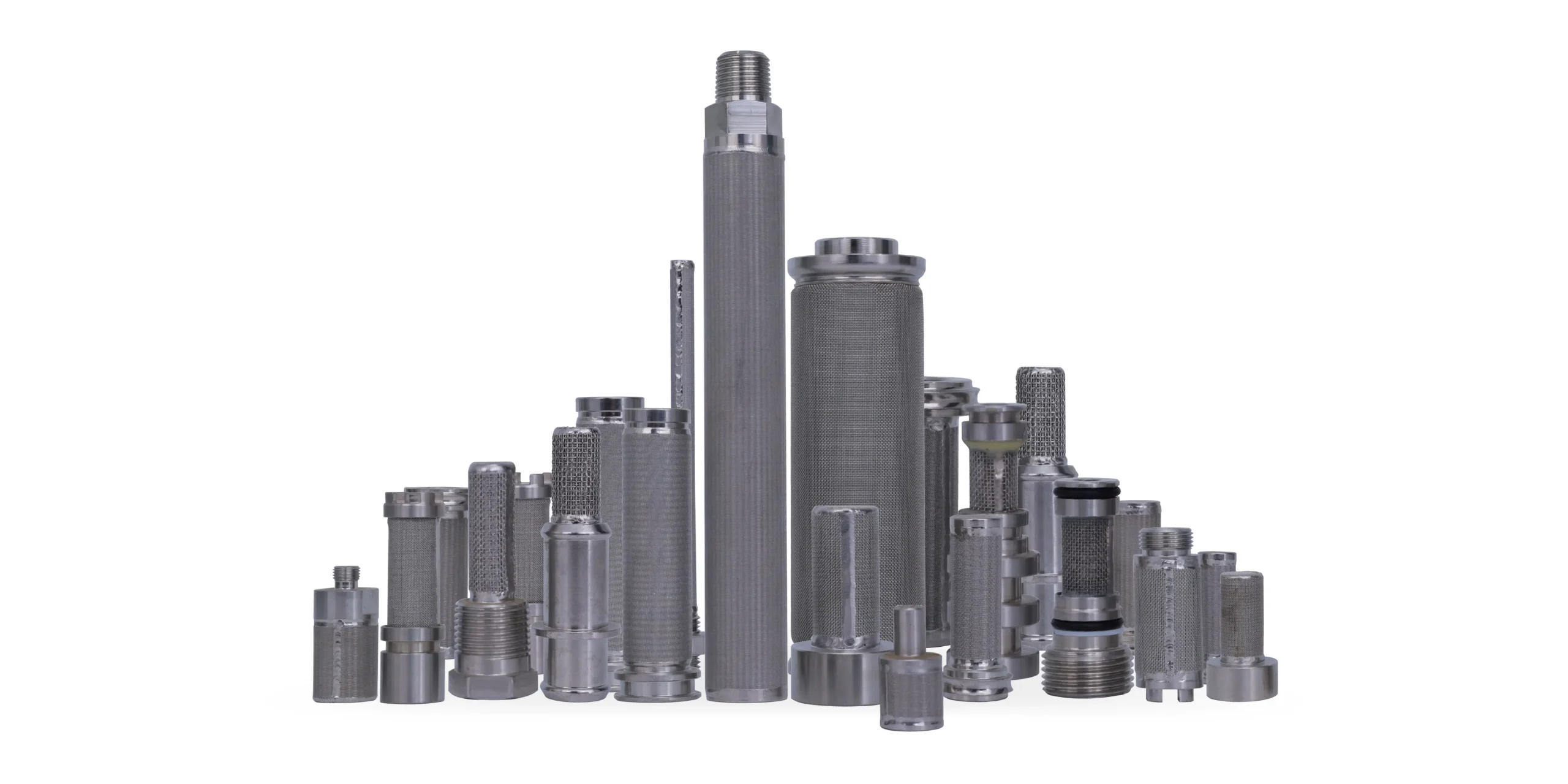
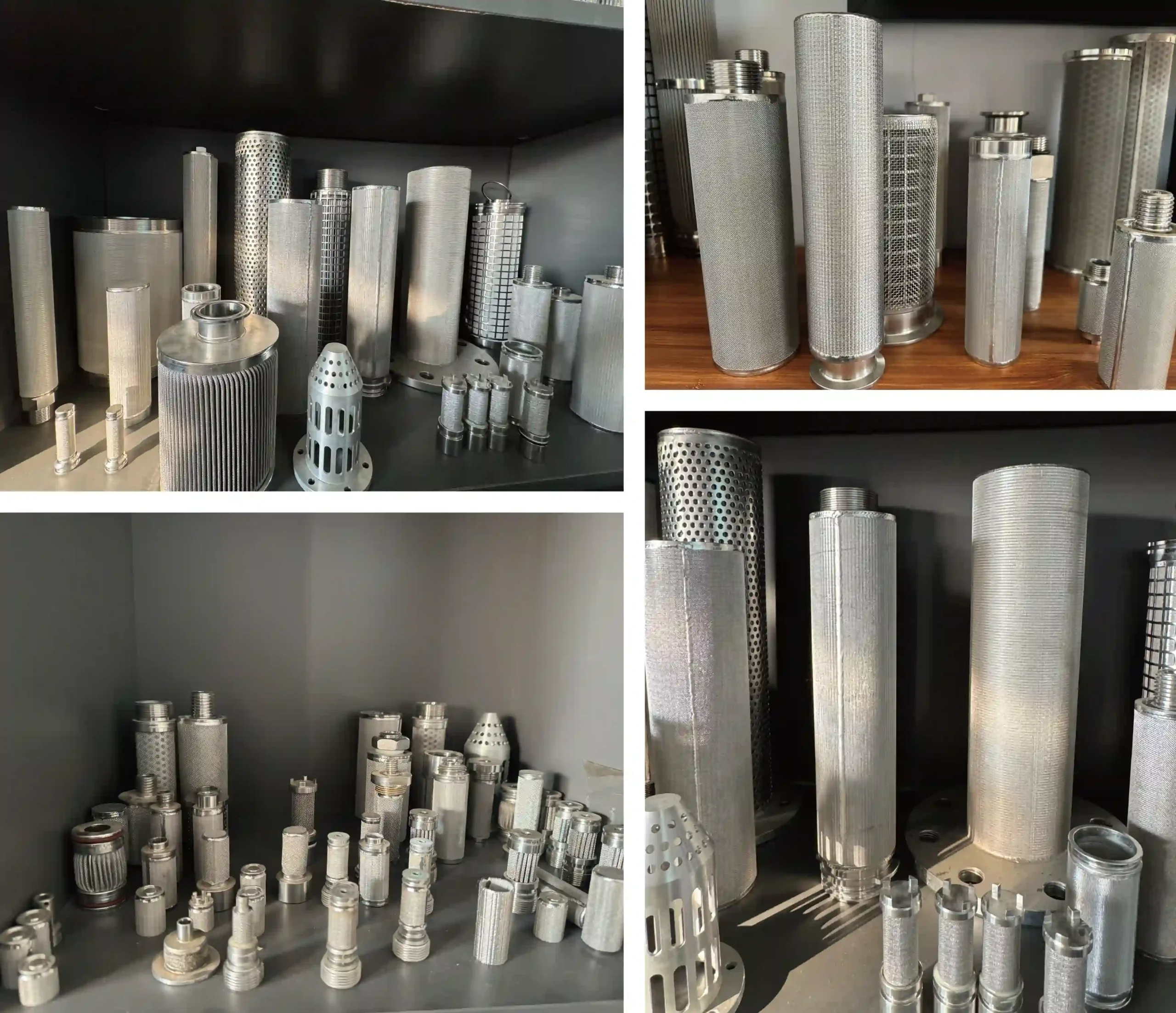
SINFT’s stainless steel filter elements include multiple forms and constructions, so the correct document scope depends on the approved drawing and bill of materials.
Material Certificate, MTC and MTR: Are They the Same?
MTC, MTR, CMTR and mill certificate are common commercial terms, but the abbreviations do not define the document’s validation level. Buyers and suppliers may use them differently. The controlling requirement should name an applicable inspection-document standard or explicitly list the information and validation expected.
Common expressions include:
- Material Test Certificate (MTC): a broad commercial term for a material inspection document.
- Mill Test Report (MTR): usually a report issued by the producing mill with material and test information.
- Certified Material Test Report (CMTR): often used when a signed or certified report is expected, but the exact meaning still depends on the order and applicable code.
- Certificate of Conformance or Compliance: generally states that supplied goods comply with the order; it may not contain specific test values.
- Inspection Certificate: a defined document name when used under a standard such as EN 10204.
Do not settle the requirement by abbreviation alone. “MTR required” can produce a different document package from “EN 10204 Type 3.1 inspection certificate for the filter media, support core and end fittings, traceable to delivered element marking.”
What a Raw-Material Certificate Does Not Prove
A raw-material certificate follows material, not every characteristic of the finished filter assembly. Even when the grade and chemistry are correct, fabrication can introduce separate risks. Cutting can mix lots, forming can change dimensions, welding can create discontinuities, cleaning can leave residues, and assembly can combine several alloys or non-metallic seals.
A filter element material certificate does not replace:
- dimensional inspection against the approved drawing;
- pore, slot or fabrication-integrity verification;
- bubble-point or permeability testing when applicable;
- pressure, collapse or burst qualification;
- weld inspection;
- passivation or surface-cleanliness records;
- seal-material confirmation;
- functional or filtration-efficiency testing.
The same principle applies to service suitability. For example, the hydraulic filtration application involves contamination control, differential pressure, fluid compatibility and housing fit that cannot be approved from a material certificate alone.
The broader filter element testing methods guide shows where material evidence sits within a complete inspection plan. Treat the certificate as one evidence layer, not a universal quality passport.
EN 10204 Inspection Document Types
EN 10204 defines inspection-document types for metallic products, but it does not select the material grade or finished-filter acceptance criteria for you. The purchase order must separately state the product specification, grade, component scope and required document type.
The BSI listing for BS EN 10204:2004 identifies it as the current standard covering non-specific and specific inspection documents, their validation and transmission. The British Stainless Steel Association provides a practical summary of EN 10204 certificate types.
| Document type | Basic evidence | Reported test results | Validation concept | Buyer use |
|---|---|---|---|---|
| 2.1 | Manufacturer declaration of compliance with the order | No test results | Manufacturer declaration | Low-risk orders where a declaration is sufficient |
| 2.2 | Manufacturer declaration supported by non-specific inspection | Results are not necessarily from the delivered batch | Manufacturer report | When general production evidence is acceptable |
| 3.1 | Compliance statement plus results from specific inspection | Specific inspection results for the defined test unit | Manufacturer’s authorized inspection representative independent of production | Common when batch-specific material evidence is required |
| 3.2 | Compliance statement plus specific inspection results | Specific inspection results for the defined test unit | Manufacturer representative plus purchaser-authorized or officially designated independent inspector | Higher-assurance projects requiring independent validation |
This table is a selection summary, not a substitute for the standard. Type 3.2 is not simply a “better PDF”; it changes the inspection and validation arrangement. LRQA describes EN 10204 Type 3.2 as involving independent third-party inspection and witnessing activities.
ISO 10474:2013 also defines types of inspection documents supplied to a purchaser for steel products according to order requirements. When a project uses ISO rather than EN terminology, cite the exact standard and edition in the RFQ rather than assuming the names are interchangeable in every contract.
How to Review a Filter Material Certificate
Review the certificate as a chain of linked facts, not as a logo-and-signature page. The following sequence catches more purchasing errors than checking the alloy line alone.
1. Confirm the document requirement
Compare the received document with the purchase order. Was the order for a declaration, a non-specific test report, a Type 3.1 certificate, Type 3.2 validation or a supplier-specific report? Check the cited standard and revision. A Type 2.2 document cannot be silently accepted as Type 3.1 because both contain numbers.
2. Identify the issuer and validator
Look for the material producer, document issuer, authorized signatory and, where required, independent inspector. Confirm that the validation arrangement matches the requested document type. A reseller or filter fabricator may transmit a mill certificate, but transmission should preserve the original data and traceability rather than recreate an ambiguous certificate.
3. Match the material specification and grade
Check the specification, grade designation and product form against the approved bill of materials. “Stainless steel” is not a grade. “316” and “316L” should not be treated as identical when the drawing requires one specific designation. Also confirm whether the certificate is for wire, mesh, sheet, tube, bar or another input relevant to the actual component.
The SS304 vs SS316L filter element guide explains how alloy selection differs from certificate review. First select a material compatible with the service; then use documentation to support that the specified material entered production.
4. Check heat, cast and lot references
Locate the heat, cast, melt or lot identifier and compare it with material labels, receiving records and internal production records. Terminology varies by material form and production route. The essential question is whether the supplier can show how the reported test unit relates to the material used in your filter.
5. Review reported chemical values
Compare reported chemistry with the applicable material specification, not with an informal internet composition table. Verify units, limits and the identity of the tested material. If mechanical properties, heat treatment or other results are required for the selected product form, list them separately in the purchase requirement and review them on the same basis.
6. Match quantities, dimensions and product description
Check whether the certificate’s product description, size, quantity or mass can reasonably relate to the supplied raw material. A valid certificate for a different thickness, wire size or product form may not support the filter components received.
7. Link the certificate to the finished element
The final step is internal traceability. Check element marking, batch number, traveler, inspection report, packaging label or another agreed identifier. A technically correct mill certificate that cannot be linked to the delivered filter has limited acceptance value.
Material Scope for a Multi-Component Filter Element
Decide material-document scope component by component. Requiring one certificate for “all stainless parts” may be impractical or ambiguous, while requiring a Type 3.1 certificate for every minor wire or fitting may add cost without reducing the main service risk.
| Filter component | Material question | Possible evidence to agree |
|---|---|---|
| Filter media | Is the controlling woven mesh, sintered laminate or fiber felt the specified alloy? | Raw-material certificate, supplier lot record, optional agreed verification |
| Support core or guard | Does the load-bearing support match the drawing? | Certificate or supplier material record linked to production lot |
| End fittings or flanges | Is the machined or formed product grade correct? | Certificate for bar, tube, sheet or forging input, as applicable |
| Weld filler | Is filler compatibility part of the design requirement? | Filler identification and batch record when specified |
| Seal | Is the elastomer or gasket material compatible and correctly identified? | Supplier certificate or declaration defined separately from metallic EN 10204 documents |
| Finished assembly | Can all required inputs be linked to the delivered element? | Batch traveler, inspection report, marking and document index |
For a pleated filter cartridge, the media, support core, guard and end connection may come from different product forms. For a sintered mesh filter element, the laminate and fabricated hardware may also require separate traceability paths. Put the required component scope on the drawing or documentation schedule.
Heat Traceability, Batch Traceability and Element Marking
Heat traceability and filter batch traceability are connected but not identical. A heat number points back to a metal production batch or test unit. A filter production batch may combine material from several heats and several component suppliers. The manufacturer needs controlled records to preserve those relationships through cutting, forming, sintering, pleating, welding, cleaning and packing.
A practical chain can include:
- receiving record for raw material and its certificate;
- internal material or lot identifier;
- cutting or issue record that transfers identity into production;
- traveler or routing record for the element batch;
- inspection records linked to that batch;
- finished-element marking or package label;
- document index supplied with the order.
The strength of this chain should match the application and contract. Not every filter needs individual serial-number traceability. However, if individual identification, heat-level traceability or retention of records is required, specify it before quotation and define how marking will be applied without damaging the filter.
Material Certificate vs PMI or Spectrometry
A material certificate and an instrument reading answer related but different questions. The certificate provides documented origin, specification, test-unit information and reported properties. Positive material identification or spectrometric analysis checks the composition of a selected sample or accessible part under the capability and limits of the chosen method.
ASTM E1086 covers spark atomic emission spectrometric analysis of austenitic stainless steel within its stated specimen and analytical scope. A test method should not be named casually: sample geometry, surface preparation, calibration, detectable elements and acceptance logic matter.
PMI can supplement traceability, investigate a mismatch or support an agreed receiving plan. It does not automatically reconstruct a missing heat history, and one spot reading does not prove every component in a mixed assembly. Conversely, a certificate alone does not prove that material segregation was maintained after receipt. Use the two forms of evidence according to the risk.
SINFT lists material spectrometry among its confirmed inspection capabilities. Whether it is required, which components are checked and what report is supplied should be agreed with the order.
Common Certificate Red Flags
Most document problems are linkage problems, not dramatic chemistry failures. Pause the acceptance review when you find:
- no clear issuer, signature or validation information;
- a material grade but no governing specification;
- no heat, lot or test-unit identifier;
- values copied without units or specification limits;
- product form or dimensions unrelated to the supplied component;
- altered, obscured or inconsistent document fields;
- a certificate date or quantity that does not align with the supply chain;
- a Type 2.2 report presented as Type 3.1;
- a mill certificate with no link to the filter batch or marking;
- one certificate used to imply coverage of every component in a multi-material assembly;
- a certificate treated as proof of filtration, pressure or cleanliness performance.
The BSSA has separately warned about misuse of EN 10204 material test certificates and recommends checking documents against the standard. If a record is unclear, ask the supplier for the traceability explanation before accepting or rejecting the batch.
Incoming Inspection Workflow for Buyers
Use a short, repeatable document workflow before the filter enters stores or production.
- Match purchase order, drawing revision, packing list and delivered part number.
- Confirm the requested certificate type and component scope.
- Review issuer, validation, specification, grade and product form.
- Compare heat or lot references with labels and supplied traceability records.
- Check reported chemistry and other required values against the named specification.
- Record any deviation, missing link or approved concession.
- File the certificate with the receiving lot and element identification.
- Complete dimensional, visual and other incoming checks separately.
For high-risk orders, add a document-review hold point before production begins. It is usually easier to resolve a missing certificate or ambiguous material scope while raw material is still segregated than after the assembly has been welded and packed.
How to Write the Requirement in an RFQ
The RFQ should state the evidence, scope and linkage expected. A useful requirement can be built from these fields:
- filter drawing and bill-of-material revision;
- material specification and grade for each critical component;
- required inspection-document standard and type;
- required chemical, mechanical or other reported results;
- heat, lot or batch traceability level;
- element or package marking method;
- PMI or spectrometry requirement and sampling, if any;
- document language and electronic format;
- records required with shipment;
- purchaser or third-party witness/approval points;
- retention period if contractually required;
- deviation and document-correction process.
Example RFQ wording should be tailored, but the logic can read: “Provide the agreed material inspection document for the filter media and pressure-carrying metallic components, traceable through supplier batch records to the delivered elements. Submit the document package for review with shipment.” Add EN 10204 or ISO 10474 type only when your project actually requires it.
How SINFT Can Support Material Documentation
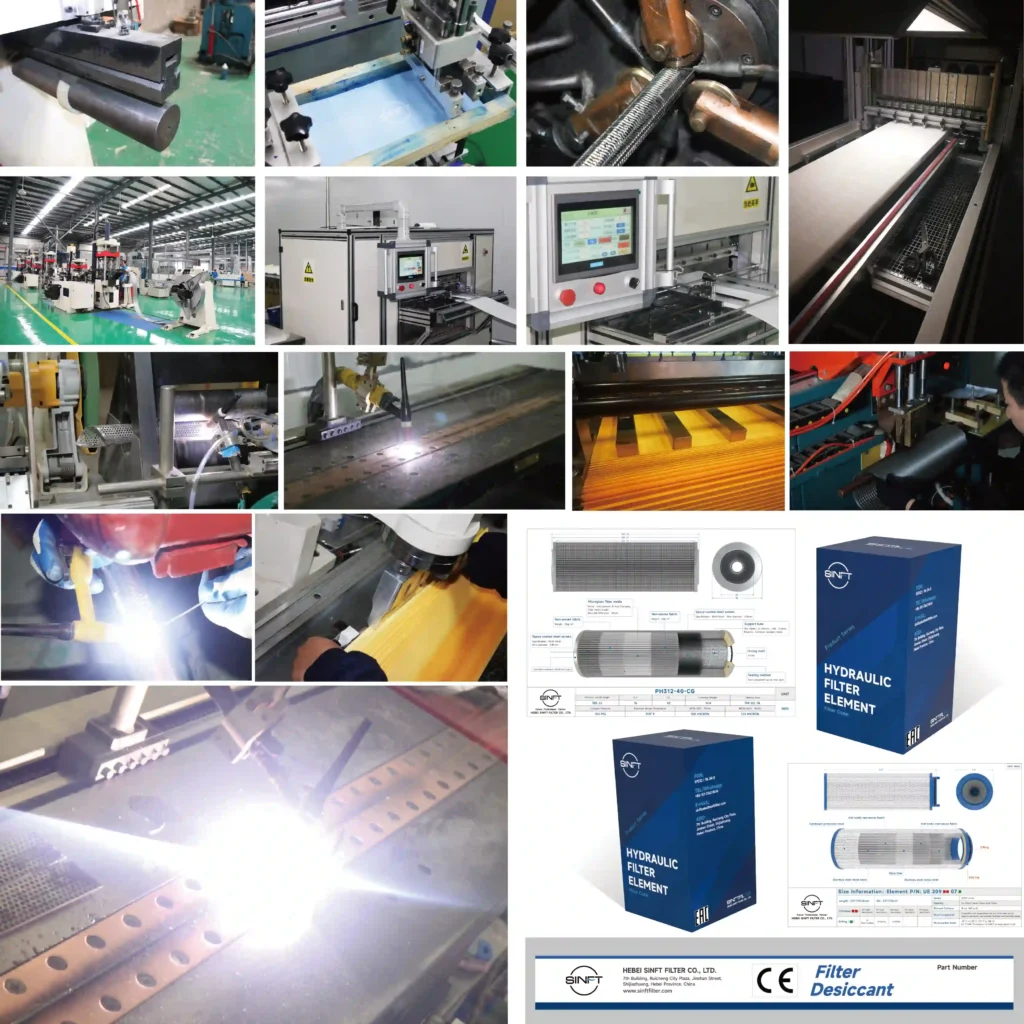
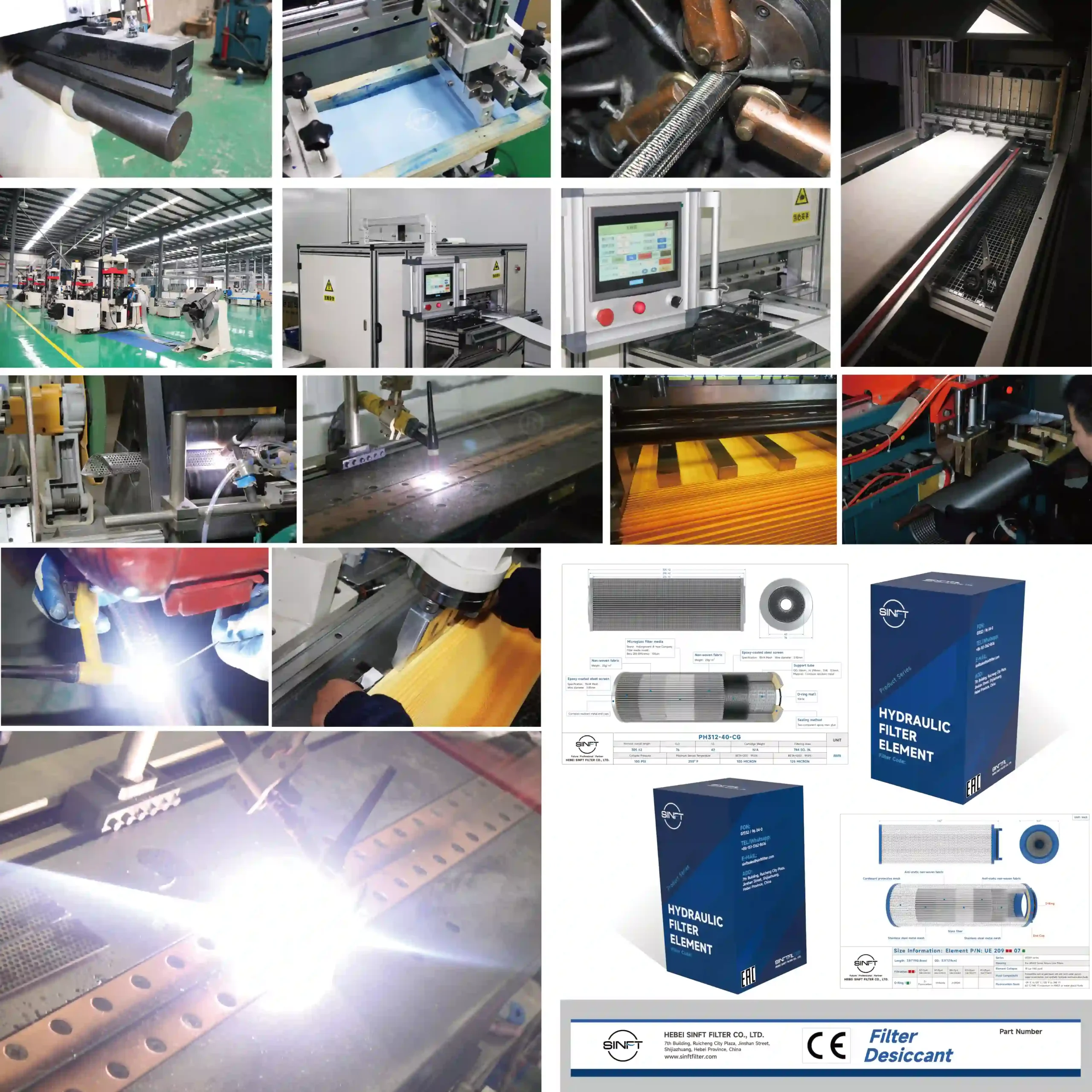
SINFT manufactures custom stainless steel filter elements from drawings, old samples, housing dimensions and operating conditions. Confirmed documentation and inspection capabilities include material certificates or mill test reports, material spectrometry, dimensional inspection, passivation records, optional pressure-test certificates, packaging photographs and batch traceability records, depending on the agreed order scope.
Not every document type is automatic for every product or quantity. If an EN 10204 type, component-level certificate, PMI check, individual marking or document index is mandatory, include it before quotation so feasibility, sourcing and cost can be reviewed.
Use the custom filter manufacturer service when the element combines nonstandard media, supports, end fittings or replacement interfaces. Send the drawing, bill of materials, required certificate type, traceability level and delivery documents through the contact inquiry form.
Frequently Asked Questions
Is a filter element material certificate the same as a certificate of conformance?
Not necessarily. A certificate of conformance may state that goods comply with the order without reporting specific material test values. A material inspection certificate or mill test report may include grade, heat or lot information and chemical or mechanical results. The title alone is insufficient. Check the applicable standard, document type, reported data, validator and traceability to the delivered filter.
Does every stainless steel filter need an EN 10204 3.1 certificate?
No. The appropriate document depends on the contract, service risk, customer specification and applicable regulation. Some orders may need only a supplier material record or declaration, while others require batch-specific Type 3.1 evidence or independent Type 3.2 validation. State the requirement before ordering. Do not assume a Type 3.1 certificate is automatically included with every standard or prototype filter.
What is the difference between EN 10204 Type 3.1 and Type 3.2?
Both involve specific inspection results for the defined test unit. Type 3.1 is validated by the manufacturer’s authorized inspection representative independent of the manufacturing department. Type 3.2 adds validation by the purchaser’s authorized representative or an inspector designated by official regulations. Type 3.2 therefore requires an independent inspection arrangement, not merely a different certificate template.
Should the certificate cover only the filter media?
It depends on the failure risk and drawing. The filter media may be the primary wetted component, but supports, end fittings, guards and weld filler can also matter for corrosion, strength or contamination control. Define critical components in the bill of materials. Then specify which need mill certificates, supplier records, batch identification or supplementary verification instead of requesting one undefined certificate for the assembly.
Can PMI replace a missing mill test report?
PMI or spectrometry can help identify alloy composition on a selected accessible part, but it does not recreate the material’s production history, heat identity, complete property record or original validation. Whether PMI is acceptable as alternative evidence is a purchaser decision governed by the project specification. Define the method, sampling and acceptance before using it to resolve missing or doubtful documentation.
How do I link a mill certificate to the delivered filter element?
Look for a controlled chain from the mill heat or lot to the supplier’s receiving record, internal material identifier, production traveler, inspection batch and finished-element or package marking. The exact system can vary. What matters is that the supplier can explain and document the transfer of identity after cutting, forming and welding, especially when one assembly contains several metallic components.
Does a correct material certificate prove corrosion resistance?
No. It supports the identity and reported properties of the specified material. Actual corrosion behavior also depends on process chemistry, concentration, temperature, oxygen, chlorides, crevices, welding condition, surface treatment and cleaning chemicals. Select the alloy from the real service environment first, then use the certificate and traceability records to support that the approved material was supplied.
When should material-document requirements be agreed?
Agree them during RFQ and before raw material is purchased. State the component scope, material specification, EN 10204 or ISO 10474 type if required, traceability level, marking, supplementary testing and shipment documents. Late requests may be impossible to satisfy if incoming labels were removed, lots were combined or the requested certificate type was not arranged with the material producer or independent inspector.
Final Thoughts
A filter element material certificate is useful only when its document type, reported results and material identifiers connect to the components you actually receive. Define that chain before production, then review material evidence separately from dimensions, pore integrity, pressure and cleanliness. SINFT can assess drawings, bills of materials and documentation requirements for custom stainless steel filter elements before quotation and batch manufacture.