Drawing-based metal filtration
Sintered mesh and metal fiber felt discs, made for your filtration assembly.
SINFT manufactures sintered filter discs for industrial liquid, gas and polymer filtration. Specify the media, diameter, thickness, filtration rating and mounting requirements for a new design or a replacement component.
Choose a bonded mesh structure for controlled surface filtration, or a metal fiber felt structure for depth loading. The finished disc and its support are reviewed against your actual operating and cleaning conditions.
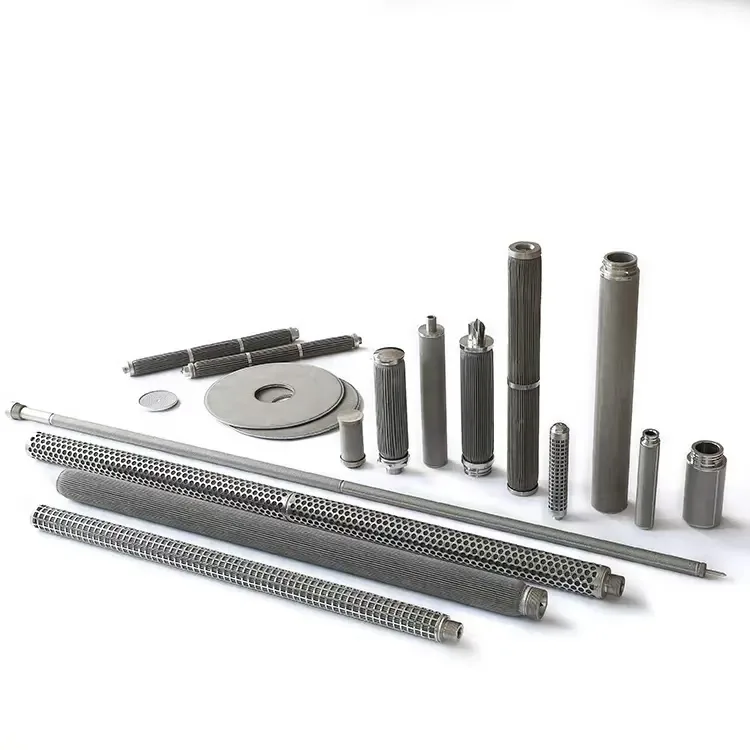
Product range
Sintered Filter Disc Media Options
A sintered filter disc is a flat or annular filtration component made from metal media bonded by sintering. The media construction determines how particles are captured; the disc geometry, edge and support determine how it fits and carries load.
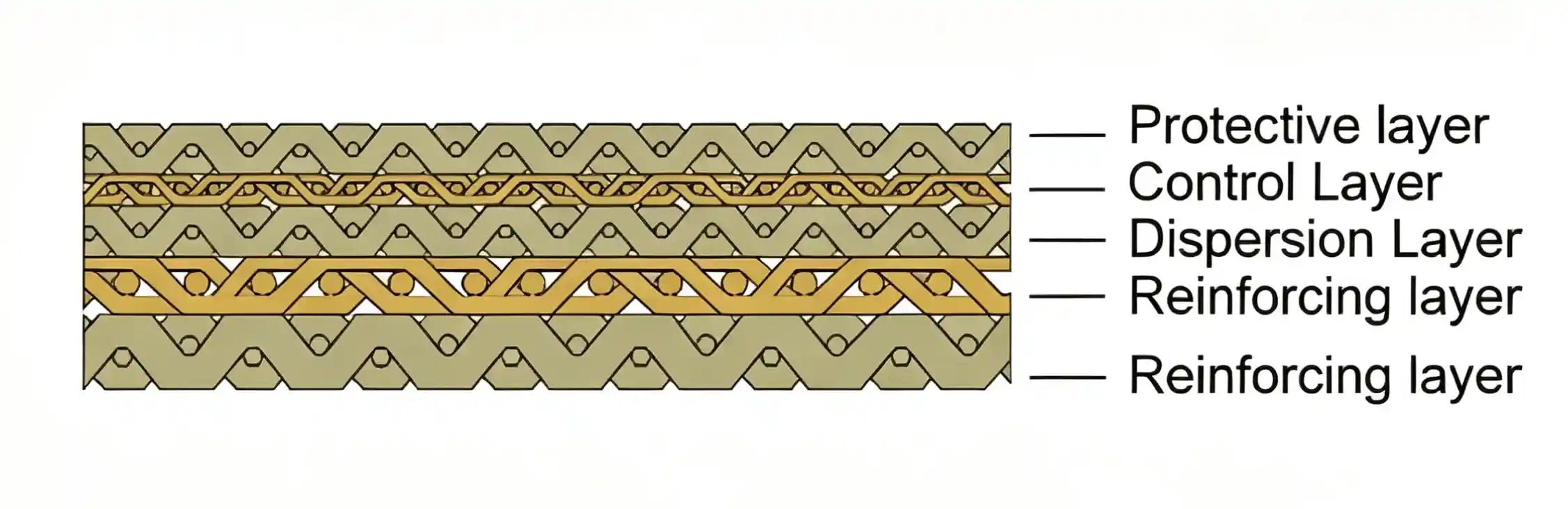
Sintered Mesh Filter Discs
Multiple woven mesh layers are diffusion-bonded into a rigid structure. The fine control layer provides the filtering openings, with other layers providing protection, distribution and reinforcement.
- For surface filtration and controlled pore geometry.
- SS304, SS316 and SS316L, with special alloys subject to specification review.
- Flat or annular discs with support and edge details matched to the mounting.
- Cleaning and reverse-flow suitability confirmed for the finished design.
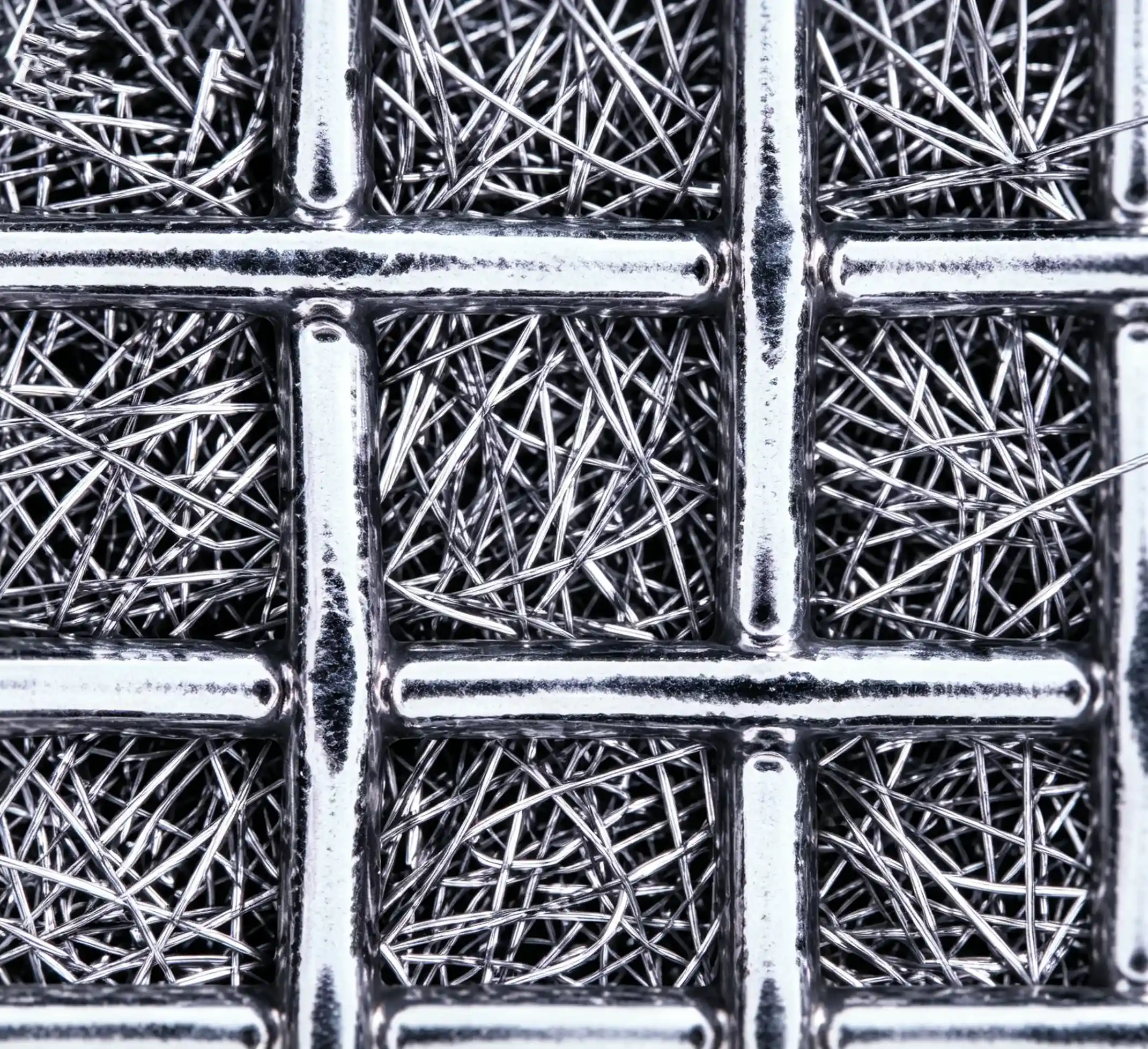
Sintered Fiber Felt Filter Discs
Fine metal fibers form a bonded porous network. This construction is used where depth capture, permeability and contaminant loading are important to the filtration process.
- For depth filtration in a compact component.
- SS316L is a standard media option; other materials require grade confirmation.
- Available media constructions include no protection mesh, or mesh on one or both sides.
- Support and cleaning reviewed for the selected felt grade and mounting.
Need help choosing the medium? Compare sintered fiber felt and sintered mesh. Diameter and micron rating alone do not establish equivalent performance.
Specification review
Materials, Dimensions and Filtration Ratings
Disc specifications are confirmed against the chosen media and assembly drawing. The media ranges below are reference ranges from the corresponding SINFT product families, rather than pressure or flow guarantees for every finished disc.
| Specification | Options / information to confirm |
|---|---|
| Media | Multilayer sintered wire mesh or sintered metal fiber felt. |
| Mesh media rating | Product-family reference: 1–200 µm. Confirm available grade, rating method and finished-disc performance. |
| Fiber felt rating | Product-page reference: 0.5–50 µm; the family technical table lists 1–60 µm typical with custom grades. Confirm the selected grade and acceptance basis. |
| Materials | SS304 / SS316 / SS316L as applicable to the medium. Special alloys are reviewed against chemistry, temperature and manufacturability. |
| Outer / inner diameter | Drawing-based. State OD and, for an annular disc, ID, tolerances and the mounting or sealing datum. |
| Thickness | Specify media thickness and total finished thickness separately when the disc includes a ring, support or welded assembly. |
| Edges and support | Define an exposed edge or required ring / welded mounting detail, support contact, unsupported span and flatness requirement for design review. |
| Pressure and flow | State flow rate, viscosity, allowable clean pressure drop and forward / reverse differential pressure at temperature. |
| Temperature and seals | Confirm operating and cleaning temperatures, material compatibility, seal location and seal material. Limits apply to the complete assembly. |
| Inspection documents | Specify material certificate, dimensional report, traceability and any required performance inspection before production. |
An unsupported flat disc does not inherit the differential-pressure rating of a cartridge made from similar media. Diameter, support spacing, clamping, flow direction and temperature must be reviewed together.
OEM and replacement manufacture
Custom Disc Geometry and Mounting Details
Flat and Annular Discs
Specify a full circular disc or a disc with a central opening to suit the filtration seat and flow path. Include OD, ID where applicable, thickness, flatness and the effective filtering area. The edge allowance and clamped area can reduce the usable area compared with the overall disc diameter.
For a replacement, provide the old component and the housing or seat dimensions. A worn sample helps identify geometry, but operating information is needed to establish the replacement specification.
Supported and Integrated Assemblies
A perforated backing, mesh support, retaining ring or welded mounting feature may be required by the assembly. Submit the proposed arrangement for manufacturing review, including contact surfaces, joint requirements and flow direction.
Define the sealing surface so process fluid passes through the intended medium. A disc that fits the cavity can still allow bypass if its edge or sealing arrangement differs from the original.
For nonstandard mounting, drawings and old-sample matching, see our custom filter manufacturing service. Production follows the agreed drawing, material and inspection scope.
Select for the operating duty
Industrial Applications for Sintered Filter Discs
Disc-shaped media can be incorporated into compact filtration assemblies where the equipment provides a defined seat, support and flow path. Suitability depends on the process and mounting design.
Polymer and Process Fluids
Review melt or liquid viscosity, temperature, contaminant loading and the support under the filtering face. A fine disc needs sufficient usable area for the target flow and pressure-drop allowance.
Polymer melt filtration requirementsHydraulic and Lubrication
Confirm retention requirements, cold-start viscosity, contamination load and any reverse pressure events. Specify the disc’s support and seal together with its micron rating.
Hydraulic and lubrication filtrationChemical Processing
Select the medium and all supporting or edge components against the process chemistry, cleaning agents and worst operating temperature. Confirm corrosion and sealing requirements before ordering.
Chemical and petrochemical applicationsWater and Industrial Utilities
Match the medium to particle loading, available pressure and the planned maintenance method. Define whether the disc will be removed for cleaning or used in an approved reverse-cleaning assembly.
Water treatment filtrationAcceptance and reuse
Inspection and Cleaning Requirements
Agree the inspection scope before manufacture. Depending on the order, this can cover material identification, OD / ID / thickness, flatness, edge condition, joints and the selected media-integrity or permeability checks.
Specify the retention test or rating basis when it matters to process acceptance. A bubble-point or permeability result alone should not be substituted for a required particle-retention test.
Cleaning may use an approved chemical, ultrasonic or reverse-flow method for the selected construction. Define the conditions and assess pressure-drop recovery, physical condition and filtration quality before reuse. Embedded or adhesive contamination may limit recovery.
Review filter inspection and testing methods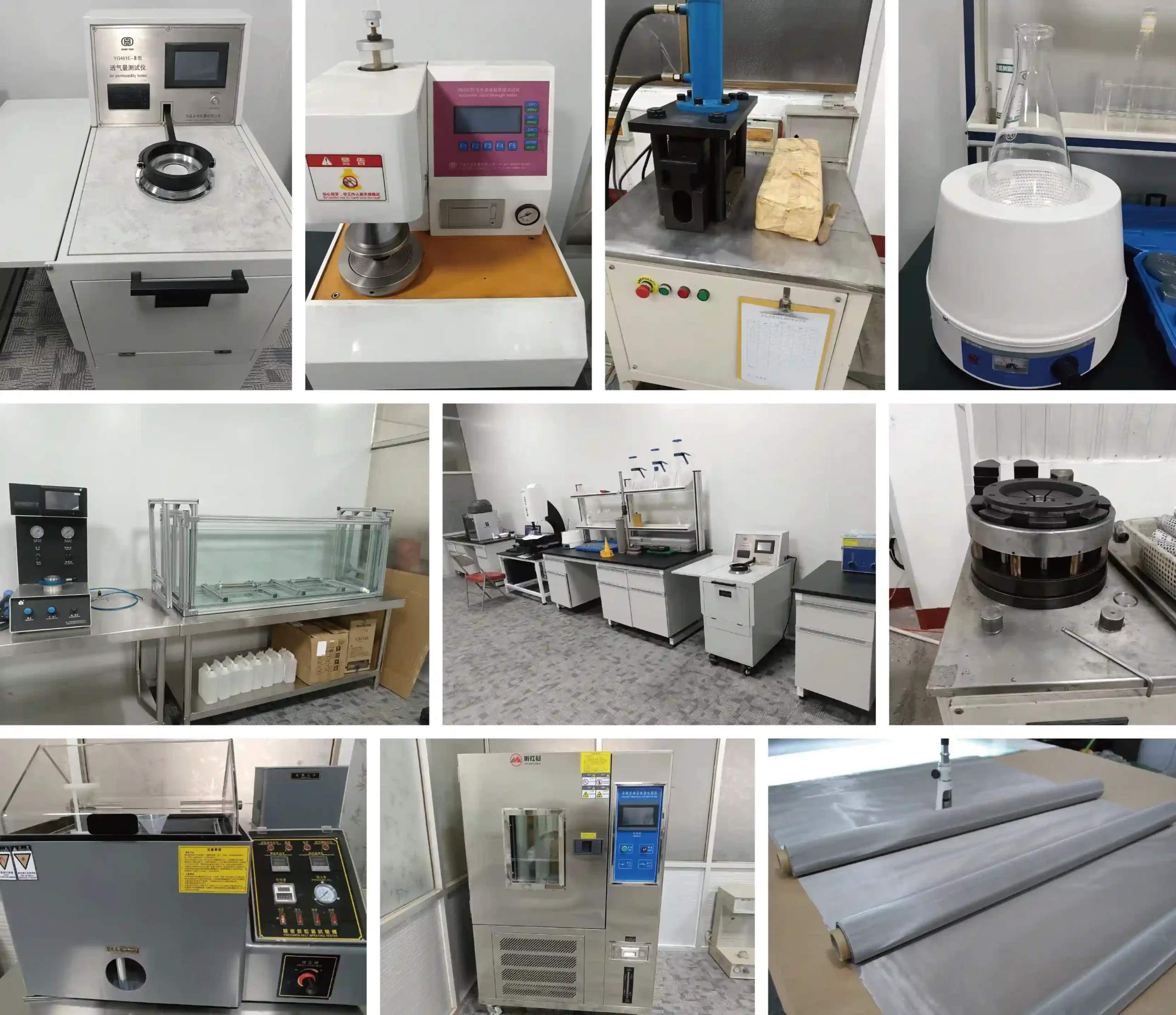
Send your drawing or sample
Request a Custom Sintered Filter Disc
Give us the component geometry and operating duty so the disc, support and mounting can be reviewed together. If a field is unknown, send a photo or sample and identify what needs checking.
Disc and Assembly
- Drawing, old sample or clear photos.
- OD, ID, media and finished thickness, with tolerances.
- Filtration rating, material and quantity.
- Support, edge, seal and mounting details.
Process and Acceptance
- Fluid, contaminants, flow and viscosity.
- Operating and cleaning temperatures.
- System pressure, allowable pressure drop and forward / reverse differential limits.
- Cleaning method, inspection and document requirements.
Buyer questions
Sintered Filter Disc FAQ
What types of sintered filter discs does SINFT offer?
This product category covers discs made from multilayer sintered wire mesh and sintered metal fiber felt. Flat or annular geometry, support and mounting details are reviewed from the application and drawing. The medium must be identified explicitly because “sintered metal” can refer to different constructions with different loading and cleaning behavior.
Can you manufacture a replacement from an old filter disc?
Yes, an old sample can support dimensional and construction review. Also provide the seat or housing information, fluid, flow, filtration requirement, temperature, pressure difference and cleaning method. A sample alone may not reveal the original rating or material specification, so those details should be verified before treating the replacement as equivalent.
Which micron rating should I specify?
Start from the contaminant that must be retained and the downstream process requirement. Then confirm the rating method, selected media grade, usable disc area and clean pressure drop at your actual fluid conditions. The parent media ranges on this page are selection references, not a guarantee that every diameter and thickness is available at every rating.
What diameter and thickness can you supply?
Dimensions are reviewed against the drawing, chosen medium and manufacturing requirements. Send outer diameter, inner diameter if present, media thickness, total assembly thickness, tolerances and mounting details. This page does not present a fixed stocked size range; the approved drawing establishes the dimensions and acceptance requirements for your order.
Can a disc be backwashed or reused?
Reuse depends on the medium, support, edge construction, contaminant and cleaning conditions. Reverse cleaning requires an approved reverse differential-pressure limit and a route for released solids to leave the assembly. Confirm recovery and integrity after cleaning. A clean appearance or low pressure drop alone is not sufficient evidence that the disc still meets the filtration requirement.
What pressure and temperature limits apply?
The limits are specific to the finished disc and its mounting. Review unsupported span, support spacing, flow direction, clamping, joints, seals, material and temperature. A pressure rating stated for a cylindrical filter element cannot be transferred directly to a flat disc. Provide normal and worst-case conditions for the assembly review.