A certificate stamped “passed” can still leave a filter shipment difficult to approve. The report may cover a different configuration, omit the pressure basis or describe a qualification sample rather than the delivered batch. This filter pressure test certificate guide explains what buyers should verify before acceptance, so the document supports a defined purchasing decision instead of becoming another PDF in the shipment folder.
Filter Pressure Test Certificate Guide: What Should You Verify First?
Verify the tested item, test purpose, method and actual conditions before interpreting the result. Then match the evidence to the delivered part or batch and the agreed acceptance requirement. A pressure figure and a pass statement are not enough if the report does not establish what was loaded, how the pressure was defined and what the conclusion covers.
Review the document through four questions:
- Does it identify the item and configuration that matter to this order?
- Does the test address the required acceptance question?
- Are the actual conditions, observations and endpoint understandable?
- Is the conclusion supported by a defined requirement and applicable scope?
The report is one part of acceptance. It does not independently establish material identity, filtration efficiency, dimensional fit, cleanliness or suitability for every operating condition.
Certificate, Test Report or General Declaration?
Document names vary between suppliers. “Certificate” may refer to a brief conformity statement, while a detailed test report contains the conditions and results supporting that statement. Do not judge the evidence by its title or the presence of a stamp alone.
Compare the received package with the order. If the purchase requirement includes actual test results and specimen identification, a generic declaration does not answer those questions. Conversely, do not demand an unrelated document format after delivery if the agreed package already contains the necessary evidence.
Define the required content before manufacture. Where a particular standard, independent witness or laboratory status is necessary, specify the requirement and confirm feasibility. A supplier-issued report is not automatically independent or accredited, and a company certification does not establish that a particular test was performed under an accredited scope.
Match the Report to the Delivered Filter
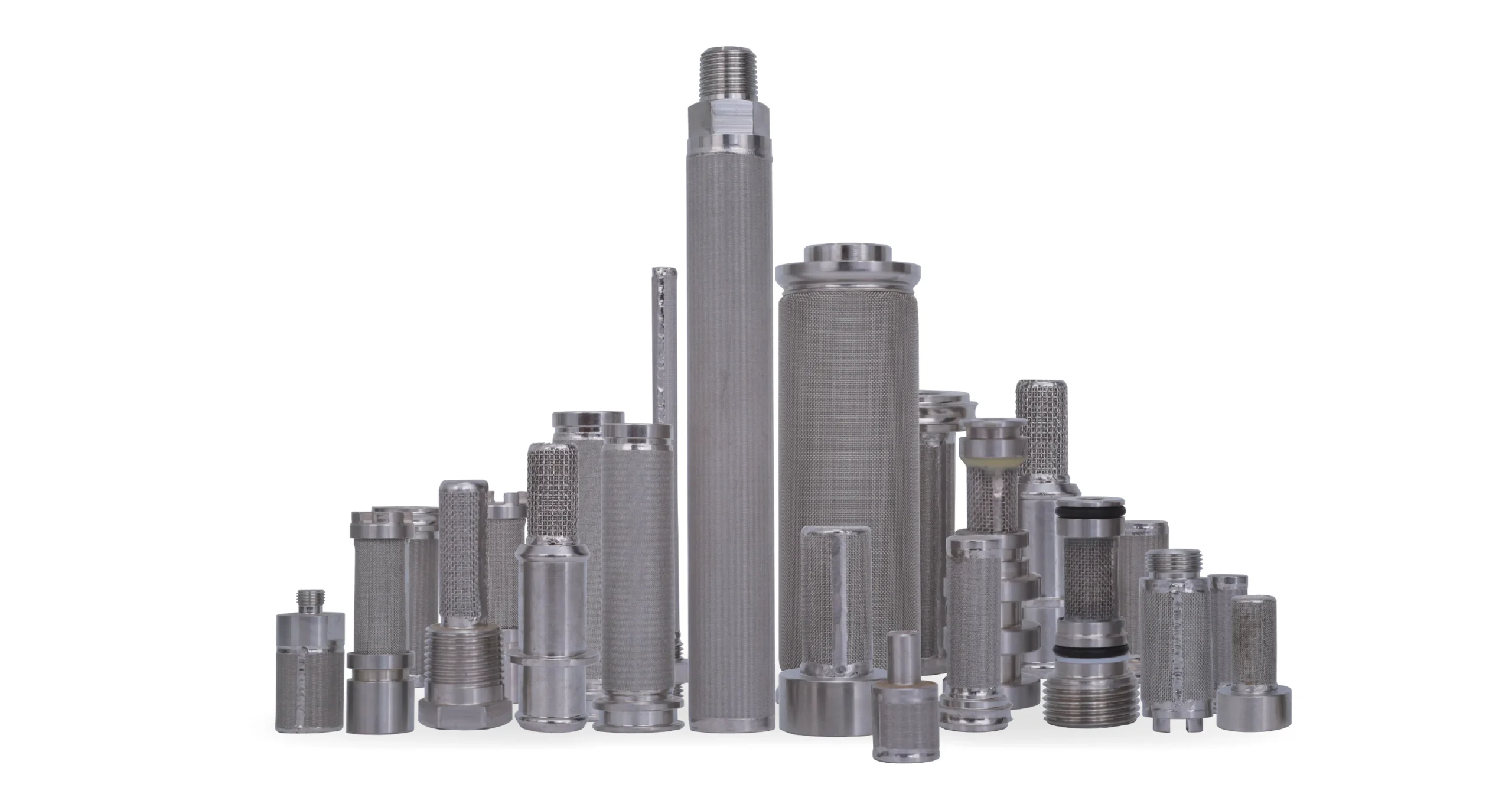
Start with the part number, drawing revision, construction and applicable batch or serial identity. Check the medium, supports, fittings and other configuration details relevant to the test. An unchanged product name does not prove an unchanged design.
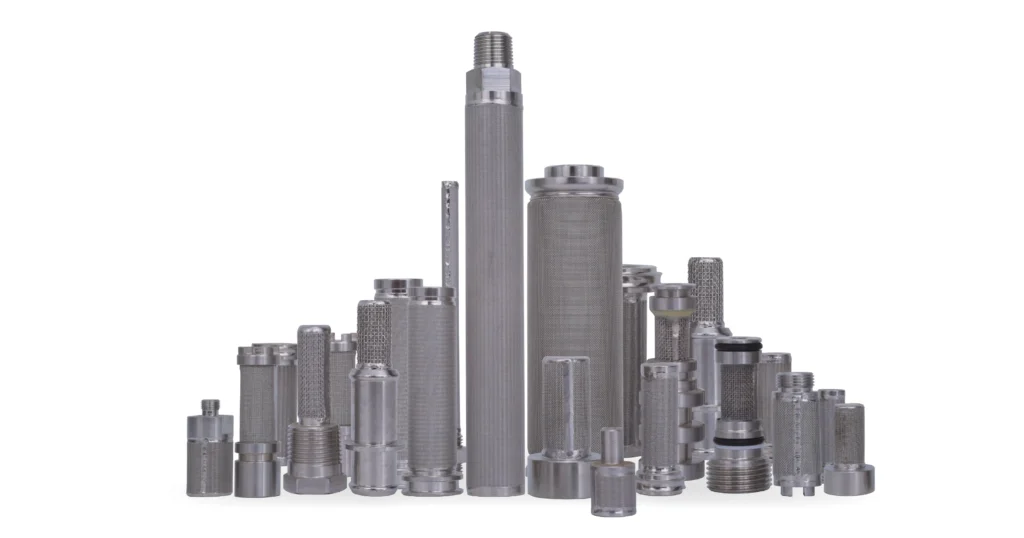
For sintered mesh filter elements, layer construction, supports and end details may matter to the evidence. For pleated filter cartridges, the report should address the appropriate media and assembly configuration rather than relying only on nominal length.
Different identifiers on the report and packing list can be legitimate if a controlled mapping links them. Ask for that relationship instead of assuming that similar dates establish identity. Our filter element batch traceability guide explains how finished batches, component records and deliveries can be connected.
Also establish the inspection level. Was this an individual delivered element, a sampled production item, a defined batch or a design-qualification specimen? A qualification report may support a design claim without showing that every item in the current shipment received that test. Neither kind of evidence should silently be represented as the other.
Confirm What the Test Was Intended to Demonstrate
Housing pressure, differential pressure across an element, integrity checks and structural qualification address different questions. A report should identify its object and purpose rather than use “pressure test” as an all-purpose description.
The public abstract of ISO 2941:2009 concerns verification of collapse/burst pressure rating for hydraulic filter elements under a designated differential pressure in the intended flow direction. It distinguishes reaching a non-failure endpoint from collapse or burst. A citation to that standard therefore needs the correct test object and scope; it is not a universal housing-pressure certificate or a claim that every metal filter was tested to the same method.
For the definitions themselves, see proof pressure versus burst pressure. During report review, the practical task is to check whether the described method answers the question specified in the order.
For a hydraulic filtration application, do not convert a housing test pressure into an allowable differential pressure for the installed medium. Likewise, a result obtained in one flow direction should not automatically become evidence for reverse-flow or backwashing duty.
A Practical Report-Review Checklist
The fields below form a purchasing checklist, not a claim that every standard requires exactly this template. Adjust the requested detail to the specified test and acceptance purpose.
| Report field | What the buyer should be able to establish |
|---|---|
| Report number, date and revision | The controlled document being reviewed and whether a later version exists. |
| Item and configuration | Part number, drawing revision and relevant construction details. |
| Specimen or batch identity | Which physical item or defined population the evidence covers. |
| Test purpose and method | The required characteristic and applicable method or procedure revision. |
| Pressure definition | Units and whether the value is gauge, absolute or differential, as applicable. |
| Actual test conditions | Relevant medium, temperature, direction, fixture arrangement and duration or loading history. |
| Observations and endpoint | What occurred and why the test ended. |
| Acceptance reference | The specification, criteria and basis for any pass/fail conclusion. |
| Equipment and authorization | Relevant instrument identification and report approval information. |
| Deviations and limitations | Changes, exclusions or coverage limits affecting interpretation. |
Avoid filling missing information with assumptions. If duration or direction is essential to the agreed test, ask for clarification rather than interpreting a blank as a standard default. Where a field genuinely does not apply, the report should make its scope understandable.
Read the Pressure Value in Context
A number without a pressure basis is ambiguous. Confirm the units, reference and location relevant to the reported loading. Where differential pressure is the subject, understand which sides of the element the value relates to. Do not compare figures merely because both are written in bar or psi.
Check whether the figure is a target, an actual achieved value, a recorded maximum or a failure result. A procedure calling for a certain condition is not evidence that the condition was achieved. The report or supporting record should distinguish the requirement from the observation.
This distinction also applies to temperature, medium and duration. A stated operating temperature on a product drawing does not mean the pressure test occurred at that temperature. Ask which conditions the result represents and what supporting evidence is needed for service conditions outside that scope.
There is no universal pressure multiplier or holding time recommended here. Selecting the test conditions belongs to the applicable design, method and qualified technical assessment, not to a generic checklist copied between unrelated filters.
Separate a Non-Failure Endpoint From a Measured Failure
If a specimen reaches a specified endpoint without the defined failure, the report should describe that outcome. It should not silently turn the achieved endpoint into an experimentally measured ultimate failure pressure.
Similarly, if failure occurs, confirm how the method defines it and what was observed. A disconnected fixture, seal issue and structural change in the specimen can have different implications. Do not rename an unexplained interruption as a successful element test.
Review any required post-test checks. Depending on the agreed purpose, acceptance may need documented condition, dimensions or integrity afterward. A pressure record alone may not answer those follow-up questions. Conversely, do not add an unagreed test after the fact without technical review of what is actually needed.
Do not assume a specimen deliberately tested to destruction is suitable for delivery. The report should distinguish qualification samples from items intended to return to usable stock, with disposition controlled under the applicable requirements.
Instruments, Calibration and Report Authority
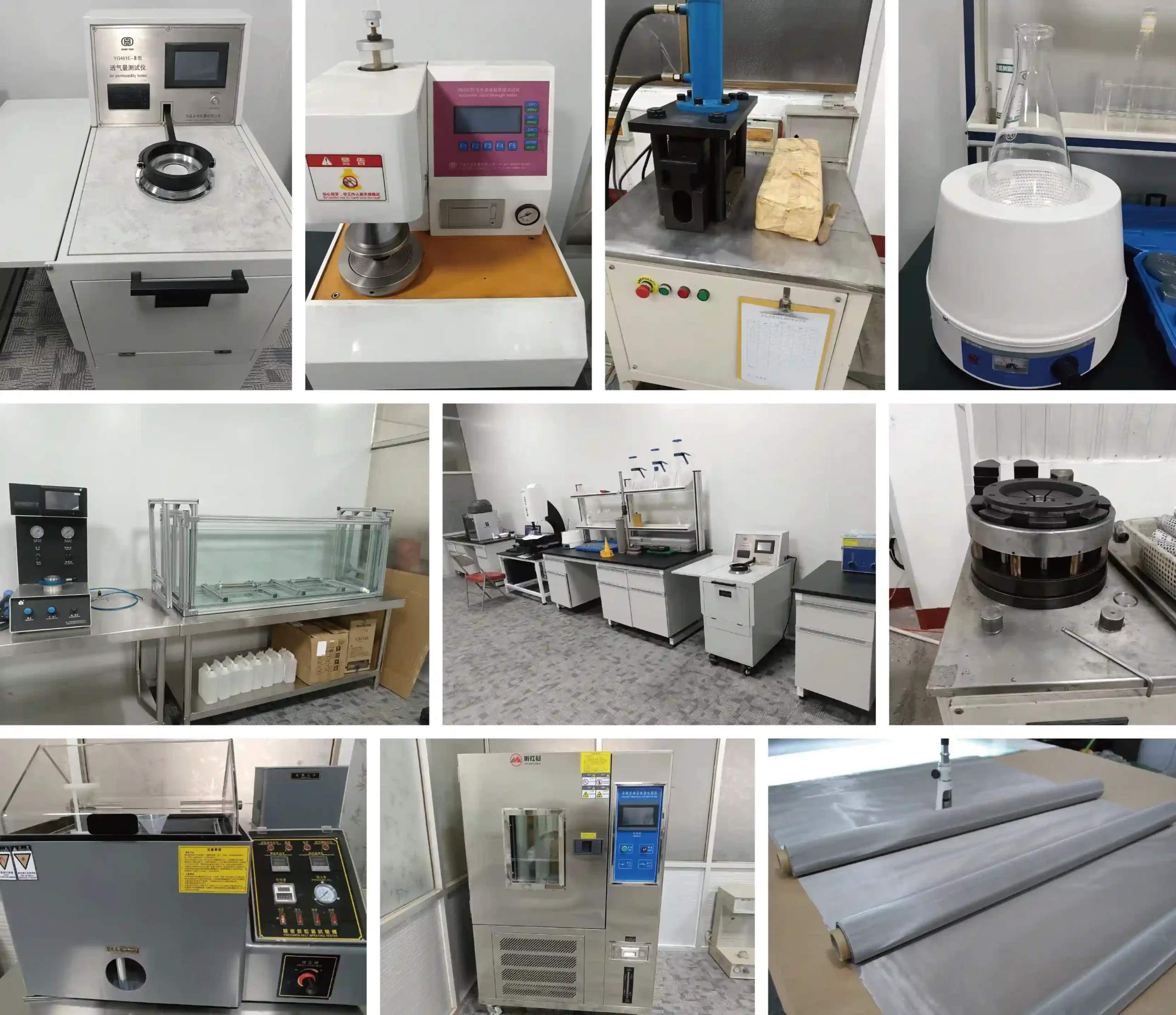
Ask how the reported measurements are supported. Relevant records may include instrument identification, measurement range and calibration status applicable at the test date. Where a conformity decision could depend on measurement uncertainty, clarify the applicable decision rule with the test provider.
A calibration certificate for a pressure instrument is not a pressure test report for the filter. It addresses the measurement equipment, not whether a particular element met the purchase requirement. A photograph of a gauge likewise does not identify the complete test history, specimen or acceptance result.
Check the issuer and authorization. If an independent witness, accredited activity or particular sign-off is required, verify the relevant scope and documentation rather than relying on a logo. If none is specified, do not describe a supplier's routine report as a third-party certificate.
If the report contains a correction, retain its revision relationship and the reason for the change. Replacing a PDF should not erase an earlier result or conceal an unresolved discrepancy. The buyer needs to know which version is valid for the acceptance decision.
Red Flags That Need Clarification Before Release
A discrepancy is a reason to investigate, not proof of either conformity or fraud. Preserve the received documents and request a controlled explanation tied to the order.
| Observation | Question to resolve | Buyer action |
|---|---|---|
| “Passed” with no criteria | Passed which requirement? | Request the applicable acceptance reference and supporting result. |
| Correct product name, different revision | Does the evidence cover the delivered construction? | Obtain the configuration mapping or relevant assessment. |
| Batch not linked to the packing list | Which supplied items are represented? | Ask for traceability and quantity mapping. |
| Pressure shown without basis | What loading does the number represent? | Clarify reference, units and applicable measurement location. |
| Only a calibration document is supplied | Was the filter test itself documented? | Request the specimen-specific or scoped test record. |
| Reissued report changes the outcome | Why was the conclusion revised? | Review the correction history and authorized explanation. |
| Test setup differs from the required scope | Does the result still answer the purchase requirement? | Seek technical disposition before release. |
Keep held material distinguishable from accepted stock while the issue is unresolved. Where a deviation is proposed, use the buyer's authorized acceptance process and retain its limits. An urgent installation date does not make an ambiguous report more informative.
Do Not Recreate the Test to Fill a Documentation Gap
Missing paperwork should first lead to a records request and technical review. It should not prompt improvised pressure testing in a receiving area.
HSE Guidance Note GS4, fourth edition, describes pressure testing as a stored-energy activity with significant hazards and emphasizes risk assessment and controlled systems of work. Its safety context reinforces why any necessary testing belongs with competent personnel and suitable facilities. This article supplies no pressure-loading sequence, fixture design, test pressure or operating procedure.
If additional testing is justified, agree its purpose, method, specimen scope and reporting requirements before proceeding. Confirm how it affects the item's condition and release status. A new test should resolve a defined question rather than merely produce another pass stamp.
What a Pressure Certificate Cannot Establish Alone
Keep the conclusion within the tested scope. One pressure-related result does not automatically prove retention efficiency, dirt capacity, chemical compatibility, fatigue life, reverse-flow capability or lifetime in a different service.
Even when the pressure evidence is adequate, the complete acceptance package may still require material, dimensional, cleanliness or other checks. Conversely, a material certificate does not close a pressure-test requirement. Each record should answer its own question and remain linked to the relevant item.
Avoid treating the report as a legal or regulatory approval for every market. Any applicable conformity obligations need their own assessment. This purchasing guide does not make a universal compliance determination.
What Buyers Should Specify Before RFQ
Send the drawing revision, materials, assembly configuration and operating conditions. Identify whether the requirement concerns a housing, element, joint or complete assembly, and explain why the pressure-related evidence is needed.
Specify the agreed method or ask for a technically suitable proposal. Define the required population or specimen, report content, acceptance basis, witnessing or approval needs, and handling of deviations or rework. Confirm whether qualification evidence, routine production records or individual-item results are expected. Resolve these distinctions before comparing quotations.
SINFT lists an optional pressure test certificate among its available order documents. The particular test, conditions, item coverage and report package must be confirmed for the proposed order. That capability should not be interpreted as a promise of every pressure-test method, independent certification or testing of every delivered element.
Discuss the documentation with our custom filter manufacturing team, or send your drawing and report requirements. A clear document scope allows the quotation to address both the manufactured filter and the evidence needed to accept it.
Frequently Asked Questions
Does a certificate saying passed provide enough evidence for acceptance?
Not necessarily. The statement needs a defined item, test scope and acceptance basis. Confirm that the actual conditions and result address the requirement in the order, and that the evidence applies to the delivered configuration or batch. A short certificate can be useful when linked to adequate supporting records. Its title or stamp alone does not resolve missing information essential to the decision.
Is a pressure test certificate the same as a calibration certificate?
No. A calibration certificate concerns the measurement equipment and its reported calibration results. A filter test report concerns the item tested under defined conditions. Both may be relevant, but they serve different purposes. Check the relationship between the identified instrument, the test date and the reported measurement without allowing an instrument document to replace the required evidence about the filter itself.
Can a housing test report establish an element's differential-pressure capability?
Not automatically. The housing and filtering element are different test objects, and the pressure acting on each must be understood. Review the report's actual configuration and pressure basis. Do not transfer a housing figure to the medium simply because the element fits inside it. The element's applicable loading requirement needs suitable design and test evidence covering that particular construction and intended duty.
Does a qualification report mean every delivered filter was tested?
No. Qualification evidence can concern selected specimens used to evaluate a design or process. Delivery inspection may cover individual items, samples or a defined batch under a separate plan. Identify which level the received report represents and how it relates to the goods supplied. Do not imply universal individual testing unless the actual records and agreed coverage support that statement.
Can a pressure value reached without failure be called the burst pressure?
Do not assume so. A non-failure endpoint and an observed failure result are different outcomes. Check the method, termination condition and report wording before interpreting the number. The result should state what was demonstrated within its scope, rather than assigning an unmeasured ultimate limit. Ask for clarification if the certificate uses a pressure term that the recorded outcome does not support.
What if the report's batch reference differs from the shipment label?
Different identifiers can be legitimate if a controlled mapping explains their relationship. Request the link between the tested specimen or population and the delivered items, including the relevant configuration and quantities. Similar dates or descriptions are not a substitute. Preserve the original labels and records while the discrepancy is reviewed, and release the goods through the applicable authorized acceptance process.
Is a third-party pressure certificate always required?
There is no universal requirement stated here. The applicable contract, specification and obligations determine the evidence and independence needed. If independent witnessing or an accredited activity is required, define the scope before ordering and confirm availability. Do not describe supplier-issued records as third-party evidence, or assume that a company certificate or logo establishes the status of the particular reported test.
What should I provide when requesting the report with a quotation?
Provide the drawing revision, construction, operating conditions and the test object. Explain the acceptance purpose and required item or batch coverage. Include any specified method, report fields, acceptance criteria, witnessing and approval needs. Ask the supplier to confirm the proposed package before manufacture. Clear requirements help avoid receiving a generic document when the buyer actually needs traceable results for a defined delivery.
Final Thoughts
Read a pressure test certificate as a scoped record, not a universal approval. Match the item and revision, understand the pressure basis and actual conditions, and check the result against the agreed requirement. Resolve missing links before release. For custom filters, submit the drawing and documentation needs together so the supplier can confirm what evidence will support acceptance of the finished shipment.