When a pump, valve, nozzle, heat exchanger, or flowmeter keeps seeing debris, the first question is not only “what mesh size should I buy?” It is whether the strainer body and removable element can hold the solids, keep pressure drop under control, and still be cleaned in the space your plant actually has.
Direct Answer: Basket Strainer vs Y Strainer
Choose a basket strainer for liquid systems with high flow, heavier solids loading, lower clean pressure-drop requirements, or frequent basket cleaning. Choose a Y strainer when installation space is limited or the service involves relatively light contamination in liquid, gas, or steam lines.
That is the practical answer, but it is not a complete specification. The final choice also depends on pipe size, flow rate, allowable pressure drop, contaminant type, mesh or perforation, operating pressure, temperature, material compatibility, and whether the line can stop for cleaning.
Spirax Sarco notes that, size for size, a basket strainer generally has a larger free straining area and a lower pressure drop than a Y-type strainer. It also explains that Y strainers are widely used in steam service and normally have less dirt-holding capacity. These are useful selection principles—not universal pressure or flow ratings for every model.
Basket Strainer vs Y Strainer Comparison
| Selection Factor | Basket Strainer | Y Strainer |
|---|---|---|
| Typical service | Liquid pipelines with moderate to heavy debris | Liquid, gas, or steam with relatively light debris |
| Free straining area | Usually larger for the same nominal size | Usually smaller and more compact |
| Dirt-holding capacity | Higher; suitable for larger debris volume | Lower; best when the solids load is limited |
| Pressure drop | Often lower at the same size and clean condition | Can be higher because of the smaller screen area and flow path |
| Installation space | Needs space above or around the housing for basket removal | Compact; often easier to fit into restricted piping layouts |
| Cleaning access | Basket lifts out for inspection, cleaning, or replacement | Screen is removed through the branch cap; blow-off options may help |
| Common orientation | Normally installed in a horizontal liquid line | Horizontal or approved vertical orientation, with the debris pocket positioned correctly |
| Best fit | High flow, higher solids load, easy maintenance, low clean pressure drop | Compact installation, steam/gas service, lighter contamination |
These are typical differences. Do not select a strainer from this table alone. The housing design, basket or screen geometry, material, opening size, open-area ratio, and manufacturer’s pressure-temperature rating still control the final result.
What Is a Basket Strainer?
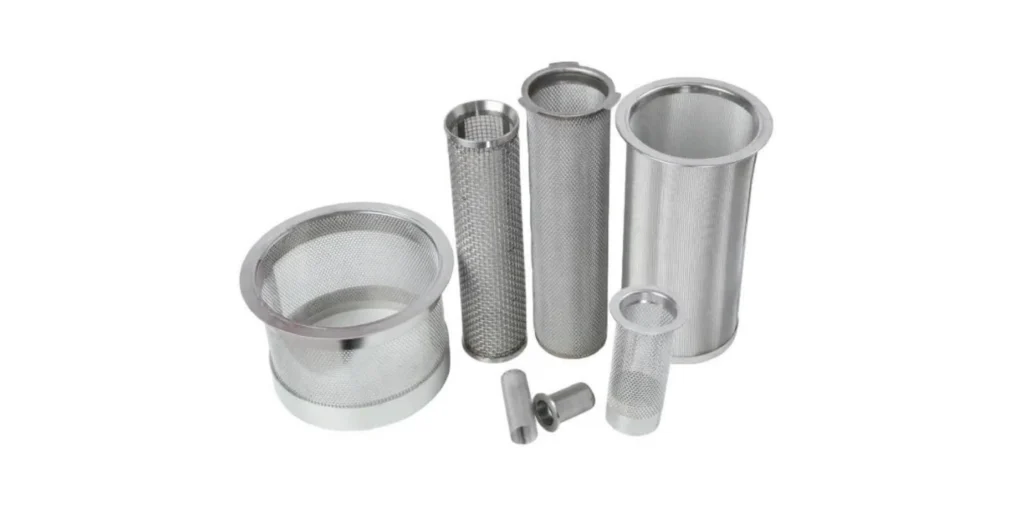
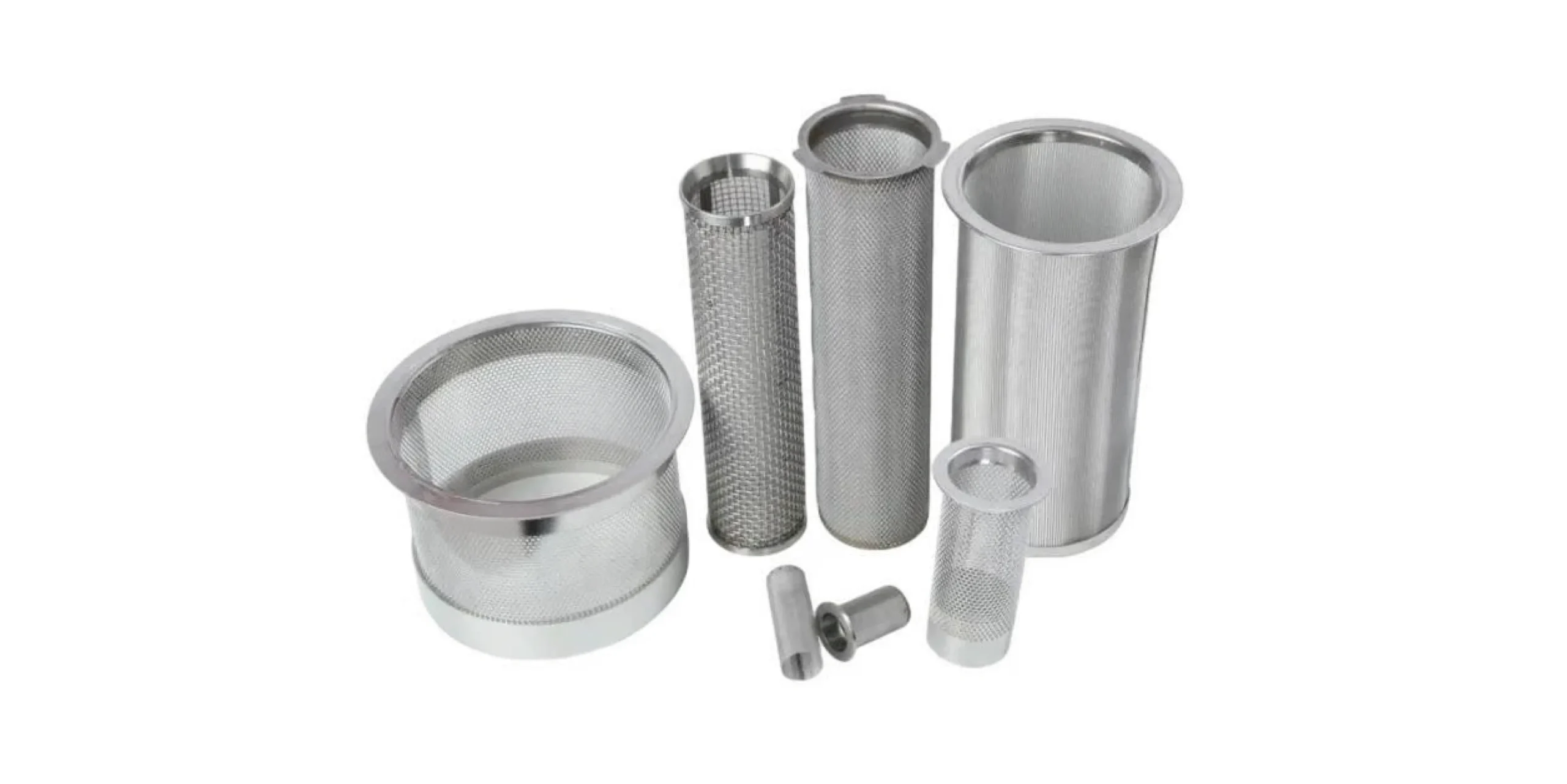
A basket strainer uses a removable cylindrical or slanted basket inside a pipeline housing. The basket may combine perforated plate, woven wire mesh, or sintered mesh. Solids remain inside the basket while the filtered fluid continues downstream.
The larger basket volume provides space for debris accumulation. This makes the design useful where a system needs:
- High liquid flow.
- Moderate or heavy dirt loading.
- A relatively large free straining area.
- Easy removal for cleaning.
- Protection for pumps, valves, meters, nozzles, heat exchangers, and downstream filters.
SINFT manufactures custom basket filters and strainers in standard, slanted, tube, and flanged-tube forms. Available constructions include perforated plate, woven mesh, and sintered mesh. Standard website options include SS304, SS316, and SS316L, with 20–200 mesh references and custom hole patterns, rims, handles, flanges, lengths, and bottom styles.
The basket is only one part of the complete strainer. The housing manufacturer must confirm the assembly’s pressure rating, cover design, gasket, flange class, and pressure-temperature limit.
What Is a Y Strainer?
A Y strainer has an angled debris pocket that forms a Y-shaped body. A cylindrical screen sits inside the branch and captures particles before they reach downstream equipment.
Y strainers are commonly selected when:
- The solids load is relatively low.
- Installation space is limited.
- The line carries liquid, gas, or steam.
- The piping arrangement requires a compact body.
- A blow-off connection can be used to remove accumulated debris.
Eaton describes its Model 85 Y strainer as suitable for liquid, gas, and steam where the amount of material removed is relatively small. Eaton also offers perforated and mesh screen options, which shows why the screen specification must match the actual contaminant rather than being chosen from pipe size alone.
Installation orientation matters. The screen pocket must remain in a position where debris collects instead of falling back into the line. For vertical piping, flow direction and the manufacturer’s installation instructions must be checked before approval.
Which Strainer Has the Lower Pressure Drop?
A basket strainer usually has the lower clean pressure drop when nominal size and operating conditions are comparable, because it normally provides a larger free straining area. However, actual pressure drop is not determined by body shape alone.
It changes with:
- Fluid flow rate
- Density and viscosity
- Pipe and strainer size
- Basket or screen open area
- Mesh count or perforation size
- Element thickness and support structure
- Contaminant loading
- Time since the last cleaning
A very fine basket can create more resistance than a coarse Y-strainer screen. Likewise, either design will experience rising differential pressure as the retained solids block its open area.
For engineering review, request both clean and dirty differential-pressure limits. Hayward’s strainer application form asks for minimum and maximum flow, operating and design pressure, temperature, maximum allowable clean and dirty pressure drop, solids concentration, particle size, and whether flow can stop for cleaning. That is a useful RFQ framework for any industrial strainer project.
Which Strainer Holds More Dirt?
A basket strainer normally holds more debris before cleaning because its basket is larger. That advantage matters in raw water, cooling water, process liquids, slurry pre-filtration, and pipelines where rust, scale, fibers, or other solids enter continuously.
A Y strainer has a smaller screen and debris pocket. It works well when contamination is light, but it may need more frequent cleaning if solids loading increases. A blow-off connection can simplify cleaning in some designs, but it does not make a small screen equivalent to a high-capacity basket.
If uninterrupted flow is required, do not stop at the basket strainer vs Y strainer comparison. A duplex basket strainer or an automatic backwash system may be more appropriate because one side can remain in service while the other is cleaned. SINFT also manufactures basket and tube elements for self-cleaning and backwash filtration systems.
How Installation and Maintenance Change the Decision
Basket Strainer Installation
A basket housing usually requires horizontal installation and enough vertical or side clearance to remove the basket. Check:
- Cover-opening clearance
- Basket lifting clearance
- Handle orientation
- Seal and rim seating
- Drain and vent position
- Element insertion depth
Ignoring removal clearance is a common design mistake. A basket may fit inside the housing but still be impossible to remove after nearby piping, platforms, or insulation are installed.
Y Strainer Installation
A Y strainer is more compact, but its pocket orientation must allow debris to collect. In steam and gas service, orientation also affects whether condensate or debris remains where intended. Always follow the housing manufacturer’s flow arrow and installation instructions.
Cleaning and Inspection
Before opening either design:
- Isolate and depressurize the line.
- Drain the housing safely.
- Remove the basket or screen without damaging the sealing surface.
- Clean with a method compatible with the fluid residue and filter material.
- Inspect mesh, perforations, welds, frame, rim, handle, and seals.
- Replace an element with torn mesh, cracked welds, distorted openings, or a damaged sealing edge.
- Reinstall it in the correct flow direction and monitor differential pressure after restart.
For water treatment filtration, removable baskets are useful in raw-water intake, cooling-water, RO pre-filtration, and wastewater duties where debris characteristics can change over time.
How to Choose Mesh or Perforation
Choose the opening from the smallest particle that must be stopped—not from a generic “finer is better” rule.
A finer mesh retains smaller particles but also:
- Reduces open area.
- Raises clean pressure drop.
- Fills more quickly.
- Requires more frequent cleaning.
- May be unnecessary if the downstream equipment tolerates larger particles.
A coarse perforated basket provides mechanical strength and high flow. Woven mesh can be added when finer retention is required. Sintered mesh may be considered when the element needs a rigid, stable filtration layer.
SINFT basket elements can use round, square, slotted, or custom perforations, with perforated plate, woven mesh, sintered mesh, or combined constructions. Final selection should balance retention, flow, pressure drop, cleanability, and structural support.
Basket Strainer vs Y Strainer Selection Checklist
Choose a basket strainer when most of these conditions apply:
- The medium is a liquid.
- Flow is high.
- The solids load is moderate or heavy.
- A larger dirt-holding capacity is required.
- Low clean pressure drop is important.
- Operators need easy basket removal and inspection.
- There is enough clearance around the housing.
Choose a Y strainer when most of these conditions apply:
- The solids load is light.
- The service involves liquid, gas, or steam.
- Installation space is restricted.
- A compact body is preferred.
- The approved model supports the required orientation.
- The screen can be cleaned often enough for the operating duty.
Review another strainer type when:
- Flow cannot stop for cleaning.
- Solids loading is continuous or unpredictable.
- Differential pressure rises too quickly.
- Automatic cleaning is required.
- The process needs very fine filtration rather than coarse equipment protection.
What Buyers Should Confirm Before RFQ
Send the following information before requesting a basket or screen:
- Working fluid, gas, or steam.
- Contaminant type: hard, soft, sticky, fibrous, abrasive, or deformable.
- Particle size and solids concentration.
- Required mesh, micron rating, or perforation.
- Minimum and maximum flow rate.
- Operating and design pressure.
- Clean and dirty differential-pressure limits.
- Operating and design temperature.
- Pipe size and housing dimensions.
- Basket OD, length, rim, handle, bottom style, and seal position.
- Material and corrosion requirements.
- Drawing, old sample, housing photo, or part number.
- Whether the process can stop for cleaning.
- Required inspection reports and material certificates.
If the existing basket is no longer available, SINFT can review a drawing, sample, or measured housing dimensions through its custom filter manufacturing service.
How SINFT Can Help With Strainer Basket Selection
SINFT is the right fit when your buying task is not simply choosing a catalog Y strainer, but replacing or customizing the removable basket or screen element. SINFT manufactures basket filters and strainer elements in standard basket, slanted basket, tube, and flanged-tube forms using perforated plate, woven mesh, sintered mesh, or combined constructions.
If you are replacing an element, send the old basket, housing photo, OD, length, rim or flange dimensions, handle shape, bottom style, mesh or perforation, material, and cleaning method. If you are building an OEM system, send the process fluid, debris load, flow, pressure-drop limit, installation clearance, and inspection requirements. For non-standard sizes and structures, use the custom filter manufacturer service before finalizing the RFQ.
Frequently Asked Questions
Is a basket strainer better than a Y strainer?
Neither is universally better. A basket strainer is usually better for high-flow liquids, heavier debris, and applications where operators need to remove and inspect the basket frequently. A Y strainer is usually better for compact installations, steam or gas service, and relatively light solids loading. Choose from the duty, not from the body name alone.
Does a basket strainer have a lower pressure drop?
It often does at a comparable nominal size because it usually has a larger free straining area. Actual pressure drop still depends on flow, viscosity, mesh or perforation, open area, screen support, housing geometry, and contaminant loading. You should compare clean and loaded differential-pressure expectations before assuming one design will always be lower.
Can a Y strainer be installed vertically?
Some models allow vertical installation, but only in an approved flow direction and orientation that keeps debris in the screen pocket. Follow the specific manufacturer’s installation instructions. If debris can fall back into the line, or if condensate behavior matters in steam service, the compact layout may create a maintenance problem rather than solve one.
How often should a basket strainer be cleaned?
There is no universal interval. Clean it when measured differential pressure reaches the plant’s approved limit or when flow performance falls. Establish the interval from actual contaminant loading, not a fixed calendar rule. During early operation, track pressure drop, flow, and the solids removed so the maintenance team can set a realistic cleaning schedule.
Can SINFT make a replacement strainer basket from an old sample?
Yes. SINFT can review a drawing, old sample, housing dimensions, or photos. Provide OD, length, rim or flange dimensions, handle and bottom style, mesh or perforation, material, fluid, flow, pressure, and temperature. The more clearly you define the housing seat and removal clearance, the less risk there is of a basket that filters correctly but does not fit.
What should I send for a custom strainer basket quote?
Send the working fluid, debris type, particle size, flow rate, operating pressure, allowable pressure drop, operating temperature, material requirement, and cleaning method. For replacement baskets, include the old basket, photos, housing drawing, OD, length, rim or flange details, handle position, bottom style, seal location, and required mesh or perforation.
Final Thoughts
The basket strainer vs Y strainer decision should protect both the process and the maintenance workflow. Use a basket strainer when debris load, liquid flow, cleaning access, and dirt-holding capacity matter most. Use a Y strainer when the line needs compact protection with lighter contamination. For replacement elements, SINFT can help turn your old basket or housing data into a custom strainer basket quote.
Request a Custom Strainer Basket
Selecting the housing type is only the first step. The basket or screen must still match the fluid, particle size, flow, pressure drop, housing dimensions, cleaning method, and material requirements.
Send SINFT your drawing, old basket, dimensions, process conditions, and required mesh or perforation. Our engineering team can review the element construction and prepare a custom quotation.
Request a custom filtration quote
Technical References
- Spirax Sarco, “Strainers,” Learn About Steam: https://www.spiraxsarco.com/learn-about-steam/pipeline-ancillaries/strainers
- Eaton, “Model 85 Y-Strainer”: https://www.eaton.com/us/en-us/catalog/filters-strainers/y-strainers-wye-strainers.html
- Eaton, “Baskets and Screens”: https://www.eaton.com/us/en-us/catalog/filters-strainers/baskets.html
- Hayward Flow Control, “Thermoplastic Strainer Product Guide and Application Information Form”: https://www.haywardflowcontrol.com/media/akeneo_connector/asset_files/T/h/Thermoplastic_Strainer_Guide_ProductGuide_SPG0821_EN_924b.pdf