When two slot-type metal filters look similar in a drawing, the wrong choice can still create a cleaning problem, pressure-drop problem, or replacement-fit problem. Before you ask for a slot size, you need to decide whether your process needs a V-slot wedge wire structure or a single-layer notch wire structure that can be air-blown, backflushed, and visually inspected more easily.
Direct Answer: Wedge Wire vs Notch Wire Filter
Choose a wedge wire filter when the process needs continuous V-shaped slots, larger screen geometry, surface release, high open area, and robust screening for water, slurry, hydrocarbon, steam, or solid-liquid separation service. Choose a notch wire filter when the process favors a single-layer wound slot structure, rectangular slots, air blowing, backflush cleaning, visual inspection, compact cartridge forms, high-viscosity fluids, food, pharmaceutical, or chemical filtration.
Both structures are slot filter elements, but they are not the same product with different names. SINFT wedge wire filters use SS316L triangular profile wire and support rods to form continuous V-shaped slots. SINFT notch wire filters use SS316L single notch wire wound into a cylindrical structure that forms rectangular slots. The best choice depends on slot size, flow direction, solids behavior, cleaning method, pressure drop, element size, material, and connection.
Quick Selection Table
The fastest way to compare wedge wire and notch wire is to start from the cleaning and contaminant problem, not from the slot size alone. Two elements can both list 0.1-3 mm slot width, yet behave differently because their wire profile, support, surface geometry, and cartridge format are different.
| Selection question | Better starting point | Why it matters |
|---|---|---|
| Need continuous V-shaped slots and surface release? | Wedge wire filter | The V-slot is narrow at the screening surface and wider behind the opening |
| Need compact cartridge forms with air blowing or backflush cleaning? | Notch wire filter | The single-layer notch wire structure is easier to inspect after cleaning |
| Screening water, slurry, resin beads, hydrocarbons, or intake flow? | Often wedge wire | Larger slot screen geometry and open area are useful in surface screening |
| Filtering high-viscosity fluid, food, pharmaceutical, or chemical streams? | Often notch wire | Rectangular slots and open construction can support cleaning and inspection |
| Retrofitting an existing cartridge housing? | Confirm both | End connection, OD, ID, length, seal position, and insertion depth may decide the structure |
| Unsure whether the issue is rating, pressure drop, or cleaning? | Send process data | Slot width alone cannot define real performance |
The practical rule is simple: do not ask only for “a 0.3 mm slot filter.” Ask which slot structure can retain the target solids, clean in your system, fit the housing, and stay mechanically suitable for the operating duty.
Structure Difference: V-Slot vs Rectangular Slot
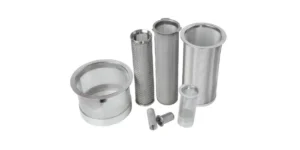
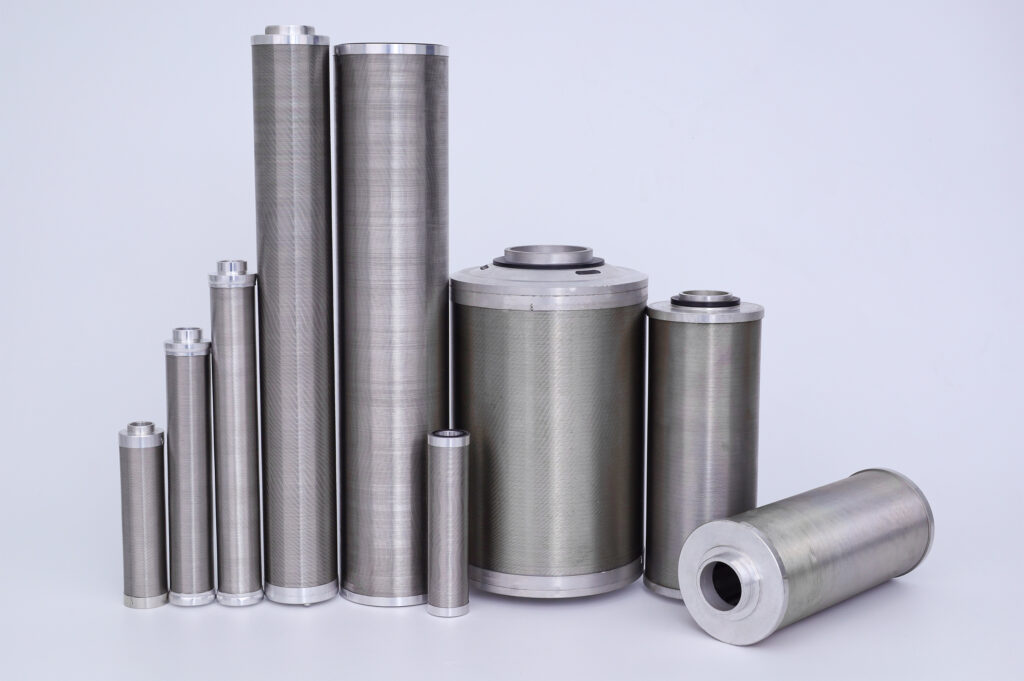
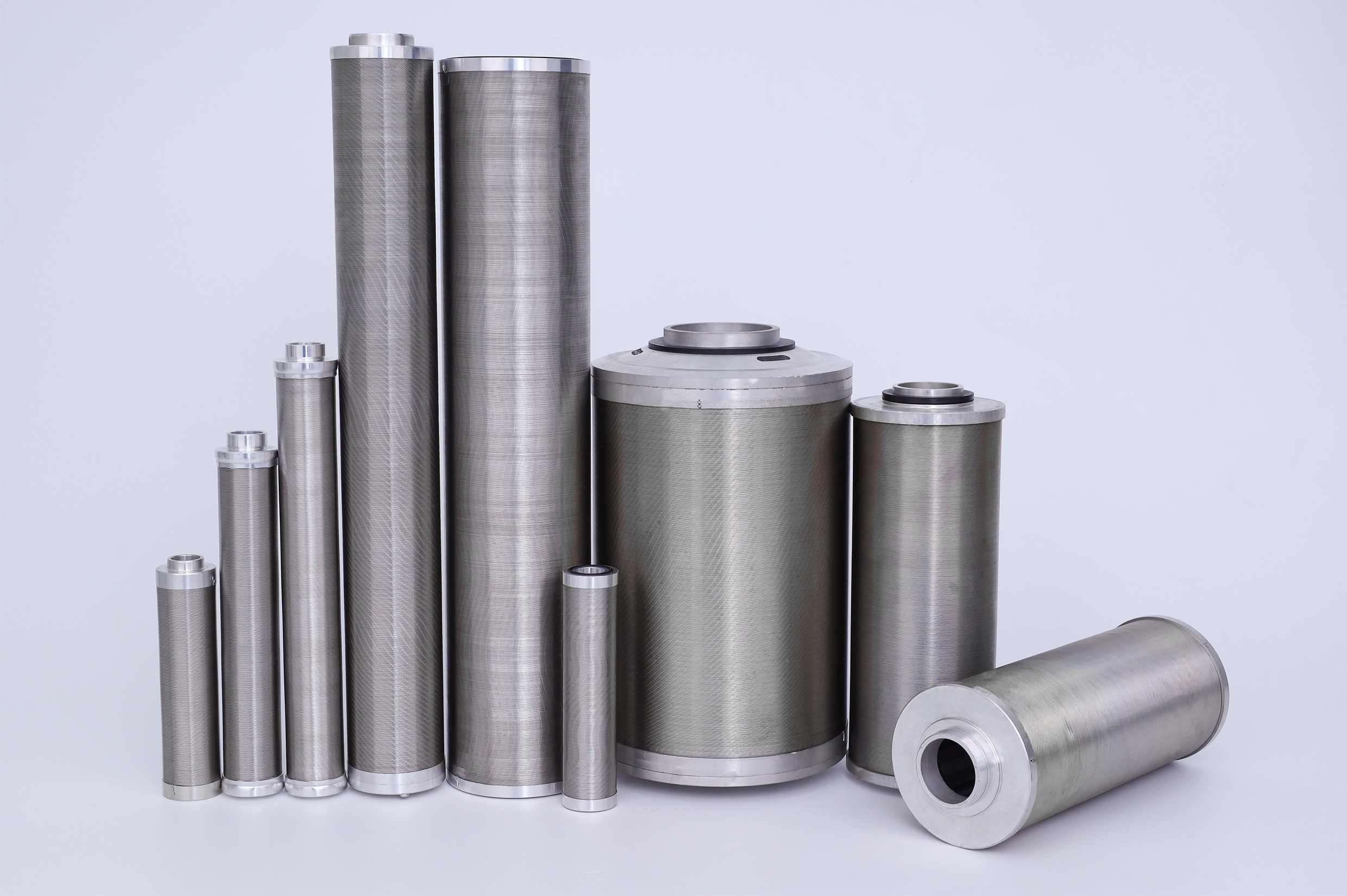
The main structural difference is the slot geometry. Wedge wire uses triangular profile wire welded to support rods, creating a V-shaped opening. Notch wire uses a single notched wire wound into a cylindrical support structure, creating rectangular slot openings.
In a wedge wire filter, the profile wire creates a narrow screening entrance and a wider space behind the slot. This shape can help reduce particle wedging when the flow direction and contaminant are suitable. The support rods also make wedge wire useful for cylinders, panels, baskets, cones, and larger custom screens.
In a notch wire filter, the single-layer wound structure creates a more open slot surface that can be cleaned by air blowing or backflush and checked visually after cleaning. This can matter when the filter handles viscous liquids, sticky deposits, food fluids, pharmaceutical fluids, or chemical processes where cleaning verification is part of the operating routine.
ISO 2194 and ISO/TC 24/SC 8 on test sieves, sieving and industrial screens are useful references because they reinforce a basic engineering point: opening designation and screen language must be defined. Slot width, mesh count, micron rating, perforation diameter, and filtration efficiency should not be mixed as if they were the same specification.
Wedge Wire Filter: When It Fits Better
A wedge wire filter is usually a stronger starting point when the process needs a robust surface screen with continuous V-shaped slots and custom geometry. It is often considered for water treatment, solid-liquid separation, slurry, hydrocarbon service, steam, food fluids, resin traps, and backwash or self-cleaning systems.
SINFT’s confirmed Wedge Wire product information lists:
| Item | SINFT confirmed product-family reference |
|---|---|
| Main construction | SS316L triangular profile wire and support rods |
| Optional materials | SS304 / SS316 / SS316L / Titanium / Hastelloy |
| Slot width | 0.1-3 mm / custom |
| Working temperature | Up to 600 C |
| Differential pressure | Up to 50 bar differential |
| Open area | Up to 60% |
| Length | 50-6000 mm / custom |
| Connection | Flange / threaded / welded / custom |
These are product-family references, not a universal promise that every maximum value can be combined in one element. A long intake screen, a short threaded cartridge, a fine-slot cylinder, and a high-temperature alloy screen must each be reviewed by structure, flow direction, pressure drop, support, and cleaning method.
For slot-size selection details, see SINFT’s wedge wire screen slot size guide.
Notch Wire Filter: When It Fits Better
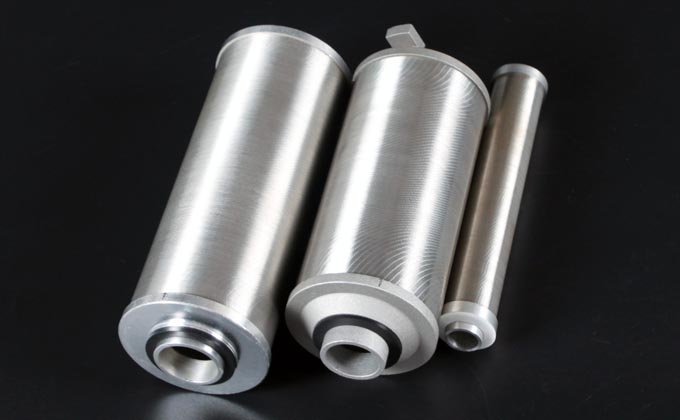
A notch wire filter is usually a better starting point when the process needs a compact slot cartridge that can be air-blown, backflushed, and visually inspected after cleaning. It is especially relevant when cleaning access, high-viscosity fluid handling, and cartridge-style replacement are more important than large screen geometry.
SINFT’s confirmed Notch Wire product information lists:
| Item | SINFT confirmed product-family reference |
|---|---|
| Main construction | SS316L single notch wire and cylindrical support |
| Optional materials | SS304 / SS316 / SS316L / Titanium / Hastelloy / special alloys |
| Slot width | 0.1-3 mm |
| Page-listed filtration range | 1-200 um |
| Working temperature | Overview up to 400 C; technical table -268 C to +371 C |
| Differential pressure | Up to 25 bar differential |
| Length | 9.75 / 10 / 20 / 30 / 40 in / custom |
| Connection | DOE / 222 / 226 / threaded M20-M42 |
| Cleaning | Air blowing / backflush |
Notch wire should be reviewed when your process fluid is viscous, when retained deposits must be removed without damaging a delicate liner, or when operators need to inspect the slot surface after cleaning. In food, pharmaceutical, and chemical processes, cleanability and material compatibility should be checked against the actual equipment design. For food manufacturing, the U.S. eCFR 21 CFR 117.40 emphasizes equipment design, construction, and maintenance that can be adequately cleaned and maintained. That principle is relevant when choosing any reusable metal filter element for a hygienic process.
Cleaning Method Often Decides the Choice
If the filter must be cleaned repeatedly, choose the structure from how the solids will release. Slot size is only one part of cleanability. Hard granular particles, fibers, gels, scale, polymer residue, biological growth, oil-coated particles, and sticky food deposits all behave differently.
Wedge wire can work well when retained particles stay on the screening surface and can release by flow reversal, washing, scraping, brushing, or other cleaning methods. The V-slot shape can reduce deep particle wedging for suitable solids, but it does not make the screen clog-proof.
Notch wire can work well when the cartridge must be air-blown, backflushed, and visually checked. Its open single-layer structure can be useful when cleaning verification is more important than simply maximizing a large screen area. If the deposit smears across the slot surface, both structures may need a larger slot, more area, lower velocity, staged prefiltration, or a different filter medium.
For a broader cleaning comparison, see SINFT’s stainless steel filter cartridge cleaning guide and backwash filter working principle guide.
Pressure Drop, Open Area and Flow Direction
Pressure drop should be compared under defined flow, fluid, temperature, viscosity, and loading conditions. A wedge wire element and a notch wire element with the same nominal slot width may not have the same open area, flow path, support blockage, element length, or loading behavior.
Clean pressure drop depends on:
- slot width and active slot length;
- open area after supports, rings, welds, end caps, and connection parts;
- OD, ID, length, and cartridge geometry;
- flow direction through the screen;
- fluid viscosity and density;
- flow rate;
- retained-solids behavior;
- housing ports, transitions, and seal design.
ISO 3968 is commonly referenced for evaluating differential pressure versus flow characteristics of hydraulic filter elements. It is not a direct sizing shortcut for every slot filter, but it supports the same engineering discipline: pressure-drop comparison needs defined test conditions. For practical sizing, see SINFT’s filter pressure drop vs flow rate guide.
Application-Based Choice
Application fit is not only about the industry name; it is about the contaminant, cleaning cycle, housing, and inspection requirement. The same slot width can succeed in one process and fail in another.
| Application condition | Better starting point | Engineering caution |
|---|---|---|
| Water intake, process water, cooling water | Wedge wire | Biological growth, scale and fibers may control cleaning interval |
| Solid-liquid separation or slurry screening | Wedge wire | Abrasion, velocity and support strength must be reviewed |
| Resin trap or bead retention | Wedge wire or notch wire | Slot must retain beads but allow enough open area |
| High-viscosity fluid filtration | Notch wire | Confirm cleaning method and pressure drop with actual viscosity |
| Food, pharmaceutical or chemical fluids | Notch wire often deserves review | Cleanability, material compatibility and inspection access matter |
| Automatic backwash or reverse-flow systems | Wedge wire, notch wire or backwash cartridge | Match slot structure to release behavior and cleaning flow |
| Existing cartridge replacement | Notch wire or wedge wire depending on old sample | Fit, seal, end connection and insertion depth may decide |
For application context, review SINFT’s water treatment filters, food and beverage filtration, and petrochemical filtration pages.
What to Confirm Before RFQ
A good RFQ lets the manufacturer compare slot structures instead of guessing from a single slot number. If you can provide the actual process data, SINFT can review whether wedge wire, notch wire, or another stainless steel filter element is a better starting point.
Send these details:
- Required slot width, micron target, or particle-retention target
- Whether the value means slot width, mesh aperture, nominal rating, absolute rating, or tested efficiency
- Fluid, gas, slurry, food fluid, chemical, oil, resin, or polymer name
- Flow rate per element and total system flow
- Operating pressure and allowable differential pressure
- Operating temperature and cleaning temperature
- Viscosity and density if available
- Contaminant type, solids load, and particle size distribution
- Flow direction through the element
- Cleaning method: backflush, air blowing, reverse flow, manual washing, ultrasonic, chemical, or steam
- Material requirement and corrosion risk
- OD, ID, length, active filtration area, and insertion depth
- End connection: DOE, 222, 226, threaded, flange, collar, welded ring, or custom
- Seal material and seal position
- Old sample, drawing, housing photo, or part number
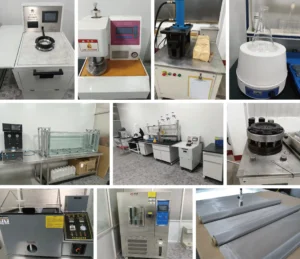
- Inspection records, slot check, material certificate, or documentation requirement
How SINFT Can Help With Slot Filter Selection
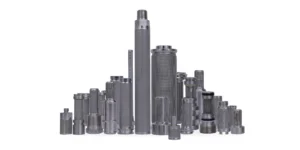
SINFT can help when the decision is not simply “wedge wire or notch wire,” but which custom slot filter element can fit the process and housing. SINFT supplies wedge wire filters, notch wire filters, backwash filter cartridges, and custom stainless steel filter assemblies.
If your filter decision depends on old-sample replacement, slot width, material compatibility, cleaning method, flow direction, end connection, or housing dimensions, use this article as a first screening tool rather than a final specification. SINFT can review drawings, samples, operating conditions, and replacement requirements through its custom filter manufacturer service. To discuss a custom slot filter, send the RFQ data through the contact form.
Final Thoughts
Wedge wire and notch wire filters both use metal slot structures, but they solve different operating problems. Wedge wire is often stronger for V-slot surface screening and larger custom screen geometry, while notch wire is often worth reviewing for compact cartridge formats, air blowing, backflush cleaning, high-viscosity fluids, and visual inspection. The right RFQ should define the process, not only the slot size.
FAQ
What is the main difference between wedge wire and notch wire filter?
The main difference is slot structure. A wedge wire filter uses triangular profile wire and support rods to form continuous V-shaped slots. A notch wire filter uses single notch wire wound into a cylindrical structure to form rectangular slots. This difference affects cleanability, open area, flow direction, support, inspection access, and the type of custom filter element that is practical.
Is notch wire better than wedge wire for high-viscosity fluids?
Notch wire is often worth reviewing for high-viscosity fluids because its single-layer open structure can support air blowing, backflush cleaning, and visual inspection after cleaning. That does not mean it is automatically better in every viscous process. You still need to confirm solids behavior, slot width, pressure drop, temperature, material compatibility, connection type, and cleaning method.
Is wedge wire better for water treatment?
Wedge wire is commonly considered for water treatment because continuous V-shaped slots, custom screen geometry, and high open-area designs can suit intake screening, process water, cooling water, and solid-liquid separation. The final choice still depends on biological growth, scale, fibers, flow rate, cleaning method, support design, alloy, and whether the filter is a large screen or a compact replacement element.
Can wedge wire and notch wire use the same slot size?
They can sometimes be specified with similar slot widths, such as values within the 0.1-3 mm product-family range listed by SINFT, but the same slot number does not guarantee the same performance. Slot shape, open area, wire profile, support, flow direction, viscosity, solids behavior, and cleaning method all affect real retention and pressure drop.
Which filter is easier to clean, wedge wire or notch wire?
The easier-to-clean option depends on the contaminant and cleaning method. Wedge wire can release suitable surface-loaded solids through its V-slot geometry and cleaning flow. Notch wire can be attractive when operators need air blowing, backflush cleaning, and visual inspection. Sticky, soft, fibrous, or deformable deposits may require testing, larger area, staged filtration, or a different filter medium.
Should I choose wedge wire or notch wire for an old filter replacement?
Do not choose only from the product name. Send the old sample, photos, drawing, OD, ID, length, end connection, seal position, slot size, flow direction, and cleaning method. Many replacement problems are caused by fit, bypass, seal location, or wrong cleaning assumption rather than the slot size itself. SINFT can compare both structures against the old part.
What information should I send for a custom slot filter quote?
Send the fluid, flow rate, temperature, operating pressure, allowable differential pressure, viscosity, contaminant type, solids load, slot or micron target, flow direction, cleaning method, material, OD, ID, length, connection, seal details, old sample photos, and any inspection requirement. With this data, SINFT can review whether wedge wire, notch wire, backwash cartridge, or another metal filter structure fits better.