
SINFT Filter Blog
Practical Filtration Insights
Guides, know-how, and fundamentals — written by engineers for engineers working with stainless steel filters and custom filtration solutions.
64
Articles
1
Topics
SINFT Filter Blog
Guides, know-how, and fundamentals — written by engineers for engineers working with stainless steel filters and custom filtration solutions.
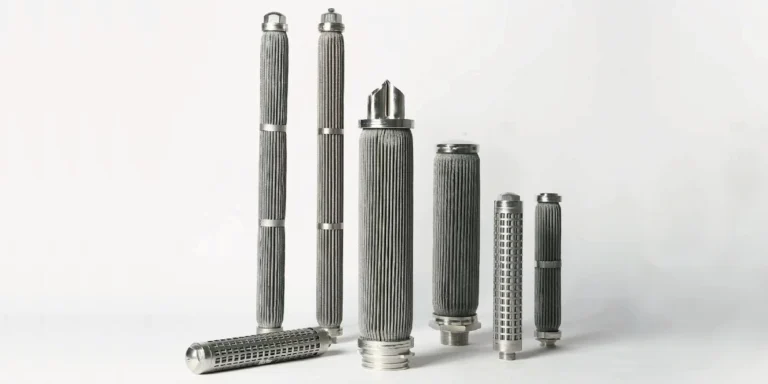
Learn how filter dirt holding capacity affects service life, compare test conditions, and specify metal filter media, area and acceptance requirements.
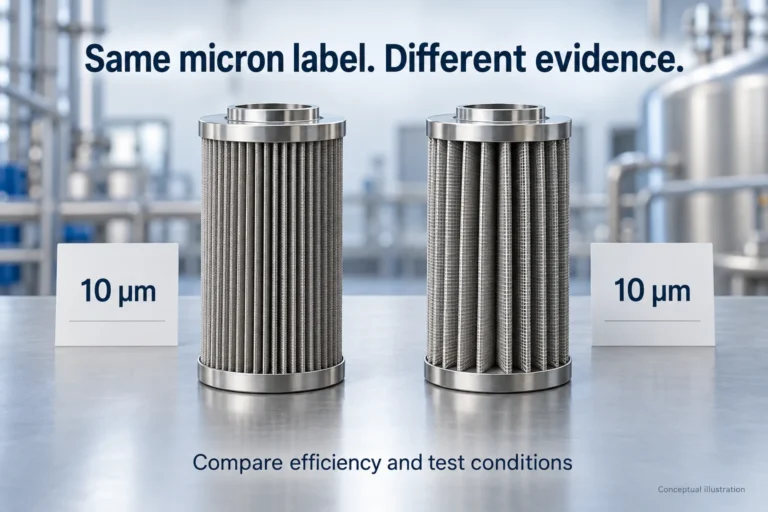
Compare filtration efficiency vs micron rating with beta calculations, test-report checks and RFQ guidance for choosing industrial metal filter elements.
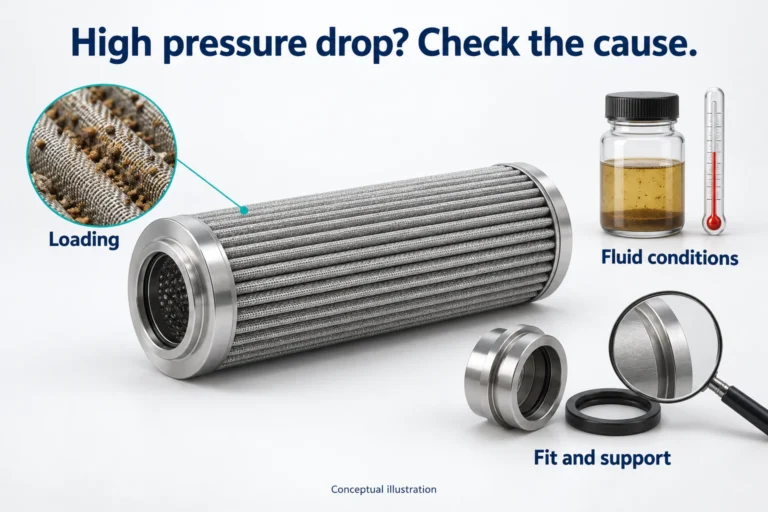
Learn why industrial filter pressure drop increases. Check 7 causes, compare operating conditions and identify what to confirm before replacing the element.
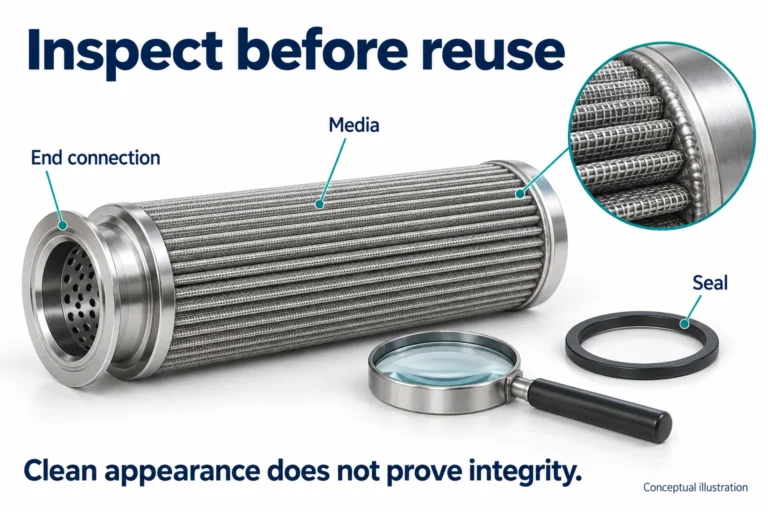
Understand the filter differential pressure replacement limit. Compare changeout, bypass and strength limits, then decide when to clean or replace an element.
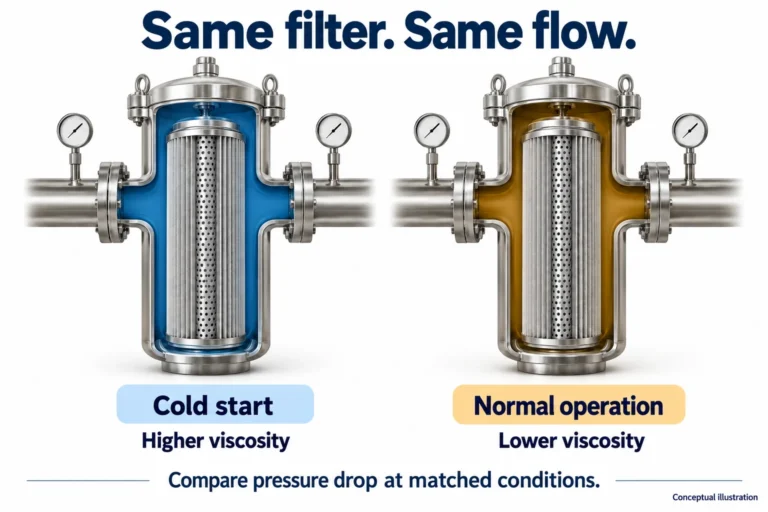
Learn how viscosity affects filter pressure drop. Check cold starts, cP vs cSt and flow data to distinguish fluid resistance from possible filter loading.
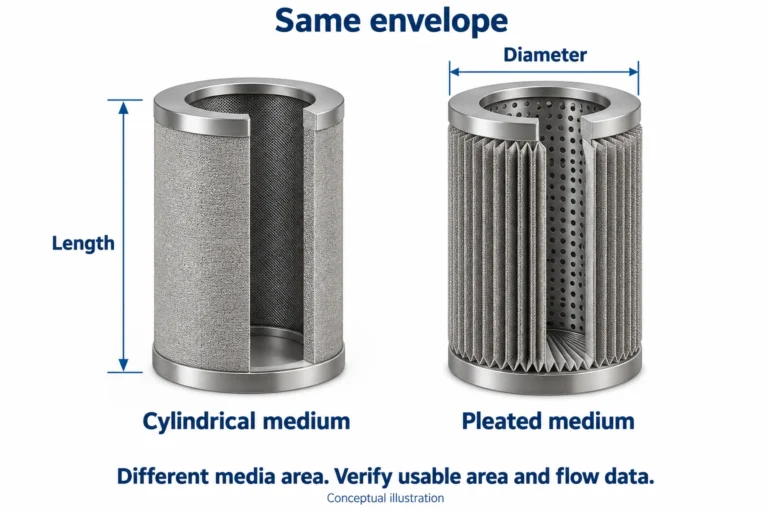
Learn how to size an industrial filter cartridge using flow, viscosity, media area and pressure drop. Check cartridge count, housing fit and RFQ requirements.
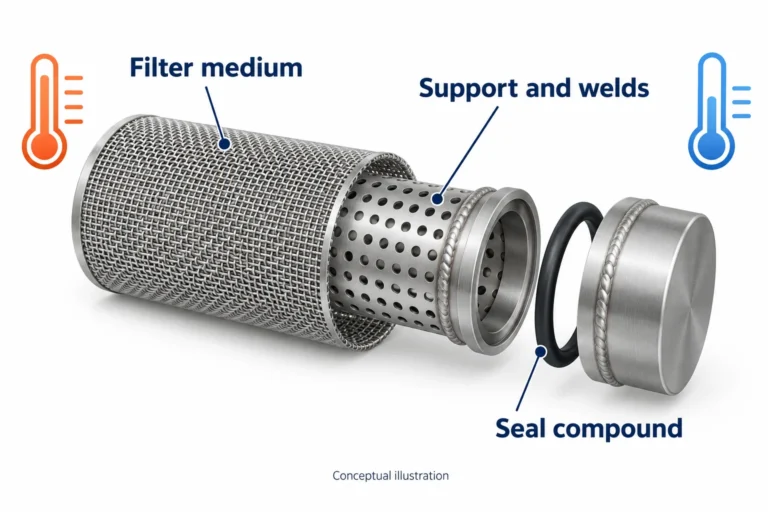
Learn how temperature affects filter selection. Check media, seals, pressure, viscosity and cleaning conditions before specifying a metal filter element.
Learn how flow direction affects filter element performance, including pressure drop, support, particle loading and backwashing. Check before installation.
Learn how to select a stainless steel filter element with 10 checks covering micron rating, flow, pressure, materials, fit, cleaning and RFQ requirements.
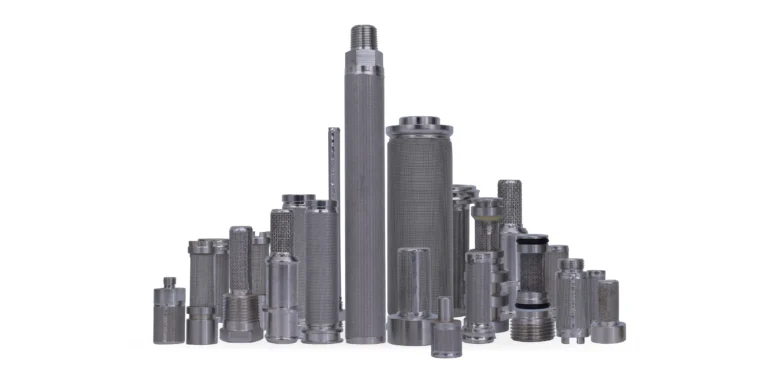
Select filter element materials by process chemistry, temperature, corrosion risk, cleaning, fabrication and complete wetted-assembly requirements.
Quick answers to the questions we get most from engineers and procurement teams.
Sintered mesh filters are made from multiple layers of stainless steel wire mesh sintered together, offering high strength and temperatures up to 400°C. Pleated filter cartridges use pleated media to increase surface area, ideal for higher flow rates with lower pressure drops. Choose sintered mesh for high-pressure and high-temperature applications; pleated cartridges for general industrial filtration.
25–100 μm for coarse pre-filtration, 5–25 μm for fine filtration, 1–5 μm for precision polishing. Provide your application details (media type, flow rate, pressure conditions) and our team will recommend the appropriate rating.
Yes. Backwash with compressed air or compatible liquid. Avoid harsh chemicals that damage seal materials. Inspect the media after each cleaning cycle. Replace if any deformation, media thinning, or seal wear is detected.
Passivation removes free iron from the stainless steel surface via electrochemical treatment, improving corrosion resistance. Every SINFT Filter filter undergoes passivation testing before shipping — verified with up to 200 tests per kit.
Initial samples typically delivered within 48–72 hours after drawing confirmation. Prototype quantities as low as 1–5 pieces accepted. Share your technical drawings via email and our team will confirm the timeline.