When a reusable metal cartridge plugs earlier than expected, cleaning is not just a maintenance chore. It is a decision about safety, process cleanliness, service life, and whether the element should be reused or replaced. The right question is not “can stainless steel be washed?” but whether this exact cartridge can recover performance without damage.
Direct Answer: How to Clean a Stainless Steel Filter Cartridge
To clean a stainless steel filter cartridge, first isolate and depressurize the housing, identify the filter medium and contaminant, remove loose solids in the reverse flow direction, apply a compatible backwash, ultrasonic, chemical, or steam-cleaning method, rinse and dry the element, then inspect and test it before reuse. There is no universal cleaning pressure, solvent, temperature, or cycle time. Those limits must come from the cartridge construction, seal material, contaminant, process fluid, housing instructions, and validated plant procedure.
Cleaning should recover usable flow or pressure-drop performance without deforming pleats, enlarging pores, attacking welds, contaminating the process, or damaging seals. If the element cannot meet the site’s post-cleaning acceptance criteria, replace or professionally evaluate it rather than returning it to service.
This guide covers reusable industrial stainless steel woven-mesh, sintered-mesh, sintered-fiber-felt, and pleated filter cartridges. It does not apply to disposable polymer cartridges, sterile membrane validation, or a proprietary element whose manufacturer prohibits cleaning.
Can Every Stainless Steel Filter Cartridge Be Cleaned?
No. Stainless steel construction makes repeated cleaning possible in many applications, but cleanability depends on the medium, support structure, joints, seals, contaminant, and required cleanliness after reuse.
Start by identifying the finished element, not only the alloy. Two cartridges with stainless steel outer guards may contain different media or nonmetal seals. One may tolerate reverse flow, while another may be damaged by the same procedure.
| Cartridge construction | Typical cleaning behavior | Main points to verify |
|---|---|---|
| Woven wire mesh | Surface deposits may release by reverse flushing, soaking, or ultrasonic cleaning | Mesh support, pleat stability, seam and weld condition |
| Sintered wire mesh | Rigid bonded layers can support repeated backwash and compatible chemical or ultrasonic cleaning | Flow direction, pore-control layer, bonded structure, end joints |
| Sintered metal fiber felt | Reusable, with higher depth loading than a simple screen; deeply embedded fines may be harder to remove completely | Recovery of permeability, fiber integrity, retained contaminant |
| Pleated metal cartridge | Added area can extend the service cycle, but narrow pleat channels require thorough rinsing and careful handling | Pleat spacing, support core, guard, welds, end connection |
| Metal cartridge with elastomer seals | The metal may tolerate a method that the O-ring or gasket does not | Seal chemistry, temperature, swelling, hardness, reuse policy |
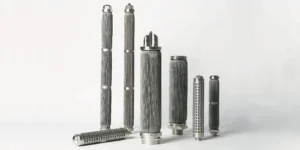
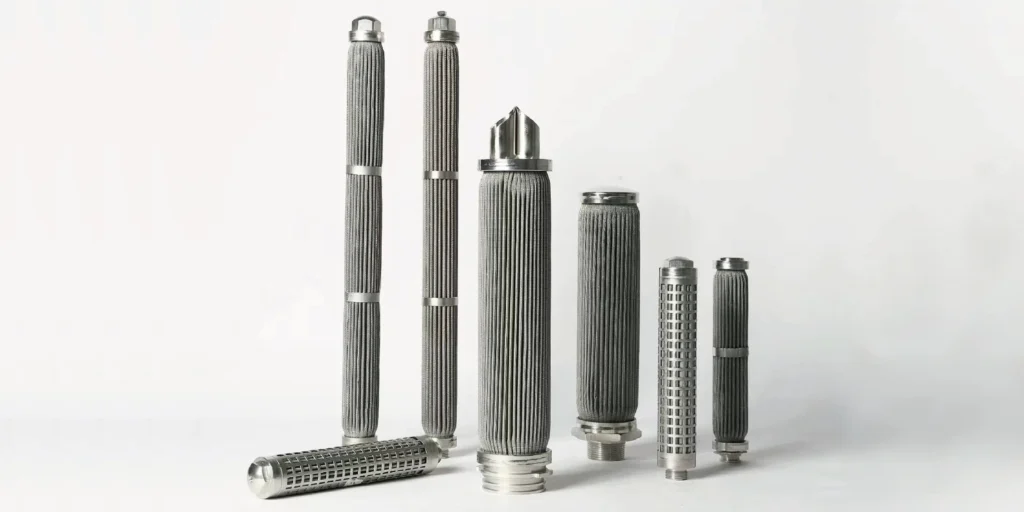
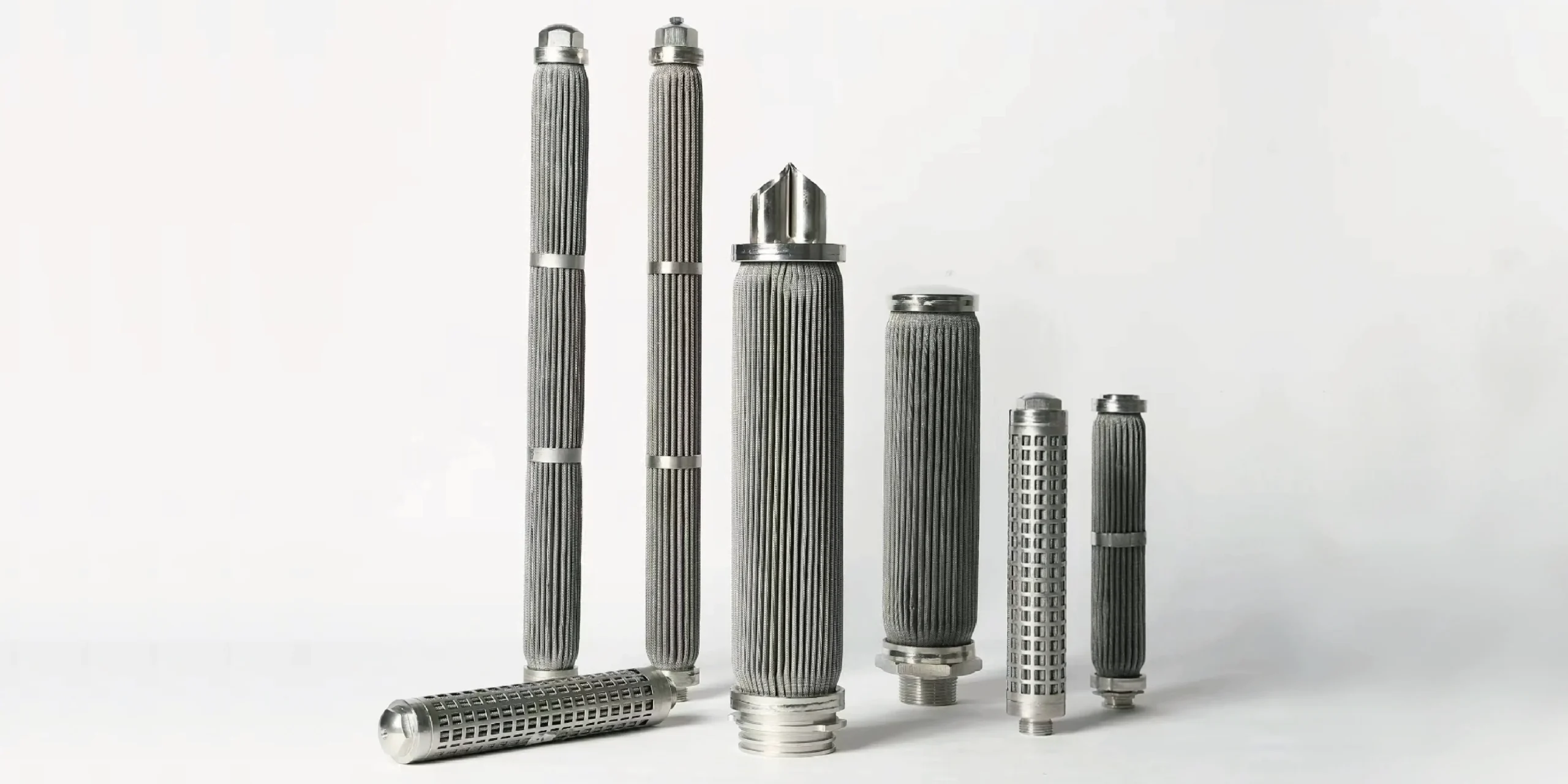
SINFT stainless steel pleated filter cartridges can be configured with woven wire mesh, sintered mesh, or sintered metal fiber felt. Confirm the actual medium and element construction before selecting a cleaning procedure.
What Determines the Correct Cleaning Method?
The correct method is the least aggressive validated process that removes the actual foulant and restores acceptable performance.
Define these inputs before cleaning:
- Filter medium: woven mesh, sintered mesh, fiber felt, powder-sintered metal, or another construction.
- Contaminant: hard particles, fibers, oil, grease, polymer, resin, scale, oxide, biological matter, or a mixed deposit.
- Process chemistry: fluid composition, cleaning-fluid compatibility, and the risk of residues entering the process.
- Loading mechanism: surface cake, embedded particles, precipitated solids, adsorbed organic material, or pore blockage.
- Element interfaces: welds, brazed joints, adhesives if any, end fittings, O-rings, and gaskets.
- Acceptance criteria: restored clean differential pressure, flow, permeability, visual condition, dimensional condition, and integrity-test result where required.
Mott’s manufacturer guidance on cleaning porous metal products lists blowback or backwash, soak-and-flush, circulation, ultrasonic baths, furnace cleaning, and hydroblasting as possible techniques, while also stating that a specific procedure must be developed for the specific fouling situation. Some of those methods are unsuitable for a pleated cartridge or for use outside specialized facilities.
How to Clean a Stainless Steel Filter Cartridge Step by Step
Use a controlled, documented workflow from safe isolation through post-cleaning verification.
1. Record the Dirty Condition
Before shutdown, record the operating flow, temperature, inlet and outlet pressure, and differential pressure under a repeatable condition. Note the process run time, product batch, visible fluid condition, and reason for removal.
Dirty differential pressure alone does not identify the foulant, but it provides a baseline for evaluating cleaning recovery. If the housing has no reliable differential-pressure measurement, document the available flow and pressure data rather than judging only by elapsed time.
2. Isolate, Drain, Vent, and Depressurize the Housing
Follow the plant’s lockout, tagout, confined-energy, chemical-exposure, and personal-protective-equipment procedures. Confirm zero pressure and a safe temperature before opening the housing. Drain or capture hazardous process fluid using the approved waste or recovery route.
Do not rely on a pressure gauge alone. A blocked vent, trapped liquid, gas pocket, or closed valve can leave stored energy inside the housing.
3. Remove the Cartridge Without Damaging It
Use the intended handle, lifting feature, or end fitting. Avoid gripping the pleated medium, striking the element against the housing, or using a tool that dents the support cage. Protect the clean-side connection from workshop contamination.
Keep each cartridge identified if several positions share one housing. Position records can reveal flow-distribution or sealing problems that would be lost if elements are mixed.
4. Identify the Medium, Flow Direction, and Seal Materials
Confirm the part number, drawing, normal flow direction, medium type, end connection, and seal material. Mark the normal and reverse-flow directions if they are not already clear.
For an unknown replacement element, pause before aggressive cleaning. A supplier can often identify construction from the old sample, photos, dimensions, housing drawing, or section detail. SINFT’s custom filter manufacturing service supports element matching from drawings, samples, and housing dimensions.
5. Remove Loose Surface Solids
Collect loose contaminant for safe disposal or analysis. Where the element and process procedure permit, use a low-energy rinse in the reverse of normal filtration flow to lift the cake away from the upstream surface.
Avoid scrubbing pleats with hard tools. Do not direct an uncontrolled high-pressure jet at fine mesh or fiber media. Even when the metal looks undamaged, excessive force can separate layers, deform pleats, enlarge local openings, or drive particles deeper into the medium.
6. Apply the Selected Cleaning Method
Use one or more approved methods described below. Keep the cleaning fluid filtered or sufficiently clean so it does not introduce particles larger than the acceptance limit. Control cross-contamination between process products.
7. Rinse, Drain, and Dry
Rinse until the cleaning agent and released contaminant meet the site’s residue or cleanliness requirement. Make sure liquid can drain from pleat valleys, the support core, end-cap cavities, and threaded connections.
Drying method matters in gas, steam, oxygen-sensitive, corrosion-sensitive, high-purity, and product-change service. Use only a process-compatible drying medium and validated cleanliness level.
8. Inspect and Test the Element
Check the cartridge before reinstalling it. The verification should be proportional to the service risk and may include:
- Visual inspection under adequate lighting
- Pleat-spacing and deformation check
- Weld, seam, end-cap, core, and guard inspection
- Seal and sealing-surface inspection
- Dimensional inspection
- Clean flow, differential-pressure, or permeability comparison
- Fabrication-integrity or bubble-point testing when applicable
9. Reinstall and Establish a Clean Baseline
Install compatible seals in the correct position, orient the element for the intended flow direction, and confirm seating and insertion depth. Close, vent, fill, and return the housing to service according to its operating procedure. Check for external leakage and abnormal bypass behavior.
Record the clean flow and differential pressure at a defined fluid condition. This becomes the reference for the next maintenance cycle.
Cleaning Methods Compared
Backwash is usually the first method considered for removable surface deposits; ultrasonic or compatible chemical cleaning may be needed for particles or films held inside the porous structure.
| Method | Best starting use | Main limitation |
|---|---|---|
| Reverse rinse or backwash | Loose surface cake and particles retained near the upstream face | Requires approved reverse-flow strength and a discharge path |
| Soak and flush | Deposits that soften or dissolve in a compatible cleaning fluid | Time, chemistry, residue removal, and waste handling |
| Circulation cleaning | In-place or bench cleaning where controlled flow can carry dissolved or released material away | Must prevent contaminant recirculation and protect the element |
| Ultrasonic cleaning | Fine or chemically inert particles lodged in pores or pleat channels | Cavitation conditions and support method must be validated |
| Chemical cleaning | Oils, organic films, scale, oxides, or deposits that respond to compatible chemistry | Risk to alloy, welds, seals, finish, process purity, and personnel |
| Steam cleaning | Compatible residues and elements designed for thermal service | Not automatically safe for every seal, joint, contaminant, or process |
Mott’s porous metal filter overview identifies blowback for gas applications, backwash or backflush for liquids, compatible chemical methods, water, steam, air flushing, and ultrasonic cleaning as regeneration options for appropriate porous metal elements. The list is not a license to apply every method to every cartridge.
Backwash or Reverse-Flow Cleaning
Backwash works by moving a compatible fluid opposite the normal filtration direction to detach retained solids.
It is most effective when particles form a surface cake and have not become strongly bonded or deeply embedded. A sintered structure can be suitable for repeated backwash, while an unsupported screen or tightly packed pleat may have a lower reverse-flow limit.
Verify:
- Which side was upstream during filtration
- The element’s allowable reverse differential pressure
- Whether the support structure resists reverse loading
- Whether detached solids can leave the housing rather than redeposit
- Whether the backwash fluid is compatible with the process
Do not copy a backpulse pressure or duration from another manufacturer’s system. The safe value depends on element geometry, media, support, housing, process pressure, and cleaning mechanism.
Ultrasonic Cleaning
Ultrasonic cleaning can help dislodge fine, insoluble particles from porous metal and narrow pleat channels when the bath chemistry and operating conditions are compatible.
Support the cartridge so it does not rub against the tank or another element. Remove released particles from the bath instead of allowing them to redeposit. Replace or filter the bath when it becomes contaminated.
Ultrasonic frequency, power density, temperature, cycle time, and cartridge position require validation. Excessive exposure can damage fine structures, seals, or joints even when the base stainless steel is chemically compatible.
Parker’s Balston filtration catalog states that its specified stainless steel sintered cartridges may be cleaned by backflushing or ultrasonic methods and should be visually inspected after cleaning. That instruction applies to the identified Parker cartridge; it supports the general workflow but does not establish parameters for a different element.
Chemical Cleaning
Select chemical cleaning by contaminant solubility and full element compatibility, not by stainless steel grade alone.
A cleaner that dissolves oil may not remove mineral scale. An acid that attacks scale may affect a weld zone, passivated surface, seal, or downstream process. Chloride-bearing cleaners can create additional stainless steel corrosion risk in unsuitable conditions.
Before use, document:
- Cleaner identity and concentration
- Alloy and surface-finish compatibility
- Weld, braze, adhesive, and seal compatibility
- Temperature and exposure time
- Agitation or circulation method
- Rinse endpoint and residue test
- Waste neutralization and disposal route
- Personnel and environmental controls from the safety data sheet
Do not mix cleaning chemicals unless an approved procedure explicitly requires it. Do not prescribe a generic acid, caustic, or solvent recipe for an unknown cartridge and contaminant.
Steam, Thermal, and Compressed-Gas Methods
Steam or thermal cleaning should be used only when the complete element and contaminant have a validated thermal procedure.
Heating can carbonize organic deposits, change residue chemistry, damage seals, distort thin pleats, or create hazardous vapors. Specialized furnace cleaning is not equivalent to placing a cartridge in an uncontrolled oven.
Compressed gas can assist an approved gas blowback or drying process, but an open air gun is not a universal cleaning method. It can drive particles into the medium, deform pleats, aerosolize hazardous contaminant, or introduce oil and water from the air line.
Match the Method to the Contaminant
Identify what is blocking the cartridge before choosing how to remove it.
| Contaminant | Starting approach to evaluate | What to avoid |
|---|---|---|
| Loose hard particles | Reverse rinse or controlled backwash | Forcing particles deeper with normal-direction flushing |
| Fibers or stringy debris | Manual removal from accessible surfaces followed by reverse rinse | Pulling aggressively enough to tear or separate fine mesh |
| Oil or grease film | Compatible detergent or solvent procedure followed by controlled rinsing | Assuming metal compatibility means seal and process compatibility |
| Mineral scale or oxide | Laboratory- or supplier-approved chemical cleaning based on deposit analysis | Generic acid recipes without alloy, weld, and residue review |
| Polymer, resin, or cured coating | Process-specific solvent or controlled thermal evaluation | Heating an unknown deposit or using an unverified solvent |
| Biological deposit | Validated sanitation and rinse procedure for the application | Assuming visual cleanliness proves microbial control |
| Mixed fouling | Deposit analysis and a staged cleaning sequence | Repeating a stronger method without knowing the remaining foulant |
If cleaning recovery deteriorates with every cycle, investigate the process rather than continually increasing cleaning severity. The cause may be particle penetration, precipitation inside the pores, chemical attack, pleat compaction, an incorrect prefilter, or operation beyond the intended terminal differential pressure.
How Do You Know the Cartridge Is Clean?
A stainless steel cartridge is clean enough for reuse when it meets documented performance, cleanliness, and integrity criteria—not merely when the surface looks bright.
Useful checks include:
- Recovered hydraulic performance: compare clean flow or differential pressure at the same fluid, temperature, and flow condition used for the baseline.
- Visual integrity: no torn mesh, collapsed or separated pleats, damaged guard, cracked weld, corrosion, or blocked passages.
- Dimensional fit: end connection, sealing surfaces, length, diameter, and straightness remain within the required fit.
- Cleanliness: rinse samples, residue checks, or application-specific cleanliness tests meet the site’s requirement.
- Integrity: the approved test shows no unacceptable through-path or fabrication defect.
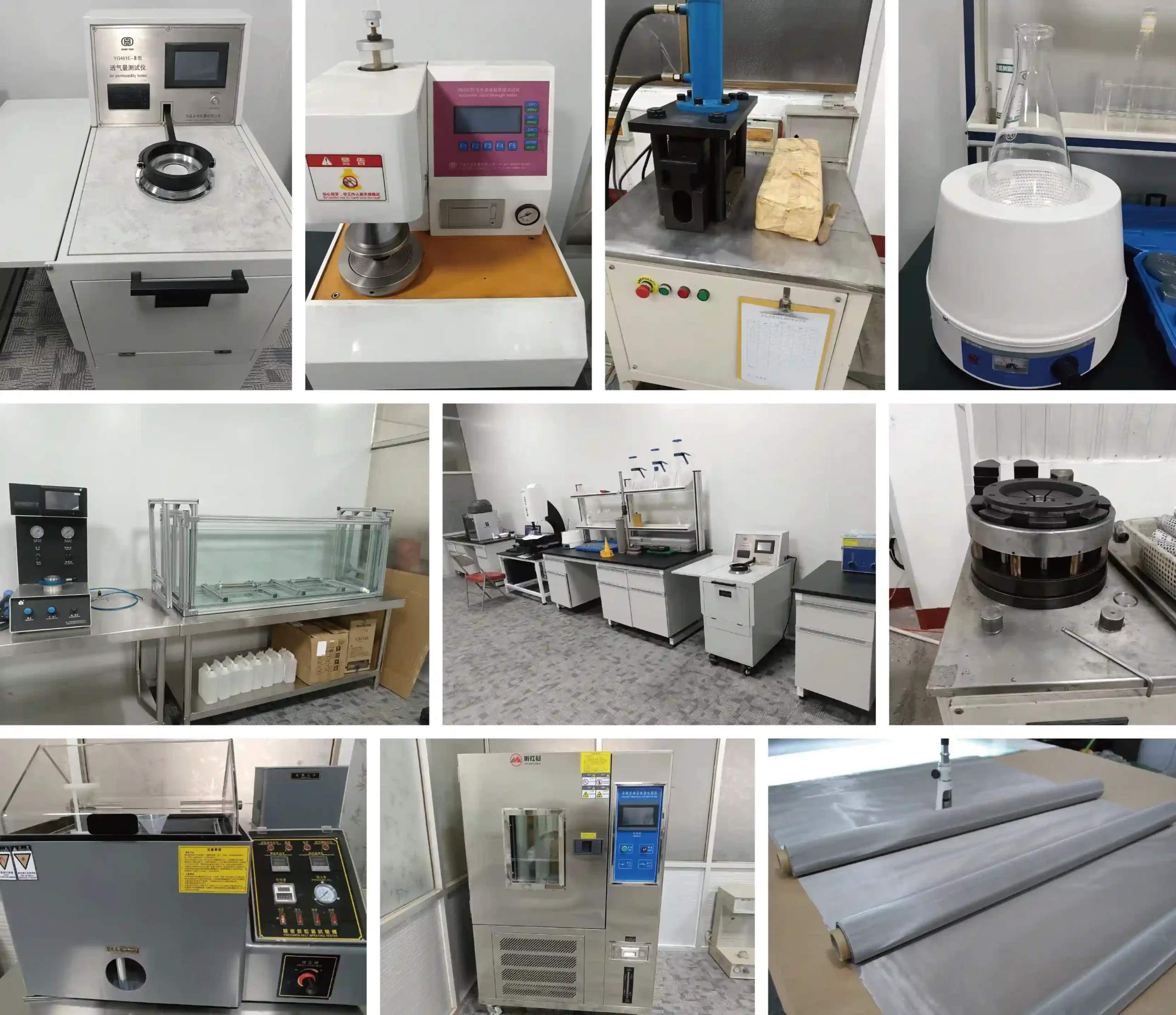
For hydraulic filter elements, ISO 2942:2018 specifies a bubble-point method that can verify fabrication integrity and locate the largest pore through the first bubble point. ISO explicitly states that the first bubble point is not a functional filtration characteristic and cannot estimate filtration rating, efficiency, or retention capacity.
Material compatibility must also be treated separately from visual condition. ISO 2943:1998 provides a method for verifying the compatibility of materials in a hydraulic filter element with a designated system fluid. A plant cleaning qualification can use the same engineering principle—verify the complete element against the actual fluid and exposure conditions—without claiming that a different application has been ISO tested.
When Should a Stainless Steel Filter Cartridge Be Replaced?
Replace or quarantine the cartridge when cleaning cannot restore the approved condition or when physical integrity is uncertain.
Typical rejection signs include:
- Torn, frayed, separated, or visibly enlarged mesh
- Crushed, spread, or permanently collapsed pleats
- Cracked welds, loose end caps, or damaged support cores
- Pitting, stress-corrosion evidence, deep discoloration, or material loss
- Damaged sealing surfaces, threads, adapters, O-rings, or gaskets
- Clean flow or differential pressure outside the acceptance range after cleaning
- Repeated rapid fouling that indicates irreversible pore blockage
- Failed integrity, permeability, or application-specific cleanliness testing
- Unknown cleaning history for a critical service element
Do not repair a critical filter element by informal soldering, welding, adhesive application, or mesh patching. A repair changes the flow path and may require qualified welding, passivation, dimensional inspection, and renewed integrity testing.
How Often Should a Metal Filter Cartridge Be Cleaned?
Set the cleaning trigger from validated process performance, not from a universal calendar interval.
Possible triggers include:
- Differential pressure reaches the approved maintenance limit
- Flow falls below the required process rate at a comparable condition
- Product quality or downstream cleanliness trends out of control
- A batch, campaign, or product change requires cleaning
- The plant’s preventive-maintenance schedule calls for inspection
- A shutdown provides safe access before severe blockage occurs
Avoid waiting until the cartridge collapses or the housing bypasses. Also avoid cleaning too frequently when each cycle adds handling risk and no process benefit. Trend clean and dirty differential pressure, run time, contaminant mass, cleaning method, and recovery percentage to establish a defensible interval.
Maintenance Record for a Reusable Cartridge
A cleaning record turns reuse from guesswork into an auditable maintenance decision.
Record:
- Cartridge part number, serial or batch identification, and housing position
- Media type, rating definition, dimensions, end connection, and seal
- Process fluid, contaminant, batch, and service time
- Flow, temperature, inlet pressure, outlet pressure, and differential pressure before removal
- Cleaning method, fluid, concentration, temperature, time, and cycle count
- Rinse and drying method
- Visual, dimensional, flow, permeability, and integrity results
- Post-installation clean baseline
- Acceptance, quarantine, repair evaluation, or replacement decision
In water treatment filtration, the contaminant can range from suspended solids and corrosion debris to fines requiring a later polishing stage. Recording what each cartridge captures helps determine whether the maintenance problem is the cleaning method, the selected medium, or the filtration-stage arrangement.
Information to Send for a Replacement or Cleaning Review
A useful technical inquiry includes both element geometry and operating history.
Send:
- Process fluid and full chemistry
- Contaminant type, concentration, and particle-size information
- Required micron rating and whether it is nominal, absolute, or efficiency-based
- Normal, minimum, and maximum flow
- Operating and design pressure
- Allowed clean and terminal differential pressure
- Operating and cleaning temperature
- Fluid viscosity at operating temperature
- Cartridge OD, ID, length, end connection, seal, and flow direction
- Current cleaning method, interval, and observed recovery
- Housing drawing, cartridge drawing, old sample, or clear photos
- Quantity and required inspection documents
SINFT can review woven mesh, sintered mesh, sintered fiber felt, pleated construction, and matching interfaces for reusable replacement cartridges. For a drawing review or application discussion, contact the SINFT Filter team.
If your maintenance decision is actually between a removable basket and an inline Y strainer, the basket strainer vs Y strainer guide explains the differences in debris capacity, access, footprint, and cleaning frequency.
How SINFT Can Help With Cleaning, Reuse, and Replacement Decisions
SINFT is most useful when cleaning results show that the next cartridge should be adjusted, not merely reordered. If the cleaned element still has high pressure drop, uneven fouling, damaged pleats, poor seal fit, or repeated short life, SINFT can review the old sample, drawing, housing dimensions, flow direction, end connection, seal material, contaminant, and cleaning record.
For reusable metal cartridges, SINFT can manufacture stainless steel pleated filter cartridges using woven wire mesh, sintered wire mesh, or sintered metal fiber felt. The custom filter manufacturer service can also review whether a different medium, pleat geometry, support core, end connection, or prefiltration stage would improve the next operating cycle.
Frequently Asked Questions
Can stainless steel filter cartridges be washed and reused?
Yes, many woven-mesh, sintered-mesh, sintered-fiber-felt, and pleated metal cartridges are designed for cleaning and reuse. Reuse is acceptable only when the approved method restores required performance and the cartridge passes inspection or integrity criteria.
What is the best way to clean a stainless steel filter cartridge?
There is no single best method. Reverse flushing is a logical starting point for loose surface solids; ultrasonic cleaning can help with fine insoluble particles; compatible chemical cleaning may be needed for oils, scale, or films. The choice must match the medium, contaminant, seals, and process.
Can I use ultrasonic cleaning on a pleated filter cartridge?
It may be suitable for a compatible metal pleated cartridge, but bath chemistry, support, frequency, power, temperature, and time must be validated. The cartridge should not contact the tank or another element, and released particles must not be allowed to redeposit.
Can compressed air be used to clean a metal filter element?
Only when the element supplier and plant procedure approve a controlled blowback or gas-cleaning method. An open air gun can deform fine media, push particles deeper, aerosolize hazardous deposits, or contaminate the cartridge with oil or moisture.
Does a bubble-point test confirm the micron rating after cleaning?
No. A bubble-point test can support fabrication-integrity checking and identification of the largest pore under a defined method. ISO 2942 states that the first bubble point cannot be used to estimate filtration rating, efficiency, or retention capacity.
When is replacement better than another cleaning cycle?
Replace the element when it is torn, deformed, corroded, has damaged welds or seals, fails integrity or cleanliness criteria, or cannot recover the required flow and differential pressure after an approved cleaning cycle.
Final Thoughts
The safe way to clean a stainless steel filter cartridge is to match the cleaning mechanism to the actual medium and contaminant, then prove that the element remains clean, dimensionally correct, and intact. When recovery declines or integrity is uncertain, the better business decision is to replace the cartridge or ask SINFT to review the element and process conditions before the next order.