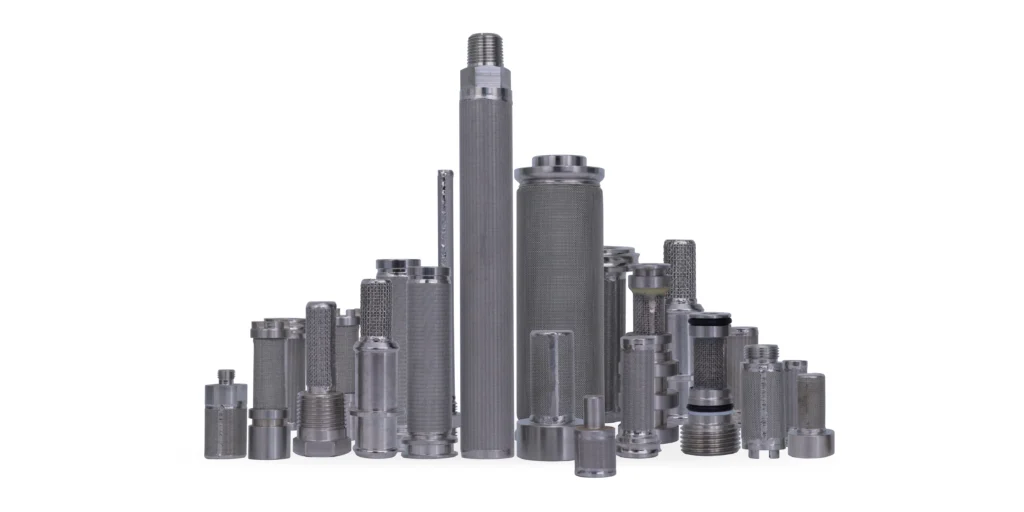
If you are replacing a filter element or writing an RFQ, the micron number is usually the first value everyone asks for. It is also one of the easiest values to misunderstand. A 10-micron filter is finer than a 50-micron filter, but the number alone does not tell you efficiency, pressure drop, dirt capacity, or whether the media fits your process.
Direct Answer: What Does a Filter Micron Rating Chart Tell You?
A filter micron rating chart helps compare particle sizes and filter-media ranges, but the micron number alone does not define filtration performance. Two products marked “10 µm” may have different efficiencies, test methods, pressure drops, dirt capacities, and service lives.
For an industrial specification, you should confirm the rating basis, removal efficiency at the stated particle size, test standard, fluid, flow rate, viscosity, allowable differential pressure, contaminant load, and filter construction. Use the charts below to shortlist a filter, not as a substitute for an application-specific performance curve or validation test.
Filter Micron Rating Chart
One micron, written 1 µm, equals 0.001 millimeter. The following conversions are exact unit conversions; the filtration examples are functional descriptions, not universal application recommendations.
| Micron Rating | Millimeters | Inches | What It Means |
|---|---|---|---|
| 1 µm | 0.001 mm | 0.000039 in | Very fine particle-size reference |
| 5 µm | 0.005 mm | 0.000197 in | Fine filtration reference |
| 10 µm | 0.010 mm | 0.000394 in | Common fine-particle reference |
| 25 µm | 0.025 mm | 0.000984 in | Fine-to-medium particle reference |
| 50 µm | 0.050 mm | 0.001969 in | Medium particle reference |
| 100 µm | 0.100 mm | 0.003937 in | Coarse filtration or pre-filtration reference |
| 200 µm | 0.200 mm | 0.007874 in | Coarse particle protection reference |
| 500 µm | 0.500 mm | 0.019685 in | Screening or coarse equipment protection reference |
| 1,000 µm | 1.000 mm | 0.039370 in | One-millimeter screening reference |
The chart does not say that a “10 µm” element captures every 10-micron particle. That claim requires a defined efficiency and test method. It also does not predict flow, because permeability, open area, filter area, media thickness, viscosity, and contaminant loading all affect resistance.
Micron Rating of Filter Media: SINFT Product Ranges
The following ranges are the published selection windows for SINFT product families. They show where each construction can be considered; they do not mean every size, alloy, geometry, and operating condition is available at every rating.
| Filter construction | Published filtration or opening range | Selection note |
|---|---|---|
| Pleated filter cartridges | 0.5–200 µm | Rating depends on woven mesh, sintered mesh, or sintered metal fiber felt media |
| Sintered mesh filter elements | 1–200 µm | Rigid multi-layer surface filtration with stable pore structure |
| Sintered fiber felt filters | 0.5–50 µm product-page range; 1–60 µm typical in the technical table | Depth media; grade and support structure must be confirmed |
| Backwash filter cartridges | 25–500 µm for mesh structures; 0.1–3 mm for slot structures | Cleaning method and element geometry influence the selection |
| Wedge wire filters | 0.1–3 mm slot width | Specify slot width directly rather than treating it as a generic micron-rated medium |
| Basket filters and strainers | 20–200 mesh references; custom perforations | Confirm actual aperture, wire diameter, weave, perforation, and open area |
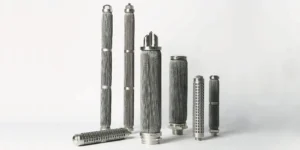
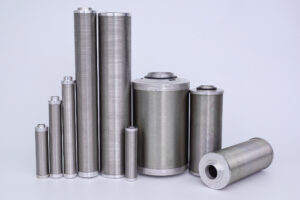
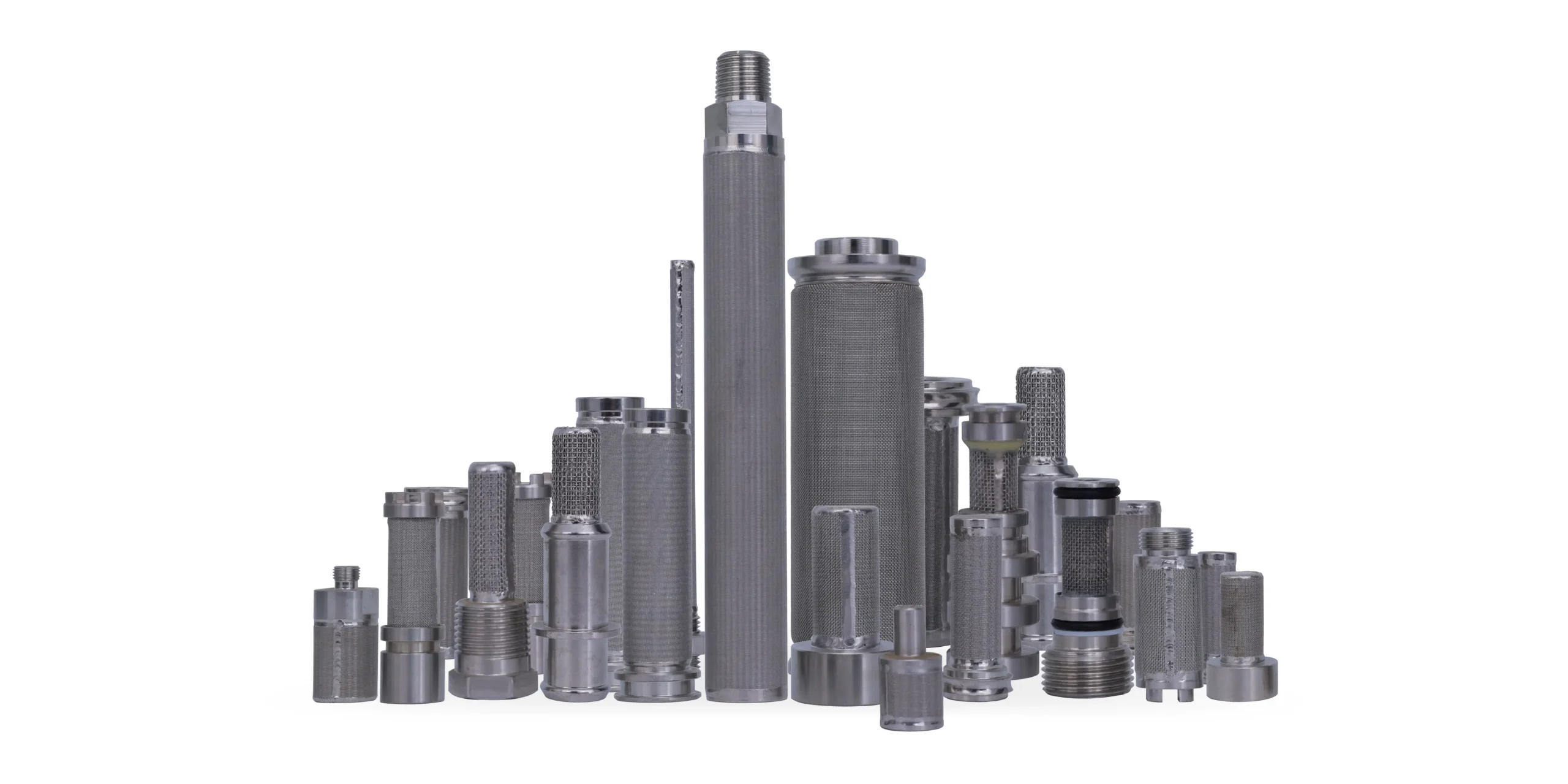
SINFT manufactures these stainless steel filter element constructions in cartridges, tubes, discs, baskets, pleated elements, and custom welded assemblies. The correct range must be taken from the specific product family, not copied from another filter structure.
Nominal vs Absolute Micron Rating
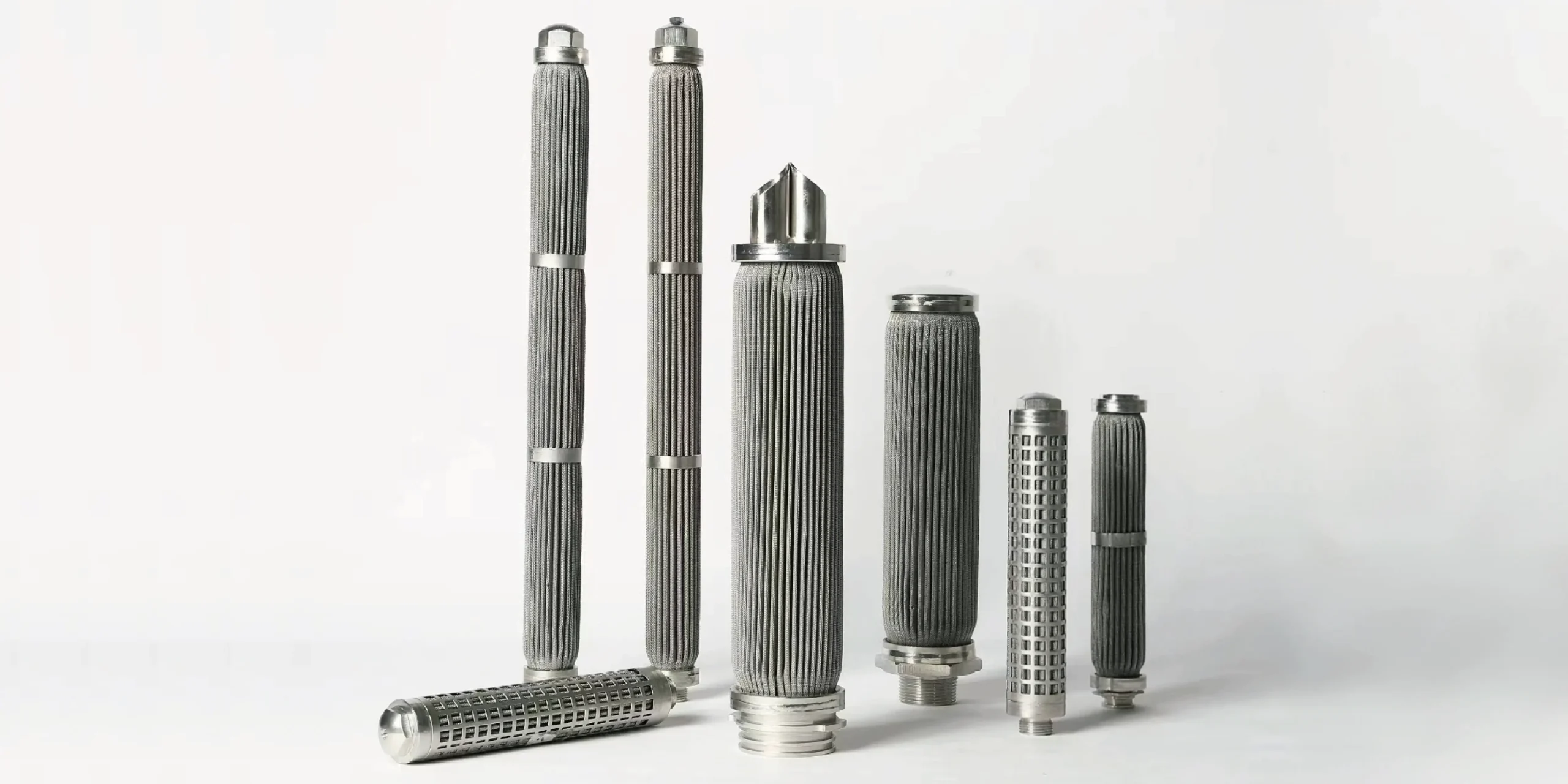
Nominal and absolute are incomplete unless the supplier states the efficiency and test method. “Nominal” generally indicates that a filter removes a stated portion of particles at a given size under specified conditions. “Absolute” is commonly used for a higher removal threshold, but the exact threshold is not universal across all manufacturers and filtration industries.
For a comparable specification, request:
- Particle size at which performance is stated
- Removal efficiency at that size
- Test method and test contaminant
- Fluid, viscosity, temperature, and flow used in the test
- Initial and final differential pressure
- Whether the value applies to the medium, element, or complete assembly
For hydraulic fluid power filter elements, ISO 16889:2022 defines a multi-pass method for evaluating particulate removal, contaminant capacity, and differential-pressure characteristics. Its scope and conditions should not be assumed to cover every gas, polymer, water, screen, or process-filter application.
How Beta Ratio Converts to Efficiency
The Beta ratio at particle size x is:
βx = number of upstream particles ≥ x / number of downstream particles ≥ x
Removal efficiency can then be calculated as:
Efficiency = (βx − 1) / βx × 100%
| Beta ratio | Calculated efficiency |
|---|---|
| βx = 75 | 98.67% |
| βx = 200 | 99.50% |
| βx = 1,000 | 99.90% |
Parker’s hydraulic filtration terminology likewise defines Beta ratio as the upstream-to-downstream particle-count ratio at a stated particle size and differential pressure during a multi-pass test. This is more informative than a micron number without an efficiency statement.
Mesh Size vs Micron Rating
Mesh count is not a universal micron conversion. Mesh commonly describes the number of openings per linear inch, while micron describes a physical dimension. The actual aperture of woven wire cloth depends on both mesh count and wire diameter; weave pattern and manufacturing tolerances also matter.
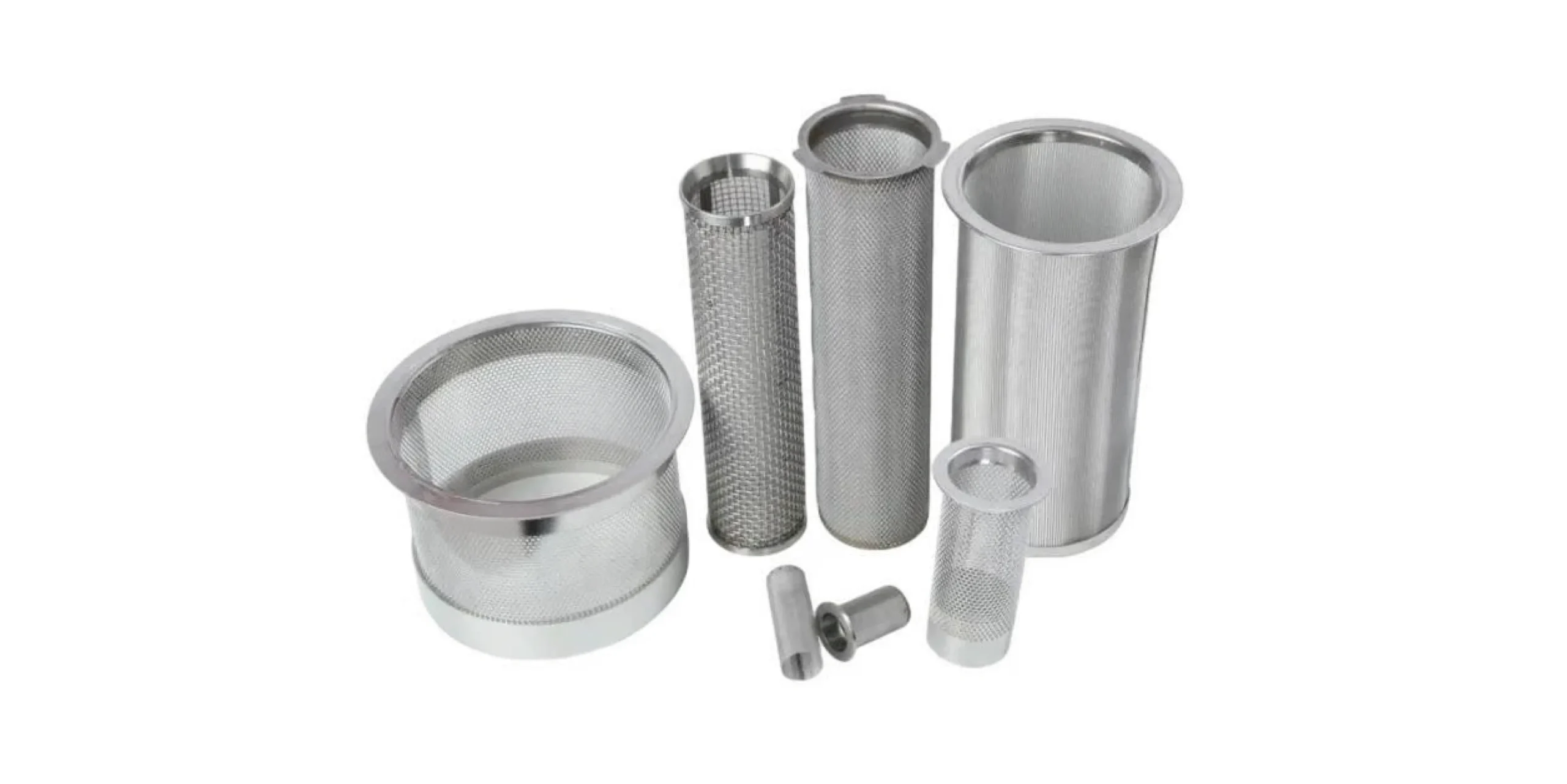
ASTM E11-24 specifies aperture and wire-diameter requirements for woven-wire test sieves. Industrial filter cloth, Dutch weave, sintered mesh, and supported basket liners are not automatically equivalent to an ASTM test-sieve chart.
When ordering a basket filter or strainer, specify one of the following:
- Required clear opening or perforation in microns or millimeters.
- Mesh count plus wire diameter and weave.
- A validated particle-retention requirement.
- An approved old sample or drawing.
A generic internet mesh-to-micron table can be a preliminary reference, but it should not be the final procurement specification.
Does a Finer Micron Rating Reduce Flow?
A finer rating often increases clean resistance, but micron size alone cannot predict flow. Two filters with the same rating can have different pressure drops because their media permeability, filtration area, pleat geometry, support layers, thickness, and housing flow paths are different.
Pressure drop also changes with:
- Flow rate and face velocity
- Fluid viscosity and temperature
- Gas or liquid density
- Filter area and open-area ratio
- Media depth and pore structure
- Contaminant concentration and particle shape
- Cake formation and time in service
- Cleaning condition and flow direction
Ask for a pressure-drop-versus-flow curve measured under stated conditions. Then correct the engineering review for the actual fluid and operating temperature. A clean-water curve cannot be transferred directly to a viscous oil or polymer melt.
For hydraulic and lubrication systems, the downstream component cleanliness requirement should drive the retention target, while the element area and housing must support the required flow and allowable differential pressure. See SINFT’s hydraulic oil filtration application guide for the available stainless steel constructions.
How to Choose the Correct Filter Micron Rating
Use this sequence instead of choosing the smallest available number.
1. Define what must be protected
Start with the downstream nozzle, valve, bearing, pump, membrane, instrument, or final product requirement. Record the harmful particle size or required cleanliness level.
2. Characterize the contaminant
Identify particle-size distribution, concentration, shape, hardness, abrasiveness, deformability, and whether solids are sticky or fibrous. A single “average particle size” can hide a damaging fine-particle fraction.
3. Decide between surface and depth filtration
Surface media retain particles mainly at a defined opening and can be easier to clean or backwash. Depth media collect particles through a three-dimensional pore structure and can provide higher dirt capacity, but their rating must still be tied to a defined performance method.
4. State the required efficiency
Do not write only “10 micron.” Write the required efficiency at 10 µm and the accepted test method where one is applicable. If nominal terminology is used, define what nominal means for that project.
5. Check flow and allowable differential pressure
Provide minimum, normal, and maximum flow; fluid viscosity at operating temperature; clean differential-pressure target; terminal differential pressure; and housing limitations. A filter that meets retention but starves a pump or exceeds the pressure budget is not correctly selected.
6. Check material and cleaning compatibility
Confirm fluid chemistry, operating and design temperature, pressure, corrosion risk, cleaning chemicals, ultrasonic cleaning, steam, backwash direction, and reuse expectations. The filter medium, welds, end caps, and seals must all be compatible.
7. Validate before scaling
For a new or critical duty, evaluate a sample or prototype under representative conditions. Record particle counts or product-quality results, clean pressure drop, loading behavior, cleaning recovery, and structural integrity.
How to Compare Filter Supplier Datasheets
A useful datasheet or quotation should let the buyer answer these questions:
- Is the stated value a pore, aperture, slot, nominal rating, or absolute rating?
- What removal efficiency is achieved at the stated particle size?
- Which standard or internal test method was used?
- What media, area, dimensions, and flow direction were tested?
- What fluid, viscosity, temperature, and flow were used?
- What were the clean and terminal differential pressures?
- Is dirt-holding capacity stated under controlled conditions?
- Are material, weld, seal, and dimensional inspections documented?
- Does the value apply to the media sheet or the finished element?
Bubble-point testing needs similar care. ISO 2942:2018 states that its first-bubble-point result is used for fabrication-integrity information and cannot by itself estimate filtration rating, efficiency, or retention capacity. A bubble-point result should therefore not replace a relevant performance test.
SINFT lists bubble-point, burst-pressure, air-permeability, dimensional, material-spectrometry, metallographic, pore or slot integrity, and surface-cleanliness inspection capabilities. The required inspection records should be agreed before manufacture through the custom filter manufacturing service.
What Buyers Should Confirm Before RFQ
Send the following information with a filter inquiry:
- Working liquid, gas, steam, or polymer.
- Contaminant type, concentration, and particle-size distribution.
- Required micron rating, aperture, or slot width.
- Nominal or absolute definition, target efficiency, and test method.
- Minimum, normal, and maximum flow rate.
- Operating and design pressure.
- Allowable clean and terminal differential pressure.
- Operating and design temperature.
- Viscosity at operating temperature.
- Material and corrosion requirements.
- OD, ID, length, end connection, seal position, and flow direction.
- Cleaning method and expected cycle.
- Existing housing, drawing, sample, photo, or part number.
- Quantity and required certificates or inspection reports.
If the project involves a pipeline strainer, the previous basket strainer vs Y strainer guide explains how debris load, installation space, pressure drop, and cleaning access affect the housing choice. The screen or basket opening still needs the rating checks described in this guide.
How SINFT Can Help With Micron Rating Selection
SINFT can review micron rating together with filter media, element geometry, flow direction, pressure drop, cleaning method, and housing fit. This matters because a stainless steel pleated cartridge, sintered mesh element, sintered fiber felt element, backwash cartridge, wedge wire screen, and basket strainer may all use different rating language.
If you only know the old part number or a target micron value, SINFT can still review the process fluid, contaminant data, required downstream result, dimensions, connection, seal, cleaning requirement, and drawing or sample. That information helps decide whether the project should use a surface screen, depth media, pleated area, slot structure, or custom welded stainless steel filter element.
Frequently Asked Questions
Is a 10-micron filter finer than a 50-micron filter?
Yes. The stated particle-size threshold is smaller. However, compare the efficiency, test method, pressure drop, media, and operating conditions before concluding that two 10-micron products perform the same way.
Are mesh size and micron rating the same?
No. Micron is a physical dimension. Mesh count describes openings per linear inch, and the resulting aperture depends on wire diameter and weave. Specify the actual opening when it matters.
What is the difference between nominal and absolute micron rating?
Nominal normally indicates partial removal at the stated size, while absolute normally indicates a higher removal threshold. Because definitions vary, the purchase specification should state efficiency at particle size x and the accepted test method.
What micron rating should I use for water filtration?
There is no universal water-filtration rating. It depends on the contaminant distribution, downstream equipment, required water quality, flow, pressure drop, and whether the stage is intake screening, pre-filtration, or final polishing. If your water system has recurring coarse solids, a screen or basket may fit; if it needs fine polishing, a cartridge or staged system may be better.
Does a lower micron rating always mean lower flow?
Not always. A finer medium often adds resistance, but a larger pleated area or more permeable structure may offset it. Compare pressure-drop-versus-flow data under the same fluid and temperature conditions. For purchasing, do not choose the smallest micron number first; define the required downstream result and then check whether flow and differential pressure remain acceptable.
What should I send when I only know the old filter micron rating?
Send the old part number, photos, dimensions, end connection, seal material, flow direction, fluid, temperature, pressure, allowable differential pressure, contaminant type, and target cleanliness or product-quality requirement. If you can send an old sample or drawing, the supplier can check whether the old micron value refers to mesh opening, nominal rating, absolute rating, slot width, or another test-based definition.
Final Thoughts
A filter micron rating chart can narrow the options, but final selection requires process conditions and a defined retention target. Before ordering, confirm whether the rating is an aperture, slot width, nominal value, absolute value, or efficiency-based test result. SINFT can review your fluid, contaminant data, flow, pressure, temperature, housing dimensions, cleaning method, and drawing or sample before recommending a stainless steel filter element.
Request a custom filtration quote
Technical References
- ISO, “ISO 16889:2022 — Hydraulic fluid power — Filters — Multi-pass method for evaluating filtration performance of a filter element”: https://www.iso.org/standard/77245.html
- ISO, “ISO 2942:2018 — Hydraulic fluid power — Filter elements — Verification of fabrication integrity and determination of the first bubble point”: https://www.iso.org/standard/68005.html
- ASTM International, “ASTM E11-24 — Standard Specification for Woven Wire Test Sieve Cloth and Test Sieves”: https://store.astm.org/standards/e11
- Parker Hannifin, “The Handbook of Hydraulic Filtration”: https://www.parker.com/content/dam/Parker-com/Literature/Hydraulic-Filter-Division-Europe/fdhb289uk.pdf