When a stainless steel filter element fails from corrosion, cracking, pitting, or cleaning damage, the problem often starts before fabrication. The RFQ may say “stainless steel,” but not which grade the process needs. If you are comparing SS304 vs SS316L filter element options, the right question is not which grade is “better,” but which grade fits the fluid, cleaning cycle, welds, temperature and inspection requirements.
Direct Answer: SS304 vs SS316L Filter Element
Use SS304 filter elements for general industrial service where corrosion risk is moderate and the fluid, cleaning chemical and temperature are compatible with 304 stainless steel. Use SS316L filter elements when chloride exposure, chemical attack, repeated cleaning, welded construction, sanitary expectations or corrosion margin make a molybdenum-bearing low-carbon stainless grade more appropriate.
SS316L is not automatically required for every stainless steel filter element, and SS304 is not automatically unsafe. The decision depends on the complete service environment. A filter element has fine openings, welded joints, sintered layers, crevices, pleats, support cores, baskets or slots that may see trapped liquid and deposits. These details can make material selection more sensitive than a simple sheet-metal part.
SS304 vs SS316L at a Glance
| Selection point | SS304 filter element | SS316L filter element |
|---|---|---|
| Typical role | General stainless steel filter elements for compatible water, oil, air, mild chemical or utility service | More corrosion-resistant stainless option for chloride, chemical, sanitary or demanding cleaning environments |
| Key selection question | Is the process mild enough for 304, including cleaning and shutdown conditions? | Does the process need extra pitting/crevice corrosion resistance or low-carbon welded construction? |
| Cost logic | Often considered when compatibility is clear and the duty is not aggressive | Often considered when the cost of early corrosion or replacement is higher than the material upgrade |
| Main risk | Pitting, crevice corrosion or cleaning-chemical attack in the wrong medium | Still not universal; may still fail in strong acids, high chloride, high temperature or unsuitable cleaning chemistry |
| Best RFQ use | General industrial baskets, guards, compatible oil/water service and non-aggressive filtration | Pleated cartridges, sintered mesh, wedge wire, food/beverage, petrochemical, chemical, marine and repeated cleaning service |
| What to confirm | Fluid chemistry, temperature, cleaning, solids, pressure, welds and documentation | Same items, plus whether 316L is enough or a higher alloy should be reviewed |
Why Material Choice Matters More in Filter Elements
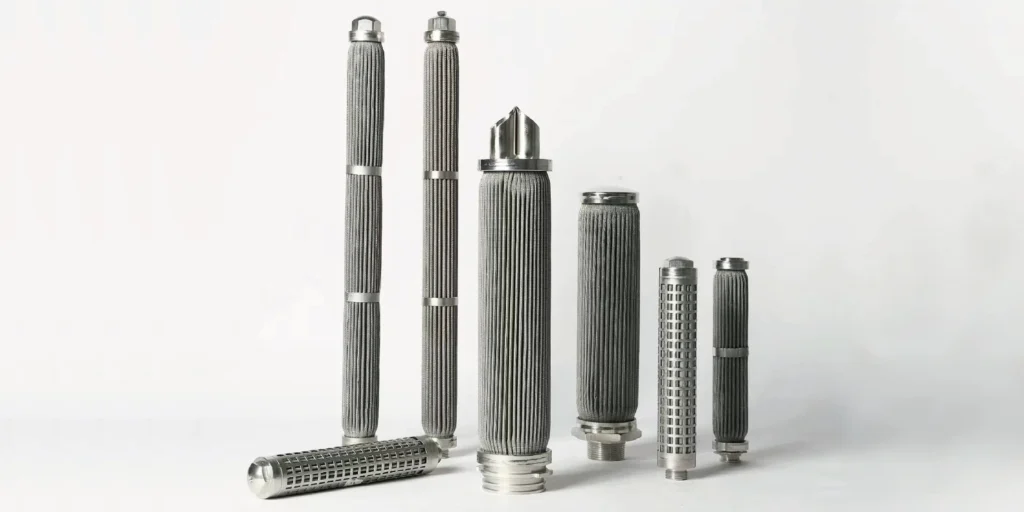
A filter element is not just a block of stainless steel. It may include fine wire mesh, sintered layers, fiber felt, slots, punched openings, perforated guards, support tubes, welds, seams, end caps and seals. Those details change how liquid sits on the metal and how corrosion starts.
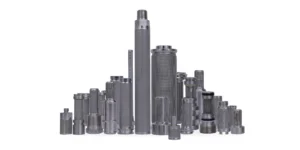
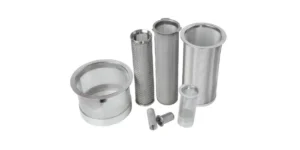
SINFT manufactures custom stainless steel filter elements in cartridge, tube, candle, disc, cone, panel, basket, pleated element and custom welded assembly forms. Available materials listed across the website include SS304, SS316, SS316L, 310S, duplex stainless steel, Hastelloy, Inconel, Monel, Titanium, FeCrAl and Nickel, depending on product family and application.
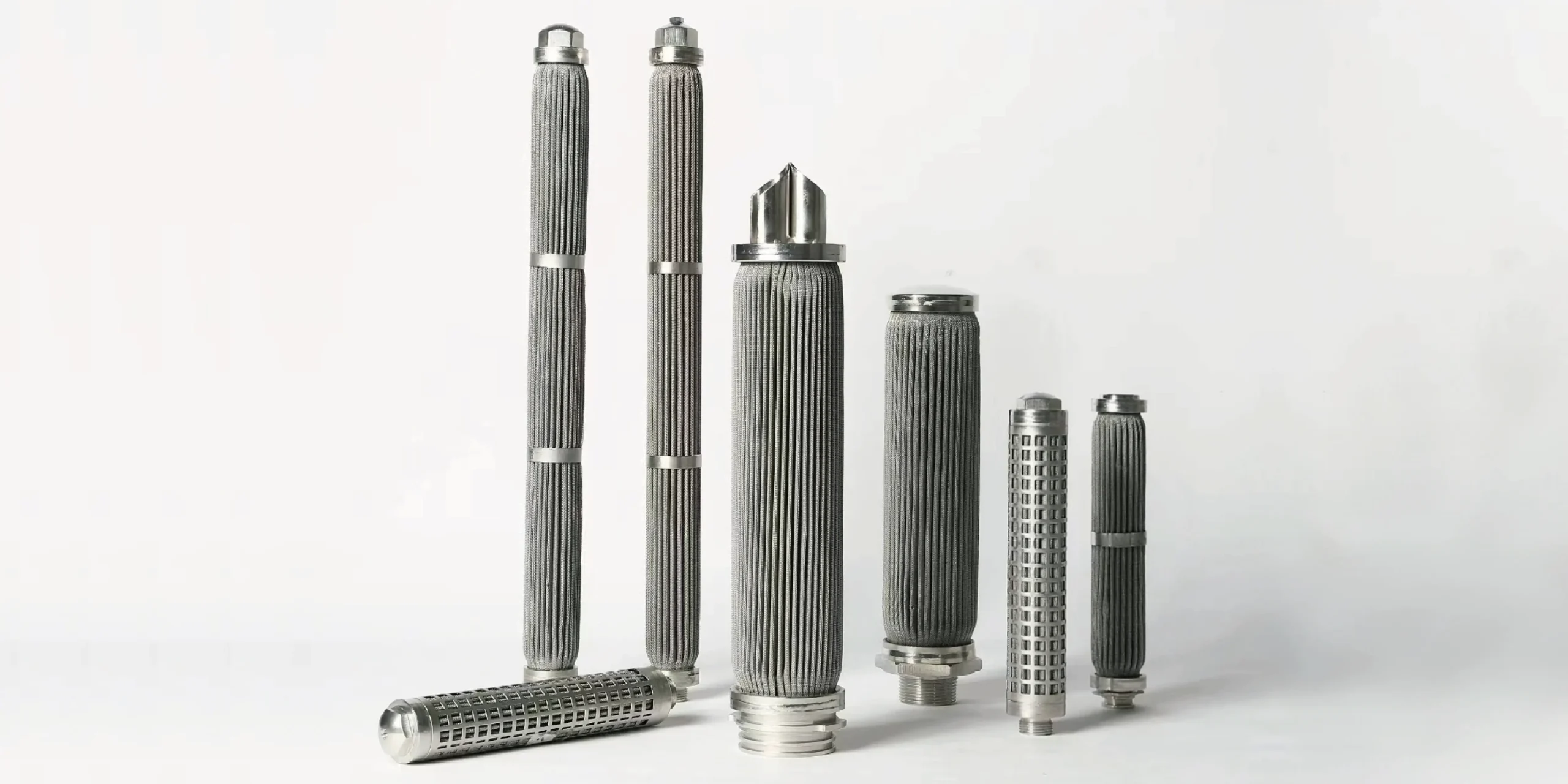
A smooth pipe may survive in a service where a fine screen corrodes early. Deposits can hold chloride, acid, caustic residue or moisture against the metal surface. Welded areas and crevices around end caps, rims or support layers may see different conditions from the main flow. That is why material selection should be tied to the real filter construction.
What SS304 Means for Filter Selection
SS304 is the common general-purpose stainless steel choice when the service environment is compatible. It is widely used for industrial metal parts because it combines corrosion resistance, formability and availability in many product forms.
For filter elements, SS304 may be reasonable when:
- the fluid is clean water, oil, air, compatible gas or mild process liquid;
- chloride level and chemical attack are low;
- the element is not exposed to aggressive cleaning chemicals;
- deposits do not hold corrosive liquid against the metal;
- the plant already accepts 304 stainless steel for similar wetted parts;
- replacement risk is low and inspection is straightforward.
The Australian Stainless Steel Development Association’s stainless steel grade selection guide describes S30400 as a widely specified grade used across many applications. That broad usefulness is real, but it should not be confused with universal corrosion resistance. A filter screen with small openings and retained solids may experience more severe local conditions than a visible tank wall.
For formal grade language, ISO 15510:2014 provides stainless-steel chemical composition references. In purchasing work, that kind of designation matters because “304,” “316,” and “316L” should be tied to a recognized material grade, certificate or project specification rather than treated as loose marketing words.
What SS316L Means for Filter Selection
SS316L is usually reviewed when the filter element needs more corrosion margin than SS304, especially around chlorides, chemical exposure, cleaning and welded construction. The “L” version is a low-carbon grade, commonly selected where welded stainless construction and resistance to sensitization are concerns.
For filter elements, SS316L is often reviewed when:
- chloride-containing water, brine, seawater mist or marine atmosphere is present;
- cleaning chemicals or CIP procedures are part of operation;
- the element has many welds, seams, sintered joints or small crevices;
- food, beverage, pharmaceutical or sanitary expectations apply;
- downtime from corrosion failure would be expensive;
- the user needs a stronger material basis for replacement consistency.
ASSDA’s Grade 316 technical article notes the role of molybdenum in improving corrosion resistance, especially against pitting and crevice corrosion in chloride environments. That is why 316 and 316L are often discussed when the process is harsher than ordinary indoor utility service.
SS316L is still not magic. It may not be enough for strong acids, high-temperature chlorides, concentrated brine, oxidizing chemicals, reducing acids, or special chemical mixtures. In those cases, SINFT may need to review another listed material such as Hastelloy, Inconel, Monel, Titanium, FeCrAl, Nickel or duplex stainless steel, depending on the product family and confirmed application.
Chlorides, Pitting and Crevice Corrosion
Chloride risk is one of the most common reasons buyers compare SS304 vs SS316L filter element materials. Chlorides can promote localized pitting and crevice corrosion, and filter elements often create exactly the kind of small trapped areas where local chemistry can become more aggressive.
If your process includes cooling water, seawater, brine, coastal air, food salt, cleaning residue, chloride-containing chemicals or evaporating wet deposits, do not approve the material from “stainless steel” alone. Ask whether the current element has rust marks, pinholes, dark pits, broken mesh, cracked welds or corrosion around seams.
ASSDA’s grade selection guidance also explains that local corrosion such as pitting and crevice corrosion is largely controlled by chlorides and can be worsened by elevated temperature and deposits. For filter elements, this matters because retained solids and stagnant pockets can concentrate corrosive species even if the bulk fluid looks mild.
Cleaning Chemicals Can Change the Material Decision
The cleaning step can be more aggressive than the filtration step. A filter may run in a mild liquid, then see hot caustic, acid cleaner, oxidizer, solvent, steam, ultrasonic cleaning or drying cycles during maintenance.
SINFT’s stainless steel filter cartridge cleaning guide explains why cleaning method and retirement limits should be defined before reuse. For material selection, you should confirm:
- cleaning chemical name and concentration;
- cleaning temperature and soak time;
- whether chloride-containing cleaners are used;
- whether acid passivation, alkaline cleaning or solvent washing is required;
- whether seals, end caps and welds see the same chemistry;
- whether the element is fully rinsed and dried after cleaning.
If your current SS304 element only corrodes after cleaning, changing filtration conditions will not solve the root cause. The material, cleaning procedure, passivation expectation and inspection method should be reviewed together.
Welding, Sintering and Low-Carbon Grades
Welded and sintered filter elements need more careful grade review than simple punched or cut parts. Welding and high-temperature processing can change the local metallurgical condition, while sintered and pleated constructions have many contact points and narrow flow paths.
SS316L is commonly discussed for welded stainless assemblies because its low-carbon version helps reduce sensitization risk compared with higher-carbon versions of similar grades. This does not remove the need for correct welding, cleaning and passivation, but it is one reason 316L appears frequently in stainless filter specifications.
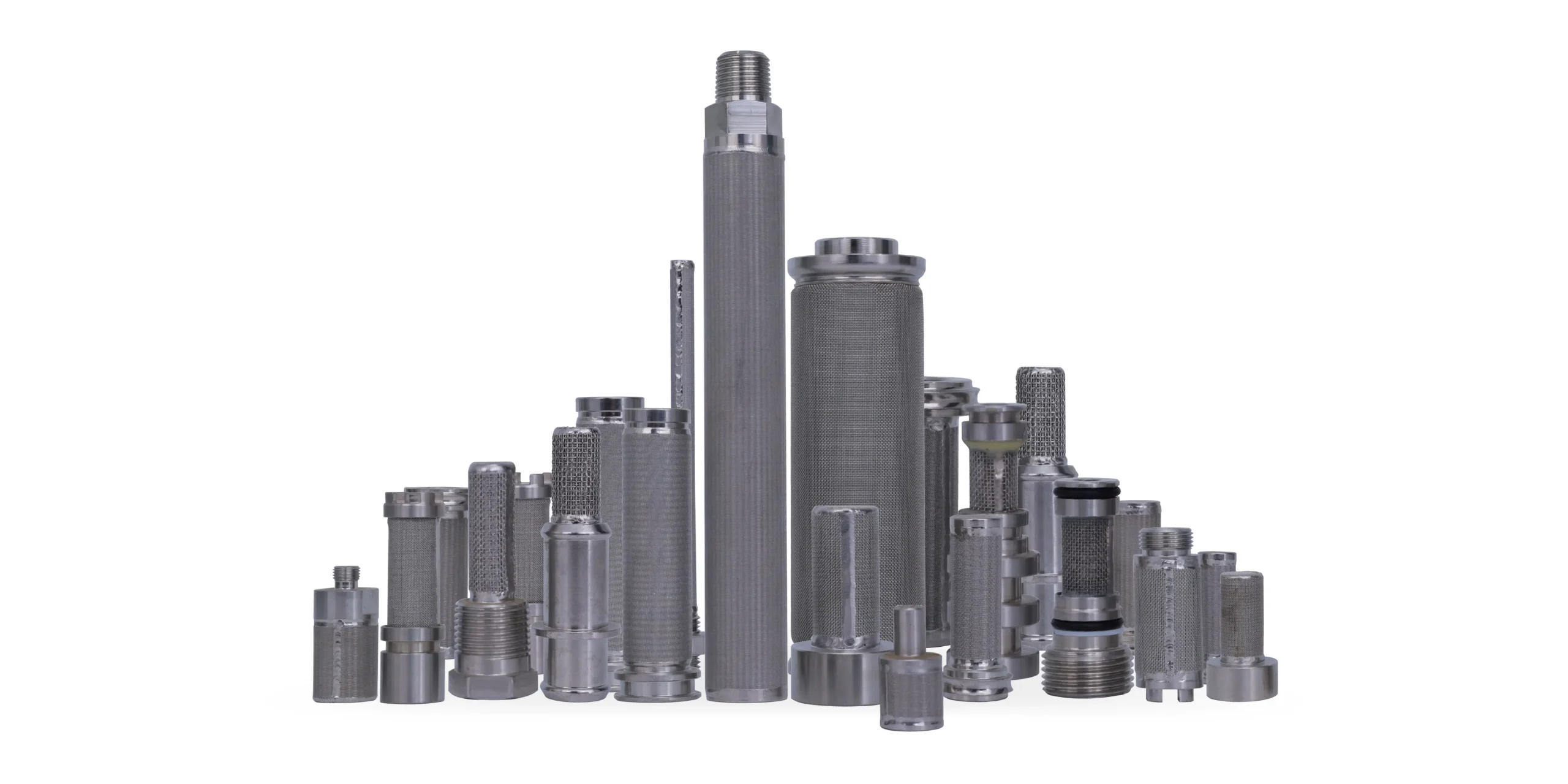
SINFT product families include welded assemblies, sintered mesh elements, sintered fiber felt filters, wedge wire filters, baskets and pleated cartridges. For sintered mesh filter elements, the confirmed material range includes SS304, SS316, SS316L, Hastelloy, Monel and Inconel. For sintered fiber felt filters, SS316L is the standard random fiber matrix, with other materials available for specific duties.
Product-Family Material Advice
The correct stainless grade depends on the filter family and the service, not on a universal website rule. A basket, wedge wire screen, pleated cartridge and sintered fiber felt element can all be stainless steel, but their corrosion and cleaning risks are different.
For pleated filter cartridges, confirm SS304, SS316, SS316L or special alloy together with media type, seal material, end connection, cleaning method and differential pressure. Pleated structures have high area, but they also create folds where particles and liquid can remain after shutdown.
For sintered mesh filter elements, material selection should consider layer stack, welds, support structure, pore stability, cleaning and backwash. A sintered laminate may be harder to visually inspect internally than a coarse basket, so compatibility margin matters.
For basket filters and strainers, SS304 may work in compatible water, oil or utility service, while SS316L or another alloy may be reviewed for chemical, food, coastal or repeated-cleaning duty. Perforated plate, woven mesh and rim welds should be treated as one element.
For wedge wire filters, SINFT lists SS316L triangular profile wire and support rods as the main construction, with SS304, SS316, SS316L, Titanium and Hastelloy as options. Slot geometry, welds, deposits and cleaning method all affect the grade decision.
For backwash filter cartridges, material selection should include reverse-flow cleaning, trapped solids, air blowing, automated cycles, pressure differential and chemical exposure. A cartridge that survives filtration but corrodes during cleaning is not properly specified.
Application-Based Selection Advice
Start with the process environment, then choose the stainless grade. A material that is acceptable in hydraulic oil may be wrong for chloride water or acidic cleaning.
For hydraulic and lubrication filtration, SS304 may be reviewed when oil compatibility and temperature are suitable, but the seal, pressure drop, cleaning and contamination type still matter. If water ingress, additives or cleaning chemicals are present, do not treat hydraulic service as automatically mild.
For water treatment, check chloride level, pH, disinfectants, biological deposits, scale, cleaning chemical and shutdown drying. SS316L may be reviewed more often for chloride-bearing or coastal water, but severe brine or chemical duty may need another alloy.
For food and beverage filtration, material choice should be tied to product chemistry, salt, acid, sugar, cleaning, sanitation and documentation needs. SS316L is often reviewed in sanitary and repeated-cleaning environments, but the actual acceptance requirement comes from the process and quality system.
For petrochemical filtration, do not select only from the stainless grade name. Confirm fluid composition, sulfur compounds, chloride, acid, water phase, temperature, pressure, solids and cleaning method. Some duties may require higher alloys beyond SS316L.
For polymer melt filtration, material selection should consider high temperature, polymer degradation products, cleaning cycle, mechanical stress and media structure. The alloy must be reviewed together with sintered mesh, fiber felt or pleated construction.
What to Confirm Before an RFQ
A useful RFQ should explain why SS304 or SS316L is being considered. If you only write “stainless steel filter element,” the supplier may quote a grade that fits the drawing but not the process.
Send these details:
- Process fluid, gas, oil, steam, slurry, food fluid, chemical or polymer name
- Chloride level, pH, acid/alkali content, solvents, oxidizers or unknown contaminants
- Operating temperature and cleaning temperature
- Normal pressure, differential pressure and flow direction
- Particle type, retained solids, scale, fibers, gels, carbon, salts or sticky deposits
- Cleaning method: backwash, ultrasonic, chemical, steam, CIP or manual washing
- Current material if known: SS304, SS316, SS316L or another alloy
- Failure evidence: pitting, rust, broken mesh, cracked welds, deformation or poor cleaning recovery
- Required product family: pleated cartridge, sintered mesh, fiber felt, basket, wedge wire or backwash element
- Dimensions, end connection, seal material, drawings, old sample and housing photos
- Documentation needs: material certificate, dimensional inspection, pressure test, passivation record or batch traceability
- Whether the material grade is mandatory from your specification or open for supplier review
If the element is a replacement, include photos of the failed part. Corrosion location often tells more than the grade name. Pits around welds, deposits inside pleats, crevice marks at the end cap and corrosion near seals may point to different root causes.
How SINFT Can Help
SINFT can help when material choice must become a manufacturable filter element, not just a stainless grade on a drawing. SINFT manufactures custom stainless steel filter elements from drawings, old samples, housing dimensions and operating conditions, and can review material together with filtration rating, geometry, cleaning and connection.
Relevant product paths include pleated filter cartridges, sintered mesh filter elements, sintered fiber felt filters, basket filters and strainers, wedge wire filters and backwash filter cartridges.
If your decision depends on chloride corrosion, cleaning chemistry, weld construction, sanitary duty, high temperature, old-sample replacement or special alloy selection, start with SINFT’s custom filter manufacturer service. For a quotation, send the process data and drawings through the contact form.
FAQ
Is SS316L always better than SS304 for filter elements?
No. SS316L usually offers better corrosion margin in chloride and some chemical environments, but it is not automatically required for every filter element. SS304 may be suitable for compatible water, oil, air or mild service. The right choice depends on fluid chemistry, temperature, cleaning method, deposits, welds, pressure and inspection requirements.
When should I choose SS316L instead of SS304?
Choose or review SS316L when chloride exposure, marine atmosphere, food salt, chemical cleaning, CIP, welded construction, sanitary expectations, crevice corrosion risk or expensive downtime makes extra corrosion resistance important. Also consider SS316L when an SS304 element has already shown pitting, rust, weld-area corrosion or cleaning-related damage in the same service.
Can SS304 be used for water filtration?
Sometimes. SS304 can be used in compatible water service, but water is not one chemistry. Chloride level, pH, disinfectants, temperature, dissolved oxygen, scale, biological deposits and shutdown conditions can change corrosion risk. For chloride-bearing, coastal, hot or chemically cleaned water systems, SS316L or another material may need review.
Is SS316L suitable for seawater filtration?
SS316L may be reviewed for some marine or chloride-bearing service, but seawater can be highly aggressive, especially with stagnant crevices, deposits, high temperature or biofouling. Do not assume SS316L is enough for every seawater filter. Provide chloride level, temperature, flow, cleaning, deposits and service life expectations so the material can be reviewed.
Does 316L mean the filter element is food grade?
No. 316L is a stainless steel grade, not a complete food-grade approval by itself. Food and beverage filtration may also require cleanability, surface finish, weld quality, passivation, seal compatibility, documentation and process-specific acceptance. The material is only one part of the finished filter element specification.
Should a sintered mesh filter use SS304 or SS316L?
It depends on the fluid, cleaning method, temperature, pressure differential, layer stack and corrosion risk. SS304 may fit mild compatible service, while SS316L is often reviewed for chemical, chloride, sanitary or repeated-cleaning duty. For severe chemicals or high-temperature corrosion, a higher alloy may be more appropriate than either SS304 or SS316L.
What documents should I request for stainless steel material confirmation?
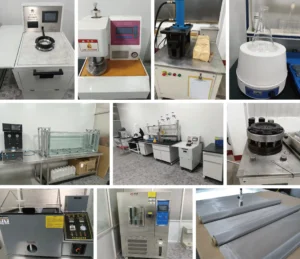
Depending on project requirements, request a material certificate or mill test report, dimensional inspection report, optional pressure test certificate, passivation record, packaging photos and batch traceability records. SINFT’s website lists material spectrometry, dimensional inspection, passivation and batch traceability among available quality-control capabilities. Confirm documentation needs before quotation.
Can SINFT make custom filter elements in materials other than SS304 and SS316L?
Yes, SINFT’s confirmed material range includes SS304, SS316, SS316L, 310S, duplex stainless steel, Hastelloy, Inconel, Monel, Titanium, FeCrAl and Nickel across relevant product families. Availability and suitability depend on the filter type, dimensions, process conditions, cleaning method and fabrication requirements. Send the application data before final material selection.
Final Thoughts
SS304 vs SS316L filter element selection should begin with the real service environment, not with a generic stainless steel label. SS304 can be practical in compatible mild duty; SS316L is often safer to review for chloride, chemical cleaning, welded or sanitary conditions. If the duty is unclear, SINFT can compare material, construction and inspection needs before quoting a custom element.