When a basket strainer passes particles or plugs too fast, the problem may not be the housing. The element may be using woven mesh where a stronger perforated basket is needed, or coarse perforation where a finer mesh liner should control retention. Before you order a replacement, separate the particle-retention job from the support and debris-holding job.
Direct Answer: Basket Strainer Mesh vs Perforated Basket
Use basket strainer mesh when the element must retain smaller particles with a defined woven opening. Use a perforated basket when the duty needs stronger coarse debris capture, mechanical support, cleaning access, and lower risk of mesh damage. Use both together when fine retention is needed but the woven mesh requires perforated support for strength, shape retention, and handling.
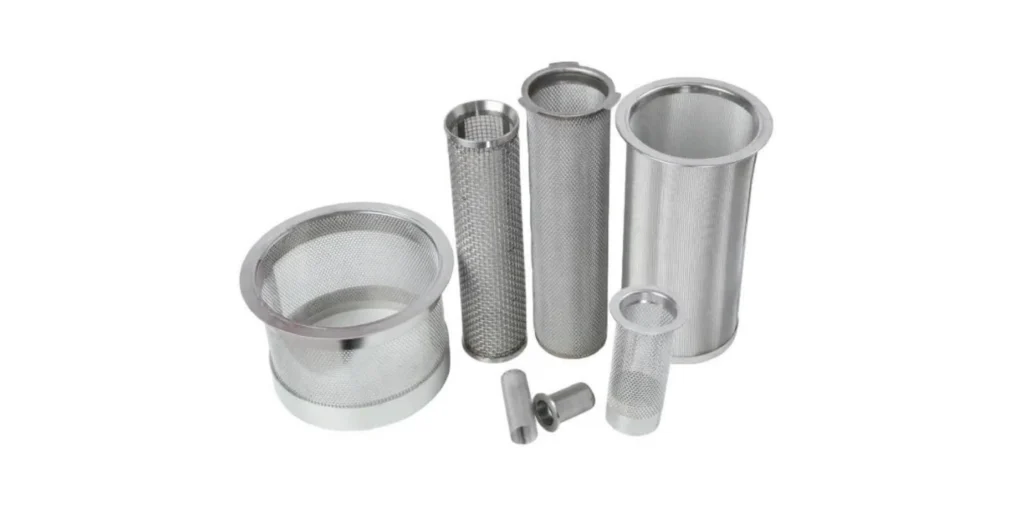
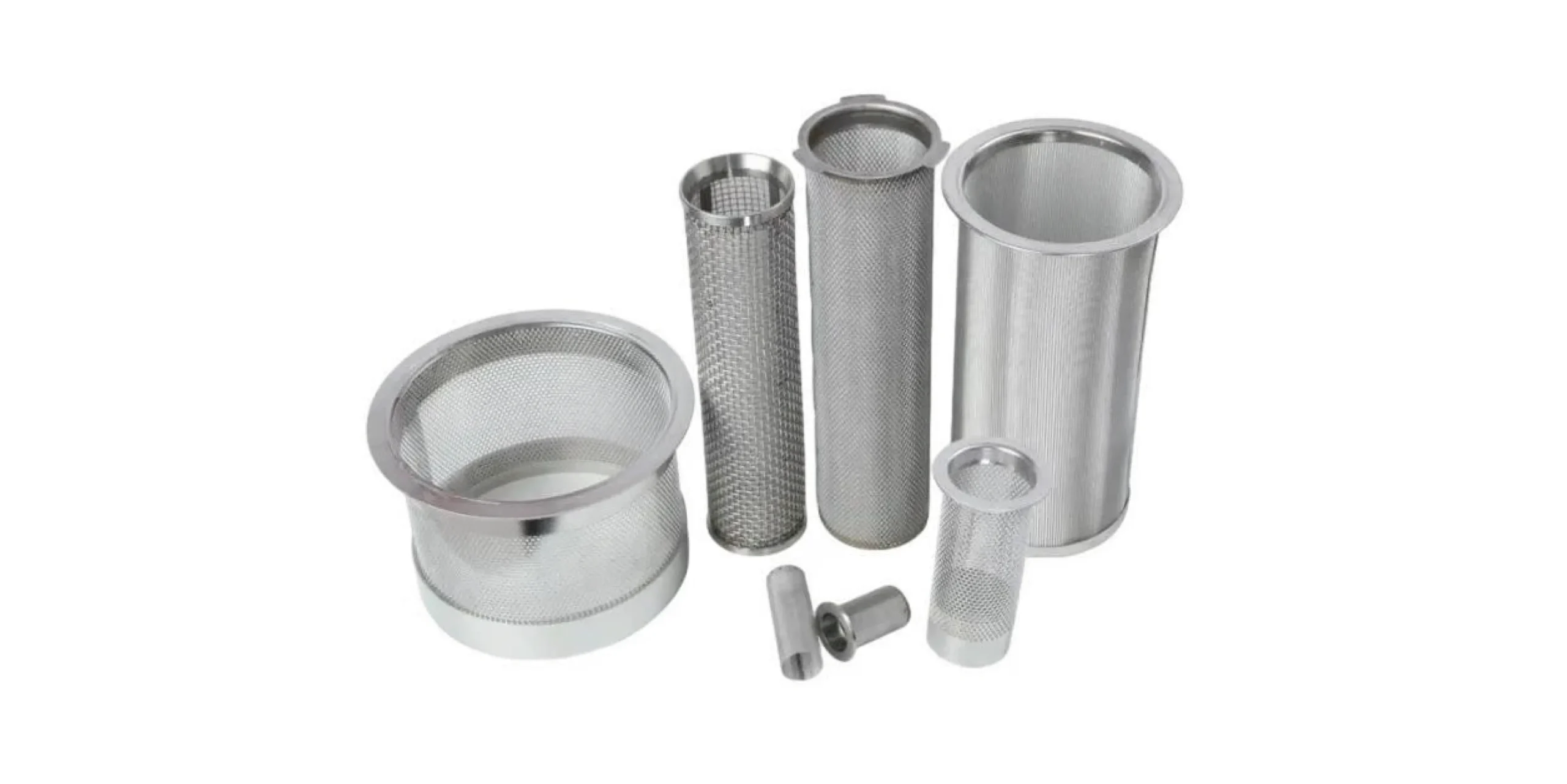
SINFT basket filters and strainers can be customized with perforated plate, woven mesh, or sintered mesh. The confirmed product information lists 20 / 30 / 40 / 60 / 80 / 100 / 150 / 200 mesh options, round / square / slotted / custom punching, standard basket, slanted basket, tube, and flanged tube formats, plus rim, ring, flange, thread, handle, and bolted-handle structures. The correct choice depends on particle size, debris load, open area, pressure drop, cleaning method, housing fit, and material.
Quick Selection Table
The fastest selection rule is to decide which layer controls filtration and which layer supports the element. Mesh and perforation can be alternatives, but in many industrial baskets they work together.
| Selection question | Better starting point | Why it matters |
|---|---|---|
| Need to retain smaller particles than punched holes can stop? | Woven mesh liner | Mesh controls finer openings when specified correctly |
| Need to catch coarse pipe scale, weld slag, stones, or large debris? | Perforated basket | Perforated plate gives stronger coarse screening and handling strength |
| Fine screen keeps tearing or deforming during cleaning? | Mesh plus perforated support | The perforated basket carries load while the liner controls retention |
| Pressure drop is too high after changing to finer mesh? | More open area or larger basket | Smaller openings can blind faster and reduce effective flow area |
| Operators must remove, dump, and wash the element often? | Perforated or reinforced basket | Cleaning workflow and handle design may matter as much as opening size |
| Existing housing must be matched exactly? | Custom basket based on sample | Rim, seal, handle, OD, length, and insertion depth can decide performance |
If you are preparing an RFQ, do not write only “100 mesh basket” or “perforated basket.” Define the retained particle target, support construction, open area expectation, cleaning method, and exact housing dimensions.
What Basket Strainer Mesh Does
Basket strainer mesh is mainly the particle-retention layer. It uses woven wire openings to stop particles larger than the selected aperture, while allowing the fluid to pass through the basket element.
Mesh is useful when:
- downstream pumps, nozzles, valves, meters, or cartridges need finer protection;
- the process has smaller particles than a coarse perforated plate can stop;
- the basket acts as a prefilter before a polishing filter;
- a removable liner is useful for cleaning or replacement;
- a custom opening is needed inside an existing basket housing.
Mesh count alone is not enough for procurement. The actual opening depends on mesh count, wire diameter, weave type, material, and whether the mesh is supported. ISO 9044 is a useful reference for industrial woven wire cloth terminology and technical requirements, because it reminds buyers that aperture, wire diameter, and cloth specification must be defined rather than inferred from a casual mesh number.
For mesh sizing context, see SINFT’s basket strainer mesh size guide.
What a Perforated Basket Does
A perforated basket is mainly a coarse screening and support structure. It uses punched holes or slots in metal plate to catch larger debris, hold shape under handling loads, and support a finer liner when required.
Perforated baskets are useful when:
- the duty is coarse debris protection rather than fine filtration;
- high debris load requires a stronger basket body;
- operators remove, dump, brush, or wash the element often;
- the basket must resist denting, tearing, or collapse during service;
- the basket needs a welded rim, ring, handle, flange, tube shape, or custom bottom;
- a woven mesh liner needs mechanical backing.
The key specification is not only hole diameter. Perforated plate should be described by hole shape, hole size, pitch, open area, plate thickness, pattern, material, edge finish, and how it is formed or welded into the final basket. The Industrial Perforators Association’s Designers, Specifiers and Buyers Handbook of Perforated Metals is a useful reference because it treats hole geometry, open area, strength, and pressure loss as separate design topics. That is the kind of detail a custom basket RFQ should include.
When to Use Mesh and Perforation Together
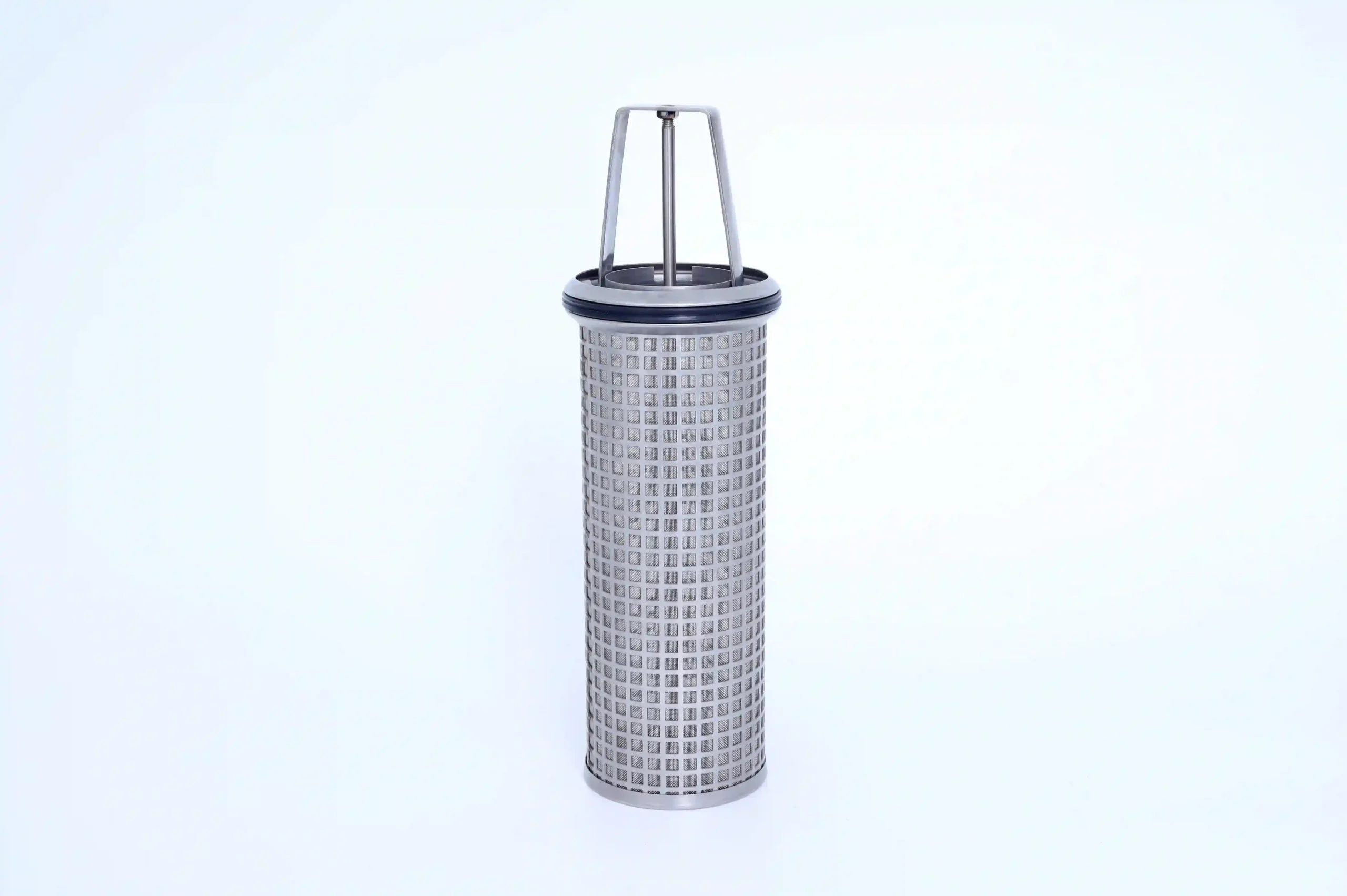
Many industrial strainer baskets should not be treated as mesh-only or perforation-only designs. A perforated support with a woven mesh liner is often the better construction when fine retention and mechanical strength are both required.
This combined structure helps when:
- a fine woven mesh would be too fragile by itself;
- flow impact or debris load may deform an unsupported screen;
- the basket is removed and cleaned frequently;
- a high open-area perforated support is needed behind the liner;
- the housing requires a rigid basket shape and accurate seating;
- the process needs both coarse debris holding and finer downstream protection.
The caution is that two layers also change pressure drop and cleaning behavior. A support plate with poor open area can block a fine liner. A fine liner can blind even if the perforated basket looks strong. A correct design reviews both layers as one finished element, not as separate catalog parts.
Open Area and Pressure Drop
Open area is one of the main reasons mesh and perforated basket choices affect pressure drop. Smaller openings and thicker support material can reduce available flow area, especially after dirt loading begins.
Clean pressure drop depends on:
- mesh aperture and wire diameter;
- perforated hole size, pitch, and open area;
- plate thickness and hole pattern;
- number of layers;
- basket diameter, length, and active area;
- blocked area from rim, handle, welds, bottom cap, or support rings;
- fluid viscosity and density;
- flow rate;
- housing inlet and outlet arrangement.
Operating pressure drop also depends on retained solids. A clean basket can look acceptable but plug rapidly if fibrous, sticky, deformable, or high-volume debris covers the open area. SINFT’s filter pressure drop vs flow rate guide explains why clean and loaded differential pressure should be separated during filter sizing.
For screen and strainer engineering, manufacturers such as Eaton publish basket and screen specifications and pressure-loss resources that show pressure drop must be tied to basket type, fluid, flow, screen opening, open area, and clean or loaded condition rather than a single opening number. Use those tools as engineering context, then confirm the final basket dimensions and media with the actual supplier.
Strength, Cleaning and Maintenance
A basket strainer element must survive cleaning, not only filtration. If operators remove the basket frequently, the rim, handle, perforated body, mesh liner, welds, and bottom construction all affect service life.
Mesh may be the right filtration layer, but it can fail when:
- the wire diameter is too light for the debris load;
- the liner is unsupported;
- operators scrape or brush aggressively;
- the basket is lifted by the mesh instead of the handle or rim;
- pressure drop rises too high before cleaning;
- the liner is installed with poor edge protection.
A perforated basket may be stronger, but it can fail the process when:
- punched holes are too coarse for downstream protection;
- open area is too low for the required flow;
- sharp burrs damage a liner or collect debris;
- the rim does not seat correctly;
- cleaning access is poor;
- the wrong material is used for corrosion or temperature.
SINFT’s confirmed basket product information includes deburred, cleaned, and passivated surfaces on request. If the basket is used in food, chemical, water, or corrosive service, cleaning and surface finish should be treated as part of the specification, not as an afterthought.
Application-Based Choice
The right construction depends on what the basket is protecting and how the debris behaves. A cooling-water strainer, pump suction basket, petrochemical line strainer, mill scale basket, and water treatment prefilter do not load the screen in the same way.
| Application condition | Better starting point | Engineering caution |
|---|---|---|
| Coarse pump protection | Perforated basket | Confirm hole size protects the pump and downstream equipment |
| Fine prefiltration before cartridge filters | Mesh liner with support | Fine mesh may need more basket area and cleaning access |
| High debris load or large solids | Perforated basket | Basket volume, handle strength, and open area may control service interval |
| Fibers, soft solids, or sticky debris | Coarser mesh or perforation review | Fine mesh may blind quickly and become difficult to clean |
| Existing strainer housing replacement | Custom basket based on old sample | Rim, OD, length, handle and seal fit may matter more than media name |
| Water treatment or cooling water | Perforated basket or mesh-supported basket | Scale, biological growth and fibrous matter may control cleaning interval |
| Petrochemical or chemical service | Material-specific basket design | Confirm SS304, SS316L, alloy, corrosion risk, temperature and cleaning method |
For application context, review SINFT’s water treatment filters, petrochemical filtration, power plant filtration, and basket and tube filters for water treatment.
What to Confirm Before RFQ
A good RFQ tells the manufacturer which layer must filter, which layer must support, and how the basket must fit the housing. If you send an old basket or drawing, the supplier can often identify whether the existing construction is mesh-only, perforated-only, or a supported liner design.
Send these details:
- Required particle retention target or opening size
- Whether the value means mesh count, aperture, micron rating, perforation size, or slot width
- Fluid, oil, water, chemical, gas, slurry, or process medium
- Flow rate and allowable pressure drop
- Operating pressure and temperature
- Debris type, solids load, particle size, and cleaning interval
- Mesh count, wire diameter, weave type, or liner requirement if known
- Perforation hole shape, hole size, pitch, plate thickness, and open area if known
- Material: SS304, SS316, SS316L, carbon steel, copper, or alloy
- Basket OD, ID, length, bottom style, and active area
- Rim, ring, flange, thread, handle, or bolted handle details
- Seal or seating surface
- Flow direction through the basket
- Cleaning method: washing, brushing, backwash, manual removal, or chemical cleaning
- Old sample, housing photo, drawing, or part number
- Surface treatment, deburring, passivation, or inspection record requirements
How SINFT Can Help With Custom Basket Selection
SINFT can help when the real question is not only “mesh or perforation,” but how the complete basket should be built for the housing and cleaning workflow. SINFT manufactures basket filters and strainers using perforated plate, woven mesh, sintered mesh, standard baskets, slanted baskets, tube elements, flanged tubes, rims, handles, threads, flanges, and custom welded details.
If your basket decision depends on particle size, debris volume, pressure drop, material, rim fit, handle design, or a failed old sample, treat this article as a first selection tool. SINFT can review drawings, samples, housing dimensions, photos, and operating conditions through its custom filter manufacturer service. To request a quote, send the RFQ details through the contact form.
Final Thoughts
Basket strainer mesh and perforated baskets are not interchangeable labels. Mesh usually controls finer retention; perforated plate usually provides coarse screening, strength, support, and cleaning durability. Many industrial elements need both. The safest purchase decision starts with the retained particle target, debris load, open area, pressure drop, housing fit, and cleaning method, then turns those conditions into a complete custom basket specification.
FAQ
What is the difference between basket strainer mesh and a perforated basket?
Basket strainer mesh is usually a woven wire layer that controls finer particle retention. A perforated basket is usually a punched metal body that provides coarse screening, mechanical strength, debris capacity, and support. Some industrial baskets use both: the perforated body supports the element, while the mesh liner controls the smaller retained particle size.
Is a mesh basket better than a perforated basket?
Not always. Mesh is better when the process needs finer openings than perforated plate can provide, but it may need support and careful cleaning. A perforated basket is better when the duty is coarse debris protection, frequent removal, high solids load, or stronger handling. The right choice depends on particle size, open area, pressure drop, and cleaning method.
When should I use a mesh liner inside a perforated basket?
Use a mesh liner inside a perforated basket when the process needs fine particle retention but the mesh alone would be too fragile, unsupported, or hard to handle. The perforated basket carries mechanical load and helps keep the element shape, while the liner controls retention. Both layers should be specified because both affect pressure drop and cleaning.
Does finer basket mesh always protect equipment better?
Finer mesh can stop smaller particles, but it can also reduce open area, increase pressure drop, blind faster, and require more cleaning. If the debris load is high or particles are fibrous or sticky, a slightly coarser screen, larger basket area, supported liner, or staged filtration may protect the process more reliably than simply choosing the finest mesh.
What should I specify for a perforated basket filter?
Specify material, plate thickness, hole shape, hole size, pitch, open area, basket OD, length, bottom style, rim, handle, connection, seal surface, flow direction, cleaning method, and the required retained particle size. If the basket supports a mesh liner, also specify the liner mesh count, wire diameter, weave type, material, and how the liner is fixed.
Can SINFT make a replacement basket from an old sample?
Yes. SINFT’s custom filter work can be based on drawings, old samples, housing dimensions, or photos. For replacement baskets, send the old element, OD, ID, length, rim shape, handle position, seal surface, mesh or perforation details, material, and operating conditions. This helps avoid bypass, poor seating, weak handles, or a wrong filtration opening.
How do I reduce pressure drop in a basket strainer?
Start by checking whether the basket has enough active area and open area for the flow. Pressure drop can increase when mesh is too fine, perforation open area is too low, debris load is high, the basket is undersized, or the housing transition restricts flow. A larger basket, coarser opening, supported liner, or staged filtration may help.