A pleated metal cartridge can provide substantial filtering area within a limited housing envelope, but that does not make it the right choice for every process. A design that works well in a relatively clean liquid may load poorly with sticky solids or require different seals for hot service. This guide explains industrial pleated filter cartridge applications and the checks buyers should make before specifying an element.
Where Are Pleated Filter Cartridges Most Useful?
Pleated metal cartridges are candidates where the process needs particle filtration, usable area within a constrained envelope and a metal construction suited to the fluid and operating duty. Examples include selected hydraulic and lubricating oils, process liquids, water, gases, steam and polymer-processing duties. Each requires review of the complete assembly and filtration objective.
The key question is whether the medium, pleat channels, supports, connections and seals can meet the actual duty. A stainless steel material description alone cannot establish allowable temperature, differential pressure, cleaning compatibility or the required removal efficiency.
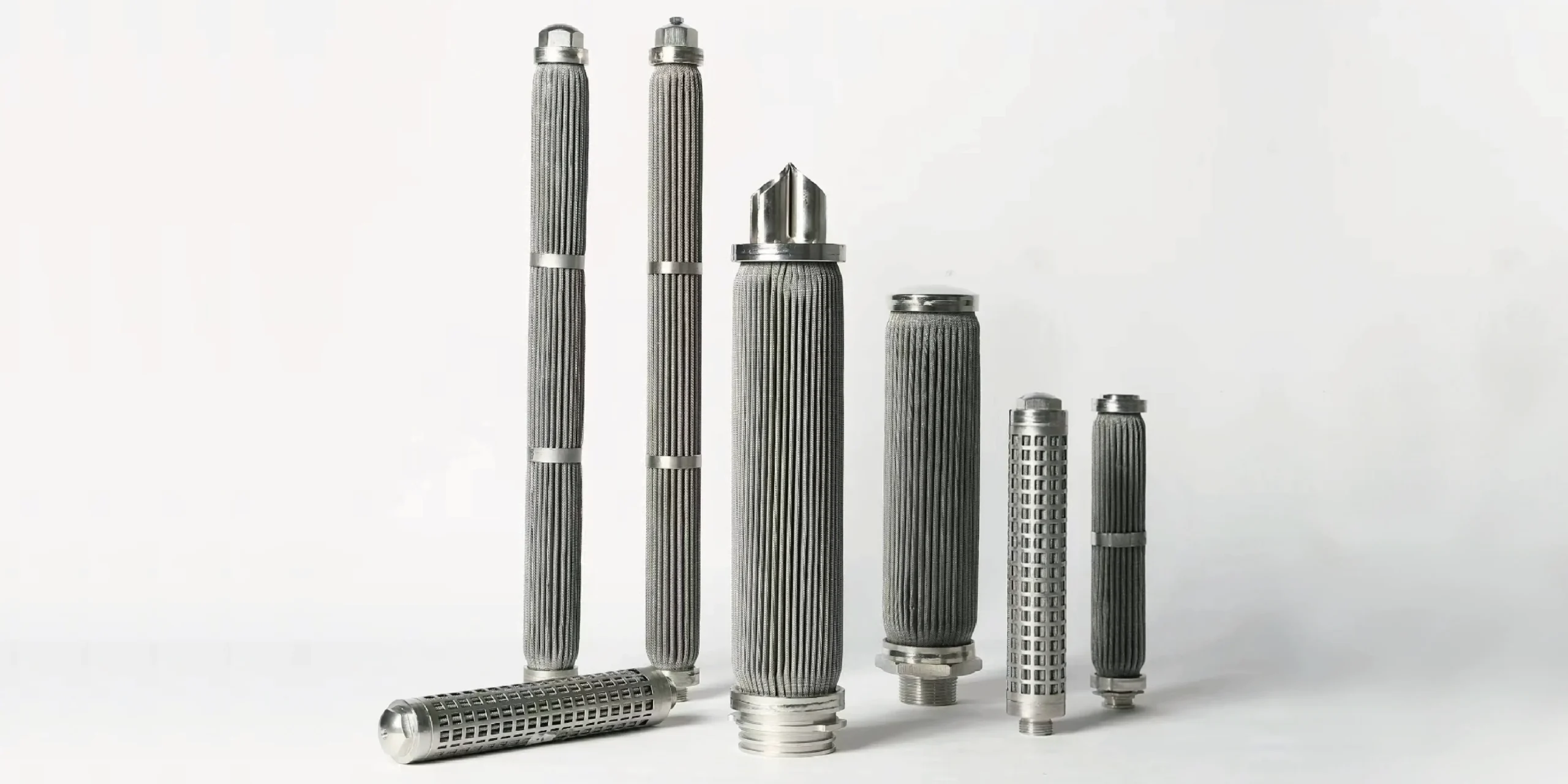
A Practical Application Map
Use this map to identify the questions for an engineering review. It is not an approval table for every element supplied with a particular media or alloy label.
| Duty | Why consider a pleated metal element? | What must be checked? |
|---|---|---|
| Hydraulic and lubrication oil | Particle protection with filtering area in an existing envelope. | Oil viscosity at startup, flow, removal requirement and differential pressure. |
| Process liquids and chemicals | A compatible metal construction may suit duties where other materials are unsuitable. | Exact fluid composition, corrosion, seals and cleaning chemistry. |
| Water and aqueous streams | Fine particle control or polishing after appropriate upstream separation. | Solids loading, scaling, biological fouling and the required outlet quality. |
| Gas service | Particle capture with application-specific metal media and support. | Gas composition, pressure, temperature, flow reference and liquid carryover. |
| Steam and hot service | Metal media may be considered where temperature affects other constructions. | Complete assembly, seals, thermal cycling and applicable acceptance requirements. |
| Polymer processing | Metal media can be considered for particle or gel-related process needs. | Rheology, temperature, contaminant behavior, supports and regeneration. |
Industry names only describe context. Two streams in the same plant may require different elements because their contamination, fluid properties and maintenance constraints differ.
Hydraulic and Lubrication Oil
In a hydraulic filtration application, start with the equipment's required particle-control performance. Then review the normal and maximum flow, oil viscosity at operating temperature and startup, allowable clean pressure drop and structural differential-pressure duty.
Cold oil can produce a higher initial resistance than warm oil. A cartridge that appears suitable from a clean-water curve may need a different area or construction when the actual viscosity is considered. Compare the same flow and fluid conditions before attributing every pressure increase to contamination.
Replacement projects also require correct end geometry and sealing. An element that fits loosely or seats incorrectly may allow bypass, regardless of media quality. Provide the housing drawing, old part identification and available performance requirements. Do not treat equal nominal length and micron labels as proof of interchangeability.
Process Liquids and Chemical Streams
Pleated metal media can be considered for selected petrochemical and process-liquid applications, but chemical compatibility needs the actual composition and operating conditions. Record concentrations, contaminants, temperature and any changes during cleaning or upset conditions.
Review the metal grade, welded joints, seals and other wetted components together. A suitable alloy for one fluid does not establish suitability for a mixture or for a different temperature. The seals may be the limiting component even when the medium itself is compatible.
Assess how the solids load the pleats. Hard particles, deformable material and sticky deposits do not behave identically. A process that quickly bridges the channels may benefit from upstream separation or a different configuration. Do not assume that adding more pleats will resolve an incompatible contaminant-loading pattern.
Water and Aqueous Streams
For water treatment, define whether the cartridge protects downstream equipment, removes defined particles or acts as a polishing stage. The required result determines the filtration evidence and upstream treatment needed.
High bulk-solids loads can consume the useful capacity of a fine pleated element quickly. A suitable strainer, settling step or other upstream process may reduce that burden. The decision depends on the stream and system, rather than a universal solids concentration threshold.
Scaling, biological fouling and chemical deposits can create concerns beyond particle capture. A metal element is not automatically a treatment for dissolved substances, microorganisms or all forms of fouling. Drinking-water, food-contact or sterile-service requirements need their own confirmed materials, documentation and validation scope; the pleated shape does not establish compliance.
Gas Filtration
For gas duty, specify gas composition, normal and maximum pressure, temperature, flow and its reference basis. A normal-volume or standard-volume flow figure is not the same as the operating volumetric flow through the cartridge. Use consistent conditions when reviewing velocity and pressure loss.
Identify the contaminant. Dry particles, liquid droplets, oil aerosol and vapor are different removal tasks. Do not assume that a metal particle-filter cartridge provides coalescing or vapor removal simply because it is installed in a gas line. Ask for the mechanism and relevant performance evidence required by the process.
Moisture or liquid carryover may also change loading and drainage requirements. Flow direction, support and seals must suit the actual operating cases. Oxygen, combustible-gas and other specialized services require an explicit project review; general gas suitability cannot substitute for those requirements.
Steam and Other Hot Duties
Metal construction may make an element a candidate for hot service, but the rating belongs to the complete assembly. Seals, joints, supports, connections and pressure-temperature combinations must all be considered. Do not apply the maximum temperature of a media material to every cartridge that contains it.
State whether steam is the process stream, a cleaning medium or an intermittent exposure. Include startup and shutdown conditions, condensate where relevant and thermal cycling. Cleaning exposure and continuous operation can impose different requirements.
The intended filtration result must also be explicit. Particle removal, a plant's steam-quality requirement and a validated sterile barrier are not interchangeable claims. Confirm the required standard, evidence and acceptance scope before selecting the element. SINFT's general pleated-product capability is not a blanket certification for every steam or regulated application.
Polymer Processing
For polymer melt filtration, media selection, viscosity behavior, temperature and the contaminant must be reviewed together. A gel or deformable deposit may not behave like hard particles, and a clean-fluid pressure comparison cannot establish the actual loading or product-quality result.
Pall's polymer filter-media overview describes multiple metal media for its polymer-processing range. This illustrates the importance of media choice within a particular duty; its proprietary grades, performance and service claims are not SINFT specifications.
Provide the relevant process data and intended cleaning or regeneration method. Confirm the support and end-joint design for the mechanical duty and any reverse loading. There is no universal service-life or cleaning-cycle prediction based only on pleated geometry.
When to Consider Prefiltration or Another Configuration
Consider a different first stage or element arrangement when bulk debris, sticky deposits or rapid channel obstruction prevent useful use of the pleated area. Also reconsider the configuration where access for cleaning is poor, the required duty exceeds the assembly's capability or the available envelope cannot accommodate suitable area and support.
This is not a reason to reject all pleated elements for a contaminant category. Review a suitable grade and assembly, the upstream process and maintenance plan. In some systems the solution is a staged filtration arrangement rather than a change of medium alone.
Porvair's metal cartridge overview shows that metal elements encompass different constructions and application contexts. General industry coverage should be treated as a starting point for a duty review, not automatic qualification of a particular cartridge.

Match the Assembly to the Duty
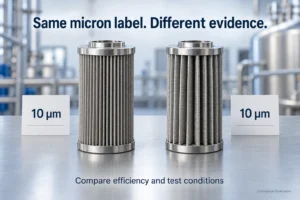
The pleated cartridge media guide discusses woven mesh, sintered mesh and metal fiber felt in folded assemblies. Their loading and cleaning behavior differ by grade and construction. Neither a medium name nor a micron number establishes all of the required performance.
Keep hydraulic performance and structural capability separate. Clean pressure drop describes resistance under stated conditions, while allowable differential pressure concerns mechanical duty. Reverse flow creates another loading case. The pleated cartridge pressure-drop guide explains how to compare measurements on a consistent basis.
| Selection question | Information needed |
|---|---|
| What must be removed? | Particle or other contaminant description, concentration and required outlet performance. |
| What crosses the medium? | Fluid or gas composition, temperature, viscosity where relevant and flow basis. |
| What loads the assembly? | Operating pressure, forward/reverse differential pressure and transient conditions. |
| What makes it fit? | Housing drawing, envelope, end connection, retention and seal. |
| How will it be maintained? | Cleaning method, compatibility, inspection and release requirements. |
| What evidence is required? | Agreed performance basis, materials and inspection/documentation scope. |
What to Send SINFT Before an RFQ
Send the application, working medium and composition, temperature range, normal and maximum flow, contamination concern and required filtration result. State operating pressure and differential-pressure duties separately, including reverse flow or cleaning where applicable.
Include a housing drawing or replacement sample information, dimensions, end connections and seals. Describe the maintenance method and required documents. If a figure or material is unknown, identify it explicitly so it can be reviewed rather than assumed from a photograph.
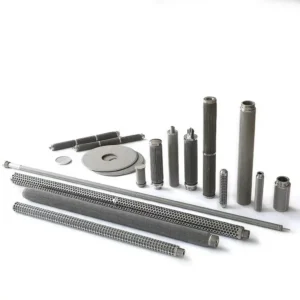
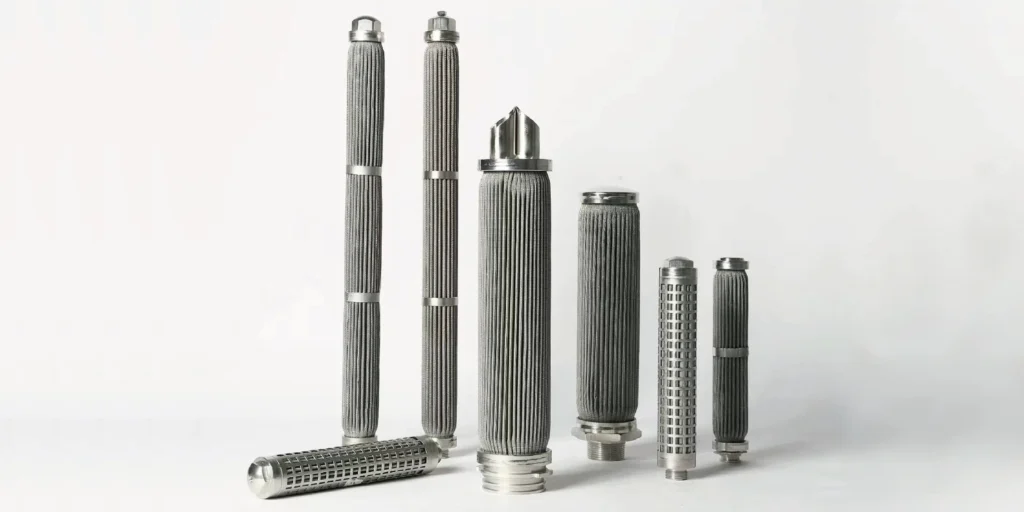
SINFT offers pleated metal filter cartridges using woven mesh, sintered mesh or sintered metal fiber felt with standard or custom end arrangements. Construction and applicability require review for the actual order. Use the custom filter manufacturer page and contact inquiry form to submit the duty for discussion.
Frequently Asked Questions
Can the same pleated cartridge be used for oil and water?
Not automatically. The media, seals, joints and complete assembly must suit each fluid and operating condition. Oil viscosity can create a different pressure-drop requirement, while contaminants and cleaning methods can change loading and compatibility. Define the actual duty and filtration objective for each application. A shared housing size or nominal rating does not establish interchangeability between two process streams.
Are pleated metal cartridges suitable for all chemical fluids?
No. Suitability depends on the exact chemical composition, concentration, temperature and exposure conditions, including cleaning. Review all wetted components rather than only the medium's alloy. Seals and joints can limit the assembly even when the metal itself is suitable. Give the supplier the relevant process information and obtain a defined compatibility review instead of relying on a general stainless steel description.
Can a particle-filter cartridge remove oil vapor from gas?
A particle-removal claim does not establish vapor removal. Dry solids, droplets, aerosols and vapors involve different separation tasks, and a gas line may require more than one treatment stage. Identify the contaminant and required outlet condition. Ask for the proposed removal mechanism and relevant evidence rather than assuming that any metal element installed in a gas stream performs all of these functions.
Does stainless steel media establish a steam-service rating?
No. Steam suitability depends on the complete assembly, including seals, supports, joints and connections, and on pressure, temperature and exposure conditions. Continuous process steam and intermittent cleaning are different duties. Define the required result and any applicable acceptance scope before selection. The medium's temperature capability alone cannot establish the finished cartridge's rating or a validated sterile-service claim.
When should a pleated filter have an upstream strainer?
Consider upstream separation when bulk debris or heavy particle loading would consume the useful capacity of the fine element too quickly. The choice depends on the contaminant, flow and maintenance needs, not a universal rule for every pleated cartridge. A strainer may remove larger debris while a downstream cartridge performs the finer task. Verify that the stages together meet the required process result.
Can pleated filters handle sticky or deformable particles?
Some media and assemblies may be candidates, but sticky or deformable deposits can load the medium or bridge pleat channels differently from hard particles. Review contaminant behavior, channel geometry and the intended cleaning method together. Do not predict service life from geometric area alone. Representative evidence or an agreed evaluation may be needed before accepting the proposed construction for the duty.
Does a reusable metal cartridge always support backwashing?
No. Reverse loading requires an appropriate medium, support arrangement, joints and approved operating conditions. A cleaning method must also be compatible with seals and the process. Confirm the permitted reverse duty for the complete element. The words metal or reusable do not establish universal backwash capability, unlimited cleaning cycles or acceptable integrity after every regeneration procedure.
What information is most useful for an application review?
Provide the process objective, fluid composition, temperature, flow and its reference basis, contaminant description and required removal performance. Add operating and differential-pressure duties, housing interfaces, seals, cleaning and documentation requirements. A drawing or old sample can help with fit, but it does not establish the missing performance data. Identify unknowns so they can be resolved before the manufacturing definition is approved.
Final Thoughts
Pleated metal cartridges are useful candidates where area, compatible construction and the required filtration result can be achieved within the available system. The right choice depends on the stream, contaminants, mechanical duty and maintenance plan. Give SINFT the operating conditions and housing information so media, support, sealing and documentation can be reviewed together for the actual application before an order is finalized.