When a buyer sees “high porosity” on a fiber felt datasheet, it can sound like an easy answer to pressure drop and service life. It is not. Porosity is valuable, but it does not replace micron rating, permeability, support structure, contaminant testing, or cleaning recovery. The useful question is what porosity means for your actual element.
Direct Answer: Sintered Fiber Felt Porosity
Sintered fiber felt porosity describes the open void volume inside a random metal fiber matrix. In engineering selection, high porosity can help reduce clean resistance and increase dirt-holding space, but porosity alone does not define micron rating, filtration efficiency, pressure drop, strength, or cleaning recovery. A useful specification must connect porosity with grade, thickness, fiber structure, support mesh, flow rate, fluid properties, contaminant loading, and test method.
SINFT’s sintered fiber felt filters use a random SS316L fiber matrix as the standard construction, with SS304, SS316L, FeCrAl, Hastelloy, Inconel, Nickel, and Titanium available for specific service conditions. The confirmed product information lists porosity up to about 85%, depending on grade and structure. That value is a product-family reference, not a universal guarantee for every alloy, micron grade, thickness, pleated design, or welded assembly.
This guide explains how engineers, maintenance teams, and industrial buyers should use porosity when selecting sintered metal fiber felt for polymer melt, gas, steam, hot liquid, hydraulic, lubrication, and high-particle-load applications.
What Porosity Means in Sintered Fiber Felt
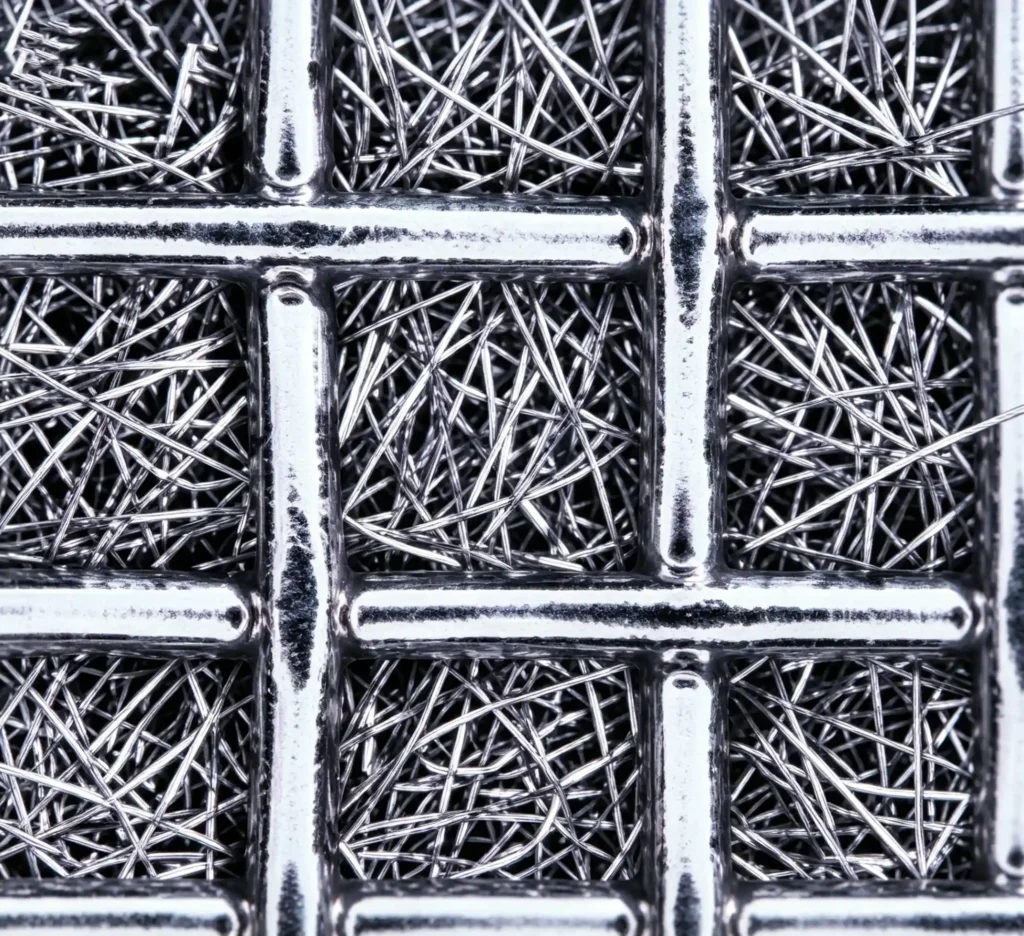
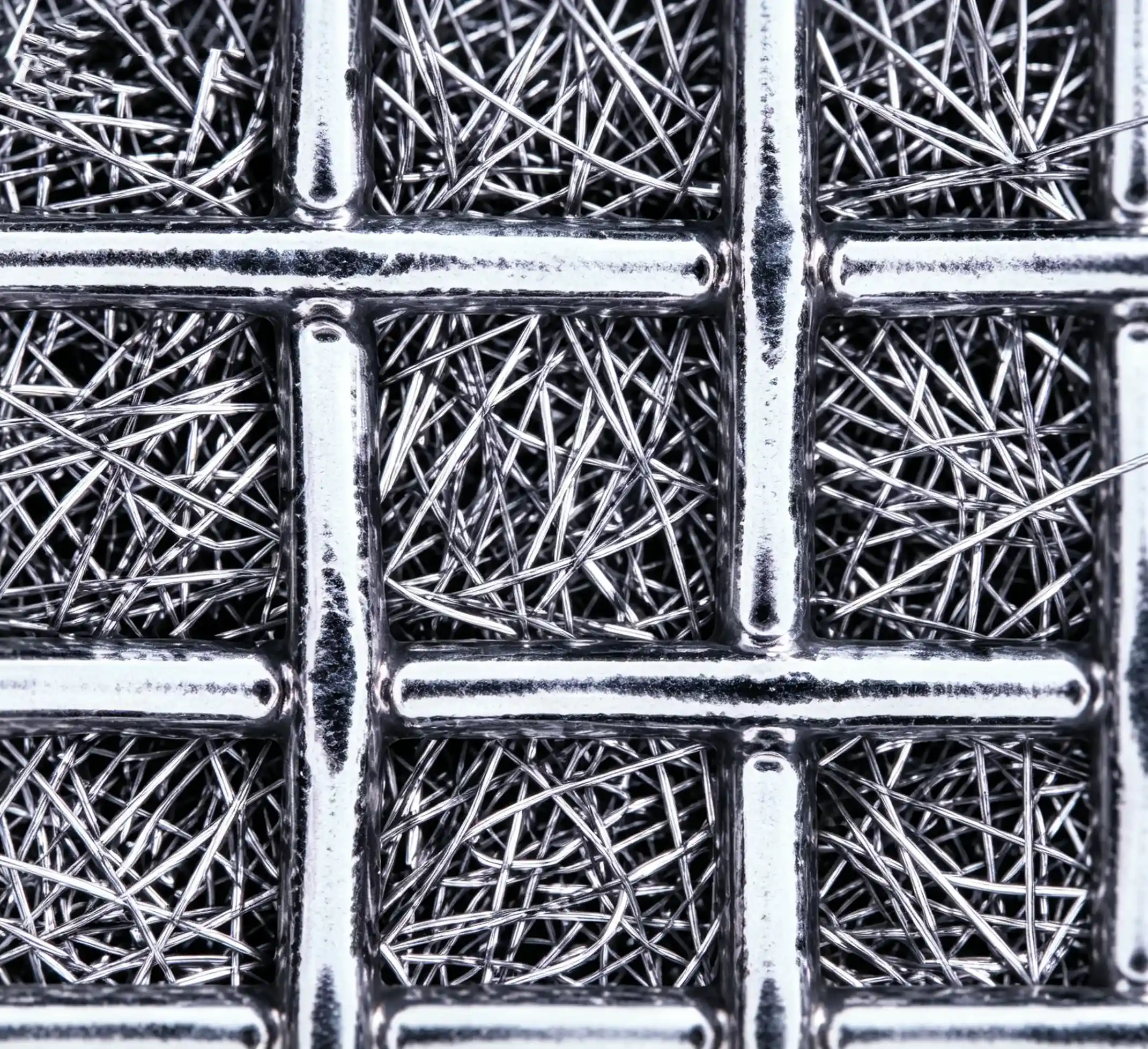
Porosity is the fraction of the media volume occupied by interconnected voids instead of metal fibers. In sintered fiber felt, those voids are not straight holes. They form a three-dimensional tortuous path between randomly laid and sintered metal fibers.
That structure is different from woven wire mesh. A square weave or Dutch weave has a controlled wire geometry and a more surface-oriented pore path. Sintered fiber felt has distributed void space throughout the depth of the medium, which is why it is normally discussed as a depth filtration medium.
For a buyer, porosity helps answer three practical questions:
- How much open flow path does the medium have before it starts loading?
- How much internal volume may be available for distributed particle capture?
- How sensitive will the element be to compression, support design, fine grade selection, and embedded contamination?
Porosity does not answer these questions by itself:
- What exact micron rating will the element achieve?
- What beta ratio or efficiency will it deliver?
- What pressure drop will it produce at a given flow?
- How long will it run before cleaning?
- How fully will permeability recover after cleaning?
- What differential pressure can the finished element withstand?
Those answers require the actual element construction and operating conditions.
Why High Porosity Is Useful
High porosity is valuable because it gives the fluid or gas more available void volume inside the medium. In many applications, this can support lower clean pressure drop and more distributed contaminant loading than a tighter, lower-void structure.
The benefit is especially relevant when the contaminant is fine, dispersed, or present as a haze rather than as a few coarse particles. Instead of all particles collecting on one surface, a depth medium can capture particles through the matrix. This may delay surface blinding and extend the interval before terminal differential pressure is reached.
SINFT’s product information positions sintered fiber felt as a high-porosity depth medium for gas, steam, polymer melt, high-particle-load liquids, and high-temperature service. It is not the first choice when the main requirement is aggressive backwash with surface release or a rigid screen surface. In those cases, a sintered mesh filter element or another screen-type structure may be more practical.
The right way to use porosity is to treat it as one selection variable, then test or confirm the final element against:
- clean pressure drop at the required flow;
- target particle retention or micron rating;
- contaminant holding before the cleaning point;
- maximum allowable differential pressure;
- cleaning method and recovery target;
- support mesh, end cap, weld, and seal design.
For a broader media mechanism comparison, see SINFT’s surface filtration vs depth filtration guide.
Porosity vs Permeability
Porosity and permeability are related, but they are not the same. Porosity describes how much void space exists. Permeability describes how easily a fluid or gas passes through that void network under a defined pressure difference.
Two fiber felt grades can have similar porosity but different permeability because the flow path depends on:
- fiber diameter and fiber distribution;
- media thickness;
- pore size distribution;
- tortuosity of the path;
- sintering condition;
- compression during forming or pleating;
- support mesh and protection layers;
- flow direction through the finished element.
A high-porosity medium can still have meaningful resistance if it is thick, fine, compressed, loaded with particles, or operated with viscous fluid. A lower-porosity medium may perform acceptably if it has more surface area, coarser grade, shorter flow path, or a better pleated geometry.
This is why engineering comparison should request clean pressure drop or permeability data under defined conditions instead of relying only on the porosity percentage. ISO 3968 is commonly referenced for evaluating differential pressure versus flow characteristics of hydraulic filter elements. The broader lesson applies beyond hydraulic filters: pressure-drop comparison needs a defined fluid, flow, temperature, and test method.
Porosity and Pressure Drop
Porosity can influence pressure drop, but it does not determine pressure drop by itself. Clean differential pressure depends on the complete fluid path: medium grade, thickness, effective area, pleat design, support layers, housing geometry, viscosity, density, temperature, and flow rate.
In general, more open void structure can reduce resistance for the same media thickness and grade. In real filter elements, however, several factors can outweigh the porosity number:
| Factor | Why it matters |
|---|---|
| Micron grade | Finer grades usually create smaller pore paths and higher resistance |
| Media thickness | More thickness gives longer flow path and more depth-loading space |
| Effective area | Pleating or larger element diameter can reduce face velocity |
| Fluid viscosity | Polymer melt or cold oil can raise pressure drop far beyond water-like fluids |
| Support mesh | Protection layers improve strength but can add resistance |
| Loading behavior | Embedded fine particles gradually reduce available pore paths |
| Cleaning recovery | Residual contamination may keep pressure drop higher after reuse |
For SINFT fiber felt filters, the confirmed product information lists a maximum differential pressure reference up to 10 bar. That reference belongs to the product family and must be checked against the actual element size, construction, flow direction, support design, temperature, and housing requirement.
If pressure-drop budget is tight, provide SINFT with the flow rate, fluid or gas, operating temperature, viscosity or density, target micron grade, allowable initial pressure drop, and allowable terminal differential pressure. For a deeper explanation of this calculation logic, see the filter pressure drop vs flow rate guide.
Porosity and Dirt-Holding Capacity
High porosity can support higher dirt-holding capacity because more internal void space may be available for distributed particle loading. This is one reason sintered fiber felt is often considered for fine-particle and high-load service.
However, dirt-holding capacity cannot be calculated accurately from porosity alone. It depends on the actual contaminant:
- particle size distribution;
- particle shape and hardness;
- oiliness, gel behavior, or stickiness;
- tendency to bridge on the surface or penetrate into the depth;
- fluid viscosity and temperature;
- flow rate and face velocity;
- terminal pressure-drop limit;
- cleaning method and acceptance criterion.
For example, hard fines in a hot liquid, gel-like polymer contamination, and soft organic deposits may load the same high-porosity felt in very different ways. One may distribute through the matrix; another may blind the inlet surface early; another may embed deeply and reduce cleaning recovery.
ISO 16889 is often associated with multi-pass testing for hydraulic filter elements, including particle removal and pressure-drop behavior under defined conditions. Not every fiber-felt application should use that exact test, but the principle is important: capacity claims should be tied to a defined contaminant, fluid, flow, temperature, terminal differential pressure, and reporting method.

Porosity vs Micron Rating
Porosity is not the same as micron rating. Porosity describes void volume; micron rating describes particle retention under a stated method or performance definition.
A coarse high-porosity grade may pass particles that a finer grade retains. A finer grade may also have high porosity compared with many solid or woven structures, but its pore paths are still smaller and may create higher resistance. This is why a buyer should not select a felt only by saying “high porosity.” The RFQ also needs the target retention level.
SINFT’s confirmed Sintered Fiber Felt product information lists:
- product-page nominal filtration range: 0.5-50 um;
- technical-table typical filtration range: 1-60 um with custom grades available;
- porosity up to about 85%, depending on grade and structure.
These values describe the product family. The actual order should define the required grade, element form, support design, and inspection method.
ASTM F316 is commonly referenced for pore-size characterization by bubble point and mean-flow pore testing. ISO 4022 is also relevant when discussing fluid permeability testing for permeable sintered metal materials. SINFT’s fiber-felt product information references GB/T standards for stainless steel fiber felt, filtration accuracy and dirt-holding capacity, bubble pressure, air permeability, and tensile strength. For procurement, the useful question is not only “what is the porosity?” but also “what test or inspection result confirms the required retention and permeability?”
For general rating language, SINFT’s filter micron rating chart explains why nominal rating, absolute rating, mesh size, pore size, and application performance should not be treated as the same specification.
Support Mesh and Element Structure
The same fiber felt medium can behave differently when it is supplied without mesh, with a single protection mesh, or with double protection mesh. Support structure affects strength, handling, pleating, flow stability, cleanability, and differential pressure resistance.
SINFT’s Sintered Fiber Felt product page lists three structure options:
- without mesh;
- single protection mesh;
- double protection mesh.
A protection mesh can help prevent mechanical damage, support the felt during handling or cleaning, and stabilize the element under differential pressure. It may also affect flow resistance, available surface area, cleaning behavior, and how particles reach the depth medium.
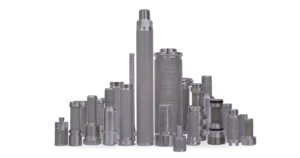
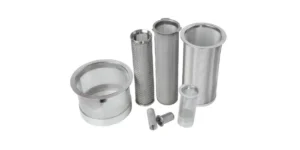
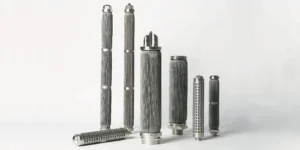
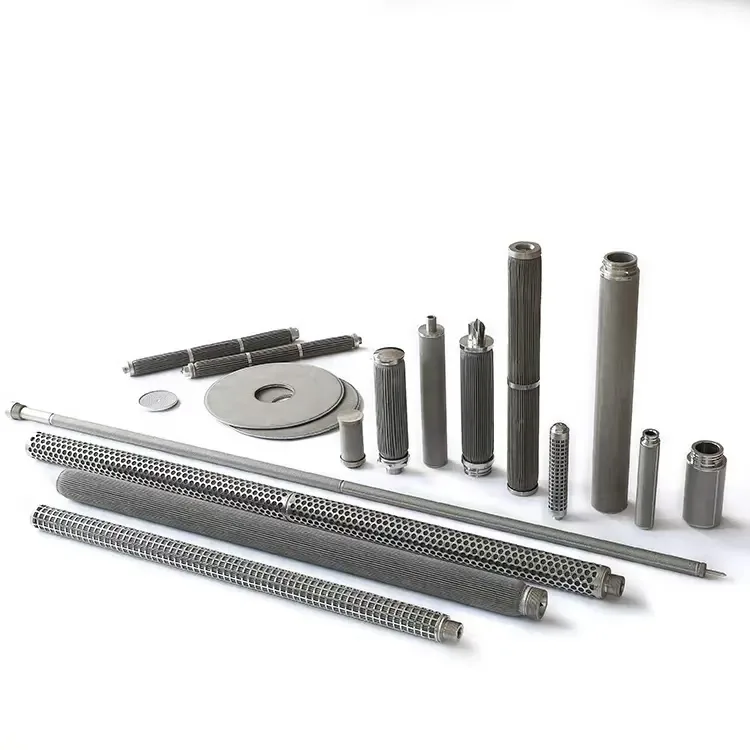
Element form matters as well. SINFT can supply sintered fiber felt as cylindrical elements, pleated elements, candles, discs, sheets, and custom welded assemblies. A pleated form can increase area inside a limited housing, while a candle or cylindrical form may be selected for vessel layout, cleaning direction, or replacement fit. The best structure depends on the process, not only on the media sheet.
Application Notes
Porosity becomes useful only when it is connected to the application problem. The same high-porosity felt may be selected for different reasons in polymer melt, gas, steam, hydraulic oil, or hot liquid filtration.
| Application condition | How porosity affects selection | Engineering caution |
|---|---|---|
| Polymer melt with gels and fine contamination | Depth structure may help distribute fine loading and support longer service interval | Viscosity, gel behavior, cleaning method, and allowable pressure drop must be provided |
| Hot gas or steam with fine solids | High-temperature metal depth media may be useful when alloy is suitable | Confirm alloy, oxidation/corrosion environment, support mesh, and cleaning method |
| Hydraulic or lubrication oil | Fine particle loading may benefit from controlled depth media | Pressure-drop curve, oil viscosity, cleanliness target, and collapse requirement must be defined |
| Catalyst fines or process particles | Porous depth media may hold fine solids before surface blinding | Abrasion, particle hardness, chemical compatibility, and cleaning recovery need review |
| Existing cartridge replacement | Media choice must fit the same OD, length, end connection and seal | Bypass caused by wrong fit can defeat any porosity advantage |
For polymer service, see SINFT’s polymer melt filtration page and the dedicated sintered fiber felt for polymer melt application page. These pages are better suited for industry-specific conditions, while this guide focuses on the porosity parameter itself.
Common Selection Mistakes
The biggest mistake is treating porosity as a standalone performance guarantee. A high number can look attractive in a datasheet, but a filter element succeeds only when the pore structure, geometry, support, material, and process match.
Avoid these mistakes:
- specifying only porosity without micron rating or retention target;
- assuming higher porosity always means lower pressure drop;
- assuming higher porosity always means longer service life;
- comparing porosity values from different suppliers without test context;
- ignoring thickness, area, pleat design, or support mesh;
- using water or air data to predict viscous polymer melt performance without correction;
- selecting fiber felt for aggressive backwash when a rigid screen would release solids better;
- forgetting cleaning recovery after embedded fine-particle loading;
- copying an old cartridge dimension without checking seal compression and bypass risk.
The related metal fiber felt vs wire mesh guide explains when a surface-oriented wire mesh medium may be better than a depth fiber felt medium, even if the felt has attractive porosity.
RFQ Data for Sintered Fiber Felt Porosity
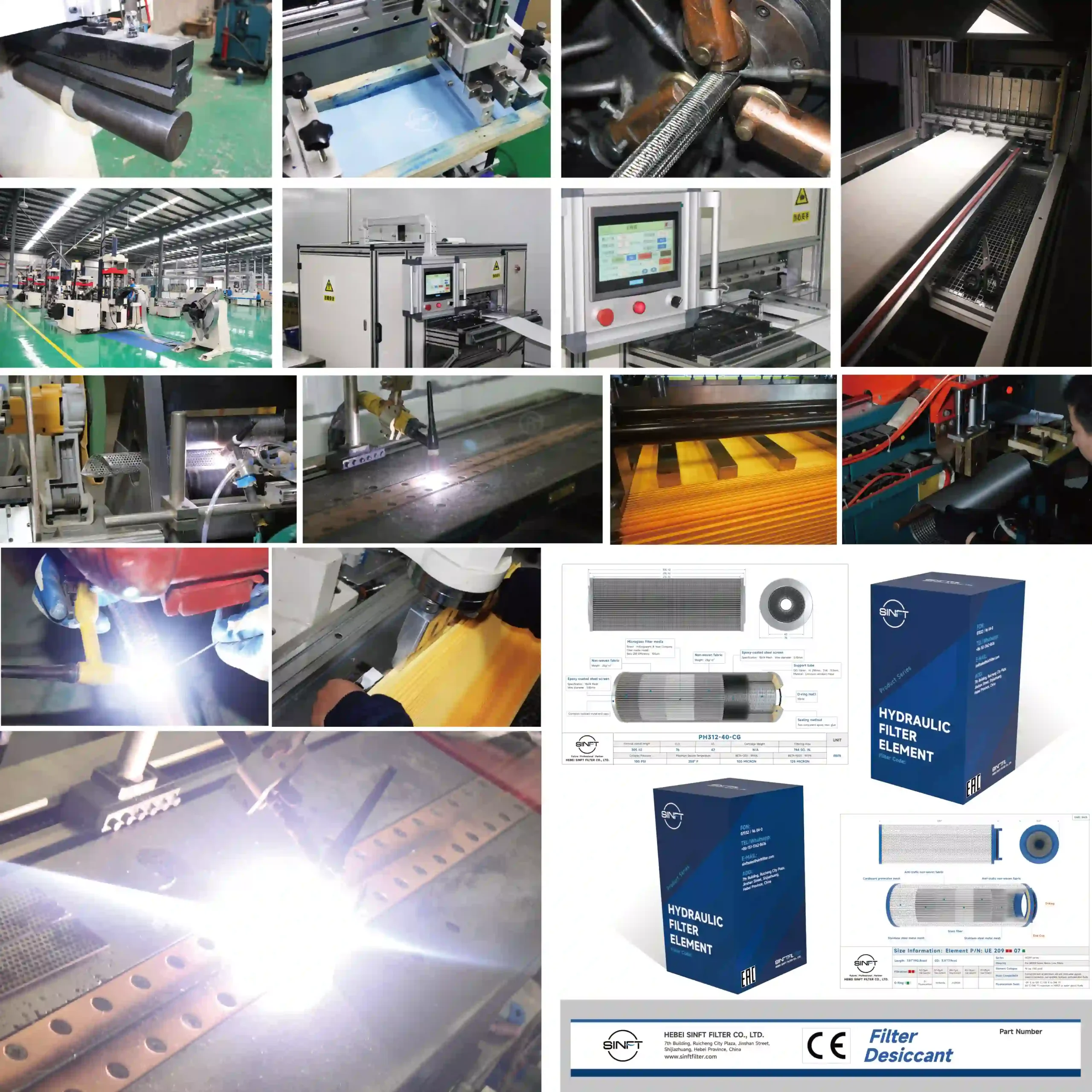
A useful RFQ should describe the process condition, not only ask for a porosity value. SINFT can review drawings, old samples, housing dimensions, materials, filter media, end connections, support tubes, seal grooves, handles, flanges, and custom welded assemblies through its custom filter manufacturer service.
Send these details when requesting sintered fiber felt:
- Required micron rating or retention target
- Whether the rating expectation is nominal, absolute, or test-method based
- Fluid or gas name
- Flow rate per element or total flow rate
- Operating pressure and maximum differential pressure
- Operating temperature
- Viscosity or density if available
- Contaminant type, loading, particle size distribution, and particle behavior
- Required material or corrosion concern
- Preferred structure: without mesh, single protection mesh, or double protection mesh
- Element form: cartridge, candle, disc, sheet, pleated element, or custom assembly
- OD, ID, length, end connection, seal type, and housing fit
- Cleaning method and desired reuse cycle
- Required inspection documents or test references
If you are replacing an existing element, include photos, drawings, old part numbers, damaged samples, and housing dimensions. To discuss a project, use SINFT’s contact form and include as much operating data as possible.
How SINFT Can Help With Sintered Fiber Felt Porosity Selection
SINFT can help when porosity needs to be translated into a finished filter element specification. SINFT sintered fiber felt filters can be supplied as cylindrical elements, pleated elements, candles, discs, sheets, and custom welded assemblies, with structure options such as without mesh, single protection mesh, or double protection mesh.
If you are comparing fiber felt grades, send the retention target, fluid or gas, flow rate, operating temperature, viscosity or density, contaminant behavior, allowable pressure drop, material requirement, cleaning method, and required element form. If you are replacing an existing filter, also send the old sample, photos, dimensions, end connection, seal type, and housing data. SINFT can then review whether porosity, media grade, support mesh, area, or cleaning recovery is the limiting factor.
Final Thoughts
Use sintered fiber felt porosity as an engineering clue, not as a complete specification. High porosity can be valuable for clean flow resistance and depth loading, but it must be balanced with micron rating, permeability, pressure drop, strength, support mesh, alloy, contaminant behavior, and cleaning recovery.
For many industrial projects, the best specification is not “highest porosity.” It is a defined combination of:
- suitable alloy;
- required retention level;
- acceptable clean and terminal pressure drop;
- enough media area;
- correct support structure;
- validated cleaning method;
- correct dimensions and seals;
- agreed inspection or test documentation.
SINFT can manufacture sintered fiber felt elements and custom metal filter assemblies for applications where polymer media, simple screens, or off-the-shelf cartridges do not match the temperature, chemical, cleaning, or dimensional requirements. Send the process data before treating the highest porosity value as the best specification.
FAQ
What is sintered fiber felt porosity?
Sintered fiber felt porosity is the open void volume inside a sintered random metal fiber matrix. It indicates how much internal space may be available for flow and particle loading, but it does not directly define micron rating or efficiency.
Is higher porosity always better for a sintered fiber felt filter?
No. Higher porosity can help flow and dirt-loading potential, but the correct choice also depends on grade, thickness, pore size distribution, support mesh, strength, fluid viscosity, contaminant behavior, cleaning method, and pressure-drop limit.
Does porosity determine filter pressure drop?
No. Porosity influences pressure drop, but clean differential pressure also depends on media thickness, effective area, flow rate, fluid properties, support layers, housing design, and micron grade. Loaded pressure drop also depends on the contaminant.
Is porosity the same as micron rating?
No. Porosity describes void volume. Micron rating describes particle retention under a stated method or performance definition. A high-porosity medium still needs a defined retention grade and suitable test or inspection method.
Why is sintered fiber felt used for depth filtration?
Its random three-dimensional metal fiber network can capture particles through the media depth instead of only at a visible screen opening. This can be useful for fine-particle and high-loading service, provided cleaning recovery and pressure drop are acceptable.
When should I choose sintered mesh instead of fiber felt?
Choose sintered mesh or another wire-mesh structure when stable surface openings, rigid support, easier surface cleaning, visual inspection, or aggressive backwash release are more important than distributed fine-particle depth loading.
What information should I send for a custom sintered fiber felt quote?
Send the required micron rating, fluid or gas, flow rate, pressure, temperature, viscosity, contaminant details, material requirement, support structure, dimensions, end connection, seal type, cleaning method, and any required test or inspection documents.