If your reusable metal filter keeps blinding, cleaning poorly, or missing the expected service cycle, the question may not be “which micron rating is lower?” It may be whether the contaminant should be captured inside a porous depth matrix or held on a more inspectable surface. That is the real metal fiber felt vs wire mesh decision.
Direct Answer: Metal Fiber Felt vs Wire Mesh
Choose metal fiber felt when you need fine-particle depth loading, high porosity, and dirt-holding capacity. Choose wire mesh when you need visible openings, surface retention, easier release of retained solids, and stable geometry for cleaning or inspection. Both can be stainless steel media, and both can be used in reusable industrial elements, but they solve different failure modes.
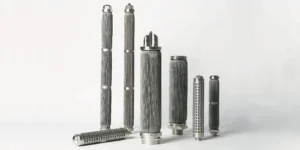
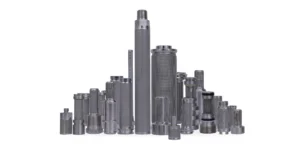
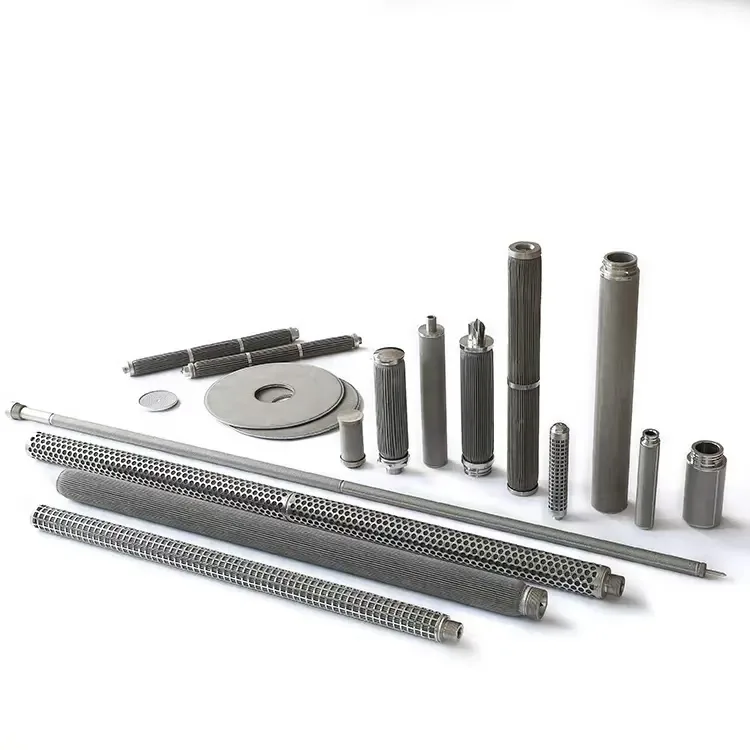
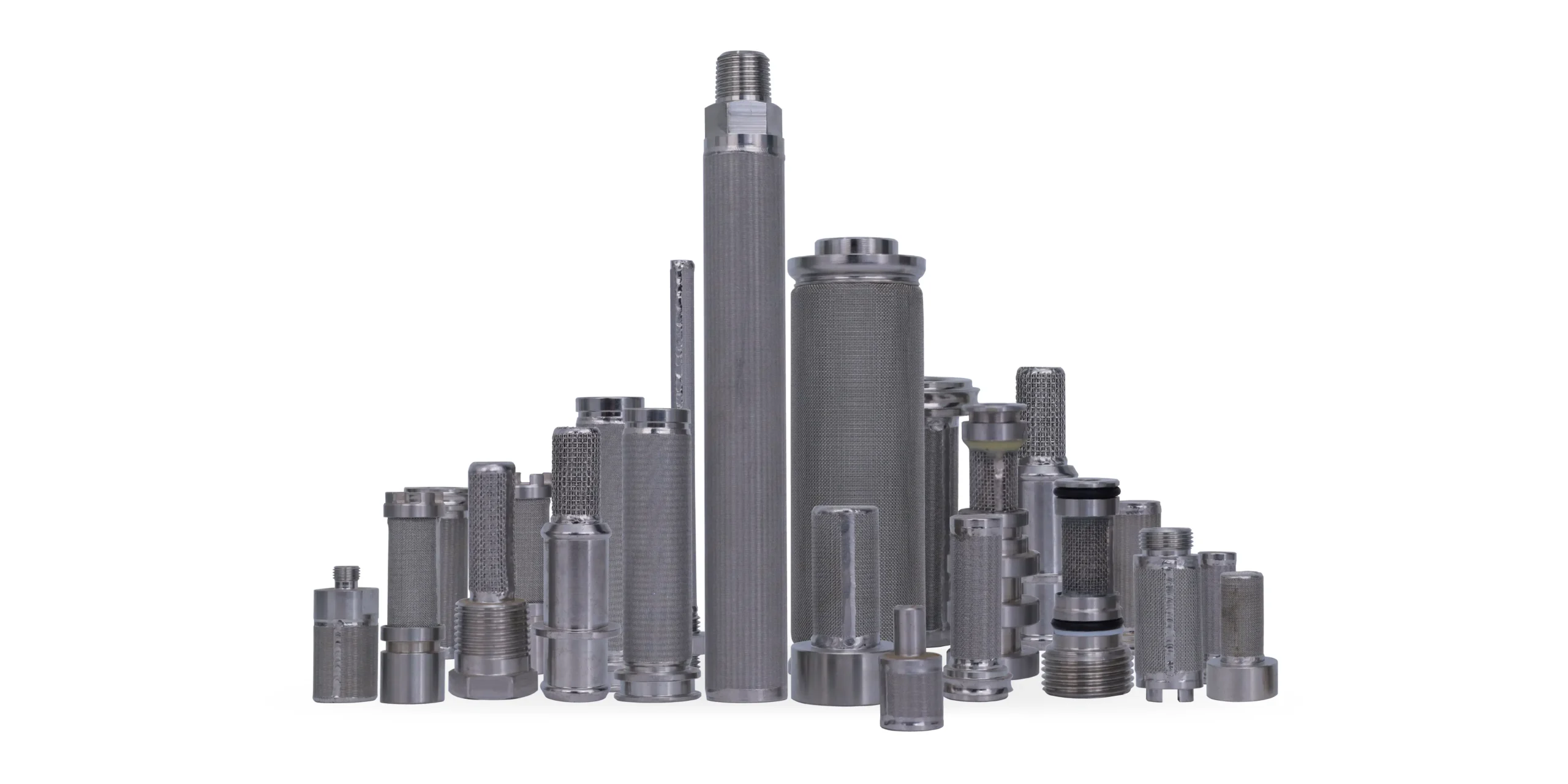
SINFT manufactures sintered fiber felt filters and sintered mesh filter elements in cartridges, cylinders, candles, discs, sheets, pleated elements, and custom welded assemblies. This guide explains how engineers and buyers should compare the two media before requesting a custom filter element.
Metal Fiber Felt vs Wire Mesh at a Glance
Metal fiber felt is usually selected for distributed fine-particle loading; wire mesh is usually selected for defined surface screening and easier release of retained solids. The best option is not determined by material alone because element geometry, support layers, seals, cleaning method, and test conditions can change performance.
| Selection factor | Metal fiber felt | Wire mesh |
|---|---|---|
| Main structure | Randomly laid metal fibers sintered into a porous matrix | Woven wires arranged into square, twill, Dutch, or other controlled patterns |
| Filtration mechanism | Mainly depth filtration | Mainly surface filtration, especially in woven or sintered mesh control layers |
| Typical strength | Needs correct support mesh or element design for the duty | Stronger visual geometry; sintered mesh adds bonded layer stability |
| Dirt loading | Good starting point for distributed fine-particle loading | Good starting point when solids form a releasable surface cake |
| Cleanability | Can be cleaned, but deeply embedded particles may be harder to remove | Often easier to inspect and clean when particles remain on the surface |
| Pressure drop behavior | Influenced by porosity, thickness, fiber diameter, grade, and loading depth | Influenced by aperture, wire diameter, open area, layer stack, and cake formation |
| Rating language | Must be tied to grade and test method | Must distinguish mesh count, aperture, micron rating, and test method |
| Best RFQ question | How much fine contaminant must the element hold before cleaning? | What opening and support structure will stop the target particles and release during cleaning? |
This comparison is about media behavior. A finished filter element may combine both: fiber felt can be protected by woven mesh, wire mesh can be sintered into multi-layer media, and either medium can be pleated to increase area inside a limited housing.
What Is Metal Fiber Felt?
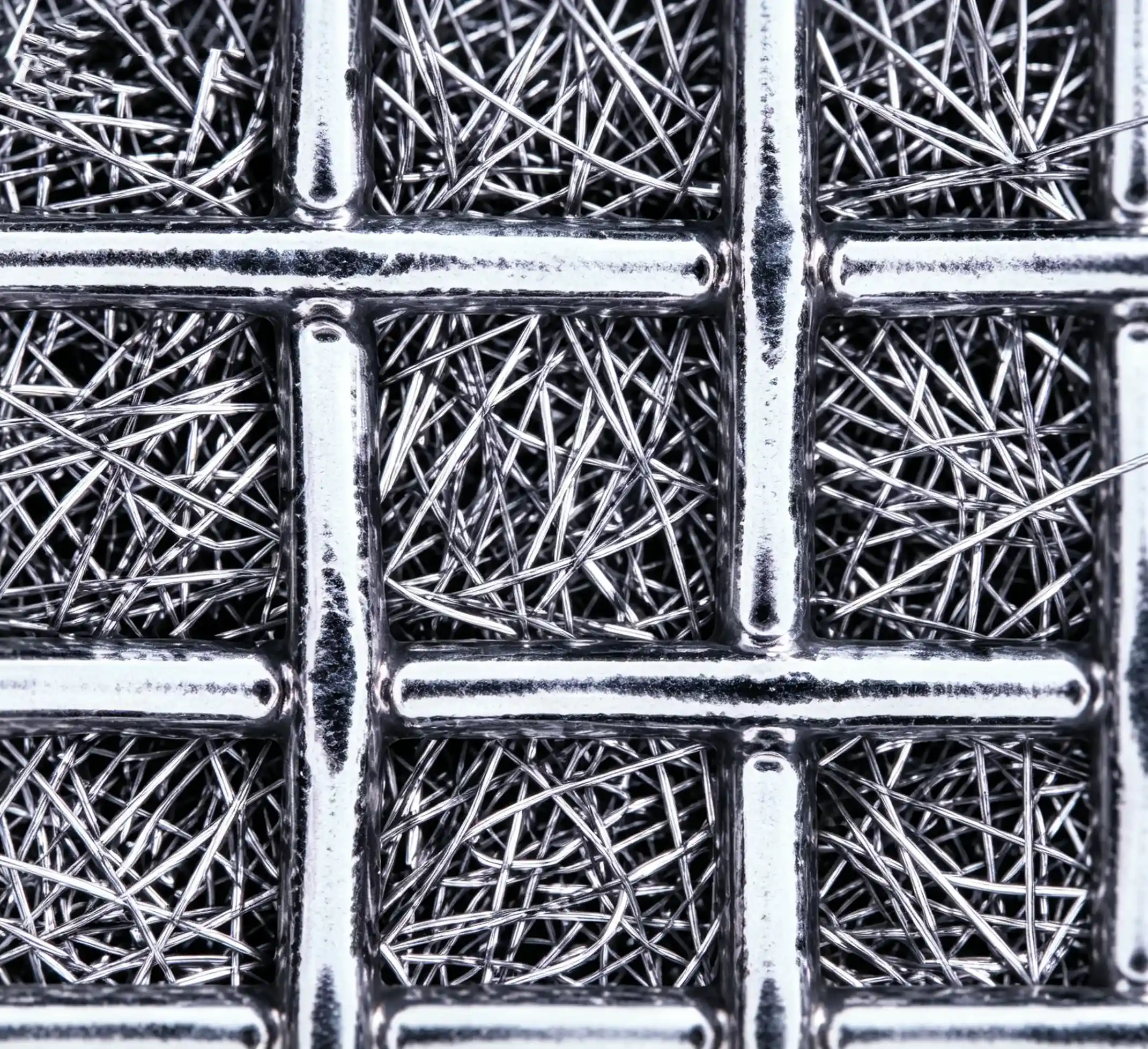
Metal fiber felt is a sintered porous medium made from randomly arranged fine metal fibers. Instead of relying on a single plane of openings, it creates a three-dimensional flow path where particles can be captured through the depth of the medium.
SINFT’s confirmed product information lists SS316L as the standard random fiber matrix, with SS304, SS316L, FeCrAl, Hastelloy, Inconel, Nickel, and Titanium available for specific applications. The product page lists 0.5-50 um as the nominal product-page filtration range, while the technical table lists 1-60 um typical with custom grades available. The page also states porosity up to about 85%, depending on grade and structure.
These values are product-family references. They should not be treated as one universal rating for every alloy, thickness, support mesh, pleated design, flow direction, temperature, or contaminant. If you are buying a replacement or an OEM element, define the required retention performance and request the applicable test or inspection method for the actual element.
Metal fiber felt is often considered when:
- fine particles must be captured without immediate surface blinding;
- a high-porosity metal medium is needed;
- the process involves gas, steam, polymer melt, hot liquid, or high particle load;
- the filter element must be reusable and withstand conditions where polymer media may not be suitable;
- depth loading matters more than simple visual inspection of a screen surface.
What Is Wire Mesh Filter Media?
Wire mesh filter media is made from woven metal wires with controlled geometry. Depending on the weave and layer structure, it can provide visible square openings, finer Dutch-weave pore paths, or a sintered multi-layer laminate with support and control layers.
Wire mesh may be used as a single woven layer, a mesh liner, a pleated cartridge medium, or a sintered mesh element. If your process needs surface release, repeated washing, or a more visible screen structure, start here before assuming fiber felt is automatically the more advanced choice. SINFT’s sintered mesh filter elements can use SS304, SS316, SS316L, Hastelloy, Monel, or Inconel, with 2-7 layers and a common five-layer structure. The confirmed product-family filtration range is 1-200 um, with thickness commonly from 0.5 to 5.3 mm and a maximum differential pressure reference up to 50 bar depending on structure, size, and flow direction.
Wire mesh is often considered when:
- particle retention should happen at a defined surface or control layer;
- the retained solids should release during backwash, air blowing, brushing, or washing;
- the operator needs visual inspection of screen plugging or damage;
- pore stability, support strength, and dimensional repeatability are priorities;
- the process requires a reusable metal element in hydraulic, petrochemical, water treatment, gas, polymer, or backwash service.
For weave-level decisions, SINFT already has a square weave vs Dutch weave sintered mesh guide that explains why mesh count, aperture, permeability, and rating method should not be mixed.
Depth Loading or Surface Release?
The most important practical difference is where the contaminant is retained. Metal fiber felt distributes particles inside a porous depth matrix; wire mesh tends to hold particles at an opening or on a surface cake.
Depth loading can improve dirt-holding capacity when fine particles are distributed through the medium instead of immediately blocking one plane of openings. This is useful in many fine-particle and high-loading duties, but it also means cleaning must be validated. Once particles enter the depth of a fiber matrix, a short reverse-flow pulse may not fully restore the original permeability.
Surface loading is easier to understand and inspect. If particles are larger than the opening and form a releasable cake, a wire mesh or sintered mesh screen may be cleaned more predictably. However, surface blinding can raise differential pressure quickly when particles are soft, sticky, fibrous, deformable, or close to the pore size.
For broader mechanism language, see SINFT’s surface filtration vs depth filtration guide. This article applies that mechanism to the actual media choice between metal fiber felt and wire mesh.
Pressure Drop and Porosity
Pressure drop cannot be predicted from the media name alone. It depends on pore structure, thickness, area, support layers, flow rate, viscosity, temperature, gas or liquid properties, and how the contaminant loads the element over time.
Metal fiber felt can have high porosity, and SINFT’s product page lists porosity up to about 85% depending on grade and structure. That does not mean every fiber-felt element has lower pressure drop than every wire mesh element. A thick fine-grade felt, a compressed element, or a heavily loaded depth matrix can still generate significant resistance.
Wire mesh may have a high open area in a coarse square weave, but a fine Dutch weave, multi-layer laminate, small cartridge diameter, or clogged surface cake can raise pressure drop. A pleated wire mesh element may reduce clean pressure drop by adding area, while a rigid cylindrical screen may be better for aggressive backwash or high mechanical support.
When comparing metal fiber felt vs wire mesh, ask for pressure-drop information under defined conditions:
- Fluid or gas type
- Flow rate
- Temperature
- Viscosity or density
- Clean element pressure drop
- Loading curve or cleaning trigger differential pressure
- Maximum allowable differential pressure for the element and housing
ISO 3968 is commonly referenced for evaluating differential pressure versus flow characteristics of hydraulic filter elements. It is a useful reminder that pressure-drop comparison needs a defined method and fluid condition; it should not be reduced to “felt is lower” or “mesh is lower.”
Dirt-Holding Capacity and Service Life
Metal fiber felt is often the better starting point when service life is limited by fine-particle loading rather than by coarse debris. Its depth structure can use more media volume before the surface is fully blinded.
That advantage is conditional. Dirt-holding capacity should be proven against the actual contaminant, not inferred only from porosity. Particle size distribution, particle shape, oiliness, viscosity, operating temperature, and cleaning chemistry all matter. A sticky polymer gel, a hard catalyst fines stream, and a soft biological deposit can behave very differently inside the same nominal grade.
Wire mesh may have lower dirt-holding volume for fine particles, but it can be more practical when solids should stay on the surface and be removed frequently. It may also be better when the buyer wants visual cleaning confirmation, a robust screen, or a low-cost coarse prefilter before a finer cartridge stage.
ISO 16889 is often associated with multi-pass testing for hydraulic filter elements. The exact standard and test program must match the media and application, but the principle is important: capacity and efficiency claims should be tied to a defined contaminant, test fluid, flow, terminal pressure drop, and reporting method.
Micron Rating and Test Method
A micron rating is useful only when the rating method and efficiency expectation are clear. Metal fiber felt and wire mesh may both be sold by micron rating, but the same number can represent different test conditions or retention definitions.
For wire mesh, mesh count is not the same as micron rating. Mesh count describes the woven geometry, while aperture, wire diameter, weave type, open area, and test method determine how particles behave. For sintered mesh, the control layer and support layers also matter.
For metal fiber felt, the grade, thickness, fiber diameter distribution, porosity, compression, support mesh, and flow direction all affect retention. The product may be specified by nominal grade, tested pore size, bubble point, air permeability, or another agreed metric.
ASTM F316 is commonly referenced for pore-size characterization by bubble point and mean-flow pore testing. SINFT’s fiber-felt product information also references GB/T standards for stainless steel fiber felt, filtration accuracy and dirt-holding capacity, bubble pressure, air permeability, and tensile strength. Buyers should state which test result or acceptance criterion they need with the order.
The practical RFQ language should be:
- required retention target or micron rating;
- nominal or absolute rating expectation;
- target efficiency if available;
- test method or supplier inspection method;
- clean pressure drop at actual flow and fluid;
- allowable terminal differential pressure;
- whether the element will be cleaned and retested.
Cleaning and Regeneration
Wire mesh is usually easier to clean when particles remain on the surface; metal fiber felt can be cleaned, but embedded fine particles require more careful validation. Do not assume all stainless steel media recover to the same permeability after washing.
Cleaning may include backwash, reverse flow, ultrasonic cleaning, compatible chemical cleaning, steam, or controlled thermal methods. The correct method depends on the contaminant and alloy. Chlorides, acids, caustics, oxidizers, oils, polymers, and abrasive solids can affect both the filter medium and the welded assembly.
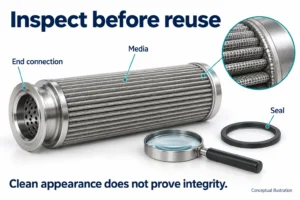
For wire mesh, inspection is often more direct. Operators can see broken wires, plugged openings, deformed screens, damaged support layers, or bypass marks. For metal fiber felt, cleanliness may need to be judged by permeability recovery, bubble point, weight change, visual surface condition, or process validation rather than by surface appearance alone.
SINFT’s stainless steel filter cartridge cleaning guide explains why cleaning should include inspection and baseline pressure-drop records. For fiber felt, that record is especially useful because depth loading may not be visible from the outside.

Mechanical Strength and Support
Wire mesh generally provides a more visible and mechanically defined structure, while metal fiber felt needs the correct support design for the duty. This does not mean fiber felt is weak; it means the finished element must be engineered as a complete assembly.
SINFT fiber felt filters can be supplied without mesh, with a single protection mesh, or with double protection mesh. The correct construction depends on differential pressure, flow direction, pleating, handling, cleaning method, and whether the element is a cartridge, candle, sheet, disc, or custom welded assembly.
Wire mesh can also fail if it is undersupported. Broken welds, poor end-cap bonding, unsupported pleats, sharp support perforations, wrong flow direction, or excessive reverse pressure can damage even a strong-looking mesh. Sintering multiple mesh layers improves dimensional stability, but the layer stack must still be matched to the housing and loading direction.
For demanding hydraulic, lubrication, or repeated backwash service, compare the whole element:
- media strength;
- support tube or support mesh;
- end-cap welds and seams;
- seal location;
- collapse and burst expectations;
- forward and reverse differential pressure;
- cleaning direction;
- dimensional tolerances;
- acceptance tests and documentation.
Application-Based Selection
Choose the medium from the failure mode you need to avoid. The same plant may use wire mesh as a prefilter and metal fiber felt as a finer final element.
| Application condition | Better starting point | Why |
|---|---|---|
| Coarse or visible particles that release from a surface | Wire mesh or sintered mesh | Easier cleaning and visible inspection |
| Fine particle haze or distributed fines | Metal fiber felt | Depth structure may hold more contaminant before terminal pressure drop |
| Strong backwash or self-cleaning duty | Wire mesh or rigid sintered mesh | Surface release and support stability are usually more important |
| High-temperature gas, steam, or hot liquid with fine solids | Metal fiber felt or supported fiber felt | High-porosity metal depth media may be useful if alloy and cleaning are suitable |
| Polymer melt or viscous process with gels and fines | Fiber felt, staged mesh, or custom construction | Media choice depends on gel behavior, viscosity, pressure drop, and cleaning method |
| Existing housing replacement | The medium that fits the envelope and seal correctly | Wrong OD, length, end connection, or seal can cause bypass regardless of media |
For polymer service, see SINFT’s polymer melt filtration and sintered fiber felt for polymer melt pages. For hydraulic and lubrication systems, wire mesh, sintered mesh, fiber felt, and pleated metal cartridges may all be considered depending on pressure-drop budget, oil viscosity, cleanliness target, and maintenance procedure.
When a Hybrid Design Is Better
Many industrial elements should not choose only fiber felt or only wire mesh. A hybrid design can use each medium where it performs best.
Examples include:
- fiber felt protected by upstream and downstream woven mesh;
- pleated fiber felt for added area inside a cartridge envelope;
- sintered mesh support behind a finer control layer;
- coarse wire mesh prefilter ahead of a fiber felt polishing element;
- removable wire mesh screen before a permanent fine metal cartridge;
- custom welded assembly with different media zones.
The hybrid decision should still be practical. Adding layers can improve support or staged capture, but it can also add pressure drop, cost, cleaning complexity, and more interfaces that must be welded or sealed correctly. Use a hybrid design when it solves a defined process problem, not simply to make the element appear more advanced.
SINFT’s custom filter manufacturer service can review drawings, old samples, housing dimensions, fluid conditions, and cleaning methods to decide whether a fiber felt, wire mesh, sintered mesh, pleated, or staged construction is more appropriate.
How SINFT Can Help With Fiber Felt and Wire Mesh Selection
SINFT can support this choice when the media decision is tied to a real element, not only a material name. For fine-particle depth loading, SINFT can review sintered fiber felt filters in cylindrical, pleated, candle, disc, sheet, or custom welded forms. For surface screening, support stability, and repeatable cleaning, SINFT can review sintered mesh filter elements or wire-mesh-based cartridge constructions.
If you already know the housing envelope, send the OD, ID, length, end connection, flow direction, seal position, and any old sample photos. If the process problem is more important than the drawing, send the contaminant, flow, viscosity, temperature, pressure-drop limit, cleaning method, and expected service cycle. SINFT can then recommend a fiber felt, wire mesh, pleated, supported, or staged construction through the custom filter manufacturer service, or you can send the application data directly.
What Buyers Should Confirm Before RFQ
A useful RFQ should define the filtration problem before naming the media. If the request only says “metal fiber felt vs wire mesh,” the manufacturer still has to guess the particle, flow, pressure, and cleaning duty.
Send these details:
- working fluid, gas, steam, oil, or polymer;
- contaminant type, particle-size distribution, shape, hardness, stickiness, and load;
- required micron rating, nominal or absolute expectation, and test method if required;
- flow rate and clean pressure-drop target;
- allowable operating and terminal differential pressure;
- operating temperature and startup/shutdown temperature changes;
- viscosity and whether it changes during operation;
- chemical compatibility and cleaning chemicals;
- preferred alloy such as SS316L, SS304, FeCrAl, Hastelloy, Inconel, Nickel, or Titanium;
- element OD, ID, length, end connection, seal material, and flow direction;
- cleaning method, cleaning interval, and acceptance criteria after cleaning;
- existing drawing, old sample, photo, housing dimensions, or part number;
- quantity, inspection reports, certificates, and packaging requirements.
With these details, SINFT can compare sintered fiber felt filters, sintered mesh filter elements, and pleated filter cartridges without inventing performance data that has not been confirmed.
Frequently Asked Questions
Is metal fiber felt better than wire mesh?
Metal fiber felt is better for some fine-particle depth-loading duties, while wire mesh is better for many surface-screening and cleanable duties. If your service cycle is limited by fine contaminant distributed through the medium, fiber felt may help. If your main need is visible openings, surface cake release, or easier inspection after cleaning, wire mesh may be the safer starting point.
Is metal fiber felt a depth filter?
Yes. Sintered metal fiber felt is generally used as a depth-filtration medium because its random fiber network captures particles through a porous three-dimensional structure. That depth path can improve contaminant holding in some fine-particle duties, but it also means cleaning recovery should be verified by pressure drop, permeability, or process acceptance rather than only by surface appearance.
Is wire mesh a surface filter?
Wire mesh is usually treated as a surface-filtration medium, especially when particles are retained at visible openings or on a surface cake. Multi-layer sintered mesh can add support and pore stability, but the control layer still needs to be specified. You should confirm aperture, weave type, layer structure, flow direction, and cleaning method before treating any mesh label as a final rating.
Which has lower pressure drop, metal fiber felt or wire mesh?
Neither is always lower. Pressure drop depends on grade, aperture, porosity, thickness, area, flow, viscosity, temperature, support layers, and contaminant loading. A high-porosity fiber felt may still show high resistance if it is fine, thick, or loaded. A wire mesh may also become restrictive when the opening is fine or the surface cake blinds quickly.
Can metal fiber felt be cleaned and reused?
Metal fiber felt can often be cleaned and reused, but recovery depends on the contaminant and cleaning method. Deeply embedded particles may be harder to remove than surface deposits on wire mesh. Before using it as a long-cycle reusable element, define the cleaning method, acceptable recovery pressure drop, chemical compatibility, and inspection method for the actual process.
Can wire mesh and fiber felt be used together?
Yes. Fiber felt may use one or two protection mesh layers, and a system may use wire mesh as a prefilter before a fiber-felt element. Hybrid designs are useful when each layer has a clear function, such as support, staged capture, or media protection. They should not be added automatically because extra layers can increase pressure drop and cleaning complexity.
What should I send for a fiber felt or wire mesh recommendation?
Send the working fluid, contaminant type, particle-size distribution, target micron rating, flow rate, viscosity, temperature, pressure-drop limit, cleaning method, desired alloy, housing dimensions, end connection, seal position, and old sample photos if available. If you are replacing a failed element, also describe how it failed: blinding, bypass, deformation, short life, poor cleaning recovery, or corrosion.
Final Thoughts
Metal fiber felt and wire mesh are not competing buzzwords; they are two ways to solve different filtration problems. Choose fiber felt when depth loading and contaminant holding matter most. Choose wire mesh when surface release, inspection, and stable openings matter most. For mixed duties, SINFT can review a supported, pleated, or staged custom metal element before you place the order.