When a filter element looks correct but fails early in service, the problem is often hidden in the media, seams, welds or cleaning damage. A bubble point test can help reveal whether a wetted porous structure has an unusually large through-pore or integrity issue. But if you use the result as a simple micron-rating certificate, you may make the wrong purchasing decision.
Direct Answer: What Does a Bubble Point Test for Filter Element Inspection Confirm?
A bubble point test for filter element inspection can support fabrication-integrity checking and largest-through-pore evaluation under a defined test method. It helps compare porous media, inspect cleaned reusable elements, and check whether a filter element has obvious damage, leakage or abnormal open paths. It does not, by itself, prove filtration efficiency, dirt-holding capacity, pressure drop, service life or exact particle retention.
For a custom stainless steel filter element, the bubble point result should be read together with media type, micron rating basis, permeability, pressure drop, material grade, dimensions, welding quality, end connection fit and application conditions.
What Is a Bubble Point Test?
A bubble point test uses a wetted porous material and gradually applied gas pressure. The test liquid fills the pores. As pressure increases, gas first passes through the largest connected pore path and produces bubbles. That first visible or measurable bubble point is then recorded according to the chosen method.
In practical filter work, this test is useful because large pores, open seams, media damage or incomplete sealing may show up before the filter is installed in a housing. For custom metal filters, it can be part of an inspection package along with dimensional inspection, material checks, pressure testing and air permeability testing.
What the Bubble Point Test Can Confirm
A well-defined filter bubble point test can help answer several useful engineering questions:
- Is there an obvious through-pore larger than expected?
- Is the porous media damaged after handling, cleaning or fabrication?
- Does one production batch look consistent with the agreed reference sample?
- Is a welded, sealed or assembled filter element likely to have a leakage path?
- Does a cleaned reusable element still deserve further inspection before reuse?
For sintered mesh filter elements and sintered fiber felt filters, this can be especially useful because the functional structure is porous and interconnected. The test is most meaningful when the supplier and buyer agree on the test liquid, wetting condition, pressure ramp, observation method and acceptance logic.
What the Bubble Point Test Cannot Prove
The most important buying point is simple: bubble point is not the same as filtration performance in the process.
It should not be used alone to claim:
- absolute particle retention;
- real operating filtration efficiency;
- dirt-holding capacity;
- pressure drop at the buyer’s flow rate;
- cleaning life or reuse cycles;
- chemical compatibility;
- mechanical strength;
- a universal micron rating for every media type.
ISO 2942:2018 specifies a bubble-point method for hydraulic filter elements. Its abstract explains that the method can verify fabrication integrity and help locate the largest pore by determining the first bubble point, while the first bubble point is not a functional filter characteristic and cannot estimate filtration rating, efficiency or retention capacity.
That boundary matters in B2B purchasing. If a supplier gives only one bubble point number and calls it the micron rating, ask for the test basis and the rating method. A responsible technical discussion should separate integrity inspection from performance claims.
Why Test Method Details Matter
A bubble point value depends on the method. The same element may not give the same result if the wetting liquid, surface tension, contact angle, temperature, wetting time or observation method changes. Media geometry also matters: woven mesh, sintered mesh, sintered fiber felt and membrane media do not behave exactly the same.
ASTM F316 covers pore-size characteristics of membrane filters by bubble point and mean-flow pore testing. ASTM notes that bubble point can indicate maximum pore size and may reveal damage, ineffective seals or system leakage, but the result should not be the only factor used to describe contaminant retention.
For sintered metal, ISO 4003:1977 is directly relevant because it addresses bubble test pore size for permeable sintered metal materials. ISO’s abstract states that the bubble test is a quality-control test, not a method for defining filter grades or exact pore-size distribution.
This is why your RFQ should not ask only, “Can you provide a bubble point?” A better request is: “Can you provide bubble point testing under an agreed method, and can you explain how it relates to the specified media grade and inspection acceptance?”
Bubble Point vs Micron Rating
Micron rating describes the size of particles a filter is intended to remove under a stated basis. Bubble point describes gas breakthrough through a wetted pore path under a test condition. The two are related in technical discussion, but they are not interchangeable.
If you are selecting a filter by retention target, start with the actual process problem: particle size, contaminant type, downstream tolerance, fluid viscosity, flow rate and acceptable pressure drop. Then use the filter micron rating chart as a selection reference and confirm whether nominal rating, absolute rating or a supplier-specific grade is being discussed.
For custom metal filters, bubble point is best used as a supporting inspection method. It can help check whether the media or assembled element has an abnormal largest pore, but it cannot replace application testing where real capture efficiency matters.
Bubble Point vs Air Permeability
Bubble point and air permeability answer different questions.
Bubble point focuses on the pressure needed for gas to pass through the largest wetted pore path. Air permeability focuses on how easily air flows through the porous structure under defined conditions. A filter could pass an integrity check but still have a pressure drop that is too high for your pump, compressor or process line.
ISO 4022:2018 specifies a method for determining fluid permeability of permeable sintered metal materials with continuous or interconnected porosity. For engineering selection, permeability and pressure drop help explain whether the selected media is practical at the required flow rate.
If your problem is rising differential pressure, also review filter pressure drop vs flow rate. A bubble point number alone will not tell you whether the installed element can meet the required flow with acceptable energy cost.
Where Bubble Point Testing Fits by Filter Type
For pleated filter cartridges, bubble point testing may help inspect media integrity or compare a cleaned element when the media and test procedure support it. Pleated stainless steel cartridges also need checks on end cap fit, gasket or O-ring compatibility, core support, seam quality and housing interface.
For sintered mesh and fiber felt, bubble point can support quality-control comparison because the media structure is porous and interconnected. It should still be paired with filtration grade information, permeability, mechanical design and cleaning behavior. The article sintered fiber felt vs sintered mesh explains why depth-loading felt and layered mesh need different selection logic.
For coarse basket filters and strainers, perforated baskets and wedge wire screens, bubble point is often less useful than dimensional inspection, slot/opening measurement, open-area review and fit verification. If the opening is a visible perforation or slot, ask for the relevant drawing, aperture or slot-size control instead.
When Should You Request a Bubble Point Test?
You should consider requesting a bubble point test when the filter element has fine porous media, when the application is sensitive to media damage, or when a reusable element is being cleaned and returned to service.
It is especially useful in these situations:
- replacing an old metal cartridge where original records are incomplete;
- approving a custom sintered element before installation;
- checking whether cleaning damaged a reusable filter;
- comparing a new batch with an approved sample;
- reviewing a high-value element for hydraulic, polymer, chemical or precision filtration duty;
- documenting inspection requirements for OEM equipment.
For hydraulic and lubrication systems, the test can support fabrication-integrity review. For polymer melt filtration, the buyer may also need material, strength, cleaning and pressure drop review because high-viscosity service can make blockage and pressure behavior critical.
How to Read a Supplier’s Bubble Point Claim
If a supplier writes “bubble point tested” without method details, treat the statement as incomplete. You need to know what was tested and what the result means.
Ask these questions:
- Was the test performed on flat media, a sample coupon or the finished assembled element?
- What wetting liquid was used?
- Was the result first bubble point, bulk flow, mean-flow pore or another reported value?
- Was the acceptance limit based on a standard, drawing, sample, supplier specification or customer requirement?
- Was the element also checked for dimensions, welds, cleanliness and material?
- Is the result intended for integrity screening or for pore-size characterization?
This is where second-person clarity helps your buying decision: if you need a filter element that protects downstream equipment, do not accept a single number without context. Ask the supplier to connect the test result to the media, drawing and operating conditions.
RFQ Checklist for Bubble Point and Inspection
When you send an inquiry to SINFT, include the details that let engineers choose the right test scope instead of guessing from a product name:
- filter type: cartridge, candle, disc, basket, tube, cone, panel or custom assembly;
- media type: sintered mesh, sintered fiber felt, woven mesh, perforated plate, wedge wire or other;
- required micron rating or particle-removal target;
- fluid name, viscosity, temperature and operating pressure;
- flow rate and acceptable pressure drop;
- filter housing dimensions and end connection;
- drawing, sample photos or old element dimensions;
- material requirement such as SS304, SS316L or special alloy;
- cleaning method and reuse expectation;
- required inspection documents, such as material certificate, dimensional report, optional pressure test certificate, passivation record, packaging photos or batch traceability records.
If you are not sure which document matters, start from the business risk. A replacement element for a non-critical prefilter may need different inspection depth from a custom element protecting pumps, valves, nozzles or expensive downstream equipment.
How SINFT Can Help With Filter Element Inspection
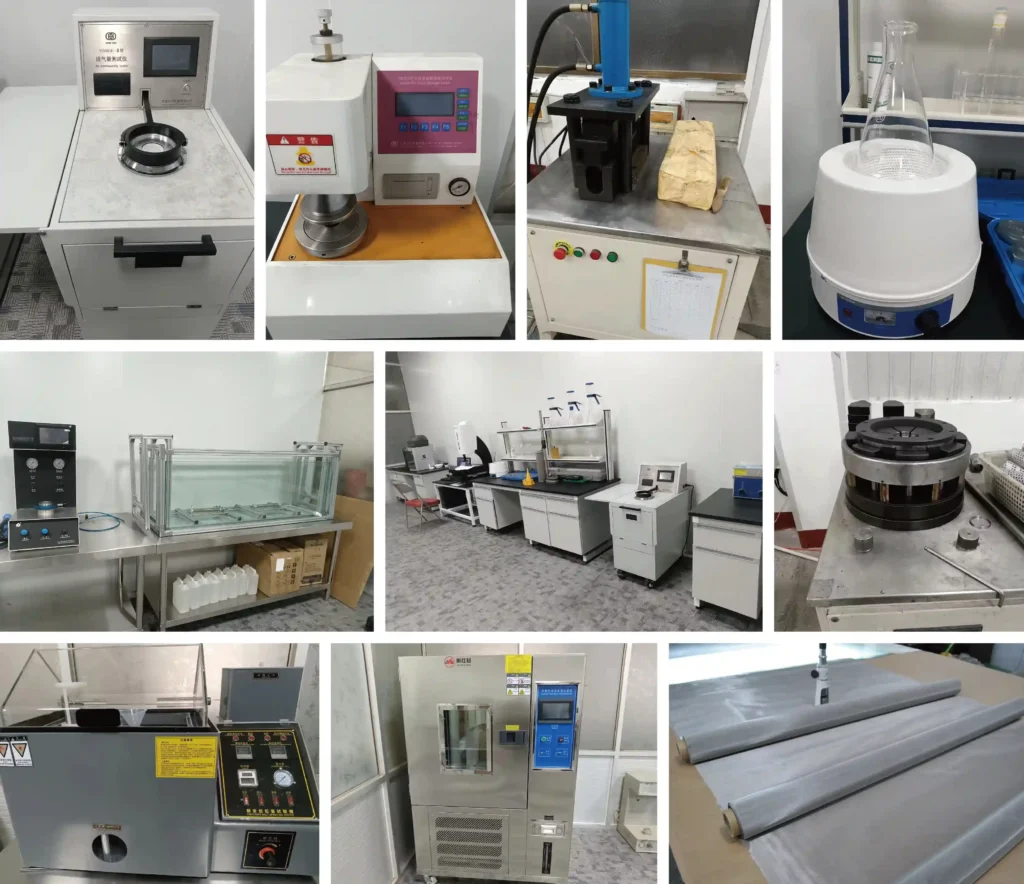
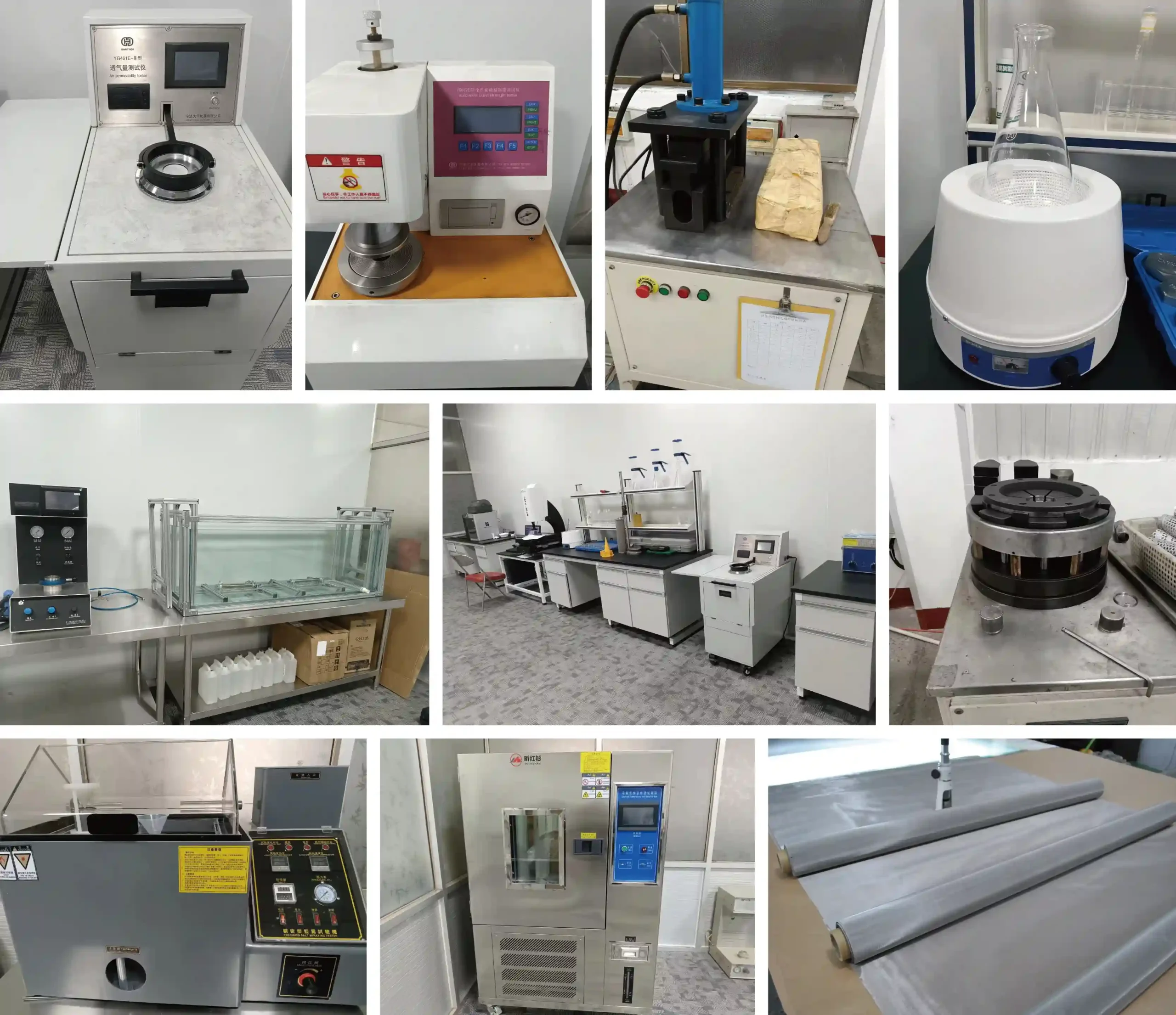
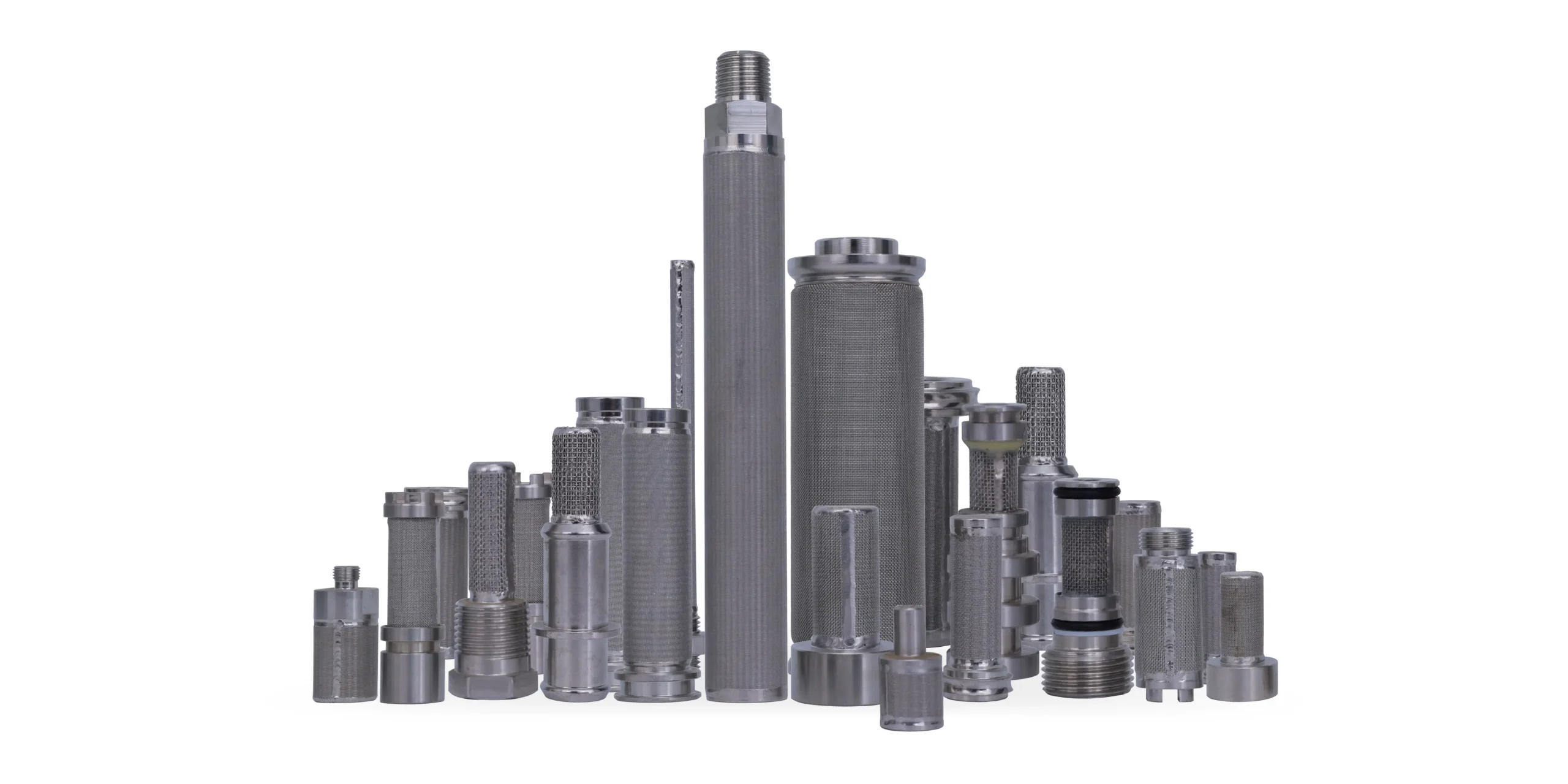
SINFT manufactures custom stainless steel filter elements and supports inspection requirements for drawing-based production, old-sample replacement and application-specific design. Confirmed capabilities include bubble point testing, burst pressure testing, air permeability testing, dimensional inspection, material spectrometry, metallographic analysis, pore or slot integrity verification, passivation and surface-cleanliness inspection, batch traceability and inspection documentation.
For a new project, start with the custom filter manufacturer service page if you need a made-to-drawing element, media conversion, special material, non-standard end connection or replacement matching. If your requirement is already clear, send the process data and documents through the contact inquiry form.
This article is not trying to sell bubble point testing as a magic certificate. The real value is engineering discipline: define what must be protected, select the right media, then use inspection data to reduce avoidable uncertainty before the filter enters service.
Frequently Asked Questions
Is a bubble point test the same as a micron rating?
No. A bubble point test can support largest-pore or integrity review under a defined method, but it is not the same as a micron rating or filtration efficiency test. If your purchase depends on particle retention, ask how the micron rating was established and whether the rating is nominal, absolute or supplier-specific.
Can bubble point testing prove filter efficiency?
No. Bubble point testing does not directly measure how many particles are captured in real flow conditions. Efficiency depends on particle size distribution, media structure, flow rate, viscosity, loading condition and the rating test method. Use bubble point as supporting inspection data, not as the sole proof of process filtration performance.
Why does the wetting liquid matter in a bubble point test?
The pressure needed to displace liquid from a pore depends on surface tension and wetting behavior. If the test liquid changes, the bubble point result can change too. That is why a useful report should state the wetting liquid, test method and acceptance basis instead of giving only a pressure value.
Should I request bubble point testing for every stainless steel filter element?
Not always. It is more useful for fine porous media, sintered metal elements and inspection-sensitive cartridges than for coarse perforated baskets or visible-slot screens. For baskets, wedge wire and perforated parts, dimensional inspection, opening measurement, weld review and fit verification may be more relevant to the buying risk.
Can a cleaned stainless steel cartridge be checked by bubble point?
Sometimes, yes. If the media type and test method are suitable, bubble point testing can help show whether cleaning created obvious damage or an abnormal through-pore. It still cannot prove full cleaning recovery. You should also compare pressure drop, flow behavior, visible condition and process cleanliness requirements.
What should be included in a bubble point test report?
A useful report should identify the tested part, media type, test method, wetting liquid, observed bubble point, acceptance limit and date or batch traceability. For custom elements, it is also helpful to include drawing revision, material grade, dimensional inspection and any additional pressure or permeability test records.
Does a higher bubble point always mean a better filter?
No. A higher bubble point may indicate smaller limiting pore paths under the test condition, but “better” depends on your process. A very fine filter may create excessive pressure drop, block too quickly or be difficult to clean. The right filter balances retention, flow, strength, cleaning and compatibility.
How do I send SINFT an RFQ for inspection-supported filters?
Send the drawing or sample photos, filter dimensions, media type, micron target, fluid, temperature, operating pressure, flow rate, connection details, material requirement and document needs. SINFT can then review whether bubble point testing, permeability testing, pressure testing or dimensional inspection should be included in the custom quote.
Final Thoughts
A bubble point test is valuable when it is used for the right question: integrity, largest-pore review and batch comparison under a defined method. It becomes risky when treated as a shortcut for filtration efficiency or service-life proof. For custom stainless steel filter elements, SINFT can combine media selection, manufacturing and inspection support so your RFQ is judged by real operating needs.
Technical References
- ISO, “ISO 2942:2018 – Hydraulic fluid power – Filter elements – Verification of fabrication integrity and determination of the first bubble point”: https://www.iso.org/standard/68005.html
- ISO, “ISO 4003:1977 – Permeable sintered metal materials – Determination of bubble test pore size”: https://www.iso.org/standard/9678.html
- ISO, “ISO 4022:2018 – Permeable sintered metal materials – Determination of fluid permeability”: https://www.iso.org/standard/72838.html
- ASTM International, “ASTM F316 – Standard Test Methods for Pore Size Characteristics of Membrane Filters by Bubble Point and Mean Flow Pore Test”: https://store.astm.org/standards/f316