A supplier sends a filter quotation with three impressive pressure figures, but the report names a housing while you are buying a replacement element. Another document says “passed burst test” without identifying whether the specimen ruptured. Comparing proof pressure vs burst pressure starts with those details. Before you accept a number, establish what was tested, which pressure difference acted on it, and what the reported result actually permits you to conclude.
Direct Answer: Proof Pressure vs Burst Pressure
Proof pressure is a specified verification pressure applied under defined conditions and acceptance criteria. Burst pressure concerns rupture strength, expressed as an observed failure result or a specified withstand requirement depending on the method. Neither is automatically the allowable working pressure. For filters, also distinguish the housing pressure boundary from the differential-pressure load across the element. A result for one does not qualify the other.
The practical buying rule is simple: compare the tested object, pressure basis and acceptance conditions before comparing the pressure values. Do not reverse-engineer an operating rating from a burst number or copy a test multiplier from another product.
What Each Pressure Term Means
Pressure terminology answers different questions. The method, equipment documentation and application specification determine the exact definitions and permitted use. The following table is a reading guide, not a test procedure or a set of design limits.
| Term | Question it addresses | What it does not establish by itself |
|---|---|---|
| Working or allowable pressure | What pressure is permitted for the identified component under stated conditions? | The element's allowable loaded differential pressure or remaining service life. |
| Proof pressure | Does the test article meet a defined verification requirement at the prescribed pressure and conditions? | A new continuous working rating, fatigue life or unrestricted reuse. |
| Burst result or requirement | What rupture-related outcome was measured or required by the method? | Permission to operate near that value or proof that a reported pass involved actual rupture. |
| Element collapse/burst differential pressure | What pressure difference can the specified element withstand under the defined loading direction and method? | Housing pressure-boundary qualification. |
| Operating differential pressure | What pressure difference exists across the element or stated assembly boundaries in service? | A structural rating or an automatic maintenance setpoint. |
| Cyclic-pressure qualification | What evidence addresses repeated loading under a defined cycle program? | Coverage of every possible service transient or a substitute for other acceptance requirements. |
A proof test is generally intended to verify acceptability without the specified unacceptable damage. That does not make every pressure test harmless to the article or establish that any tested sample may be shipped. The procedure must define examination, acceptance and disposition. A burst investigation may intentionally reach destructive failure; a qualification test can instead stop after meeting a specified requirement. Read the endpoint, not just the heading.
Norman's proof/burst discussion is explicitly about filter housings and its own procedures. It illustrates why a pressure claim needs a defined object and method. Its test multiplier, holding period and equipment capability are not universal filter requirements and are not SINFT capability statements. Norman: Proof and Burst Pressure Testing
First Identify the Tested Object
A housing contains the pressurized fluid; a porous element separates upstream and downstream regions. Their load paths and acceptance questions differ. A housing report may cover the body, closure and stated connections, but it does not automatically demonstrate the strength of a replacement cartridge installed inside it.
Likewise, an element qualification may address its media, core, end caps and joints under differential loading without qualifying the surrounding vessel. A pressure-rated fitting or seal also does not establish the rating of the complete assembly. Match the report to the purchased scope and identify any components excluded from the test.
When replacing an element, obtain the housing identification, installed fit, flow direction, seals, support arrangement and operating requirements. Copying the outside dimensions leaves unanswered whether the new media pack and joints can tolerate the intended load. A material name such as SS316L is useful for compatibility review, but is not itself a finished-element pressure qualification.
For a custom welded element, ask which drawing revision, material, thickness, weld configuration and support were represented by the evidence. A report on a prototype should state how it applies to the offered production design. If construction changes, require an engineering review rather than assuming the old pressure result remains applicable.
Line Pressure and Differential Pressure Are Not Interchangeable
The element's pressure difference is the difference between its two sides, not simply the system's highest pressure reading. Use compatible units and pressure reference conventions, and confirm where the readings are taken. A housing inlet/outlet measurement may include restrictions beyond the element itself.
For a hypothetical illustration, suppose pressures immediately on the element's upstream and downstream sides are 120 bar and 118 bar on the same basis. Their difference is 2 bar, not 120 bar. This is arithmetic only, not a SINFT rating, an acceptable operating point or evidence that either the housing or element is suitable for the duty.
Normal service, contamination loading and reverse cleaning can create different load cases. A qualification for the intended filtration direction should not be treated as proof of equal reverse-direction strength. Pressure-balanced operation also does not eliminate the need to review startup, shutdown and abnormal conditions with the equipment designer.
Our filter element collapse pressure rating guide covers the element-strength question in greater detail. Use it alongside the actual equipment limits, not as a generic substitute for an approved design assessment.
What ISO2941 Actually Addresses
ISO2941:2009 addresses verification of the collapse/burst pressure rating of a hydraulic fluid power filter element under differential pressure in its intended flow direction. Its public abstract allows an endpoint of collapse/burst or reaching the maximum expected differential pressure without element failure. Consequently, verification under that scope need not mean that the specimen was driven to rupture. ISO2941:2009 Official Public Abstract
This distinction matters when a report says “passed” but provides no failure pressure. Determine whether it verified a designated withstand level, recorded an actual failure, or reached another defined endpoint. Do not rewrite a non-failure result as the measured rupture strength.
The standard is specific to hydraulic elements. It is not a blanket proof-test standard for every filter housing, polymer application or gas assembly. A standard number on a quotation does not establish execution, conformity or document coverage. Request the relevant report and confirm applicability to the supplied element. This article does not claim that every SINFT product has been tested to ISO2941.
Why a Test Result Does Not Raise the Working Rating
A successful qualification result is evidence for a defined design claim, not permission to increase operating pressure. Published limits may also depend on temperature, material, seals, connections, loading direction and other constraints. A short-duration result does not automatically address sustained or cyclic duty.
Swagelok's November2022 PTR2873 report, for specified NPT fittings, states that testing beyond recommended operating parameters does not modify published ratings. The relevant lesson is the separation between test evidence and permitted use—not its fitting-specific pressures, sample count or test sequence. Swagelok: PTR2873 Product Test Report
Do not assume a universal formula such as “working pressure equals burst divided by a fixed factor.” The responsible design basis determines the allowable limits and verification requirements. Different products and procedures can use different criteria; a supplier's numerical relationship is not a transferable safety factor.
Temperature also needs explicit treatment. Evidence at one test temperature does not automatically cover another operating temperature. The porous medium, supports, joints, seals and surrounding assembly must remain appropriate together. Similarly, passing an initial strength test is not evidence that corrosion, erosion, cleaning or repeated loading cannot affect later condition.
Read the Report Before Accepting the Claim
A usable report links a result to an identifiable article, method and acceptance criterion. “Pressure tested” on an invoice is too vague if pressure evidence forms part of the purchase requirement. Resolve the following items before accepting a substitution or final documentation package.
| Report item | What to confirm | Common misunderstanding |
|---|---|---|
| Article identity | Part number, drawing/revision, sample or batch identification, included components | A similar-looking element is treated as the tested design. |
| Test objective | Proof, rupture-related qualification, differential strength, leakage or another stated purpose | Every pressure-related test is called a burst test. |
| Pressure basis | Gauge/absolute/differential as applicable, units, loading side and direction | Housing line pressure is compared with element differential pressure. |
| Method and conditions | Procedure/standard edition, medium, temperature and relevant duration or loading history | A single maximum number is treated as complete evidence. |
| Acceptance and endpoint | Defined pass criteria, observations, actual failure or non-failure at a stated endpoint | “Passed” becomes an invented measured rupture pressure. |
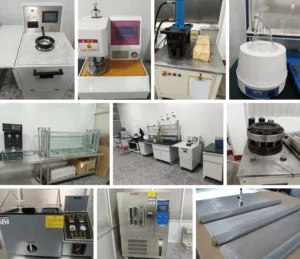
| Measurement traceability | Instrument identification and calibration status appropriate to the method | An untraceable displayed reading is accepted as a complete report. |
| Applicability and disposition | Qualification versus production coverage, deviations, specimen condition and release decision | A prototype result is treated as inspection of every delivered unit. |
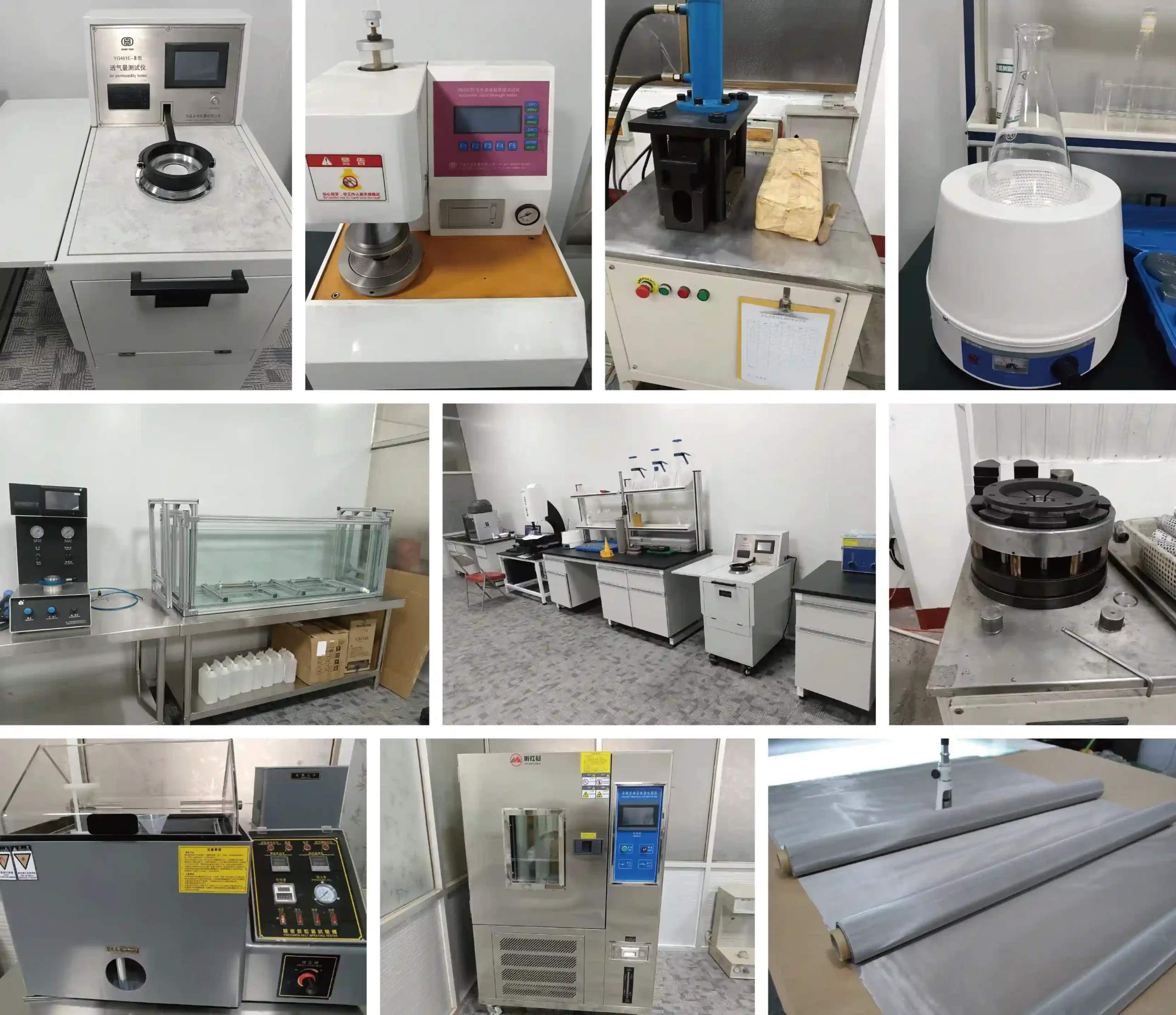
A report can be concise and still provide the necessary traceability. Conversely, many pages of equipment photographs do not fill a missing acceptance criterion. Record unresolved points as unconfirmed rather than assuming that a supplier has performed an unstated test.
If the report provides only a threshold pass, preserve that wording. If it records failure, preserve the observed failure mode and specimen identity. If fixtures or connectors limited the test, establish what conclusion can actually be drawn about the component. Do not convert an interrupted or limited test into a stronger result than the evidence supports.
Qualification, Production Inspection and Incoming Acceptance
Design qualification establishes evidence for a specified construction. Routine production inspection controls whether supplied parts match the approved design and applicable acceptance plan. Incoming acceptance reconciles the delivery with the purchase order, drawing and agreed documents. These are connected activities, but they are not the same test repeated under different labels.
A destructive qualification test is generally not performed on every unit intended for delivery. If a purchaser requires lot sampling, a proof check or a particular certificate, that scope must be agreed explicitly. Define sample identification, document coverage and disposition so a “tested batch” does not leave the sampling basis ambiguous.
Changes in media grade, core geometry, weld configuration, end connection or seal can require review of the earlier evidence. Do not assume that keeping the same length and diameter preserves the qualification. Our filter element testing methods guide explains how different inspections contribute to acceptance without asking one test to establish every property.
Strength evidence also does not establish filtration retention. An element can meet a structural criterion yet still require appropriate integrity and particle-control verification. Keep those requirements separate in the inspection plan rather than treating an elevated-pressure result as proof of micron efficiency or cleanliness.
Pressure Testing Is Not an On-Site Shortcut
Pressure tests involve stored energy and can produce hazardous release, component ejection or other failure consequences. HSE GS4 emphasizes risk assessment, controlled systems of work and safeguarding for pressure testing. It is safety guidance, not a product-specific test pressure or a universal design code. HSE: Safety Requirements for Pressure Testing, GS4
This article is for specification and report review, not for conducting a test. Do not improvise a test rig, pressurize an unknown used assembly or select a gas test merely because it is convenient. The responsible competent personnel must determine the applicable method, safeguards and disposition. Changing the test medium is not just an administrative substitution.
If a received element lacks evidence, request technical clarification or an agreed qualification route. Do not attempt to establish suitability by raising the installed system above its approved limits. Where operating condition or damage is uncertain, follow the equipment's isolation, inspection and engineering-review requirements.
Apply the Comparison to Your Filter Duty
For hydraulic and lubrication applications, identify housing operating pressure separately from the element's differential-pressure requirements. Review normal flow, loading, temperature and the approved protection arrangements. A stronger element does not authorize changing the equipment's alarm or bypass settings. The differential-pressure replacement-limit guide addresses those maintenance distinctions.
For high-temperature processes, including polymer melt filtration, confirm that pressure evidence relates to the relevant temperature and construction. Do not transfer a hydraulic room-temperature verification to hot polymer service without an application-specific basis.
For reusable and reverse-cleaned elements, state both filtration and cleaning duties. Reverse pressure can act differently on supports, media and joints. If the accepted evidence covers only one direction, the other remains unconfirmed until reviewed. Cleaning recovery and retained integrity also need their own acceptance criteria.
For a new custom assembly or old-sample replacement, separate known dimensions from unknown performance. A sample can help establish fit and construction, but cannot by appearance reveal the original qualification history or operating limit. Identify those gaps during quotation rather than concealing them behind a generic “stainless steel high-pressure filter” description.
How SINFT Can Support a Better-Specified Element Inquiry
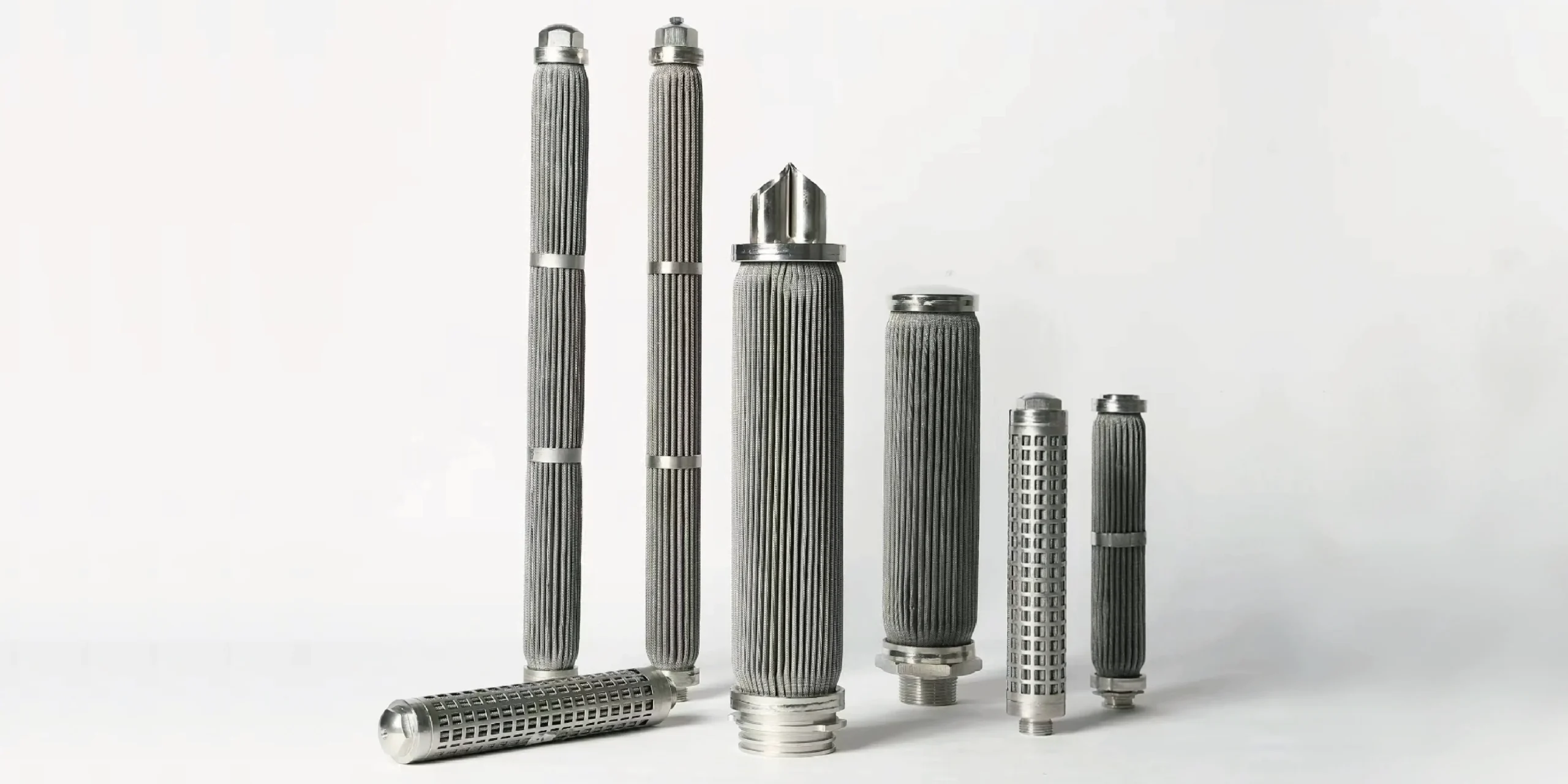
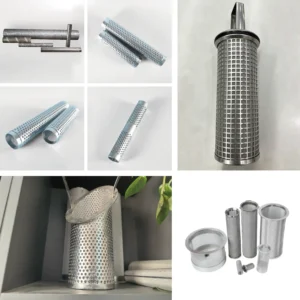
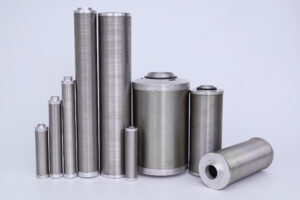
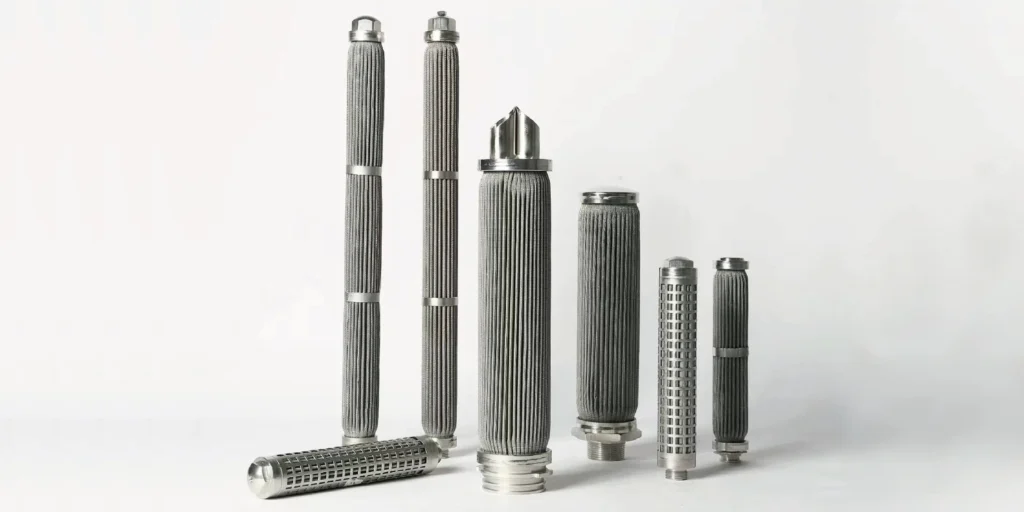
SINFT manufactures pleated metal filter cartridges and sintered mesh filter elements with construction and connection options for defined duties. Specify the element, support, material, flow direction and interface together; do not attach one family-level pressure figure to every available size or design.
For backwash filter cartridges, include reverse-cleaning conditions in the review. The filtration-direction requirement alone does not define the complete operating envelope.
SINFT's confirmed product information includes burst-pressure testing and optional pressure-test documentation. The method, article, conditions, available range and document scope still need project-specific confirmation. A proof-test service, third-party witnessing or compliance with a particular standard should not be assumed from that general capability description.
Through the custom filter manufacturing service, drawings, samples and operating requirements can be reviewed before manufacturing scope is agreed. Keep housing design responsibility separate unless a specific housing supply and qualification scope has actually been confirmed.
What to Include Before Requesting a Quotation
Prepare the following information for an element or assembly inquiry:
- The purchased object: element, supported insert or another clearly defined assembly, with drawing and revision.
- Working fluid, chemistry, normal and limiting temperatures, and cleaning conditions.
- Housing/system pressure requirements, explicitly separated from element differential pressure.
- Normal flow direction, possible reverse loading, flow variation and relevant transient/cyclic duty.
- Existing housing fit, dimensions, materials, supports, end connections and seals.
- Required pressure evidence: objective, applicable method, acceptance criteria and documentation scope agreed by the responsible engineer.
- Qualification sample or routine inspection requirements, traceability and any witnessing needs.
- Required retention, integrity, cleanliness and dimensional checks in addition to strength evidence.
A useful quotation instruction is:
Identify the component and pressure basis for each rating or test claim. State the supporting method, conditions, acceptance criterion and report coverage. Distinguish an observed failure result from a non-failure qualification endpoint. Confirm any limitations and obtain approval before changing the qualified construction.
Avoid adding an arbitrary test multiplier when the applicable design requirement is unresolved. Send SINFT the drawing, operating duty and required acceptance documents so the proposed manufacturing scope can be discussed against a defined requirement.
Frequently Asked Questions
Is proof pressure the maximum working pressure?
No. Proof pressure is a verification condition under a specified method and acceptance criterion. Allowable working pressure belongs to the identified component and its approved operating conditions. Passing a proof check does not authorize continuous operation at the test pressure. Confirm the published or approved rating, temperature limitations and complete assembly scope rather than treating the test value as a new operating limit.
Does a burst-test pass mean the specimen actually ruptured?
Not necessarily. Some qualifications verify that an article withstands a specified endpoint without the prohibited failure, while other investigations measure actual rupture. Read the method, endpoint and observations. A report that records no failure at a stated pressure should retain that meaning. It should not be rewritten as a measured rupture pressure or an unlimited strength result.
Can a housing pressure report qualify a replacement cartridge?
Not by itself. A housing test addresses the identified pressure boundary and included components. A porous cartridge has its own differential-pressure load path through media, supports, joints and end connections. Confirm the evidence for the proposed element and duty separately. Matching its outer dimensions to the housing does not demonstrate the same strength or qualification as the original cartridge.
Is there a universal proof or burst pressure multiplier?
No universal multiplier should be applied across filter designs and test methods. The applicable design basis, product specification and agreed procedure determine the verification requirements. A manufacturer's relationship for one housing, fitting or hose is not automatically valid for a metal filter element. Have the responsible engineer define the requirement instead of copying a convenient factor from an unrelated document.
Does ISO2941 cover all filter housing pressure tests?
No. ISO2941:2009 addresses collapse/burst pressure verification for hydraulic fluid power filter elements under differential loading in the intended flow direction. It is not a universal housing proof-test procedure. Confirm the applicable scope, edition, tested construction and report. Mentioning the standard in a quotation does not establish that the supplied assembly was tested or conforms to it.
Can forward-flow evidence be used for backwash pressure?
Not automatically. Reversing the pressure difference can change how the medium, core, supports, joints and end caps carry load. Establish the permitted cleaning conditions for the finished construction and obtain appropriate supporting evidence. Do not assume equal forward and reverse capability or increase a cleaning setpoint based on a test that covered only normal filtration direction.
Does passing a pressure-strength test prove filtration efficiency?
No. Structural strength, fabrication integrity and particle-removal performance answer different questions. A pressure result does not itself establish a micron efficiency, cleanliness condition or restored retention after cleaning. Define the complementary inspections and performance evidence needed for the duty. Keep their reports and acceptance criteria separate so one successful test does not hide an unresolved requirement.
What pressure documents should I request from SINFT?
Start with the component drawing, operating duty and required acceptance basis. Ask which pressure-related verification and documentation are available for that specific construction, including method, conditions, sample or batch coverage and traceability. Confirm optional or third-party requirements during quotation. Do not assume that a general burst-testing capability includes every proof test, pressure range, standard or witnessing arrangement.
Final Thoughts
Proof and burst pressure become useful only when the tested object, loading basis and acceptance conditions are clear. Separate housing pressure from element differential strength, and keep qualification evidence distinct from operating permission. For a replacement or custom metal element, provide SINFT with the drawing, duty and required documentation so the quotation addresses the actual component and the limits of the available evidence.