A shipment can arrive with a packing list, material certificates and inspection reports, yet leave one question unanswered: which records belong to the filters in these cartons? Filter element batch traceability closes that gap. Before accepting a delivery, buyers should verify the links between finished items, their relevant material inputs, manufacturing records and inspection evidence, rather than counting the number of attached PDFs.
What Should Filter Element Batch Traceability Establish?
Filter element batch traceability should let the buyer identify a delivered batch, connect it to the agreed production and inspection records, and establish which material lots supplied the components within the specified scope. It should also support tracing forward from a questioned input or process record to potentially affected finished items and deliveries.
That is different from proving that the filter meets every performance requirement. Traceability tells you which evidence applies and which items may need investigation. Acceptance still depends on the drawing, specification, inspection results and approved disposition.
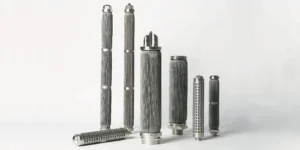
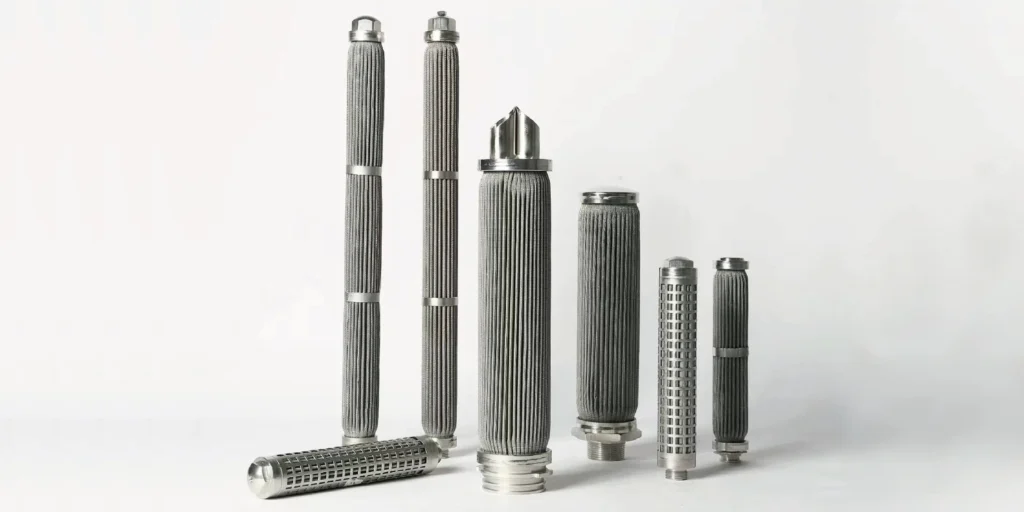
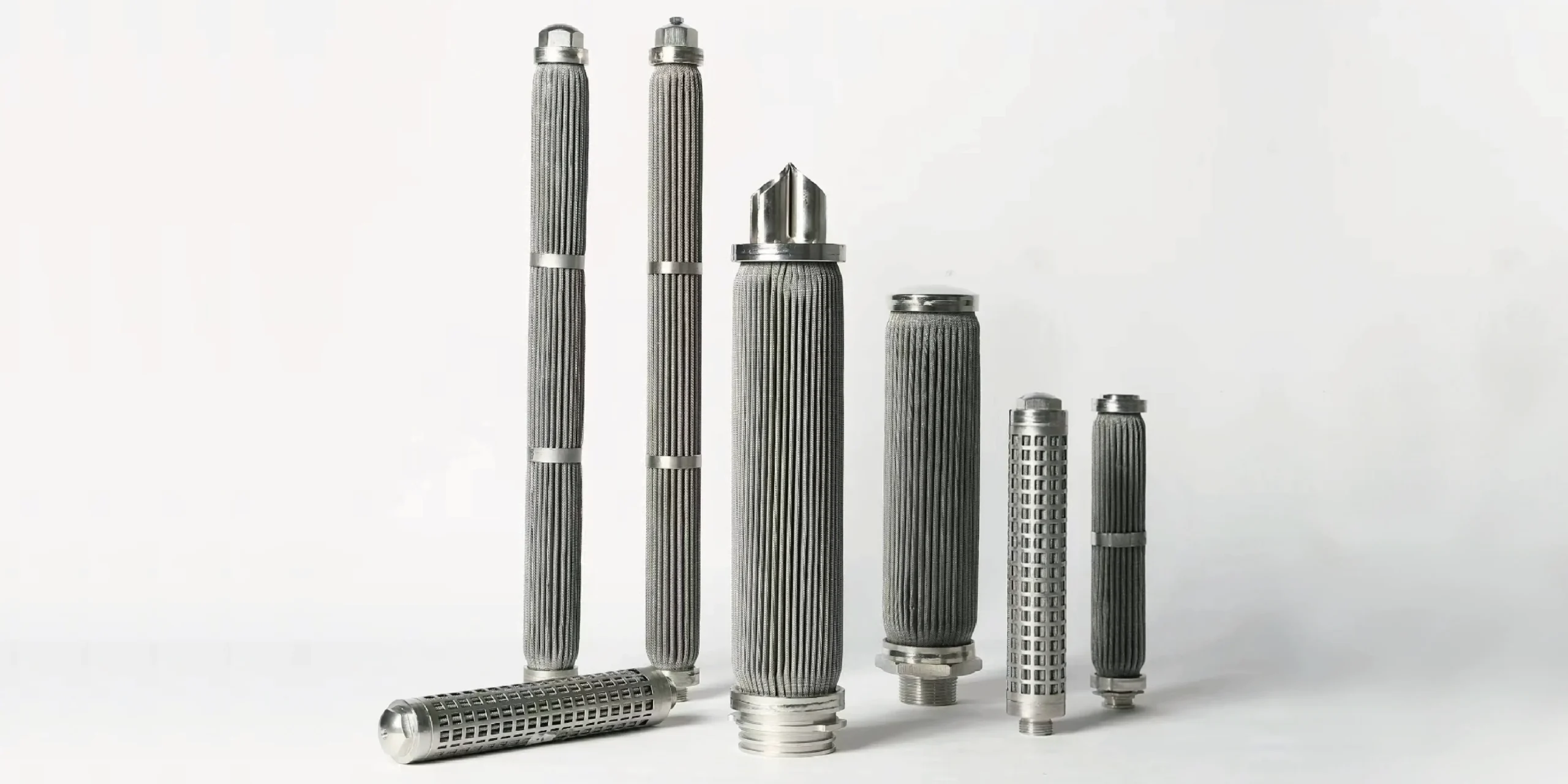
For example, pleated filter cartridges may combine filtering media, a support core, end fittings and seals. Their records need a defined component scope. A single document headed “stainless steel” does not automatically cover the entire assembly.
A Batch Number Is a Reference, Not the Complete Record
A useful identifier leads to information. A batch code printed on a bag is of limited value if neither party can retrieve the associated drawing revision, work order or inspection results.
GS1's official explanation of traceability describes identification, data capture, recording and information sharing, with data-quality controls between processes. The relevant purchasing lesson is straightforward: identification and reliable record links belong together. This article does not assume that SINFT or a buyer uses GS1 identifiers.
The agreed system may use paper travellers, controlled spreadsheets or a manufacturing database. Choose evidence that can be retrieved, understood and checked. Software sophistication is not a substitute for a demonstrated link to the physical goods.
Before ordering, define what the finished batch means. Does it represent one work order, a specified manufacturing run or another controlled grouping? Ask how differences in component inputs, drawing changes, rework or inspection status are recorded. Do not assume the word “batch” means the same thing for raw metal, finished filters and shipping cartons.
Distinguish the Identifiers Before Comparing Documents
Several identifiers may legitimately appear on one shipment. They do not need to match character for character, but the relationship between them needs to be clear.
| Identifier | What it identifies | Link the buyer should verify |
|---|---|---|
| Part number and drawing revision | The specified design configuration | The delivered variant matches the approved order. |
| Material heat reference | A source-metal reference on applicable material records | The reference connects to the relevant component inputs. |
| Media or component lot | A supplier-defined grouping of material or parts | The lot used in production is identified within the agreed scope. |
| Production batch or work order | The manufacturing grouping or job record | It identifies the finished quantities and associated inputs. |
| Individual serial number, if required | One finished element | Item-level records can be retrieved using that serial. |
| Packing or shipment reference | The delivery and its logistics records | It maps cartons and quantities to the finished batches supplied. |
A material heat number is not a universal finished-filter serial number. Likewise, a carton number may identify packaging rather than a manufacturing batch. Ask for the mapping instead of rejecting different identifiers simply because they are different.
Define Which Components Must Be Traceable
A welded assembly may contain several metallic inputs and non-metallic seals. Its media, support structure and fittings may come from different lots. That does not automatically make the assembly nonconforming; it makes component-level mapping important where the order requires it.
For sintered mesh filter elements, identify the required scope for the media structure and the finished fittings. Do not assume that a certificate covering one mesh layer also establishes the material identity of every support and end connection.
For seals, define whether the buyer needs compound identification, supplier-lot linkage or another agreed record. A metal mill certificate cannot establish elastomer identity. Similarly, where weld-consumable records are required, specify that requirement rather than expecting the base-metal certificate to cover them.
Scope should follow the application, purchase requirements and applicable obligations. Avoid demanding the same document package for every low-risk replacement and every critical assembly. The practical objective is enough evidence to resolve the actual acceptance and investigation questions.
Why a Material Certificate Alone Is Not Enough
A valid material record can still be disconnected from the delivered element. The missing step is the production link showing where that material was used.
The British Stainless Steel Association's EN 10204 explanation distinguishes inspection-document types and notes that the certificate type is separate from the steel specification. Buyers should therefore confirm both the required evidence and its connection to the relevant material. Do not treat a document designation as proof of finished-filter performance.
Our filter element material certificate guide explains how to review certificate content. This article addresses the next question: how does the reviewed document connect to the component, finished batch and shipment being accepted?
Ask the supplier to demonstrate that relationship for a selected delivered batch. An index listing filenames helps navigation, but an index that says only “material certificate attached” may leave the component mapping unresolved.
Keep the Link Through Manufacturing and Inspection
The vulnerable points are often transitions: material is cut into smaller pieces, components are issued to a job, several inputs become one assembly, or a production batch is divided for delivery. At each relevant transition, the records need to preserve the input-to-output relationship required by the order.
Agree how identity is maintained when individual parts cannot carry a permanent mark during production. Controlled containers or job documentation may be suitable, depending on the process. The supplier should explain the chosen method and its limitations; do not assume that every small component is individually engraved.
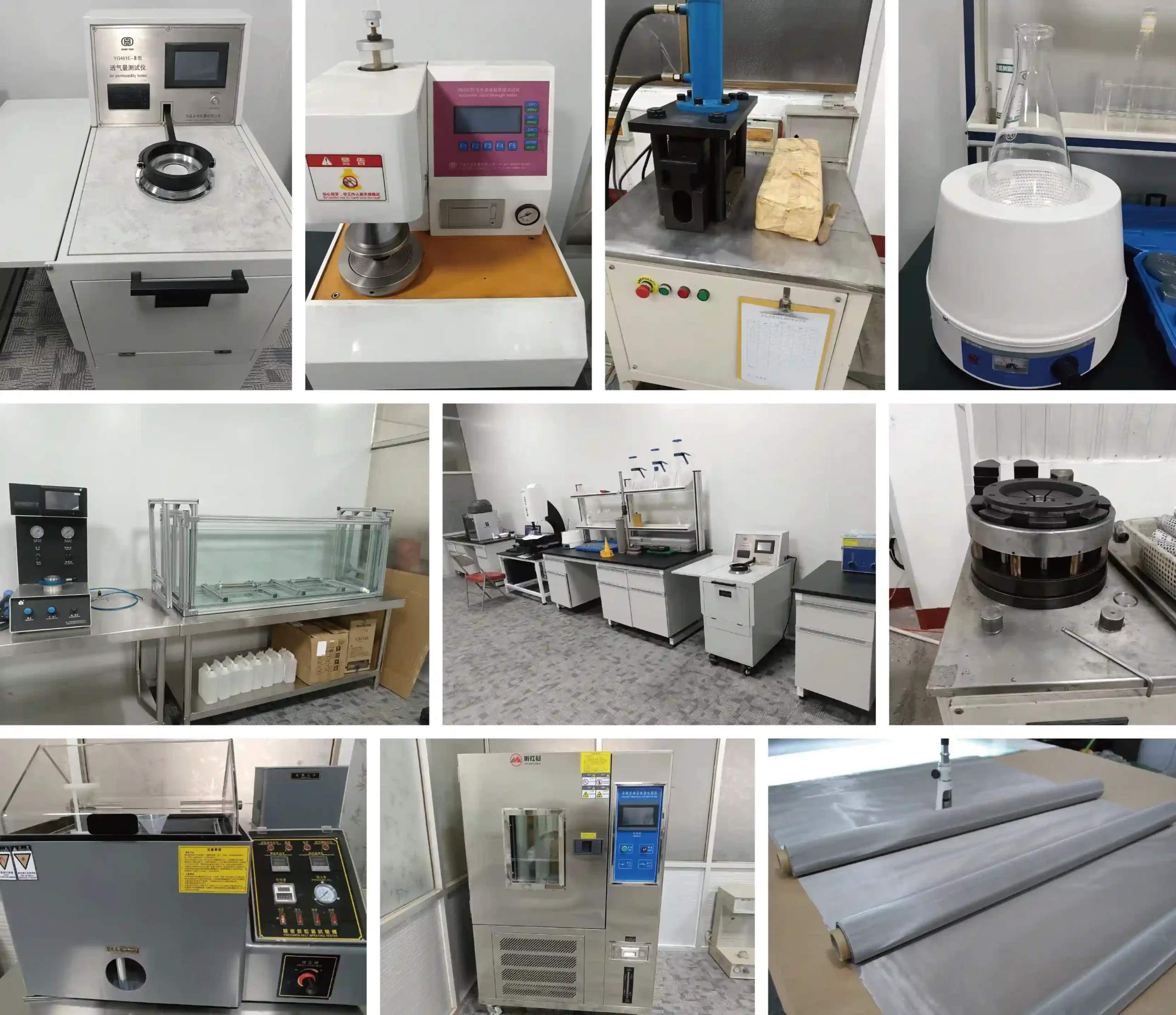
Inspection records need their own scope. Establish whether a report concerns a particular element, a defined sample, a production batch or design qualification. A report from another production period should not silently become delivery-specific evidence.
For broader method selection, see filter element testing methods. Traceability connects the applicable results to the goods; it does not turn sampled inspection into verification of every item, or a material test into a finished-element test.
Hypothetical Example: One Production Batch, Two Shipments
Consider an illustrative order for 40 custom elements. These numbers and codes are invented to explain record links; they are not a SINFT customer order or manufacturing record.
Production batch F-240 contains 40 elements made to one approved drawing revision. Its scoped records connect media lot M-18 and fitting lot E-07 to the batch. Delivery D-1 contains 25 elements, while delivery D-2 contains the remaining 15. Both packing records identify F-240 and their respective quantities.
The quantity check is simple: 25 + 15 = 40. It reconciles the two deliveries with the finished quantity in this example. It does not prove that the inputs, inspection results or physical labels are correct; those links still need checking.
If a concern later arises with media lot M-18, the investigation must identify all finished batches that used it, not only the latest shipment. Conversely, a concern confined to a documented operation on a subset of F-240 may require a narrower investigation. The affected scope must follow the evidence rather than an assumption that everything sharing a shipment date has the same history.
A Practical Incoming-Shipment Checklist
Perform the document review while the physical identification remains intact. If warehouse staff remove all original labels before the records are matched, an avoidable identification problem can be introduced during receiving.
| Check | Evidence to compare | If the link is missing |
|---|---|---|
| Correct design | Purchase order, part number and approved revision | Hold the variant for clarification before release. |
| Physical identification | Element, bag, container or carton identification as agreed | Preserve labels and request a controlled identification explanation. |
| Quantity by batch | Packing list, counted goods and batch allocation | Resolve shortages, excess or mixed quantities. |
| Component inputs | Agreed material/component records and batch mapping | Ask which records cover which components. |
| Inspection scope | Batch or serial reference, method, results and status | Clarify whether evidence is delivery-specific or qualification-only. |
| Exceptions | Rework records, deviations and approvals where applicable | Confirm disposition and required reinspection. |
| Release and storage | Acceptance record and retained identification | Keep held and accepted goods distinguishable. |
This is a purchasing checklist, not a universal inspection standard. Add project-specific requirements where applicable. Do not release an unresolved discrepancy merely because a replacement is urgently needed; use the buyer's authorized disposition process.
For a hydraulic filtration application, preserve the distinction between documentation acceptance and suitability for the actual fluid, pressure, temperature and contamination-control duty. Complete traceability cannot compensate for an unsuitable element specification.
Mixed Lots, Rework and Replacement Deliveries
Mixed inputs require an explainable record, not an automatic conclusion that the whole order is wrong. Ask whether the variation is permitted by the approved specification and whether the supplier can identify which finished items or batches contain each input.
Where permitted rework occurs, retain the relationship to the original identity and record the work, disposition and relevant reinspection. A newly issued report should not erase earlier results or conceal an unresolved nonconformance. Corrections need an identifiable revision or other controlled explanation.
Replacement shipments should identify what they replace and the new items supplied. Reusing the rejected item's paperwork without a clear link to the replacement can create confusion during later investigations. The buyer should also distinguish returned, scrapped, accepted and still-held quantities in its own records.
Marking, Packaging and Storage Must Preserve Identity
Agree where identification will be placed and how long it needs to remain usable. Depending on the design and order, identification may be on the element, a tag, protective bag or controlled container. Do not specify stamping, engraving or labels on a filtering surface without considering damage, cleanliness and application compatibility.
If individually unmarked elements arrive in a marked container, define how identity will be preserved after that container is opened. Splitting a carton into warehouse bins without carrying forward the batch reference can break an otherwise adequate delivery trail.
A QR code is a carrier of information or a reference to it. It does not make incorrect data correct. If codes link to online records, agree access, export and retention arrangements so the evidence does not become unavailable when a portal changes.
Specify retention and retrieval requirements according to the contract and applicable obligations. There is no single retention period recommended here for every industrial filter. Buyer-side installation and maintenance records should preserve the link from stored goods to the equipment in which they were used.
What to Request Before Placing the Order
Include the approved drawing revision, component scope, batch or serial identification requirement, document list, inspection coverage, packaging identification and handling of split shipments. Confirm whether a traceability summary will be included or supporting records will be provided on request.
Ask how discrepancies, substitutions and rework require approval, and define who may release an affected item. Agree record format, availability and retrieval expectations before production. If third-party witnessing or a specific certificate type is required, state it explicitly and confirm feasibility.
SINFT's confirmed documentation capabilities include batch traceability records, material documentation and dimensional inspection reports, with other records depending on the order. The exact component coverage, identification method and report package need project confirmation. This is not a promise of universal serialisation, online record access or every test on every element.
For drawing-based replacements, discuss these requirements with our custom filter manufacturing team. Send the drawing and documentation requirements together so the quotation can address both the physical element and its acceptance evidence.
Frequently Asked Questions
Is a batch number alone enough to prove traceability?
No. A batch number needs to lead to the applicable records and the physical items supplied. Ask how it connects to production, agreed component inputs, inspection evidence and shipment quantities. A label without a retrievable mapping provides identification but limited traceability. Check the relationship using one actual delivered batch rather than accepting the presence of a printed code alone.
Is a heat number the same as a finished-filter batch number?
No. A heat reference concerns the relevant source metal, while a finished-filter batch identifies a supplier-defined production grouping. An assembly can use several material inputs, and one input may supply several finished batches. The identifiers can differ legitimately. What matters is a clear mapping within the agreed component scope, not forcing every reference on every document to be identical.
Does every filter element need its own serial number?
Not necessarily. Individual serialisation and batch identification provide different levels of resolution. Choose the level needed by the application, contract and applicable requirements, then confirm how records follow that identity. Do not assume serialisation is included automatically. Where batch identification is sufficient, preserve it through packaging, warehouse handling and installation so later investigations can still locate the affected goods.
Does traceability prove filtration efficiency or pressure strength?
No. Traceability connects evidence to the relevant items and helps define the scope of an investigation. Performance acceptance still needs appropriate specifications and supporting results. A complete material trail cannot establish retention efficiency, structural strength or operating suitability on its own. Review the applicable test coverage and conditions separately, including whether the evidence concerns a design, sample, batch or individual element.
Can one batch be supplied in several deliveries?
Yes, provided the arrangement is permitted and the records preserve the mapping between the finished batch and each delivery. Compare the quantities and identification across packing lists and received goods. A split shipment should not create an unexplained new manufacturing history. Keep records of partial receipts so later deliveries, returns and replacements can be reconciled without losing the original batch relationship.
What if a material certificate cannot be linked to the goods?
Treat the missing relationship as an unresolved documentation issue, not as proof that the material is either correct or incorrect. Preserve the received identification and request the supplier's controlled explanation and supporting records. Avoid inventing a link from similar dates or descriptions. Release, additional verification or rejection should follow the buyer's authorized disposition process and the agreed purchase requirements.
Is permanent marking always required on the filter body?
No universal marking method is specified here. The design, application and contract determine what is suitable. Marking must not damage the filtering surface, interfere with fit or create an unacceptable cleanliness issue. If identification relies on packaging or containers, define how it is preserved after opening and during storage. Confirm the method with the supplier before manufacture rather than marking received elements informally.
What should an RFQ say about traceability records?
State the required identification level, drawing revision, component scope, document list and inspection coverage. Include packaging and split-shipment mapping, handling of rework and substitutions, and record retention or retrieval needs. Ask the supplier to confirm the proposed evidence package. A precise scope is more useful than requesting full traceability without explaining which relationships the buyer needs to verify before acceptance.
Final Thoughts
Useful traceability lets a buyer follow a delivered filter batch back to its relevant inputs and records, then forward to other potentially affected deliveries. Check those links before removing identification or releasing goods to service. Define component scope and documentation with the order, and keep performance acceptance separate. For a custom replacement, send the drawing and traceability requirements together so both can be reviewed before manufacture.