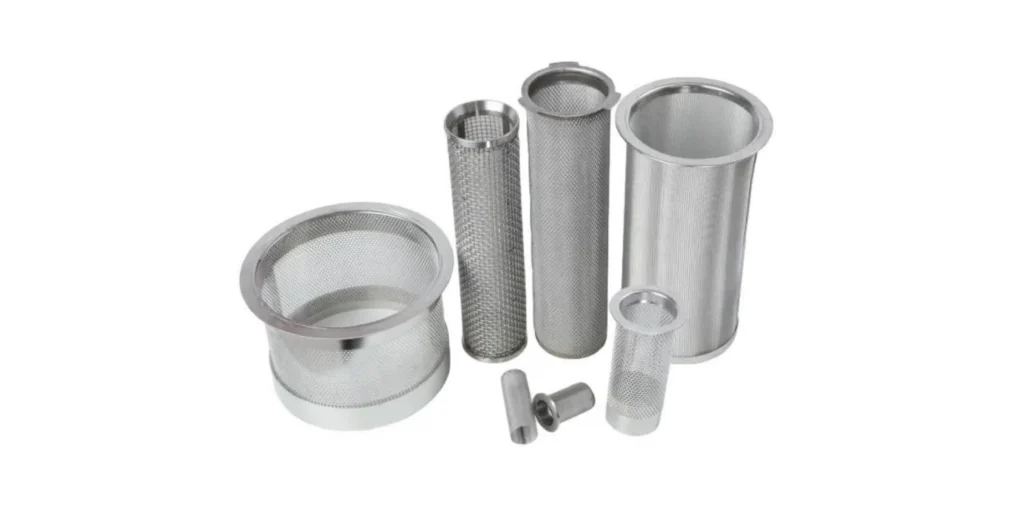
The old filter is on the bench, its label is worn, and the equipment manual only gives a housing model. You can still send an inquiry that a supplier can review. The most useful package combines photos of the mounting interface, a sketch with clear reference points, and the actual service conditions. This sintered mesh filter RFQ checklist shows what to send and how to mark the values that still need confirmation.
What Should You Send for a Replacement Sintered Mesh Filter Quote?
Send the old part identification, photos of both ends, a fit sketch, and the operating conditions. Identify where the element seats and seals. Include the process fluid, flow and temperature range, expected differential pressure, flow direction, cleaning method, and any available filtration grade. Tell the supplier which details came from a drawing, which you measured, and which are unknown.
If you have only the equipment model, send the nameplate and identify the filter position in the equipment. A single unit may use several elements, and a housing model can have variants. Attach any parts list, service manual excerpt, or order history that identifies the specific position. Ask the supplier to list what it still needs to confirm.
Photograph the Mounting Interface
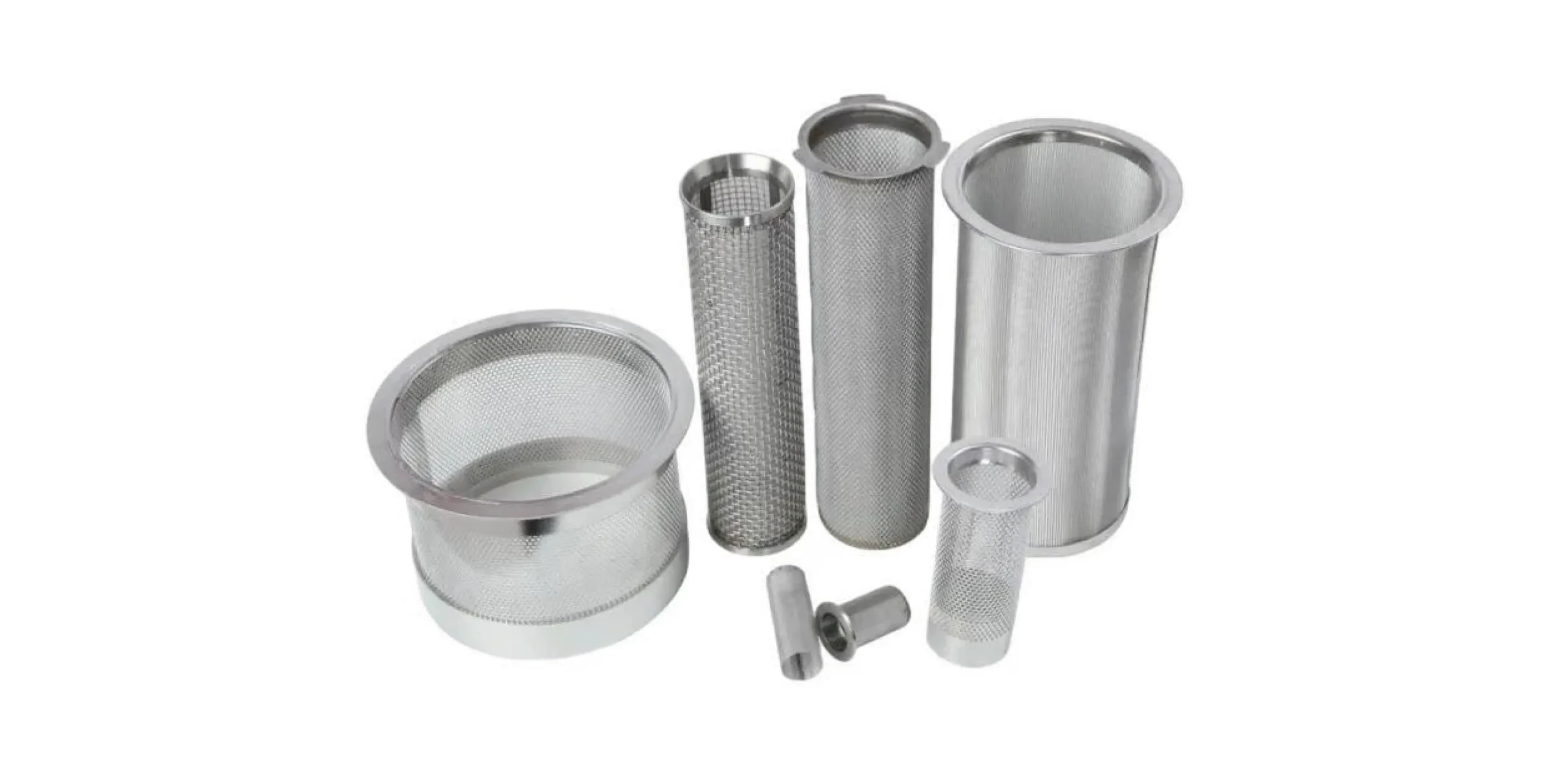
A full-length photo shows the shape and general construction. Add a photo of each end square to the camera, a side view showing any shoulders or stops, and a close-up of the seal or seating surface. Photograph the mating connection in the housing if it is accessible under the site's procedures. A ruler in the same plane can provide scale. Record the critical dimensions separately on a sketch.
Point out damage before anyone measures from it. A dented tube can show the intended construction while giving a distorted body diameter. A worn gasket may show its position while leaving the original gasket thickness uncertain. Mark these as observations and check the matching housing feature or a sound spare where possible.
Separate Sample Readings From Required Dimensions
Record the measurement reference as well as the number. For a cartridge, overall length and length below the mounting shoulder answer different questions. The first helps identify the element. The second shows how much room it takes up inside the housing. For discs and panels, the rim or frame can control seating even where the mesh has a different thickness.
Use three labels on the sketch: drawing requirement, measured from sample or housing, and to confirm. For example, a reading of 248 mm on a used part belongs under observed measurements. If a current drawing gives 250 mm from the same seating face, include both and flag the difference. The supplier can then check the revision, reference point, or sample condition with you. Sintered mesh filter dimensions guide.
| If you have | Send first | Ask the supplier to confirm |
|---|---|---|
| Old element only | Both ends, overall photo, label, sketch, and notes on wear | Which features can be matched and which housing dimensions are needed |
| Partial drawing | Revision, visible dimensions, interface photos, and missing callouts | Locating face, connection, seal, and unresolved fit |
| Equipment model only | Nameplate, serial or variant if available, filter position, and service records | Which additional part ID or measurements are needed |
| Approved drawing and duty data | Drawing with revision, operating range, quantity, and acceptance requirements | Any proposed deviation and the supporting documentation |
Include the Conditions the Sample Cannot Show
Filtration grade and the reason for replacement
Copy any micron marking exactly and identify the source. If the old label says 10 µm and the test basis is unknown, record it that way. Add the required retention if you have a specification, or describe the downstream component and what you need to protect it from. If the existing filter caused a problem, describe what happened and under which conditions. This gives the supplier a basis for reviewing the proposed grade. Sintered mesh micron rating guide.
Flow, temperature, and pressure
Include normal and peak flow. Indicate whether the numbers refer to one element or to the whole housing. Give the fluid and its temperature range, and include viscosity at relevant temperatures if known. State operating pressure and differential pressure separately. A line pressure rating and the pressure loss through the filter describe different conditions. When you have clean readings, include their flow, temperature, and pressure tap locations. Sintered mesh filter pressure drop guide.
For a hydraulic system, identify whether the filter is on a pressure, return, or lubrication line and what equipment it protects. If you ask for a hydraulic flow curve, confirm the tested assembly and fluid conditions. ISO 3968 describes pressure drop evaluation for hydraulic filters within its stated scope. Hydraulic and lubrication applications · ISO 3968.
Material, flow direction, and cleaning
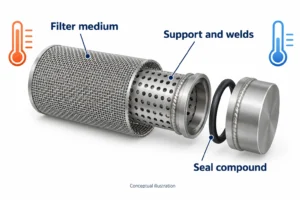
State any approved alloy and seal material. For uncertain materials, report the old marking and provide the process chemistry so the supplier can review the wetted parts. Mark the normal flow direction and describe any reverse flow during cleaning. Include the cleaning fluid, temperature, and relevant pressure conditions if known. The support, seams, and sealing arrangement all need to suit the intended operation.
Copy This English RFQ Template
Replace the bracketed entries with your information. Leave an unknown field marked “to confirm” and attach the evidence you have.
Subject — Replacement sintered mesh filter quote for [equipment and filter position]
Please review the attached photos and sketch and quote a replacement sintered wire mesh element. Please identify any missing information and list the assumptions behind the quote.
- Equipment and old part — [manufacturer, model, serial or variant, filter position, part number]
- Attachments — [old element photos, mating connection, sample sketch, drawing and revision]
- Fit — [shape, dimensions and units, seating face, insertion depth, connection and seal]
- Filtration — [original marking and source, required retention and test basis if available]
- Materials — [specified mesh, support, fitting and seal materials, or to confirm]
- Service — [fluid, contaminants, normal and peak flow, temperature, viscosity, operating pressure]
- Differential pressure — [clean reading and conditions, allowable clean loss, and maximum differential if specified]
- Flow and cleaning — [direction, cleaning method, reverse flow and cleaning conditions]
- Quantity and timing — [trial quantity, production quantity, requested delivery]
- Documents and checks — [drawing approval, material records, dimensional report, and any agreed performance or integrity checks]
Please confirm the proposed element construction, fit, grade basis, included documents, and any items that need approval before manufacture.
Review the Quote Before Approving Manufacture
Match the quotation and proposed drawing to the equipment and filter position. Ask the supplier to identify any proposed changes to the old configuration. For each open item, write down who will confirm it and what evidence will close it. A quote can proceed on stated assumptions. An order should refer to the agreed revision and acceptance requirements.
| Review item | What to agree before placing the order |
|---|---|
| Fit | Drawing revision, locating face, connection, seal, and critical dimensions |
| Filtration | Grade basis, proposed laminate, and relevance of any supporting report |
| Flow | Clean pressure drop at the stated flow and fluid conditions |
| Construction | Support, normal flow direction, and cleaning compatibility |
| Inspection and delivery | Which checks, reports, and traceability records are included |
If the supplier proposes a bubble test, specify what it should verify and which specimen or assembly it covers. A pore-related quality check and a particle retention result answer different questions. ISO 4003 describes a bubble test for permeable sintered metal materials within its quality control scope. ISO 4003.
SINFT can review a replacement request using drawings, old samples, housing information, and service conditions. Send the completed template and identify the dimensions or specifications that still need review. Sintered mesh filter elements · Custom filter manufacturing · Send your RFQ.
Frequently Asked Questions
Can I request a quote with just photos of the old element?
Yes, photos can start a review. Include the complete element, both ends, the label, and the housing interface if accessible. Add the equipment model and what the filter does. The supplier may need dimensions, operating conditions, or a sample before confirming fit, grade, or final pricing. Ask which specific information would let the review proceed.
What should I do if the old part is bent or worn?
Mark the damaged features on the photos and sketch. Record any readings from those areas as observations. Check the housing, drawing, or a sound spare for the intended fit dimensions where available. Tell the supplier which parts of the old assembly appear intact and ask it to show the proposed dimensions on a drawing for approval.
Can I send the equipment model without a part number?
Send the model, serial or variant if available, and the filter location in the equipment. Include a parts list or an annotated photo that shows the position. Ask the supplier what it can identify and what still needs measuring. A model number is more useful when it is tied to a specific housing and duty.
What if I know the micron marking but have no test report?
Copy the marking and say where it came from. Include the fluid, contamination, and any known downstream requirement. Ask the supplier how it defines the proposed grade and what evidence can support the application. If a retention result is required for acceptance, agree the test basis and the item to be tested before ordering.
Should I provide line pressure or differential pressure?
Provide both if available. Line pressure describes the system condition and differential pressure describes the pressure difference across the stated points. For a clean reading, include the measurement locations, flow, and temperature. If the equipment has a specified maximum differential or a cleaning trigger, identify the source and state which operating condition it covers.
What should I check if a quote includes a different construction?
Ask the supplier to list the change on the proposed drawing and explain its effect on fit, retention, resistance, and cleaning. Confirm which drawings and test records cover the revised build. Agree on any sample or trial checks you need before production. Keep the accepted change and drawing revision together in the order documentation.
Final Thoughts
Start the inquiry with the old element photos, a fit sketch, and the conditions in which the filter runs. Label observations and missing information so the supplier can make its assumptions visible. Before placing the order, confirm the drawing, grade basis, pressure drop requirements, and included checks. Use the template to send the information together and keep the agreed revision with the quotation.