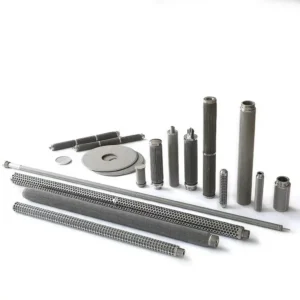
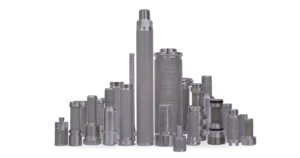
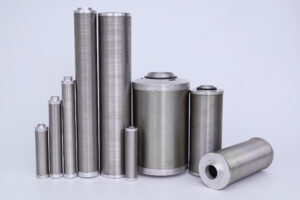
A metal cartridge may fit the housing and meet the required micron rating, yet still be unsuitable for a temperature change. The weak point could be its seal, a loaded support, or the viscosity of the fluid during startup. When reviewing how temperature affects filter selection, specify the conditions the complete assembly will experience—not just the normal process temperature printed on a requisition.
Direct Answer: How Temperature Affects Filter Selection
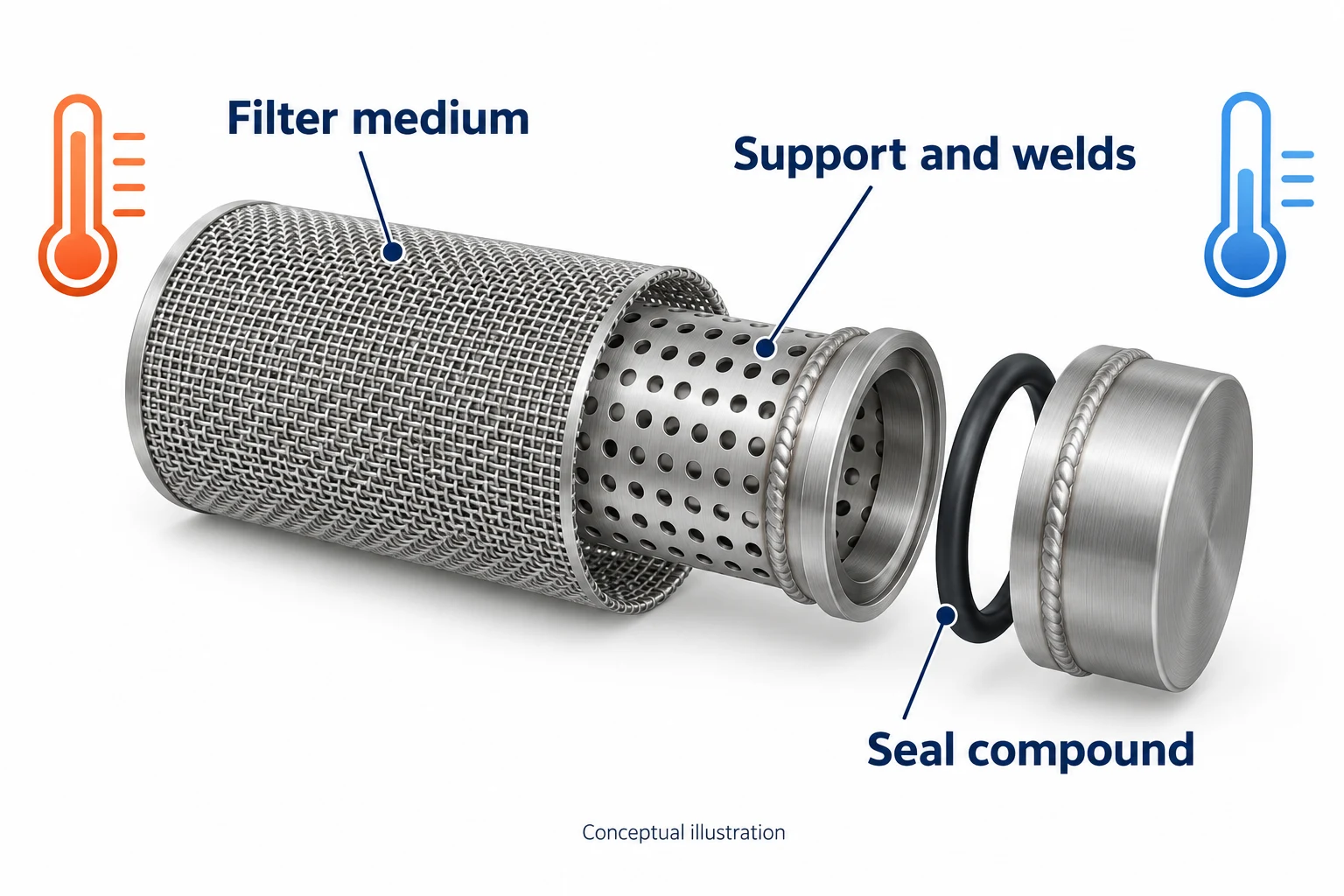
Temperature affects filter selection through material compatibility, seal behavior, structural capacity and the fluid conditions that determine flow resistance. Evaluate the finished element, its mounting and the housing at the same temperature and pressure conditions. A temperature reference for metal media alone does not approve the assembled cartridge or its elastomer seals.
Use seven checks before specifying: define the temperature duty, verify media compatibility, select the exact seal compound, confirm structural limits, review thermal cycling, evaluate viscosity-dependent pressure drop, and approve cleaning exposure. Normal service, startup, short excursions and cleaning need separate review. A hotter condition can challenge materials while a colder liquid startup can create the greater pressure-drop demand.
1. Define the Temperature Duty, Not One Maximum Number
A useful temperature specification describes operating states and how long each state lasts. A single maximum leaves the supplier guessing whether it means continuous operation, a brief upset, an external heater setting or a cleaning cycle.
Record minimum startup temperature, normal operating range and the maximum credible process excursion. Add excursion duration, frequency and the planned response. Identify where temperature is measured: the fluid at the filter inlet, the vessel wall and a heating jacket can have different readings during a transition. State whether the requirement concerns the fluid, the metal parts or both.
Build a duty schedule before comparing quotations:
| Operating state | Temperature information | Conditions to pair with it |
|---|---|---|
| Cold startup | Lowest fluid and ambient temperatures before flow | Startup viscosity, requested flow and differential pressure |
| Normal service | Continuous range and time at temperature | Fluid composition, flow, line pressure and contamination |
| Process excursion | Peak, duration and expected frequency | Coincident pressure, protective action and restart conditions |
| Shutdown and restart | Cooling/heating sequence and frequency | Draining, residual fluid and mounting constraints |
| Cleaning | Fluid or steam exposure, duration and sequence | Chemistry, pressure, flow direction and seal removal policy |
This schedule also prevents over-specification. If the process requirement is uncertain, label it as an assumption to resolve. Do not quietly replace it with an arbitrary temperature margin: the responsible equipment designer should define the design basis and approval criteria.
2. Match the Medium and Alloy to the Hot or Cold Fluid
Choose the filtering function first, then confirm that the selected construction and alloy suit the temperature-dependent chemistry. Woven or sintered mesh and metal fiber felt do not become interchangeable simply because all are metallic.
Sintered mesh filter elements provide a bonded multilayer structure. Sintered fiber felt filters use a porous fiber matrix for depth loading. The choice should still reflect particle behavior, retention requirements and cleaning, not temperature alone. Confirm the grade and supporting layers for the finished element being quoted.
In hot gas service, oxidation and the gas atmosphere require review alongside temperature. In liquid service, provide chemical composition and concentration at operating conditions. A compatibility decision made for a cool fluid should not automatically be carried into heated service. Do not assume that a corrosion-resistant alloy is also the best choice for every high-temperature load.
Outokumpu's high-temperature stainless steel guidance distinguishes oxidation resistance, high-temperature corrosion and mechanical requirements. Its alloy data are material references, not ratings for a SINFT filter. For broader alloy comparisons, use the filter element material-selection guide.
3. Check the Exact Seal Compound and Its Exposure
The seal can limit an otherwise suitable metal assembly. Specify the compound and duty, not only a family name such as EPDM or FKM. Include contact fluid, temperature range, exposure time, pressure and whether the seal is static or moves during operation.
Parker's O-Ring Handbook shows why compatibility and compression-set behavior depend on the compound and contact medium. Hot-air information is not an automatic approval for hot water, steam or a chemical process fluid. Low-temperature elasticity also matters.
For procurement, ask the supplier to identify the proposed compound and document the basis for its use. If a drawing calls for “Viton,” confirm the actual fluorocarbon compound rather than treating the trade name as a complete specification. Check process and cleaning fluids separately.
Changing to PTFE or a metal gasket is not a drop-in remedy. The sealing interface may need different geometry, surface condition or assembly requirements. Ask the designer to review the complete joint before changing the seal type. If the seal is removed for cleaning, document when it is reinstalled and how its condition is checked.
4. Confirm Structural Limits at the Coincident Temperature
Ask for an allowable operating differential pressure at the required temperature and flow direction. A room-temperature test result alone does not establish the permissible load in hot service.
The complete load path includes the filtering wall, supporting core or cage, seams, end caps and attachment to the housing. Establish which parts carry differential loading and what evidence supports the proposed operating limit. At elevated temperature, the relevant metal behavior can differ from room-temperature behavior; long-duration exposure may require a different assessment from a brief excursion.
Outokumpu's mechanical-properties guidance describes creep as time-dependent deformation under sustained stress. That is a material consideration, not proof that a particular filter will creep in a particular process. The supplier must assess the actual geometry, material, temperature, loading and exposure duration.
Keep three values separate in the enquiry: system line pressure, forward element differential pressure and reverse cleaning differential pressure. State which values coincide with each temperature state. Request clarification when a quotation lists maximum pressure and temperature separately: those maxima may not be jointly permissible. Do not use a burst or collapse test result as the normal operating setpoint.
5. Review Thermal Cycling, Expansion and the Mounting
A steady-temperature approval does not describe repeated heating and cooling. Record the temperature swing, frequency and approximate transition time. Include hot cleaning followed by cooling, batch-process starts and heater-controlled restarts where relevant.
Metal parts expand as they heat, but a thin filtering wall, thick end cap and housing may heat at different rates. Mounting constraints and temperature gradients can therefore matter even when the nominal alloy is the same. Outokumpu's mechanical guidance identifies startup and shutdown gradients as possible sources of thermal stress and fatigue.
Review the seating datum, insertion depth, seal groove, retaining arrangement and available movement with the equipment designer. Ask whether differential expansion can alter seal engagement or load a seam. Do not compensate for unknown movement by adding an arbitrary clearance: a larger gap can create another sealing or alignment problem.
For a replacement, supply the original drawing or sample plus details of the operating cycle. A dimensional match at room temperature is only part of the review. The assembled fit and constraint must also be suitable across the intended duty.
6. Evaluate Pressure Drop at Startup and Operating Viscosity
For liquid filtration, evaluate the flow requirement at the viscosity expected in each operating state. A clean pressure-drop value measured with a warm, low-viscosity test liquid can be misleading for cold oil or a different process liquid.
Pall's Principles of Filtration explains the relationship between fluid viscosity and resistance, and why filtration temperature belongs in the selection data. Many liquids become less viscous as they warm; use the actual fluid's viscosity-temperature data rather than assuming the same response for every process stream.
Ask for pressure-drop information referenced to the specified fluid, temperature and flow. Where cold startup is critical, confirm the planned startup flow and available pressure budget. Include the housing and connections when assessing total system losses, and preserve an agreed allowance for contamination loading rather than using all available differential pressure with a clean element.
A simple viscosity correction can be a screening estimate for a clean liquid medium in an appropriate linear-flow regime. It is not a universal prediction for a loaded filter, gas, non-Newtonian polymer melt or an assembly with significant entrance losses. Refer to the filter pressure-drop and flow-rate guide for the broader sizing framework.
7. Treat Cleaning as a Separate Temperature Duty
Approve the cleaning method against the whole assembly, even if the operating fluid is relatively cool. Heated chemical washing, steam exposure and reverse flow can impose a different combination of temperature, chemistry and load from normal filtration.
State whether cleaning occurs in the installed housing or after removal. Provide the cleaning agent, concentration, temperature, exposure time and rinse sequence. Include cleaning direction and differential pressure if fluid passes through the medium. Record whether seals remain installed, are removed or are replaced.
Do not infer steam-cleaning approval from a metal-medium temperature reference. Seals, trapped residues, joints and the housing must also suit the procedure. Similarly, a cleanable metal medium does not establish a guaranteed number of regeneration cycles or prove that retained process deposits can be removed completely.
Agree on the return-to-service checks before ordering. Depending on the requirement, these may include visual and dimensional inspection, cleanliness confirmation and an appropriate integrity or flow check. Confirm what evidence the supplier can provide for the specified construction, and what the plant will check after each cleaning cycle.
Applying the Seven Checks to Your Process
Start with the operating state that presents the unresolved requirement, then review the remaining states. There may be more than one limiting condition. The following are enquiry priorities, not approved operating procedures or universal limits.
| Process | First information to resolve | What should not be assumed |
|---|---|---|
| Hydraulic or lubricating oil | Lowest startup temperature, corresponding viscosity, required flow and seal compound | Warm-oil pressure drop represents cold startup |
| Polymer melt | Actual melt temperature, rheology, pressure budget, support and residue-removal method | A water-test curve predicts polymer-melt performance |
| Hot chemical liquid | Composition, concentration and alloy/seal compatibility at temperature | Room-temperature compatibility is enough |
| Heated cleaning or steam exposure | Cleaning schedule, installed/removable seals and coincident loading | Metal construction alone approves the cleaning cycle |
For polymer melt filtration, give the material grade and operating data rather than just “high viscosity.” For hydraulic oil filtration, distinguish startup from stabilized operation. Where data are missing, identify them before requesting a final specification; an attractive maximum-temperature statement cannot close those gaps.
What to Confirm Before RFQ
Send a duty schedule and drawing together so the supplier can review temperature, compatibility and fit as one requirement. Include:
- Fluid or gas identity, composition, concentration and relevant contaminants.
- Minimum startup, normal continuous and peak temperatures; duration and frequency of peaks.
- Temperature measurement location and any known wall/fluid differences.
- Flow rate and fluid viscosity at startup and normal operation; actual gas-flow basis if applicable.
- Line pressure and allowable forward/reverse differential pressures at each relevant state.
- Micron or slot requirement, retention basis and contamination-loading expectations.
- OD, ID, length, end connection, seal groove, mounting and approved flow direction.
- Proposed seal compound, or an explicit request for compound selection.
- Cleaning chemistry, temperature, duration, pressure, direction and seal handling.
- Drawing, sample or old-part photos; quantity and required inspection documents.
Ask the quotation to identify the offered construction and the conditions under which it is accepted. Resolve exclusions before ordering, especially any mismatch between the process duty and cleaning approval.
How SINFT Can Help
SINFT can review drawings, samples, housing dimensions and operating conditions for a custom metal filter element or replacement assembly. The enquiry should identify the duty rather than request a generic “high-temperature cartridge.”
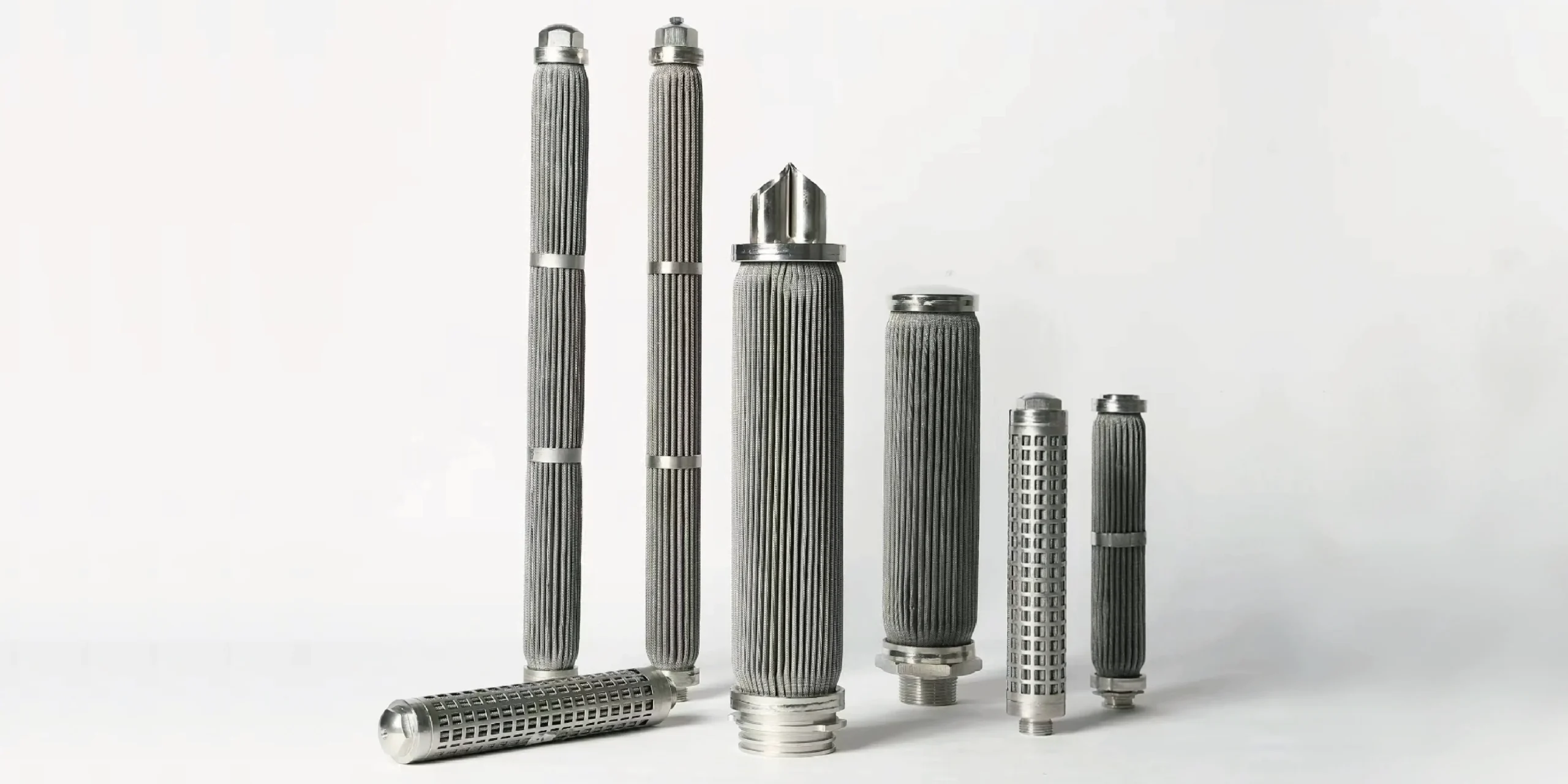
Pleated filter cartridges are one option when filtration area and housing space are important. Sintered mesh and sintered fiber felt offer different filtering constructions. SINFT's confirmed range includes stainless steels and selected special alloys, but the appropriate material, seal, support and connection must be confirmed for the order.
Use the custom filter manufacturing service for drawing-based dimensions and interfaces. If the temperature schedule or seal specification is unresolved, send your operating conditions and drawing for review before approving a replacement. Product-page reference values remain tied to their stated construction and conditions; they should not be transferred across the range.
Frequently Asked Questions
What is the maximum temperature for a stainless steel filter element?
There is no single maximum for every stainless steel element. The alloy, porous medium, support, joints, seal and mounting all affect acceptance. Continuous duty and brief exposure may also need different evaluations. Request an operating approval for the quoted finished assembly at the specified fluid, pressure and temperature, rather than treating a metal-medium reference value as the complete element's limit.
Is a higher-temperature filter always the better choice?
No. A higher stated temperature does not establish better retention, lower pressure drop, cleaner regeneration or better chemical compatibility. An option can also require changes to the seal or housing interface. Select the construction that meets the actual operating and cleaning schedule, then compare the documented limits and installation requirements. A temperature headline alone is not a meaningful purchasing comparison.
Can I keep the existing O-ring when changing to metal media?
Only if the existing compound and joint remain suitable for the complete duty. Confirm the seal's identification, condition, contact fluids and process/cleaning exposure; do not rely on its appearance or family name alone. A new metal medium may tolerate conditions that the old seal does not. Specify seal handling during maintenance and have any proposed compound or geometry change reviewed before installation.
Why can a clean filter show higher pressure drop during cold startup?
The liquid may be more viscous at startup than during stabilized operation, increasing flow resistance at the same requested flow. A high reading is therefore not, by itself, proof of contamination. Compare temperature, actual flow, fluid properties and measurement locations against the approved startup basis. Confirm the operating limits and plant response rather than changing a bypass or alarm setting solely to suppress the reading.
Does heating change the filter's micron rating?
A nominal temperature change does not justify assigning a new micron rating without evidence. What matters is whether the finished medium retains its required geometry and the assembly prevents bypass under the actual duty. Fluid behavior and deposits may also change. If retention at operating temperature is critical, specify the validation conditions and acceptance criteria rather than calculating a new rating from temperature alone.
Can a high-temperature metal filter automatically be steam-cleaned?
No. Steam exposure is a separate combination of temperature, pressure, moisture, duration and thermal transition. The seal and assembled joint may differ in suitability from the metal medium. Confirm whether cleaning occurs installed or removed, what parts remain fitted and how the element is checked before reuse. Obtain approval for the actual procedure rather than assuming that the operating-temperature reference covers steam cleaning.
Final Thoughts
Temperature belongs in an assembly specification, not only in an alloy description. Review the full duty: cold startup, continuous operation, excursions and cleaning. Pair each state with its fluid, flow and loading requirements, then confirm the medium, seal, support and mounting together. A clear duty schedule and drawing give the supplier a much better starting point than a single maximum-temperature number—and help reveal unresolved requirements before manufacture.