When a cartridge changeout keeps returning to the maintenance schedule, the problem is rarely only the purchase price. You may be comparing a disposable element that is simple to replace with a reusable filter cartridge that needs the right metal media, seals, cleaning method and inspection limit. This guide explains how to compare both choices before approving a new cartridge specification.
Direct Answer: Reusable vs Disposable Filter Cartridge
The main difference between a reusable and disposable filter cartridge is the maintenance strategy. A disposable cartridge is normally removed and replaced after loading, damage, pressure-drop increase or process change. A reusable cartridge is designed so the filter medium, support structure, joints and seals can tolerate cleaning and return to service when inspection shows it is still acceptable.
For industrial systems, the better choice depends on the fluid, temperature, particle type, differential pressure, cleaning method, downtime cost, housing interface and documentation requirements. A reusable stainless steel filter cartridge can be a strong option for high-temperature, corrosive, oil, gas, steam, polymer or repeated-cleaning duty. A disposable cartridge may still be better when contamination control, validation, low unit cost, simple logistics or single-use operation matters more than cleaning.
Quick Comparison Table
| Selection point | Reusable filter cartridge | Disposable filter cartridge |
|---|---|---|
| Main decision | Can the element be cleaned, inspected and returned to service safely? | Can the element be replaced quickly at an acceptable operating cost? |
| Typical industrial media | Stainless steel woven mesh, sintered mesh or sintered metal fiber felt | Polypropylene, melt-blown, string-wound, membrane or other polymer media |
| Best fit | Repeated service, demanding temperature, chemical compatibility, washable solids, replacement of special elements | Low-cost replacement, fine polishing, validated single-use process, short campaigns |
| Main risk | Cleaning may not restore flow or retention if contaminants embed, blind or chemically attack the media | Frequent changeout may increase downtime, waste handling and recurring purchase work |
| Specification focus | Media, micron rating, pressure drop, reverse-flow limit, material, seals, end connection, cleaning method | Media grade, nominal or absolute rating, length, diameter, end cap, seal and replacement interval |
| RFQ requirement | More process data is needed because the cartridge must survive both filtration and cleaning | Replacement dimensions and performance rating are often the first priority |
What “Reusable” Really Means in Industrial Filtration
Reusable does not mean permanent. It means the cartridge is built for a defined filtration, cleaning and inspection cycle. Before you specify a reusable cartridge, you should know how particles load into the media, how the element will be cleaned and what condition makes it unfit for reuse.
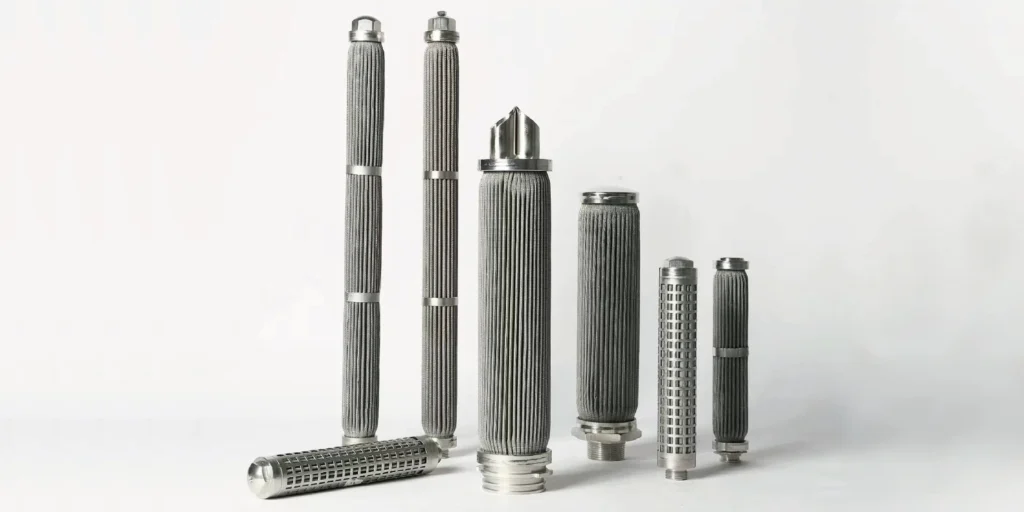
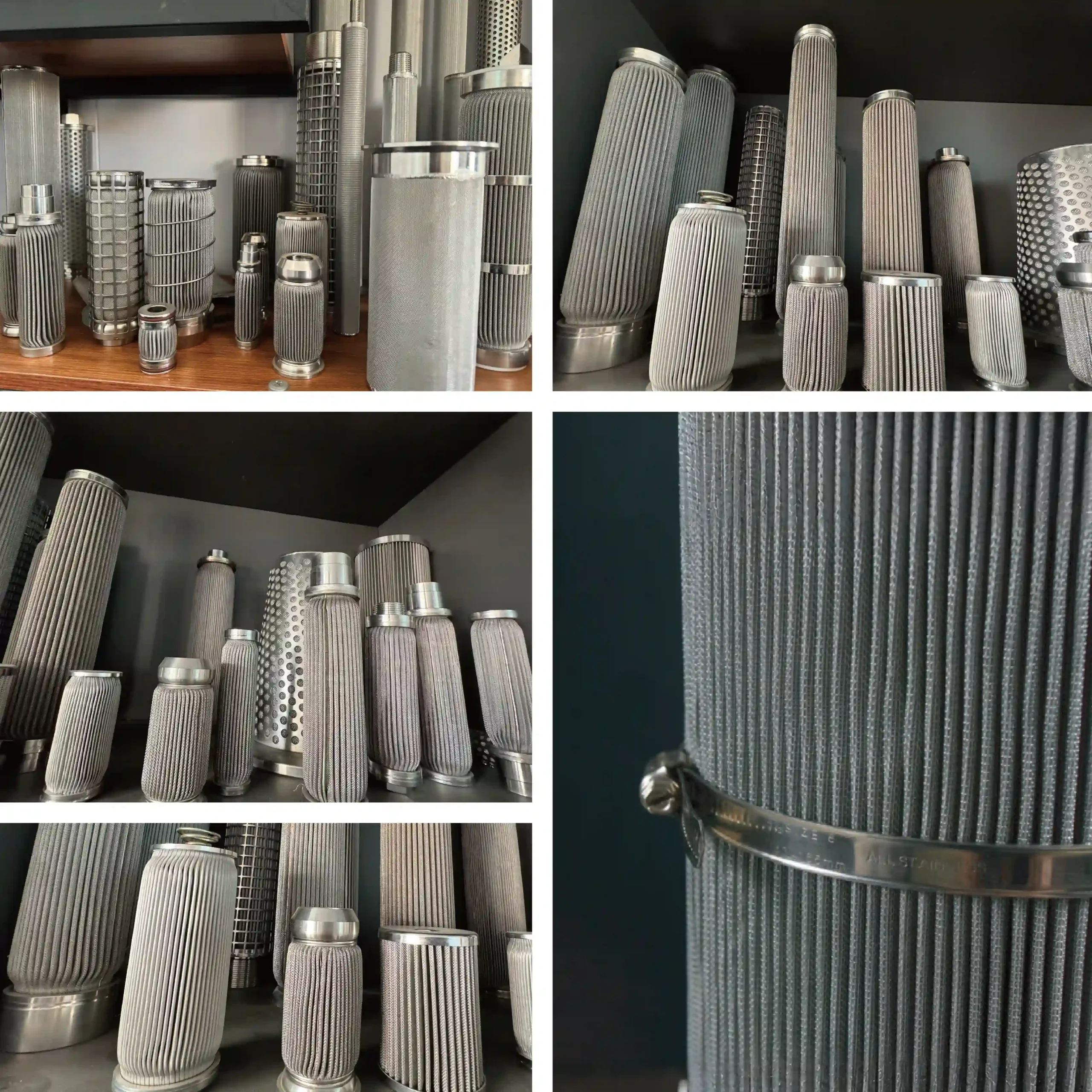
SINFT stainless steel pleated filter cartridges can use woven wire mesh, sintered wire mesh or sintered metal fiber felt. These metal media can be reviewed for backwash, ultrasonic, chemical or steam cleaning when the operating duty supports reuse. Available cartridge formats include DOE, 222, 226, threaded, flanged and custom interfaces.
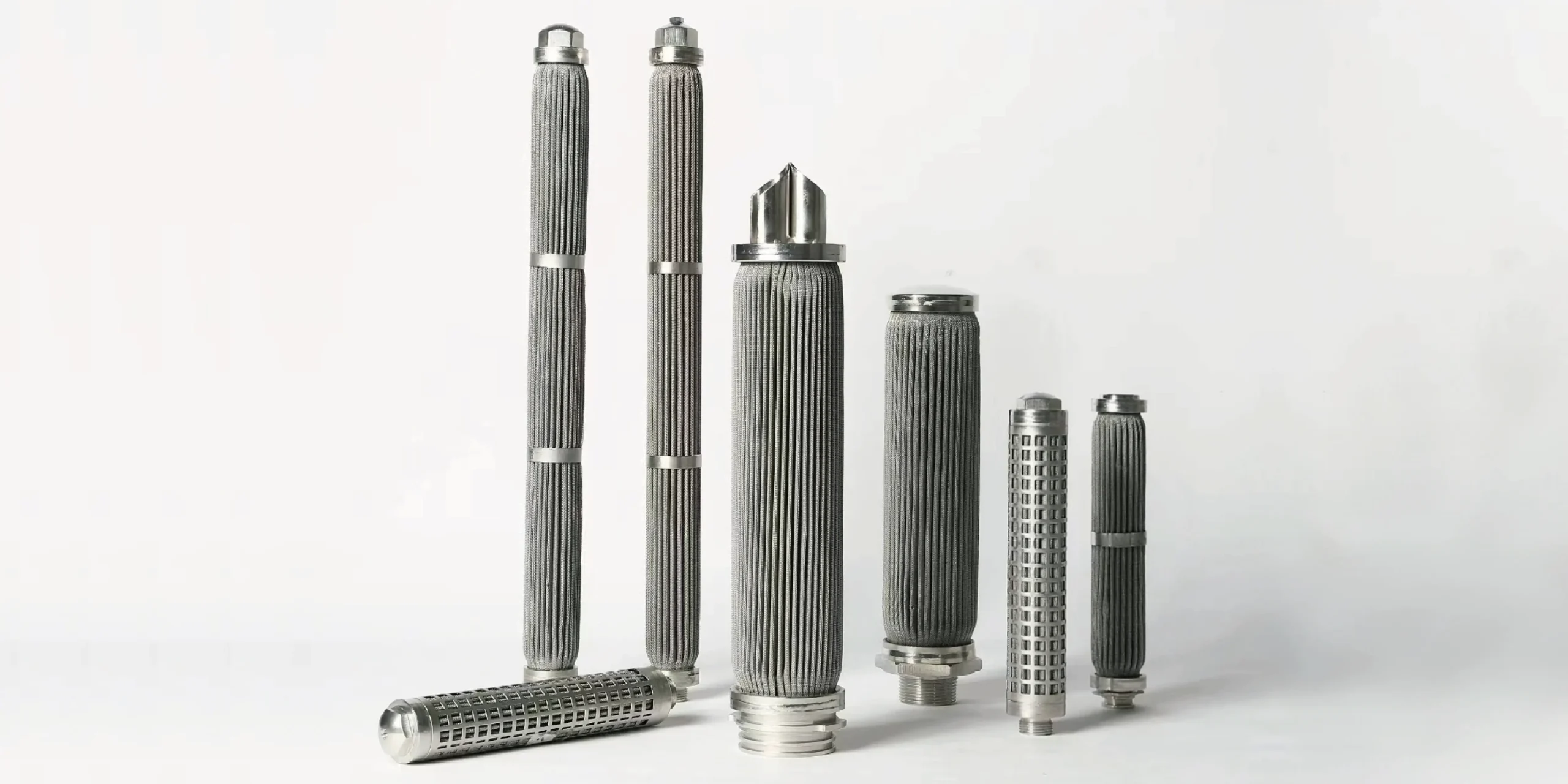
A reusable metal cartridge may be attractive when the disposable option fails early because of temperature, solvent exposure, pressure pulsation, collapse risk or repeated shutdown. It can also help when an old imported element, non-standard end cap or special housing must be copied from a sample or drawing. The useful question is not “Is reusable better?” but “Can this exact cartridge be cleaned and verified under this exact duty?”
For deeper maintenance detail, see SINFT’s stainless steel filter cartridge cleaning guide. For media behavior, the surface filtration vs depth filtration guide explains why some particles release from a surface more easily while others become trapped inside a porous medium.
When a Disposable Cartridge Is Still the Right Choice
Disposable cartridges remain practical when replacement is simpler, cleaner or easier to control than reuse. In many water, chemical, prefiltration, polishing or batch processes, a disposable polymer cartridge can be stocked, changed and documented with minimal cleaning equipment.
Disposable cartridges may be preferred when:
- the process needs a fresh element for each batch or campaign;
- the retained material is hazardous, biological, sticky or hard to remove;
- cleaning water, solvent or steam would create a second waste stream;
- operators cannot inspect internal media condition reliably;
- validation or quality systems require single-use replacement;
- the operating temperature and compatibility are within polymer-cartridge limits.
The U.S. EPA’s waste management hierarchy places source reduction and reuse ahead of recycling and disposal, but that principle should not be applied blindly to process filters. If cleaning consumes chemicals, time and inspection labor, or if the cleaned element cannot be trusted, a disposable cartridge may still be the more controlled choice.
When to Consider a Reusable Stainless Steel Filter Cartridge
A reusable stainless steel cartridge deserves review when the process is too demanding for ordinary disposable media or when repeated replacement becomes a reliability issue. Metal construction is especially relevant when the cartridge must handle heat, pressure differential, aggressive media, steam cleaning, backwashing or a custom mechanical interface.
Consider a reusable metal cartridge when your process involves:
- hot liquid, gas, steam, oil or chemical filtration;
- hydraulic and lubrication systems where pressure drop and contaminant control matter;
- polymer or high-viscosity fluids where temperature and mechanical stability are important;
- repeated cleaning by backwash, ultrasonic cleaning, chemical washing or steam;
- an existing housing that requires DOE, 222, 226, threaded, flanged or custom welded ends;
- replacement of a discontinued or non-standard cartridge;
- applications where a stronger core, guard or pleat pack is required.
SINFT’s confirmed pleated cartridge range includes SS304, SS316, SS316L and special alloys; woven wire mesh, sintered wire mesh and sintered metal fiber felt media; filtration ratings from 0.5 to 200 microns depending on media; and standard or custom lengths. Temperature and differential-pressure suitability must still be checked against the finished cartridge construction, seal material and actual flow direction.
Material Compatibility Comes Before Price
A reusable vs disposable filter cartridge decision should start with compatibility, not purchase cost. If the fluid attacks the media, seal or end cap, neither reuse nor replacement frequency will solve the problem.
For metal cartridges, confirm the alloy, seal material and cleaning chemistry together. Stainless steel may be suitable for many water, oil, gas, steam and chemical duties, but chloride level, acid concentration, alkaline cleaner, solvent exposure and temperature can change the decision. Seal materials such as EPDM, Silicone, Viton, PTFE or metal gaskets should be selected for the process and cleaning method, not only for the filtration step.
For disposable cartridges, polymer media and bonded parts also need compatibility review. A disposable cartridge that softens, swells, sheds fibers or loses mechanical strength may cause downstream contamination or early differential-pressure rise. If the current disposable cartridge is failing this way, a custom stainless steel cartridge may be worth reviewing through SINFT’s custom filter manufacturer service.
Pressure Drop and Flow: Do Not Compare Labels Only
Two cartridges with the same nominal micron rating can have different pressure-drop behavior. Media structure, pleat geometry, open area, cartridge length, contaminant loading and fluid viscosity all affect the flow curve.
Reusable metal cartridges often use stronger media and support structures, but they are not automatically lower in pressure drop. Disposable depth media may hold particles through a thicker structure, while a pleated metal cartridge may provide more active area in a limited housing envelope. The comparison has to be made under the same fluid, viscosity, flow rate, temperature and loading condition.
ISO 3968:2017 covers evaluation of pressure drop versus flow characteristics for hydraulic filter elements, while ISO 16889:2022 defines a multi-pass method for hydraulic filter elements. These standards are useful references when the application fits their scope, but their results should not be transferred automatically to steam, gas, polymer melt, food, pharmaceutical or chemical processes.
SINFT’s filter pressure drop vs flow rate guide explains why a filter should be sized by clean pressure drop, terminal differential pressure and loading behavior instead of a micron label alone.
Cleaning Method Decides Whether Reuse Is Practical
A reusable cartridge only works when the retained contaminant can be removed without damaging the filter element. Cleaning can fail because particles wedge into the media, bind with oil, melt into polymer residue, form scale, attack the alloy or remain trapped inside a depth medium.
Common cleaning methods include backwashing, ultrasonic cleaning, chemical cleaning and steam cleaning. Each method creates its own design checks:
| Cleaning method | What to confirm before specifying reuse |
|---|---|
| Backwash | Reverse-flow direction, reverse differential-pressure limit, media support and particle release behavior |
| Ultrasonic cleaning | Media robustness, joint integrity, contaminant type and post-clean inspection method |
| Chemical cleaning | Alloy compatibility, seal compatibility, cleaner concentration, temperature and rinse control |
| Steam cleaning | Temperature, thermal cycling, seal material and whether deposits harden after heating |
For SINFT pleated cartridges, the product data confirms backwash, ultrasonic, chemical and steam cleaning as available cleaning approaches, but the correct method must be selected by duty. If a contaminant becomes embedded, polymerized, carbonized or chemically bonded, reuse may be limited even when the cartridge itself is made of stainless steel.
Lifecycle Cost: What Buyers Should Actually Calculate
Lifecycle cost is not the same as cartridge price. For a reusable vs disposable filter cartridge decision, calculate the full operating pattern before assuming either option is cheaper.
Review these cost items:
- cartridge purchase cost and minimum order quantity;
- replacement frequency under real operating conditions;
- labor time for changeout, cleaning and inspection;
- production downtime during cartridge removal;
- waste handling, cleaning liquid, solvent or rinse-water cost;
- inventory value and emergency-stock risk;
- housing modification cost if the cartridge type changes;
- risk cost from leakage, bypass, collapse, media shedding or poor fit.
A reusable cartridge may reduce recurring replacement work when it can be cleaned effectively and returned to service many times. A disposable cartridge may reduce labor and uncertainty when inspection would be difficult or when process rules favor replacement. The correct answer is therefore site-specific. Ask suppliers for finished-element limits and cleaning recommendations rather than comparing catalog price alone.
Application-Based Selection Advice
The same reusable vs disposable rule should not be applied across every plant area. A cartridge that makes sense in a hot oil, gas or polymer line may be unnecessary in a low-temperature utility water stream.
For hydraulic and lubrication filtration, confirm pressure drop, contaminant control, bypass setting, collapse resistance, seal compatibility and whether the system can tolerate cleaning variation. ISO hydraulic-filter test methods can help frame the conversation, but the housing and operating conditions still matter.
For polymer melt filtration, review temperature, viscosity, gel behavior, carbonized deposits, media type and cleaning recovery. A reusable metal cartridge may be considered when polymer temperature or mechanical stress is unsuitable for disposable media, but cleaning residue and pressure drop must be controlled.
For water treatment, disposable cartridges may be practical for polishing duty, while reusable metal cartridges may be reviewed for prefiltration, high solids, backwashable duty or special housing replacement. The basket filter vs cartridge filter guide can help decide whether a cartridge is even the right format.
For petrochemical filtration, material compatibility, seal selection, fluid temperature, solids type and safety requirements should lead the decision. Do not convert from disposable to reusable metal media without checking housing fit, cleaning procedure and acceptable inspection criteria.
What to Confirm Before an RFQ
A good RFQ should describe both filtration and maintenance. If you only send length, diameter and micron rating, the supplier may not know whether the cartridge must be disposable, washable, backwashable or built for a harsh replacement duty.
Send these details when requesting a reusable or custom stainless steel cartridge:
- Fluid, gas, oil, steam, chemical or polymer name
- Operating temperature and expected cleaning temperature
- Normal flow rate and clean/terminal differential pressure
- Required micron rating and whether nominal or absolute rating is expected
- Particle type, size range, concentration and whether solids are sticky, hard, fibrous or deformable
- Existing cartridge length, outside diameter, inside diameter and end connection
- Housing model, drawing, photos or old cartridge sample if available
- Seal material, gasket style and chemical compatibility requirements
- Cleaning method: replace only, backwash, ultrasonic, chemical, steam or combined process
- Inspection method and retirement limit after cleaning
- Batch, continuous or intermittent operating mode
- Documentation, test or packaging requirements
The filter micron rating chart is useful when the rating term is unclear. The 222 vs 226 filter cartridge guide explains why end connection details must be separated from the micron-rating discussion.
How SINFT Can Help
SINFT can help when the decision depends on finished-element design, not only on the word “reusable.” SINFT manufactures stainless steel pleated filter cartridges for liquid, gas, steam, oil and chemical filtration using woven wire mesh, sintered wire mesh or sintered metal fiber felt.
If your plant is replacing a disposable cartridge that fails too often, converting a polymer element to a metal cartridge, matching an old imported element or specifying a new OEM cartridge, SINFT can review drawings, old samples, photos, housing dimensions, media requirements, flow direction, pressure drop, cleaning method and seal compatibility.
For non-standard length, diameter, end cap, thread, flange, perforated guard, support core or alloy requirement, use the custom filter manufacturer page as a starting point. To request a quotation, send the cartridge details through the contact form so the recommendation can be tied to your actual process instead of a generic cartridge label.
FAQ
Are reusable filter cartridges always better than disposable cartridges?
No. A reusable filter cartridge is better only when it can be cleaned, inspected and returned to service without losing retention, flow capacity, sealing or mechanical strength. Disposable cartridges may be better for validated single-use processes, hazardous captured solids, low-temperature polishing duty, or situations where cleaning cost and uncertainty are higher than replacement cost.
When should I choose a stainless steel reusable filter cartridge?
Choose a stainless steel reusable filter cartridge when temperature, pressure differential, chemical exposure, cleaning frequency, housing fit or mechanical strength makes disposable media unreliable. It is especially worth reviewing for hot fluids, oil, gas, steam, polymer, aggressive chemicals, repeated cleaning, non-standard end connections and old element replacement. Confirm the exact alloy, seal and cleaning method before ordering.
Can a reusable filter cartridge replace a disposable polymer cartridge directly?
Sometimes, but it should not be assumed. The metal cartridge must match the housing dimensions, sealing interface, end connection, flow direction, micron requirement and differential-pressure limits. The filtration mechanism may also change from depth media to surface or pleated metal media. Send the old cartridge sample, drawing or photos before approving a conversion.
How do I compare filter cartridge replacement cost?
Compare purchase cost, changeout labor, downtime, cleaning equipment, cleaning chemicals, inspection work, waste handling, inventory and failure risk. A reusable cartridge can be economical when cleaning restores performance reliably. A disposable cartridge can be more practical when replacement is fast, predictable and easier to document. Use actual site changeout records whenever possible.
What cleaning method is best for a reusable metal filter cartridge?
The best cleaning method depends on the contaminant and media. Backwash may work for releasable surface solids; ultrasonic cleaning may help with fine particles; chemical cleaning may dissolve deposits; steam may suit some thermal cleaning duties. Always check alloy, seal, media support, reverse-flow limit and post-clean inspection before making reuse part of the maintenance plan.
Does a reusable cartridge have the same micron rating after cleaning?
Not automatically. Cleaning can leave embedded particles, deform media, damage joints or change pressure-drop behavior if the process is too aggressive. The cartridge should be inspected after cleaning and compared with an acceptance limit such as visual condition, flow recovery, pressure drop, integrity requirement or plant-specific quality criteria before it returns to service.
Is a reusable metal cartridge suitable for food or pharmaceutical filtration?
It can be reviewed, but the requirement is application-specific. Food and pharmaceutical duties may involve cleanability, surface finish, material traceability, sanitation, validation and contamination-control requirements beyond ordinary industrial filtration. Do not assume a metal cartridge is acceptable only because it is stainless steel. Confirm process regulations, cleaning procedure, documentation and quality acceptance before specification.
What information should I send SINFT for a custom reusable cartridge?
Send the process fluid, flow rate, temperature, pressure, differential pressure, micron rating, particle description, housing dimensions, old cartridge photos, end connection, seal material, flow direction and cleaning method. If the cartridge replaces an existing element, include the old sample or drawing. These details help SINFT review media, alloy, pleat structure and interface fit.
Final Thoughts
Reusable vs disposable filter cartridge selection is a maintenance and risk decision as much as a media decision. Disposable cartridges can be simple and controlled; reusable stainless steel cartridges can solve demanding temperature, cleaning, compatibility and custom replacement problems. If your current element fails too often or no standard cartridge fits the housing, SINFT can review the application and propose a practical metal cartridge option.