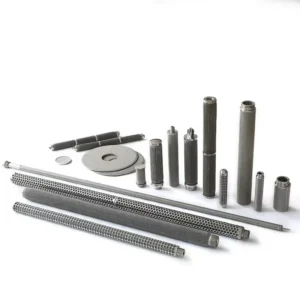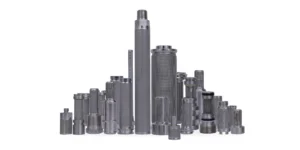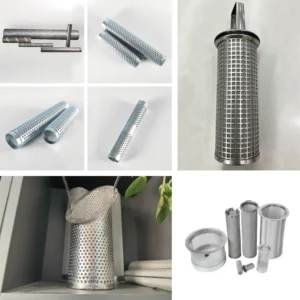
When a screen plugs too fast, cracks around punched holes, or creates too much pressure drop, the next RFQ often becomes a structure question: should the replacement use wedge wire or perforated plate? The answer is not only about opening size. You need to compare slot geometry, open area, retained solids, cleaning method, strength, flow direction and housing fit before choosing the screen.
Direct Answer: Wedge Wire vs Perforated Plate
Choose wedge wire when the process needs continuous V-shaped slots, high open area, surface release, backwash-friendly cleaning and custom screen geometry. Choose perforated plate when the process needs a strong punched sheet, coarse debris protection, a support layer, lower complexity or a simple removable basket. Neither structure is automatically better; each solves a different screen problem.
SINFT wedge wire filters use SS316L triangular profile wire and support rods as the main construction, with SS304, SS316, SS316L, Titanium and Hastelloy available for specific applications. SINFT basket filters and strainers can use perforated plate, woven mesh, sintered mesh or combined structures. The correct choice depends on the fluid, solids, opening requirement, pressure drop, cleaning cycle and element shape.
Wedge Wire vs Perforated Plate at a Glance
| Selection point | Wedge wire screen | Perforated plate screen |
|---|---|---|
| Opening geometry | Continuous slots formed by profile wire and support rods | Punched round, square, slotted or custom holes in sheet or plate |
| Main advantage | Surface screening, high open area, V-slot release and custom cylindrical or panel forms | Mechanical support, coarse protection, simple fabrication and robust handling |
| Retention style | Slot width controls the narrowest opening | Hole size or slot dimension controls the opening |
| Cleaning behavior | Often easier to clean when particles release from the slot surface | Easy to wash for coarse debris, but holes may blind or retain wedged particles |
| Strength logic | Depends on wire profile, support rod spacing, welds, diameter and flow direction | Depends on plate thickness, hole pattern, pitch, ligament and forming method |
| Best applications | Intake screens, resin traps, slurry screening, backwash elements, water treatment, solid-liquid separation | Basket strainers, guards, coarse screens, support tubes, prefilters and protective liners |
| RFQ data needed | Slot width, profile wire, support rod, flow direction, size, connection and material | Hole shape, hole size, pitch, plate thickness, pattern, open area, forming and material |
What Makes Wedge Wire Different?
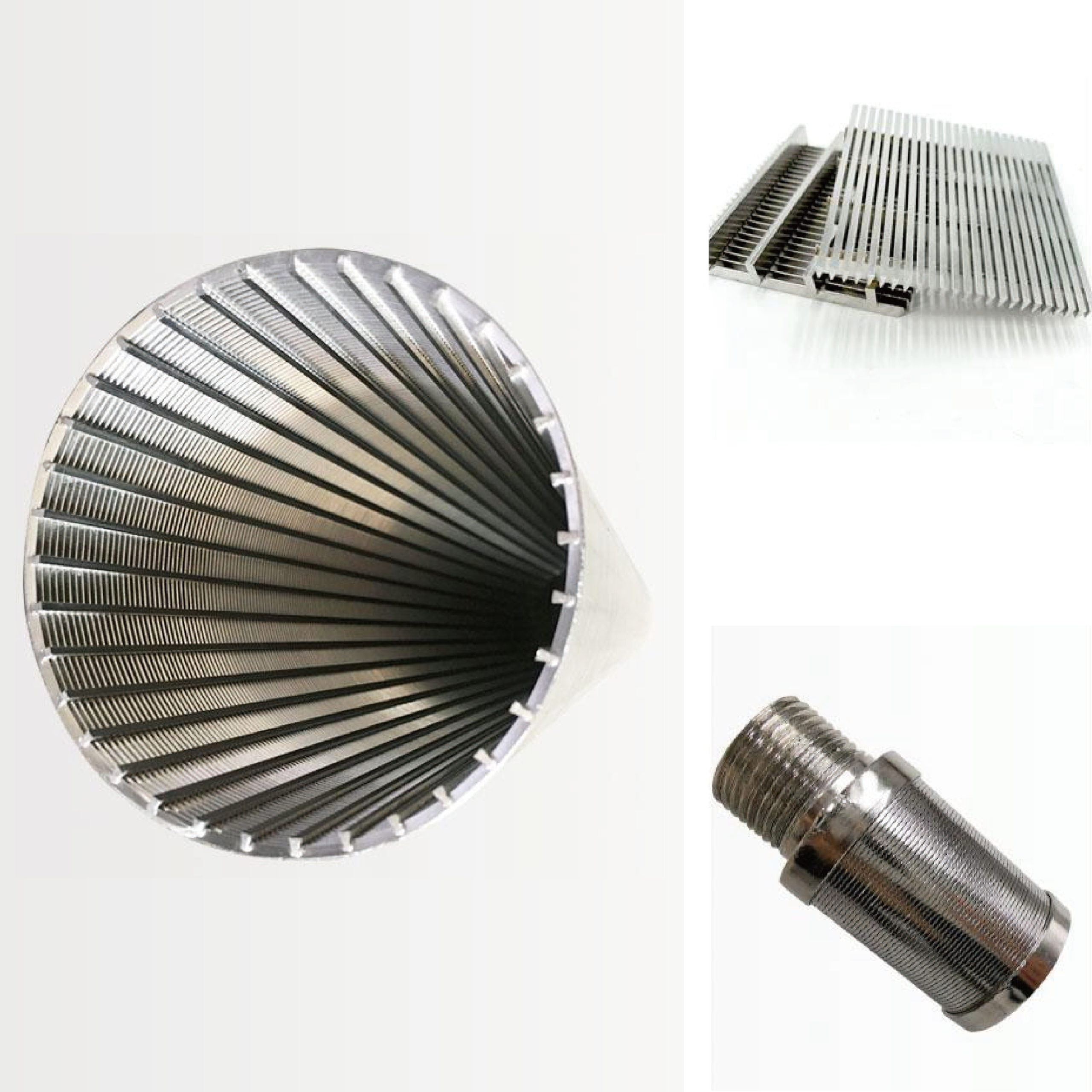
Wedge wire is selected for slot behavior, not only for stainless steel construction. The profile wire creates a narrow surface opening with a wider passage behind it. When the flow direction and particle shape are suitable, this V-slot geometry can reduce particle wedging compared with parallel-sided holes.
SINFT’s confirmed Wedge Wire product information lists 0.1-3 mm slot width with custom options, open area up to 60%, working temperature up to 600 degrees Celsius and differential pressure up to 50 bar depending on structure and service conditions. These are product-family references, not a promise that every maximum can be combined in one design. A long intake screen, compact cartridge and flat panel may need different support geometry.
The wedge wire screen slot size guide explains the slot-selection side in more detail. For this comparison, the key point is that wedge wire is usually strongest when the buyer needs controlled slots, surface release and custom screen geometry rather than a simple punched hole pattern.
Manufacturer literature for Vee-Wire and wedge wire screens commonly describes the construction as shaped profile wire fixed to support rods, creating continuous slots rather than punched openings. This general construction principle matches why wedge wire is often considered for media retention, surface screening and liquid-solid separation applications.
What Makes Perforated Plate Different?
Perforated plate is selected for punched-hole geometry, stiffness and support. It can be the main screen in a coarse-duty basket, or it can act as a support layer behind finer woven mesh, sintered mesh or another filtration medium.
For perforated plate, the RFQ should not say only “5 mm holes” or “round holes.” ISO 7806:1983 identifies the designation of perforations by hole shape, aperture size, arrangement, pitch and orientation relative to plate edges. That is exactly why two plates with the same hole diameter can behave differently if pitch, pattern or sheet thickness changes.
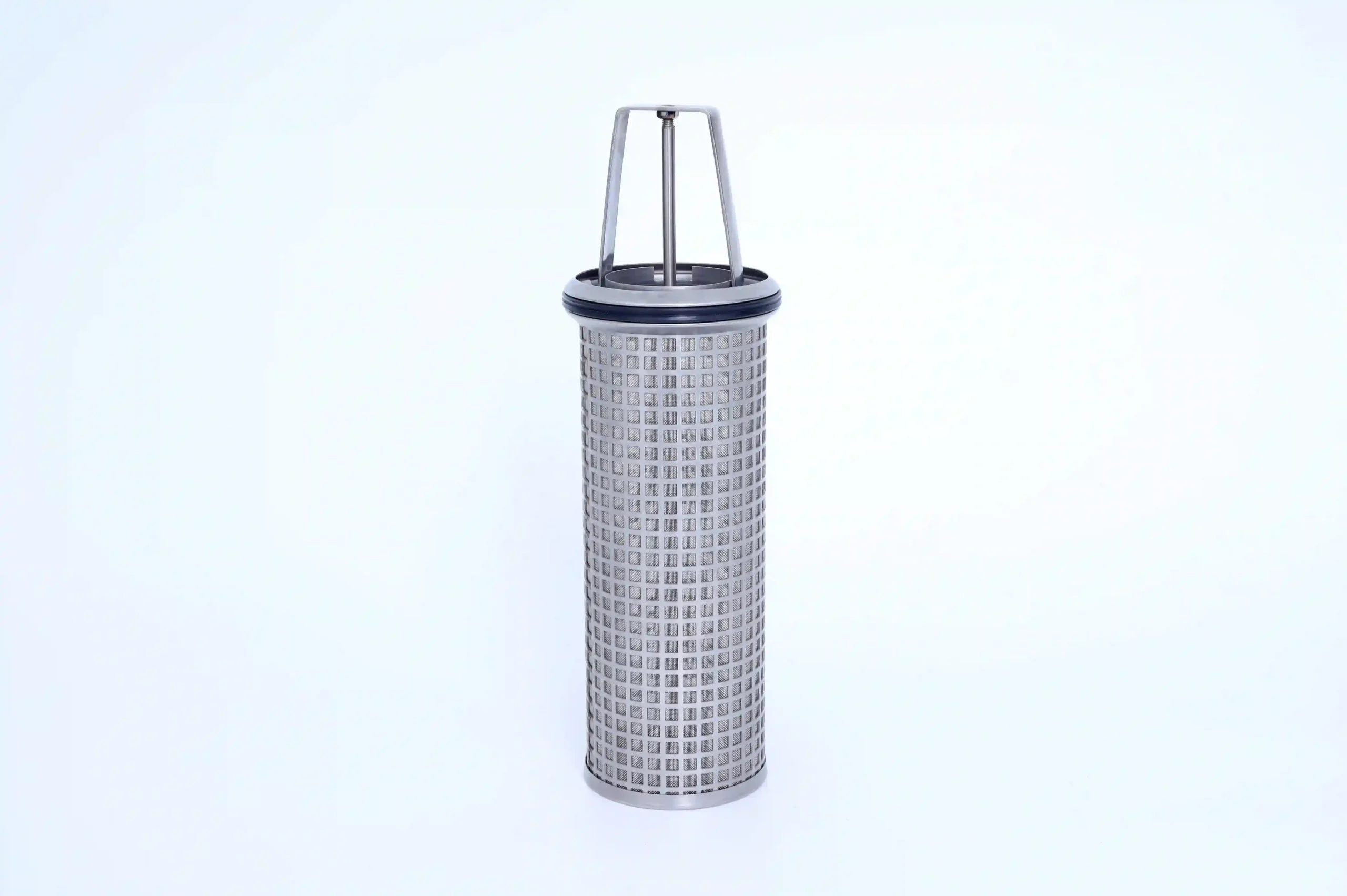
Perforated plate can be a good choice when your duty involves large debris, simple washing, repeated manual removal, or a screen that must resist handling during maintenance. It can also support finer media. For example, a basket may use perforated plate for strength and a woven mesh liner for particle retention. In that case, the perforated plate is not the filtration rating by itself; it is part of the complete filter element.
Opening Size Is Not the Whole Specification
A slot and a hole are different geometric controls. A 1 mm wedge wire slot and a 1 mm round perforation both have a 1 mm opening dimension, but they do not create the same flow path, open area, cleaning behavior or particle-retention pattern.
For wedge wire, specify:
- slot width;
- profile wire shape;
- support rod size and spacing;
- screen diameter, length or panel size;
- flow direction;
- material and connection;
- cleaning method and inspection requirement.
For perforated plate, specify:
- hole shape: round, square, slotted or custom;
- aperture size;
- pitch and hole arrangement;
- plate thickness;
- open area;
- rolled, welded, flanged or basket geometry;
- liner or backing mesh if used.
Perforated-metal technical references commonly show that open area is governed by hole size, pitch and pattern together. The Industrial Perforators Association’s Designers, Specifiers and Buyers Handbook of Perforated Metals treats open area, pressure loss and strength as separate specification topics. A high open-area pattern may improve flow, but it can also reduce remaining metal and stiffness. This is why perforated plate selection should balance hydraulic performance and mechanical strength instead of chasing the highest percentage.
Pressure Drop and Open Area
Pressure drop depends on more than the published open area. The same open-area number can still behave differently because of hole entrance shape, slot geometry, plate thickness, flow direction, debris load and downstream support.
Wedge wire is often reviewed when a screen needs a high open area with continuous slots and surface release. The V-slot can help reduce wedging for suitable particles. However, a fine slot on a small-diameter element can still restrict flow if the screen area is undersized.
Perforated plate can be strong and predictable for coarse screening, but a thick plate with small holes can create more resistance and more plugging points. If it is used as a support behind mesh, the support pattern may also block part of the active media area.
For a broader sizing discussion, see SINFT’s filter pressure drop vs flow rate guide. For water-intake context, the U.S. Bureau of Reclamation has studied wedge-wire and punch-plate screen behavior in fish-protection and debris-plugging research, including the relationship between hydraulic conditions and screen plugging.
Cleaning and Plugging Behavior
If the filter must be cleaned repeatedly, compare how particles leave the opening. This is often where wedge wire and perforated plate separate in real service.
Wedge wire can be easier to clean when solids are stopped at the screen surface and can be removed by sweeping flow, backwash, scraping or washing. The V-shaped opening means particles that pass the narrowest point are less likely to lodge deeper inside a parallel hole. This advantage depends on particle shape, flow direction and slot orientation.
Perforated plate is easy to rinse when the duty is coarse debris and the basket can be removed. But round or slotted holes can blind if fibrous, sticky, deformable or scale-like solids bridge across the openings. A perforated basket may still be the right answer if the solids are large, cleaning is manual, and the plant values rugged handling over finer slot control.
For automatic cleaning systems, also compare wedge wire with SINFT backwash filter cartridges. Those elements may use stainless steel mesh, reinforced basket or slot structures depending on how the contaminant releases during reverse-flow or air-blowing cleaning.
Strength, Support and Fabrication
Strength should be checked from the complete element, not from the screen material alone. A wedge wire cylinder, flat panel, basket insert and perforated tube all resist loads differently.
Wedge wire strength depends on the profile wire, support rods, welding, unsupported span, diameter, end rings, flow direction and pressure differential. SINFT wedge wire filters can be customized with flange, threaded, welded or custom connections, and with lengths from 50 mm to 6000 mm depending on design.
Perforated plate strength depends on plate thickness, hole pattern, pitch, ligament, forming, welds, rim, handle and support ring. If too much material is removed to increase open area, the remaining metal may lose stiffness. If the hole pattern is too conservative, pressure drop may rise. For basket work, the basket strainer mesh size guide explains why strength, open area and retention sometimes need two different layers.
Application-Based Selection Advice
Start from the failure mode in your process. If the current screen plugs, collapses, misses particles or is hard to clean, the replacement structure should address that specific problem.
For water treatment, wedge wire may fit intake screening, backwashable duty, resin retention or high-flow surface screening. Perforated plate may fit coarse debris baskets, removable strainers or support tubes. In some elements, both are used together.
For petrochemical filtration, confirm material compatibility, temperature, pressure differential and solids behavior. Wedge wire can support robust surface screening and vessel internals, while perforated plate may be useful as a support or guard.
For food and beverage filtration, cleanability matters. Wedge wire may be reviewed when surface release and washability are important; perforated plate may be practical for coarse protection and removable baskets. The final choice should respect the actual cleaning procedure and documentation requirements.
For self-cleaning and backwash filtration, the screen must release particles during the cleaning cycle. A wedge wire slot, notch wire slot, sintered mesh surface or perforated support should be selected by contaminant behavior, not only by aperture.
What to Confirm Before an RFQ
A good RFQ should let the factory quote the same screen you actually need. If you send only opening size, suppliers may quote different structures that look similar in price but perform differently in service.
Send these details for a wedge wire or perforated plate comparison:
- Fluid, slurry, oil, gas, steam, resin, food fluid or chemical name
- Particle type, shape, size range and whether solids are hard, fibrous, sticky or deformable
- Required retained-particle target or allowed downstream particle size
- Normal flow rate and allowable pressure drop
- Operating temperature, pressure and cleaning temperature
- Flow direction: outside-in, inside-out, cross-flow or special layout
- For wedge wire: slot width, wire profile, support rod direction and screen geometry
- For perforated plate: hole shape, aperture size, pitch, plate thickness and open area
- Material requirement such as SS304, SS316, SS316L, Titanium or Hastelloy
- Connection: flange, threaded, welded, rim, handle or custom end structure
- Cleaning method: manual wash, backwash, air blow, scraper, chemical cleaning or steam
- Old sample, drawing, housing dimensions and photos if replacing an existing element
If the opening requirement is being described as microns rather than slot or hole dimensions, review SINFT’s filter micron rating chart before issuing the RFQ. A slot, woven mesh aperture, perforated hole and sintered pore should not be treated as the same rating language.
How SINFT Can Help
SINFT can help when the real question is not only “wedge wire or perforated plate,” but which custom screen structure fits the process and housing. SINFT supplies wedge wire filters, basket filters and strainers, backwash filter cartridges and custom stainless steel filter assemblies.
If your screen decision depends on slot size, hole pattern, open area, pressure drop, cleaning method, material, connection, old-sample replacement or drawing-based production, use SINFT’s custom filter manufacturer service as the next step. For a quotation, send the process data, dimensions and photos through the contact form.
FAQ
Is wedge wire better than perforated plate?
Not always. Wedge wire is often better when continuous slots, V-slot release, high open area and repeat cleaning matter. Perforated plate is often better for coarse debris protection, simple baskets, mechanical support and rugged handling. The right choice depends on retained particles, flow rate, pressure drop, cleaning method, material and housing geometry.
When should I choose wedge wire instead of perforated plate?
Choose wedge wire when the screen must handle surface screening, resin retention, intake flow, slurry, backwash cleaning or a custom slot geometry. It is especially useful when particles should release from the surface rather than wedge inside holes. Confirm slot width, support rods, flow direction and pressure differential before replacing a perforated plate.
When is perforated plate the better screen material?
Perforated plate is often better for coarse straining, guards, removable baskets, support tubes and applications where strength and simple cleaning matter more than fine slot control. It may also support woven mesh or sintered mesh. Specify hole shape, aperture, pitch, pattern, thickness and open area so quotations can be compared correctly.
Can wedge wire and perforated plate be used together?
Yes. Some filter assemblies use perforated plate as a support or guard and another medium for retention. Others use wedge wire as the main screening surface with end rings, frames or supports. The combined design should be reviewed as a complete element because support layers can affect open area, pressure drop, cleaning and strength.
Is wedge wire slot size the same as perforated hole size?
No. A wedge wire slot is a continuous opening formed between profile wires, while a perforated hole is punched through a sheet or plate. The same numerical opening can behave differently because flow path, open area, particle wedging and cleaning behavior are different. Specify the actual geometry rather than converting everything to one rating.
Which has lower pressure drop, wedge wire or perforated plate?
It depends on open area, screen size, plate thickness, slot or hole geometry, flow direction, solids loading and fluid viscosity. Wedge wire is often selected for high open area and surface release, but it can still restrict flow if undersized. Perforated plate can be efficient for coarse openings but restrictive when small holes and thick plate are combined.
What information does SINFT need for a custom screen quote?
Send the fluid, solids, target opening, flow rate, pressure drop limit, temperature, material, cleaning method, screen shape, connection, and housing dimensions. For wedge wire, include slot width and flow direction. For perforated plate, include hole shape, hole size, pitch, thickness and open area. Photos or samples help replacement projects.
Final Thoughts
Wedge wire vs perforated plate is a structure decision, not a simple opening-size comparison. Wedge wire is strong for V-slot surface screening, high open area and cleanable custom screens; perforated plate is strong for coarse protection, support and robust removable baskets. If the duty is not obvious, SINFT can review the process and help turn the comparison into a manufacturable screen element.