When a filter element collapses, tears, bursts, or sheds media, the failure often looks sudden. In reality, the RFQ may have missed one pressure question: how much differential pressure can the finished element withstand in the real flow direction? A filter element collapse pressure rating helps answer that question, but only when it is separated from normal system pressure and clean pressure drop.
Direct Answer: What Is Filter Element Collapse Pressure Rating?
A filter element collapse pressure rating is the differential pressure a filter element is verified or designed to withstand without structural failure under defined conditions. It is not the same as system operating pressure, housing pressure rating, clean pressure drop, bypass setting or filtration efficiency.
For a custom stainless steel filter element, collapse pressure rating should be reviewed together with flow direction, media support, weld design, pleat or mesh structure, end cap connection, seal fit, cleaning method and the maximum loaded differential pressure expected in service.
Collapse Pressure vs Burst Pressure vs Pressure Drop
The terms sound similar, but they answer different engineering questions.
| Term | What it means | Why it matters in buying |
|---|---|---|
| Operating pressure | Pressure in the system or housing | The housing and seals must be suitable for the process pressure |
| Clean pressure drop | Differential pressure across a clean element at a stated flow and fluid condition | Helps size the element and avoid excessive energy loss |
| Terminal differential pressure | The pressure drop at which the element should be cleaned or replaced | Protects the element before structural damage or bypass risk |
| Collapse pressure rating | Differential pressure the element can withstand before collapse/burst failure under a defined test or design basis | Prevents media, support, end cap or core failure |
| Burst pressure test | A pressure-strength test used to verify resistance to rupture or failure under defined conditions | Supports inspection and supplier qualification |
| Bypass valve setting | Differential pressure where bypass opens in a housing or assembly | Protects flow continuity but may allow unfiltered fluid downstream |
The mistake is choosing from only one column. If you know the system operating pressure but not the differential pressure across the element, you still do not know whether the element can survive blockage, cold start, high viscosity, pump surge, reverse flow or backwash.
Why Collapse Pressure Matters in Stainless Steel Filter Elements
A stainless steel element can still fail if the support structure is wrong for the pressure load. Metal media is stronger than many disposable polymer media, but the finished part includes joints, perforated cores, pleat packs, sintered layers, end caps, welds and seals. Each one can become the weak point.
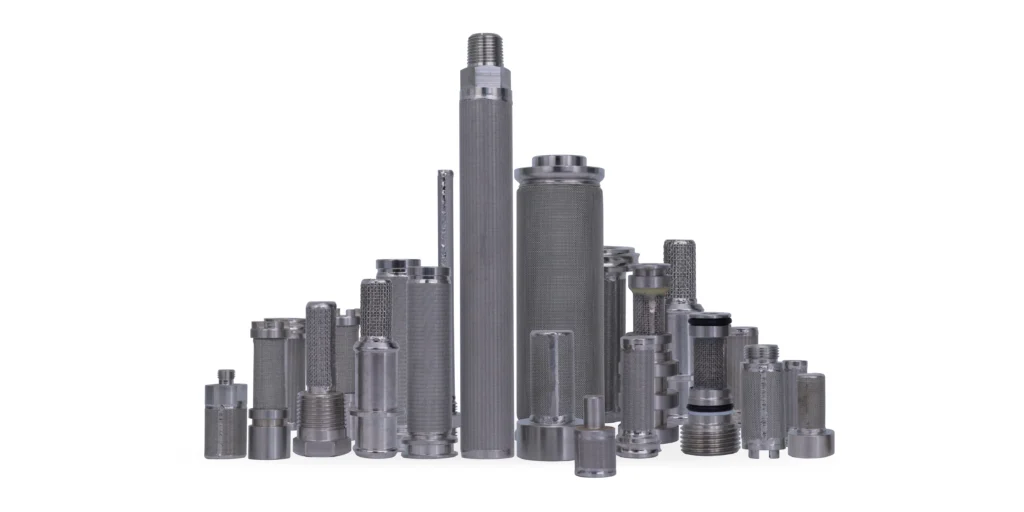
SINFT manufactures stainless steel filter elements in cartridge, tube, candle, disc, cone, panel, basket, pleated element and custom welded assembly forms. The confirmed product information covers multiple media families, including woven wire mesh, sintered mesh, sintered fiber felt, perforated plate, wedge wire and custom assemblies. These media types do not carry pressure load in the same way.
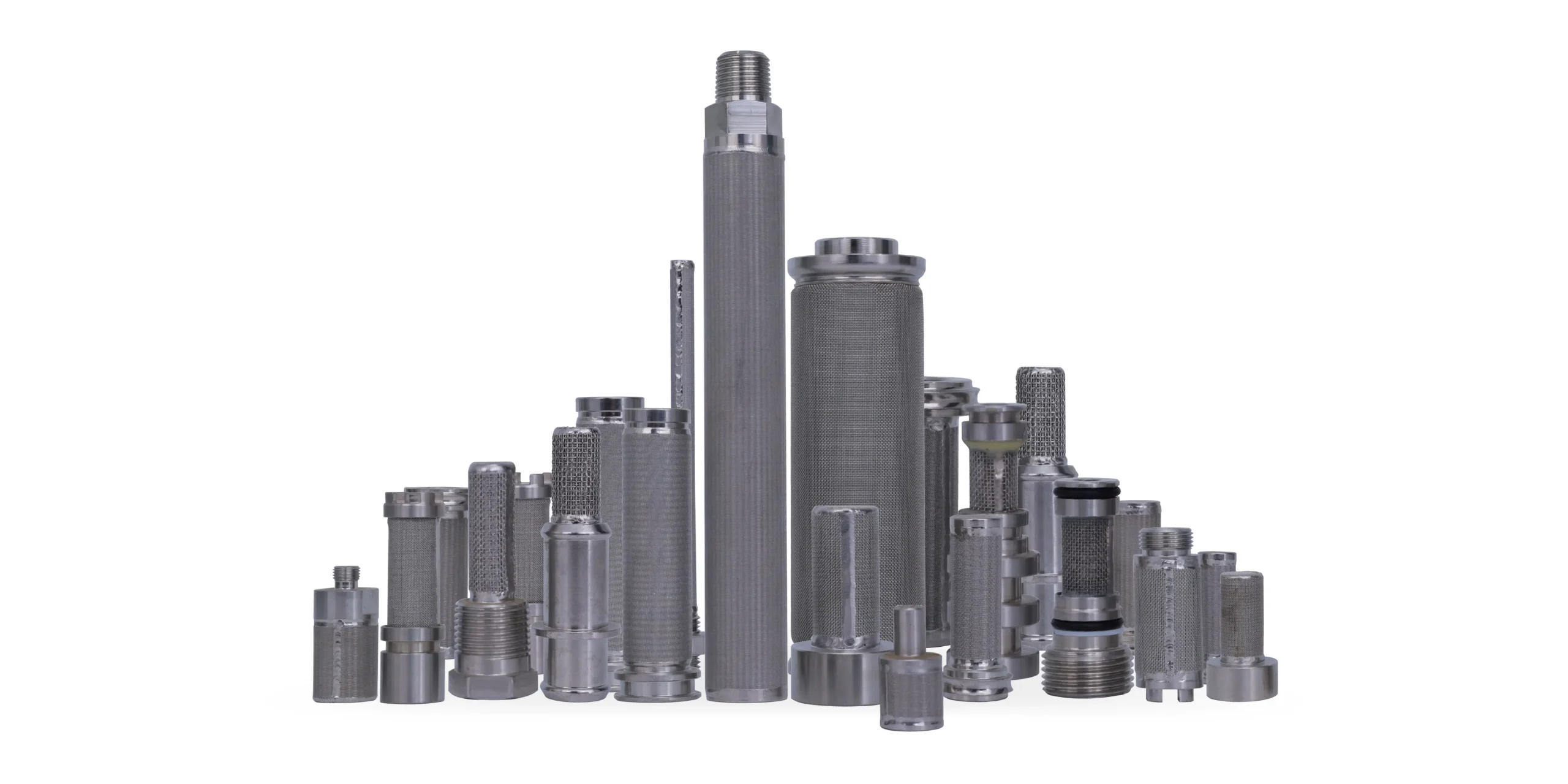
For example, a rigid sintered mesh cylinder may tolerate a different load path from a pleated cartridge. A basket with a fine woven liner may need a perforated support. A backwash element must also handle reverse-flow or cleaning loads. A wedge wire cylinder may have good slot stability, but its end rings, support rods and installation direction still need review.
What ISO 2941 Says About Collapse/Burst Verification
ISO 2941:2009 is the key international standard for hydraulic filter elements when collapse/burst pressure rating is being discussed. ISO describes the method as verifying the capability of a hydraulic filter element to withstand a designated differential pressure in the intended flow direction by pumping contaminated fluid until collapse/burst occurs or the expected maximum differential pressure is reached without failure.
This standard is important for two reasons:
- It treats collapse/burst rating as a differential pressure issue across the filter element.
- It verifies a filter element, not just a generic piece of media.
Not every industrial liquid, gas, steam, polymer or strainer application is a hydraulic-filter ISO 2941 test project. But the selection discipline is still useful: define the pressure load, test boundary, flow direction, housing condition and acceptance rule before comparing suppliers.
Do Not Confuse Housing Pressure With Element Collapse Strength
One of the most common RFQ mistakes is writing only “working pressure” or “system pressure.” That number may describe the housing, pipeline or process, but the element usually fails from differential pressure across the media.
Imagine a filter housing operating at high pressure with almost equal pressure on both sides of a clean element. The element may see only a small differential pressure. Now imagine a low-pressure return line where the element becomes plugged and no bypass or changeout action occurs. The system pressure may be modest, but the loaded element can see a damaging pressure drop.
This is why your RFQ should include:
- normal operating pressure;
- maximum system pressure;
- clean element pressure drop;
- alarm, cleaning or changeout differential pressure;
- bypass valve setting, if used;
- maximum allowable differential pressure for the element;
- flow direction and any reverse-flow condition.
Pressure Drop Data Does Not Equal Collapse Rating
Pressure drop curves are used for sizing. Collapse rating is used for strength review. They are connected, but they are not the same.
ISO 3968:2017 provides a hydraulic-filter method for evaluating differential pressure versus flow. That kind of curve helps compare flow resistance under defined fluid, viscosity, temperature and assembly conditions. It does not automatically prove the element can survive the final blocked condition.
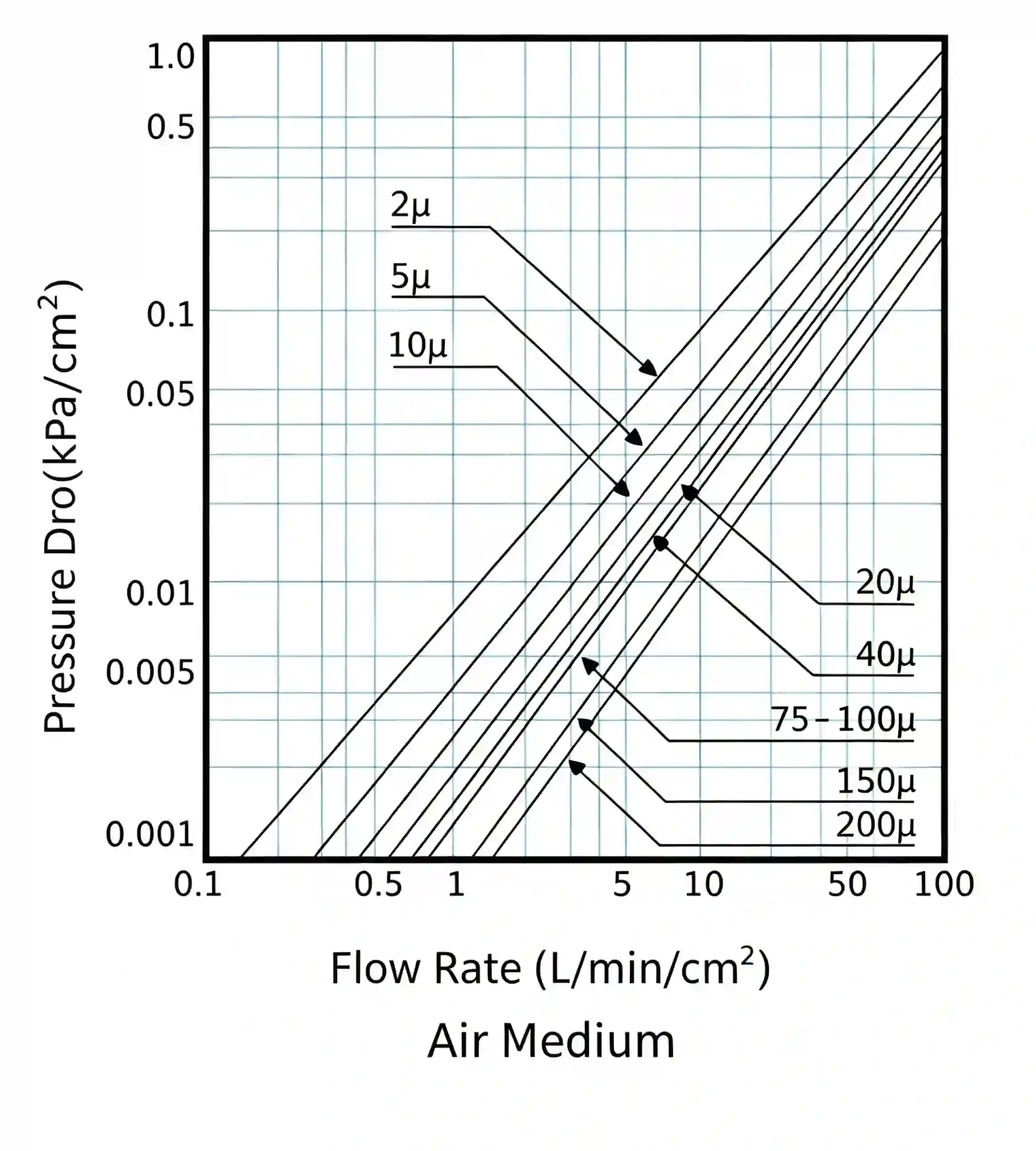
For sizing work, read SINFT’s filter pressure drop vs flow rate guide first. For pressure-strength work, ask a different question: what is the highest differential pressure the finished element may see before cleaning, bypass, shutdown or failure?
How Bypass and Changeout Settings Affect Collapse Risk
Many hydraulic and lubrication systems use a bypass valve or differential-pressure indicator. These devices are not just accessories; they affect how close the element gets to its structural limit.
Pall’s guide to differential pressure indicators and switches explains that differential pressure rises as contamination loads the filter, and indicators help signal replacement before bypass occurs. Pall also notes that continued operation at high differential pressure can risk filter element collapse.
Donaldson’s hydraulic filter replacement guidance similarly warns that wrong pressure or efficiency choices can damage systems and that bypass valves may open during cold starts, pressure spikes or heavy loading, allowing unfiltered fluid through the circuit.
For purchasing, the lesson is practical: if your system has a bypass valve, the element, indicator and bypass setting should be coordinated. If your system has no bypass, the element may need a higher collapse margin and a stricter maintenance procedure.
What Causes a Filter Element to Collapse or Burst?
Most structural failures come from a mismatch between pressure load and element construction. The triggering condition may be sudden, but the root cause is often an incomplete specification.
Common causes include:
- excessive dirt loading after the cleaning/changeout point is missed;
- cold start or high viscosity causing higher pressure drop;
- reverse flow through an element not designed for it;
- backwash pressure exceeding the media or weld limit;
- undersized filter area creating rapid plugging;
- weak support core, cage, perforated tube or pleat spacing;
- wrong flow direction during installation;
- damaged end cap, seal groove or weld;
- media weakened by corrosion, chemical cleaning or thermal cycling;
- replacement element copied by dimensions but not by strength.
If you are replacing a failed element, send photos of the collapse pattern. A crushed core, torn pleat, separated end cap, blown seam or deformed basket tells a different story.
Product-Type Guidance
Different SINFT product families need different pressure-strength questions.
| Filter type | Pressure-strength question to ask | Related SINFT page |
|---|---|---|
| Pleated metal cartridge | Can the pleats, core, guard, seam, end caps and seals handle the terminal differential pressure? | Pleated Filter Cartridges |
| Sintered mesh element | Is the layer structure, thickness, support and flow direction suitable for the load? | Sintered Mesh Filter Elements |
| Sintered fiber felt element | Does the felt need protection mesh or support for the pressure and cleaning method? | Sintered Fiber Felt Filters |
| Backwash filter cartridge | What reverse-flow and cleaning differential pressure can the finished element withstand? | Backwash Filter Cartridges |
| Wedge wire filter | Are slot direction, support rods, end rings and flow direction suitable for the load? | Wedge Wire Filters |
| Basket or strainer element | Will the perforated body, mesh liner, rim, handle and support resist plugging load and removal handling? | Basket Filters & Strainers |
If you are unsure which family fits, the custom filter manufacturer service is the better starting point than ordering from a copied catalog description.
Application Advice: Where Collapse Rating Becomes Critical
In hydraulic and lubrication filtration, collapse rating is often tied to cold start, high viscosity, pressure spikes, bypass setting and component protection. Do not replace a hydraulic element by size alone. Match filtration rating, media, seal, bypass arrangement, flow direction and collapse pressure logic.
In polymer melt filtration, viscosity, gel loading, thermal exposure and pressure drop can make pressure-strength review important even when the filter is metallic. A strong-looking element can still fail if the active area is too small or the media plugs faster than expected.
In water treatment and petrochemical service, the risk may come from debris surges, corrosion, chemical cleaning, pressure shock or maintenance delay. The correct element should be selected for both retention and survivability.
What Buyers Should Confirm Before RFQ
Before requesting a quote, prepare data that lets the supplier review pressure load instead of guessing from a picture:
- filter type and intended product family;
- drawing, old sample, photos or part number;
- OD, ID, length, end connection and seal position;
- normal flow direction and any reverse-flow condition;
- fluid, gas, steam or polymer name;
- viscosity and operating temperature;
- normal and maximum operating pressure;
- clean pressure drop target;
- terminal, cleaning or changeout differential pressure;
- bypass valve setting or “no bypass” requirement;
- cleaning method, including backwash, ultrasonic, chemical, steam or air blowing;
- contaminant type, particle load and plugging behavior;
- required material, such as SS304, SS316L or special alloy;
- required inspection documents, including material certificate, dimensional inspection report, optional pressure test certificate, passivation record or batch traceability records.
If you only have a failed old element, send the old element anyway. For replacement work, physical construction and failure marks often reveal pressure-load information that a short RFQ form cannot capture.
How SINFT Can Help With Pressure-Sensitive Filter Elements
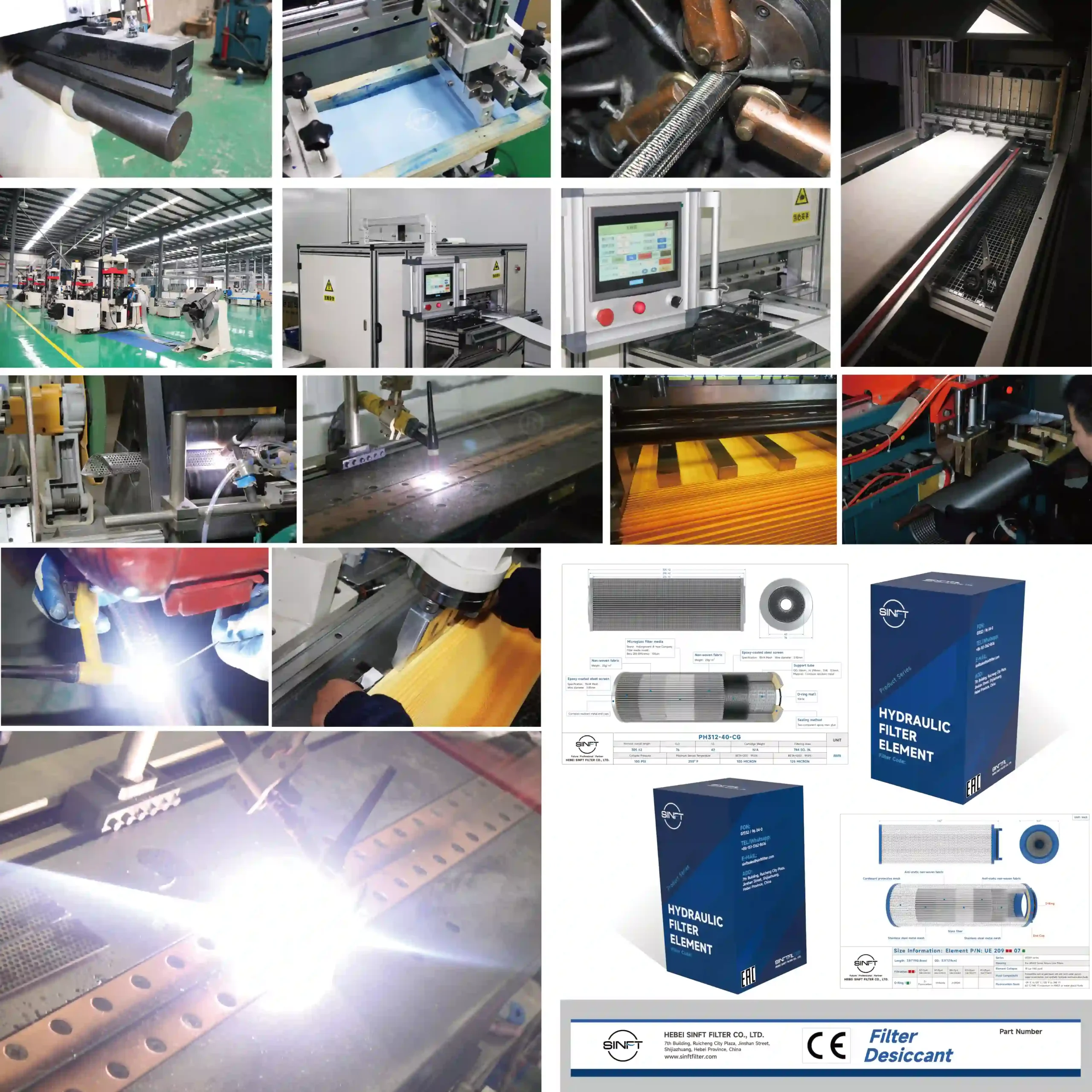
SINFT can manufacture custom stainless steel filter elements from drawings, old samples, housing dimensions and operating conditions. Confirmed quality capabilities include burst pressure testing, bubble point testing, air permeability testing, dimensional inspection, material spectrometry, metallographic analysis, pore or slot integrity verification, passivation and surface-cleanliness inspection, batch traceability and optional pressure test certificates.
For a pressure-sensitive project, send the operating envelope and failure risk through the contact inquiry form. If the element needs a non-standard material, support structure, end connection, flow direction or inspection plan, start from the custom service page and attach your drawing or old sample photos.
Frequently Asked Questions
Is collapse pressure rating the same as working pressure?
No. Working pressure usually refers to system or housing pressure. Collapse pressure rating refers to differential pressure across the filter element. A housing may operate at high pressure while the element sees a low pressure drop, or a lower-pressure system may damage a plugged element if differential pressure rises too far.
Is burst pressure testing required for every filter element?
Not always. It is most relevant when the filter has a defined pressure-strength risk, such as hydraulic duty, high-viscosity flow, backwash, reverse flow, critical equipment protection or old-element failure. For simple coarse baskets, dimensional inspection and support design may matter more than a formal burst pressure test.
Can I use pressure drop data as the collapse pressure rating?
No. Pressure drop data shows flow resistance under stated conditions. Collapse rating addresses structural resistance to a designated differential pressure. A clean pressure-drop curve can help size the element, but you still need terminal differential pressure, bypass setting, loaded condition and support strength to judge collapse risk.
Why does flow direction matter for collapse strength?
Filter elements are often stronger in one direction than the other. A support core, pleat pack, perforated guard or wedge wire slot may be designed for outside-to-inside or inside-to-outside flow. Reverse flow, backwash or wrong installation can load the media and welds differently, so direction should be marked on the drawing.
What is a safe changeout differential pressure?
There is no universal value. It depends on the element construction, housing, bypass valve, fluid viscosity, temperature, contaminant loading and required safety margin. The changeout point should be lower than the damaging differential pressure and coordinated with the application. Ask the supplier or system engineer to define it for the finished assembly.
Does a stainless steel filter element always have higher collapse strength?
No. Stainless steel media can improve strength, temperature resistance and cleanability, but the finished element still depends on support structure, welds, pleat spacing, end caps, corrosion condition and size. A poorly supported metal mesh liner can deform, while a well-designed cartridge can carry the expected load safely.
What should I send for a replacement element that collapsed?
Send photos of the failed element, housing, end connections, seals, flow arrow, damaged area and any debris. Include operating pressure, differential pressure history, fluid, temperature, viscosity, cleaning method, bypass setting and service interval. Failure shape helps determine whether the issue was blockage, wrong direction, weak support, corrosion or oversizing.
Can SINFT provide a pressure test certificate?
SINFT’s confirmed documentation capabilities include optional pressure test certificates, along with material certificates, dimensional inspection reports, passivation records, packaging photos and batch traceability records. The exact test scope and acceptance basis should be agreed during RFQ because not every product family, size or application uses the same test method.
Final Thoughts
Filter element collapse pressure rating is not a catalog decoration. It is the link between pressure drop, dirt loading, flow direction, support design and maintenance timing. If your application has pressure spikes, high viscosity, backwash, no bypass or a failed old element, ask SINFT to review the complete element instead of copying only the dimensions.
Technical References
- ISO, “ISO 2941:2009 – Hydraulic fluid power – Filter elements – Verification of collapse/burst pressure rating”: https://www.iso.org/standard/41062.html
- ISO, “ISO 3968:2017 – Hydraulic fluid power – Filters – Evaluation of differential pressure versus flow”: https://www.iso.org/standard/64104.html
- Pall Corporation, “Differential Pressure Indicators and Switches”: https://www.pall.co.uk/uk/en/solutions/differential-pressure.html
- Donaldson, “How to Replace Hydraulic Filters Correctly: Types, Ratings & Tips”: https://www.donaldson.com/en/resources/technical-articles/replacing-hydraulic-filters/