If your line keeps stopping for cartridge changeout, an automatic backwash filter may look like the obvious upgrade. If your contaminant is sticky, hazardous, fine, or hard to flush, that upgrade can create a different problem. The real decision is not “modern system versus old system”; it is whether your solids, process, waste route, and maintenance team fit in-place cleaning.
Direct Answer: Backwash Filter vs Cartridge Filter
For an industrial backwash filter vs cartridge filter decision, choose the system architecture before choosing the filter element. An automatic backwash system cleans retained solids in place and discharges them through a waste line, making it attractive for continuous service and recurring surface loads. A conventional cartridge system isolates contaminants in removable elements and is often simpler when loads are lower, fine retention is required, or the process needs controlled element changeout.
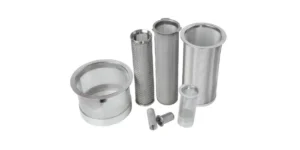
The terms are not opposites in every design. A cartridge describes a removable element format; backwash describes a cleaning method. Stainless steel cartridges may be cleaned by reverse flow, while some automatic self-cleaning systems use cylindrical screens, baskets, discs, or multiple tubular elements. Your comparison should therefore be automatic in-place cleaning versus planned cartridge removal, based on the complete housing, valves, controls, media, waste route, and operating duty.
Backwash Filter vs Cartridge Filter at a Glance
Backwash systems favor continuity and repeated in-place cleaning; cartridge systems favor simple containment, flexible fine media, and controlled changeout. Neither is automatically lower in pressure drop or lower in total cost.
| Selection factor | Automatic backwash filter system | Conventional cartridge filter system |
|---|---|---|
| Normal solids handling | Retains solids on a cleanable surface, then flushes them to drain or recovery | Stores solids in or on removable cartridges until cleaning or replacement |
| Cleaning event | Reverse flow, suction scanning, air-assisted cleaning, or another approved in-place method | Housing isolation, opening, cartridge removal, and cleaning or replacement |
| Process continuity | Can be designed to clean with limited or no interruption; verify the actual valve sequence and usable flow during cleaning | Usually requires isolation unless a duplex or parallel housing arrangement is installed |
| Best load pattern | Recurring particles that form a releasable surface deposit | Lower or intermittent loading, fine polishing, or contaminants that should remain contained in the element |
| Rating choice | Commonly screen, mesh, slot, or other cleanable surface structures | Broad choice of surface and depth media, including reusable stainless steel cartridges |
| Waste stream | Produces a concentrated flush stream that must go to drain, treatment, or recovery | Produces removed cartridges plus retained product, wash liquid, or disposal waste |
| Controls and utilities | Requires an adequate cleaning differential, valves, controller logic, and a defined backwash source | Mechanically simpler, but requires labor, safe access, spares, lifting space, and changeout procedures |
| Main design risk | A deposit that does not release, inadequate reverse load, blocked discharge, or unstable cleaning logic | Rapid loading, excessive changeout frequency, bypass at seals, or unsuitable cartridge area |
This is a system-level comparison. A metal cartridge can be part of a backwash system, and a replaceable cartridge can also be cleaned off-line and returned to service after inspection.
What Is an Industrial Backwash Filter System?
An industrial backwash filter is a filtration assembly that periodically reverses or redirects flow to remove retained solids from a cleanable element without routine element removal.
During normal filtration, the contaminant is retained on the designated dirty side. As the deposit grows, differential pressure generally rises. A cleaning sequence is initiated by differential pressure, elapsed time, an operator command, or a combination of signals. Valves then create the required cleaning flow, the released solids leave through a flush or drain connection, and the filter returns to its normal mode.
The exact mechanism varies. BOLL & KIRCH’s automatic backwash filter overview provides a manufacturer example of a system that periodically flushes retained debris from the filter. Amiad’s explanation of automatic self-cleaning screen filters describes a different, differential-pressure-triggered suction-scanning cycle.
These examples should not be treated as one universal sequence. Buyers must confirm:
- whether the element is cleaned by full reverse flow, localized suction scanning, air, mechanical scraping, or a combined method;
- whether filtration continues during cleaning and at what usable flow;
- the source, cleanliness, pressure, and volume of the cleaning fluid;
- the flush duration, discharge frequency, and waste destination;
- the maximum reverse differential pressure on the element, joints, and end hardware.
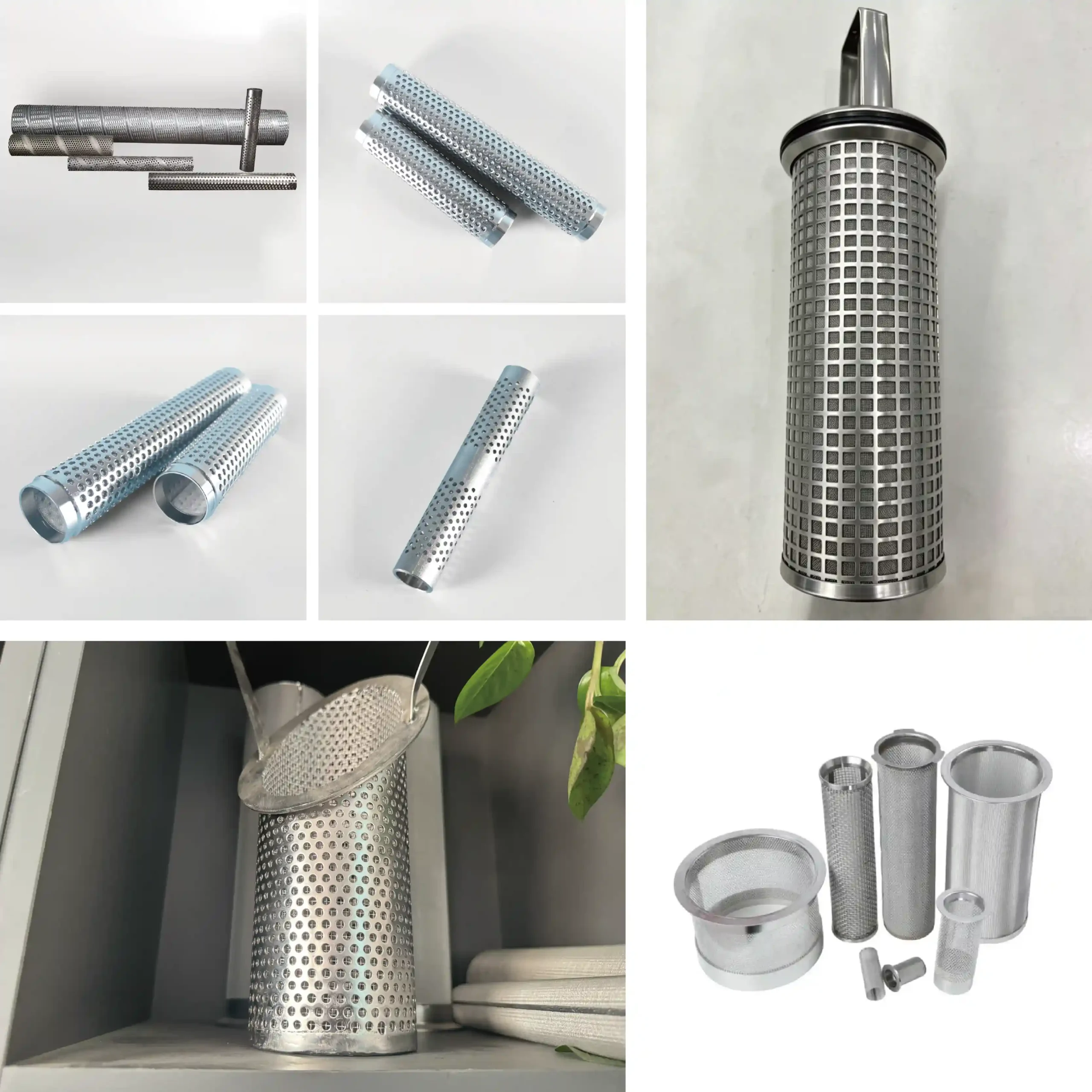
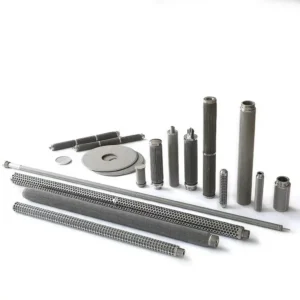
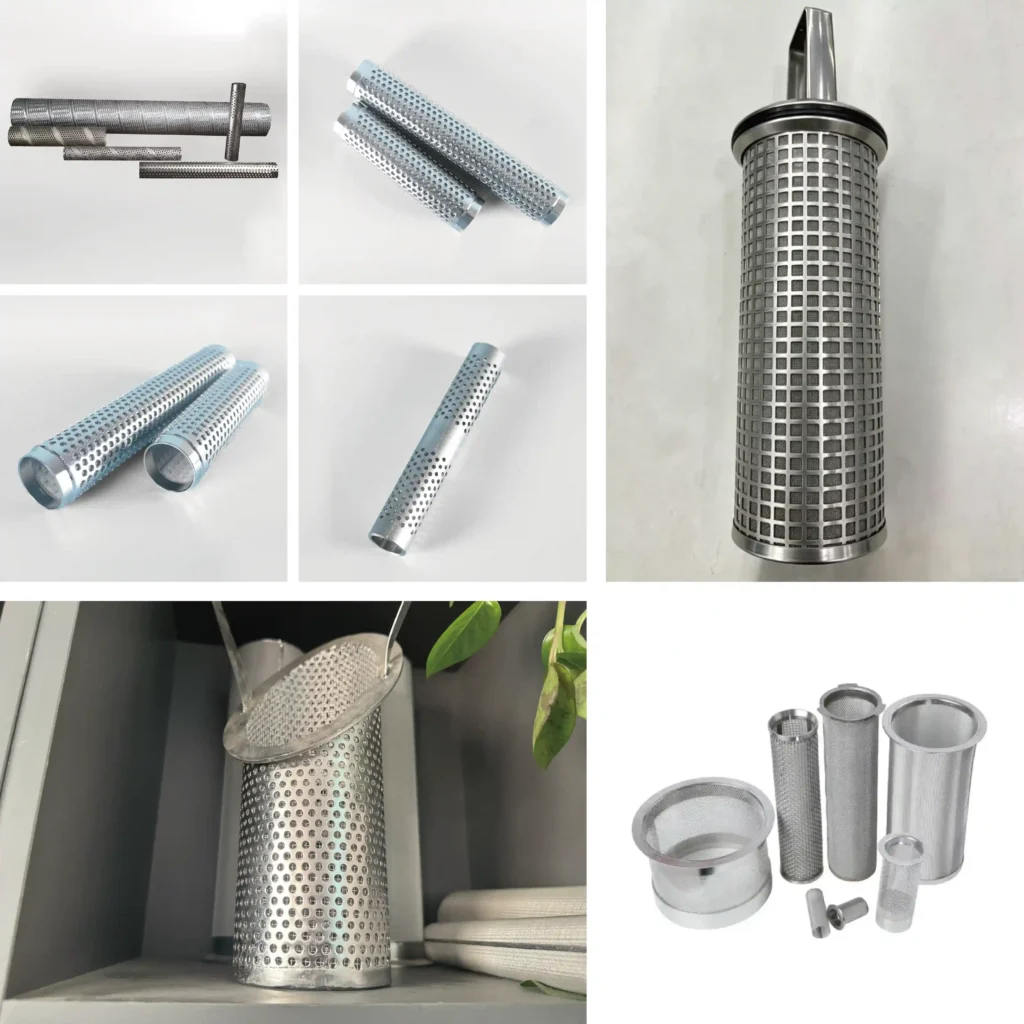
SINFT backwash filter cartridges can use stainless steel mesh, reinforced basket, or slot structures. The confirmed product-family references include 25–500 µm for mesh constructions, 0.1–3 mm slot widths, temperatures up to 400°C, and differential pressure up to 20 bar. These are family limits—not a promise that every rating, alloy, diameter, joint, seal, and flow direction can use every maximum simultaneously.
What Is a Cartridge Filter System?
A cartridge filter system passes the process fluid through one or more removable elements installed and sealed inside a housing.
Cartridges may use pleated woven mesh, sintered mesh, metal fiber felt, polymer depth media, membranes, or other media. Some are disposed of after reaching a terminal differential pressure; stainless steel elements may be cleaned by backwash, ultrasonic, chemical, steam, or another qualified method and then inspected before reuse.
The defining operational feature in this comparison is removal: the housing is isolated and opened so the cartridge can be changed or cleaned off-line. A duplex housing or parallel train can keep the process running, but that continuity comes from redundant equipment and valves—not from the cartridge format alone.
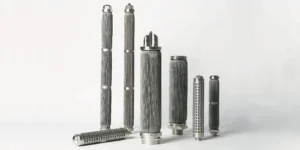
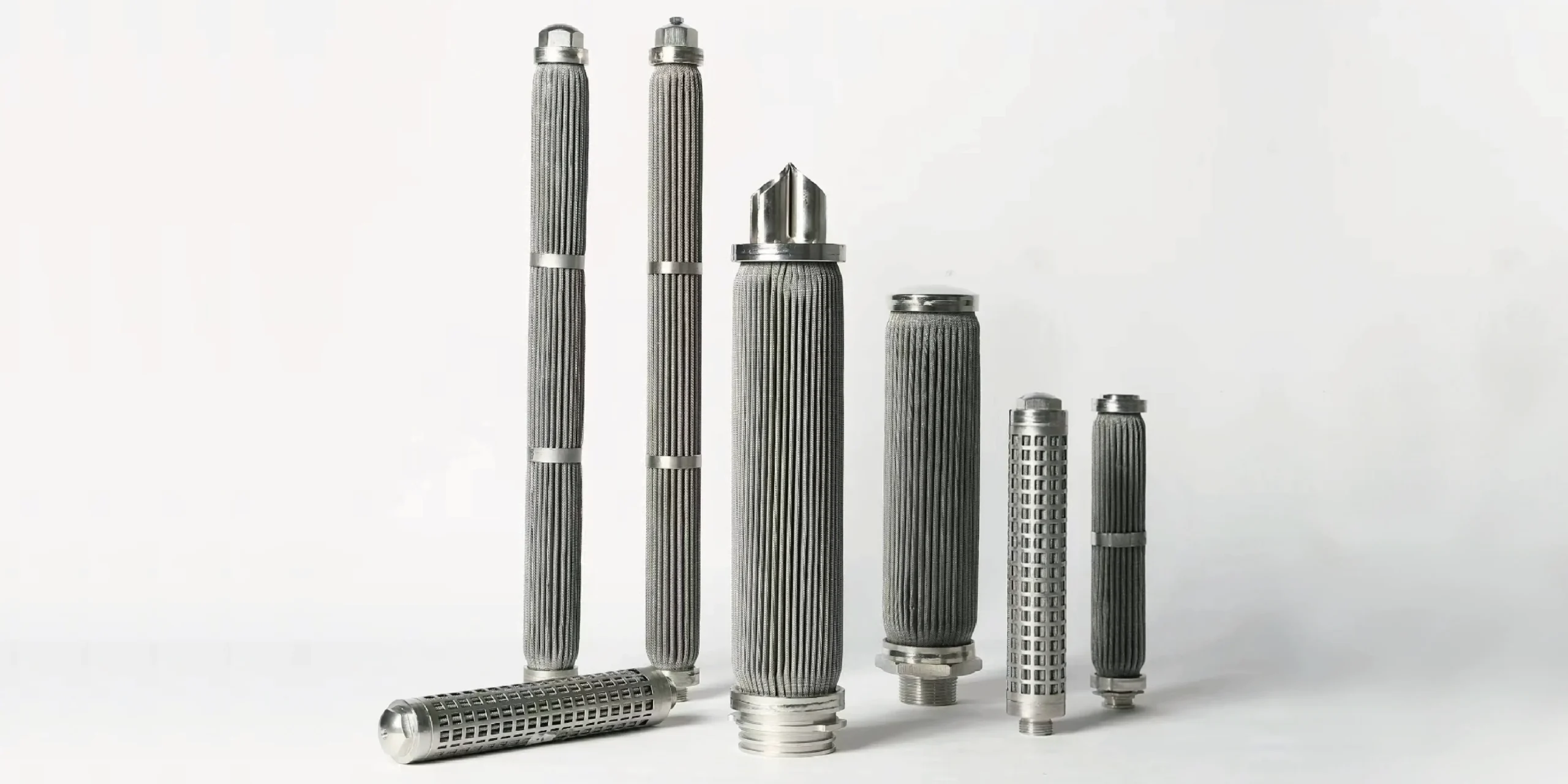
SINFT pleated filter cartridges cover liquid, gas, steam, oil, and chemical filtration with woven mesh, sintered mesh, or sintered fiber felt media. The product family uses 0.5–200 µm ratings depending on media and can be matched to DOE, 222, 226, threaded, flange, or custom connections. Actual flow, allowable differential pressure, cleaning method, and service temperature depend on the selected media, support, seal, joint, direction, and housing.
The Most Important Selection Question: Will the Contaminant Release?
Backwashing is practical only when the retained deposit can be removed reliably by the available cleaning mechanism.
A nominally cleanable screen can still fail as a self-cleaning system if particles embed in the pore structure, deform across slots, bridge at openings, harden during a hot shutdown, or form a sticky and compressible cake. Fibers and soft particles may wrap around supports. Oil, polymer, resin, or biological deposits may require chemistry, temperature, soak time, or mechanical action that the installed backwash cycle cannot provide.
Characterize the contaminant before selecting the architecture:
- Particle-size distribution, not only the largest visible particle
- Particle shape, hardness, and abrasiveness
- Solids concentration and expected mass loading over time
- Whether the deposit is dry, oily, sticky, gelatinous, fibrous, or compressible
- Cake-release behavior under the proposed reverse flow
- Value, hazard, and disposal route of the concentrated flush stream
- Changes during startup, upset, cleaning, and shutdown
For surface-cake behavior versus internal pore loading, use the surface filtration vs depth filtration guide. A depth cartridge may hold more fine contaminant, but it is generally harder to restore by a short reverse-flow pulse than a suitably supported surface screen.
Continuity, Maintenance, and Operator Exposure
Choose the maintenance concept that the plant can execute safely and repeatedly—not the one that appears automatic on a schematic.
An automatic backwash system can reduce routine housing opening, but it adds valves, actuators, instruments, controller logic, and a flush path. The plant must be able to detect a failed cleaning sequence, blocked drain, leaking valve, inadequate backwash pressure, and element damage. Maintenance is shifted from frequent cartridge handling toward periodic inspection of the cleaning mechanism and control system.
A cartridge system is usually easier to understand and isolate. However, frequent changeout can create labor, exposure, confined access, lifting, drainage, spare inventory, and contaminated-element handling requirements. A duplex cartridge housing can support continuous operation, although it adds capital equipment and requires a controlled switchover procedure.
Do not compare only element purchase price. Compare a defined operating period using:
- installed housing, valve, instrument, and controller cost;
- replacement or cleaning labor;
- cartridges, seals, spare screens, and actuator parts;
- product lost during draining, flushing, and startup;
- backwash liquid, compressed gas, treatment, and waste cost;
- planned and unplanned downtime;
- inspection, validation, and documentation work;
- safe disposal or recovery of the retained material.
Use plant-specific values. Generic claims that one architecture always has a lower lifecycle cost are not technically defensible.
Micron Rating and Separation Performance
The same micron number does not guarantee the same removal performance in a backwash screen and a cartridge.
A woven mesh opening, wedge-wire slot, nominal cartridge rating, and absolute-rated medium are different specifications. The rating should be tied to a definition, test method, particle challenge, efficiency, and acceptable downstream result. The industrial filter micron rating chart explains the differences among mesh, micron opening, nominal rating, absolute rating, efficiency, and beta ratio.
Automatic backwash systems commonly use cleanable surface structures because a surface deposit is accessible to the reverse flow. Cartridge systems can use either surface or depth media and may therefore offer more options for fine polishing or high-efficiency retention. That does not mean a cartridge is always finer, or a backwash filter is always coarse. The finished-element test and application acceptance criteria decide the result.
Pressure Drop and Flow Capacity
Size both systems from clean and loaded differential-pressure data at the actual fluid condition.
Pressure drop depends on flow rate, viscosity, density, temperature, media permeability, area, housing passages, fittings, contaminant loading, and flow direction. A backwash filter also needs enough cleaning energy to release the deposit without exceeding the reverse-load capability of the element. A cartridge system needs enough installed area and changeout margin to reach the planned service interval.
ISO 3968:2017 defines a method for evaluating pressure drop versus flow characteristics of hydraulic filters. Although not every industrial process is hydraulic oil, the measurement discipline is useful: curve conditions and boundaries must be stated before two filters are compared. Pall’s explanation of differential-pressure indicators also illustrates why upstream-to-downstream pressure difference is a primary filter-condition signal.
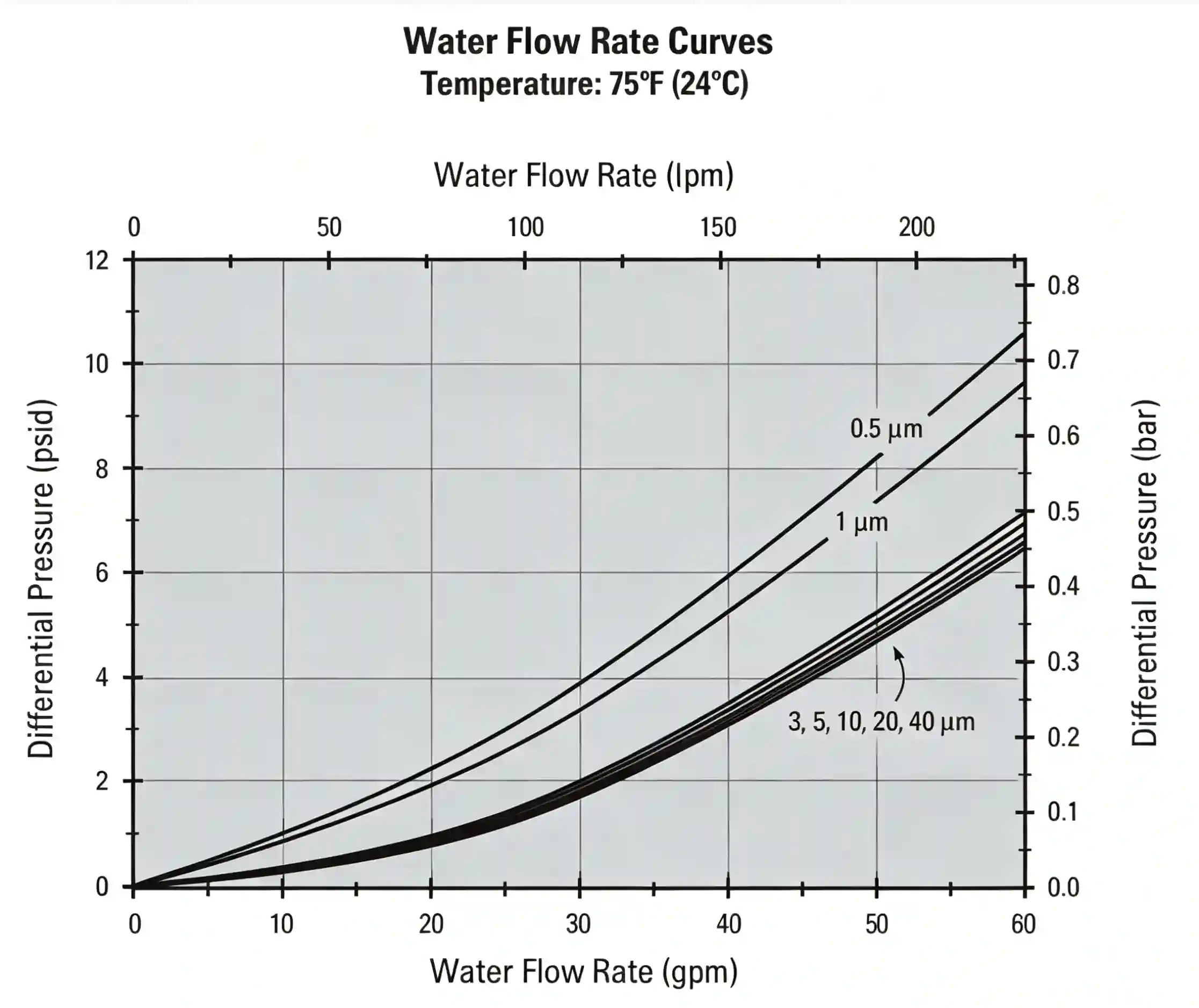
The filter pressure drop vs flow rate guide provides the full sizing workflow. For either architecture, request at least a clean-element curve, the planned cleaning or changeout trigger, the maximum allowable differential pressure, and the operating envelope.
When an Automatic Backwash Filter Is Usually the Better Starting Point
Start with an automatic backwash concept when the solids load is recurring, the deposit releases from a durable surface, and opening the housing frequently is operationally unacceptable.
Typical decision signals include:
- continuous or high-duty service with limited shutdown windows;
- cooling water, process water, or another stream with repeatable suspended-solids loading;
- a useful product or contaminant that can be sent to a controlled recovery line;
- adequate clean fluid or system pressure for the cleaning cycle;
- a particle size and deposit behavior compatible with the selected mesh or slot;
- plant capability to maintain valves, actuators, sensors, and controls.
Review SINFT’s sintered mesh elements for self-cleaning and backwash systems when a rigid multilayer surface and qualified reverse-flow support are needed. The published 5-layer sintered wire mesh guide explains why layer order, flow direction, support, and weld construction must be confirmed before a laminate is used under reverse load.
When a Cartridge Filter Is Usually the Better Starting Point
Start with a cartridge housing when the solids load is manageable, fine or specialized media are needed, and controlled removal is more practical than flushing the contaminant through a waste line.
Typical decision signals include:
- final polishing after an upstream separator or coarse filter;
- hazardous, valuable, or regulated contaminant that should remain contained in the element;
- low or intermittent solids loading;
- a process that requires a specific validated cartridge medium;
- no suitable drain, backwash source, or control infrastructure;
- batch operation where planned element changeout fits the production schedule.
The pleated cartridge selection guide covers rating, media, area, pressure drop, temperature, connection, seal, and cleaning decisions. For reusable metal cartridges, the stainless steel cartridge cleaning guide separates cleaning from post-cleaning acceptance.
When a Hybrid System Is Better Than Either Alone
Many industrial lines work best with staged filtration: a self-cleaning prefilter removes recurring coarse load before a finer cartridge stage.
The first stage protects cartridge area and reduces changeout frequency; the second stage provides the required polishing or efficiency. This arrangement is useful only when each stage has a defined cut point and the hydraulic penalty is acceptable. Do not add stages merely because more filtration appears safer.
The industrial basket filter vs cartridge filter guide provides another prefilter-versus-polishing comparison. In a new design, calculate the combined clean pressure drop, expected loading distribution, isolation sequence, instruments, drain routing, and failure response for the complete train.
Common Selection Mistakes
Most costly errors come from undefined operating conditions, not from choosing the wrong product label.
- Treating “backwash filter” and “cartridge filter” as mutually exclusive physical element types
- Assuming stainless steel automatically means an element will clean completely
- Selecting only by micron number without a rating definition or efficiency requirement
- Ignoring reverse differential pressure and flow direction
- Comparing clean pressure drop without modeling contaminant loading
- Assuming cleaning occurs without process interruption without checking the valve sequence
- Omitting flush volume, drain capacity, waste treatment, or product-loss calculations
- Using maximum temperature or pressure from one configuration for every alloy, seal, joint, and size
- Specifying a housing connection but not the cartridge seal position and insertion depth
- Reusing an element without inspection and an acceptance criterion
What Buyers Should Confirm Before RFQ
A useful RFQ describes the process, contaminant, operating cycle, and maintenance concept before requesting a part number.
Provide:
- Fluid or gas, composition, compatibility concerns, and viscosity
- Normal, minimum, maximum, startup, and upset flow rates
- Operating and design pressure and temperature
- Maximum clean and loaded differential pressure
- Contaminant type, particle-size distribution, concentration, and load variability
- Required downstream result and rating definition
- Desired cleaning trigger and acceptable process interruption
- Available backwash source, pressure, volume, and cleanliness
- Flush duration, waste route, drain capacity, and recovery requirements
- Normal and reverse flow directions
- Housing dimensions, nozzle sizes, element quantity, and available maintenance space
- Cartridge OD, ID, length, end connection, seal position, and seal material
- Preferred media, alloy, support, joint, and surface treatment
- Existing drawing, sample, photo, housing model, or part number
- Inspection, material certificate, pressure-test, traceability, and documentation requirements
SINFT’s custom filter manufacturing service can review replaceable and cleanable metal elements against the housing and operating duty. To compare a backwash element with a cartridge design, send the process data, drawings, and cleaning sequence.
How SINFT Can Help With Backwash and Cartridge Selection
SINFT can support both sides of this decision because the company manufactures stainless steel backwash filter cartridges, pleated filter cartridges, sintered mesh filter elements, and custom welded filter assemblies. The useful question is not which label sounds better, but which element structure can meet your contaminant, flow, cleaning, housing, and maintenance requirements.
For recurring surface loads, SINFT can review stainless steel mesh, reinforced basket, slot, wedge wire, or sintered mesh structures for backwash duty. For controlled removal, fine media, or planned maintenance, SINFT can review pleated stainless steel cartridges with DOE, 222, 226, threaded, flanged, or custom interfaces. If the application is not standard, drawings, old samples, and process data help define the correct custom filter element before production.
Frequently Asked Questions
Is a backwash filter the same as a self-cleaning filter?
Backwashing is one type of self-cleaning method. Other self-cleaning filters may use suction scanning, mechanical scraping, rotating elements, air assistance, or combined mechanisms. Confirm the actual cleaning sequence instead of relying on the label.
Can a cartridge filter be backwashed?
Some reusable metal cartridges can be backwashed when their media, supports, welds, connections, and seals are qualified for the specified reverse flow and differential pressure. Cartridge format alone does not prove backwash suitability.
Which system has lower pressure drop?
Neither architecture is automatically lower. Compare clean and loaded curves at the same fluid, temperature, viscosity, flow, rating definition, element area, and housing boundaries. Include the pressure required for a successful cleaning cycle.
Is an automatic backwash filter always better for high solids?
No. High solids favor in-place cleaning only when the deposit can be released and discharged reliably. Sticky, fibrous, compressible, or hardened deposits may require a different screen, cleaning mechanism, separator, or removable element.
Which system is better for continuous operation?
An automatic backwash system can be designed for limited or no interruption. A duplex or parallel cartridge system can also provide continuity. Verify usable flow during cleaning or switchover and define the failure mode.
What information is needed to compare lifecycle cost?
Use site-specific housing and controls cost, element and seal consumption, labor, cleaning utilities, flush loss, waste treatment, downtime, inspection, spares, and expected service intervals. Do not compare element prices alone.
Final Thoughts
Choose an automatic backwash system when the contaminant forms a reliably releasable deposit and continuous in-place cleaning has greater operational value than the added controls and flush system. Choose a cartridge system when fine-media flexibility, contaminant containment, simple equipment, or planned changeout is more important.
The final design may combine both. Before selecting the element construction, define the separation target, solids mass, flow, pressure-drop budget, cleaning behavior, waste route, materials, housing fit, and acceptance tests. SINFT can use that information to compare backwash cartridges, pleated cartridges, sintered mesh elements, or a custom assembly for the actual duty.