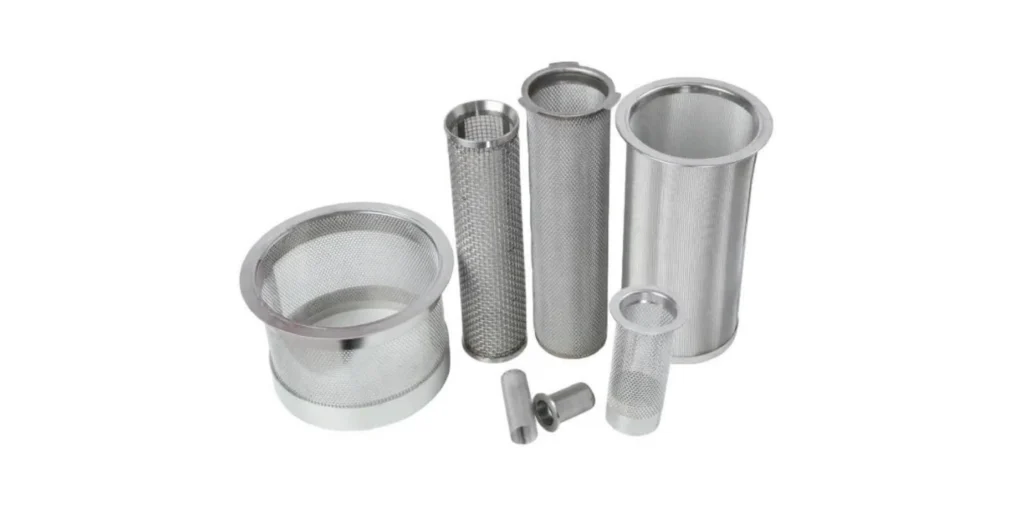
A replacement basket can match the old part’s approximate diameter and still fail in service. A rim that sits too high may stop the cover closing; a short body may leave a bypass path; an oversized handle may strike the lid. Before requesting a replacement, you need dimensions tied to the housing seat, plus enough media and operating information to reproduce the basket’s real function.
Direct Answer: Which Replacement Strainer Basket Dimensions Matter?
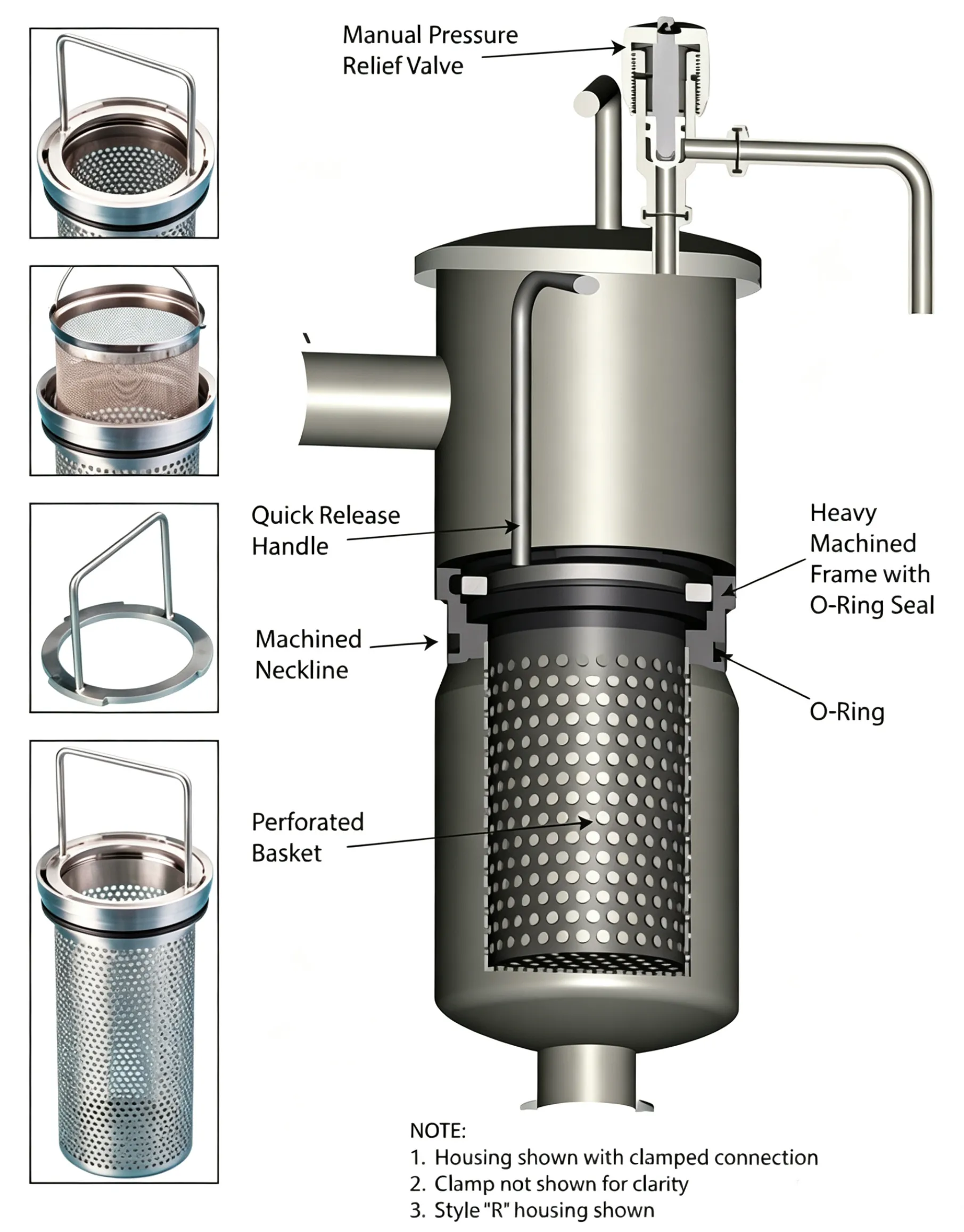
The critical replacement strainer basket dimensions are the rim outside diameter, seating diameter and thickness, basket body OD and ID, overall length from the seating face, effective screened length, bottom shape, handle height and width, seal location and any insertion or removal clearance. Measure each feature from a defined datum rather than copying isolated dimensions from a worn basket.
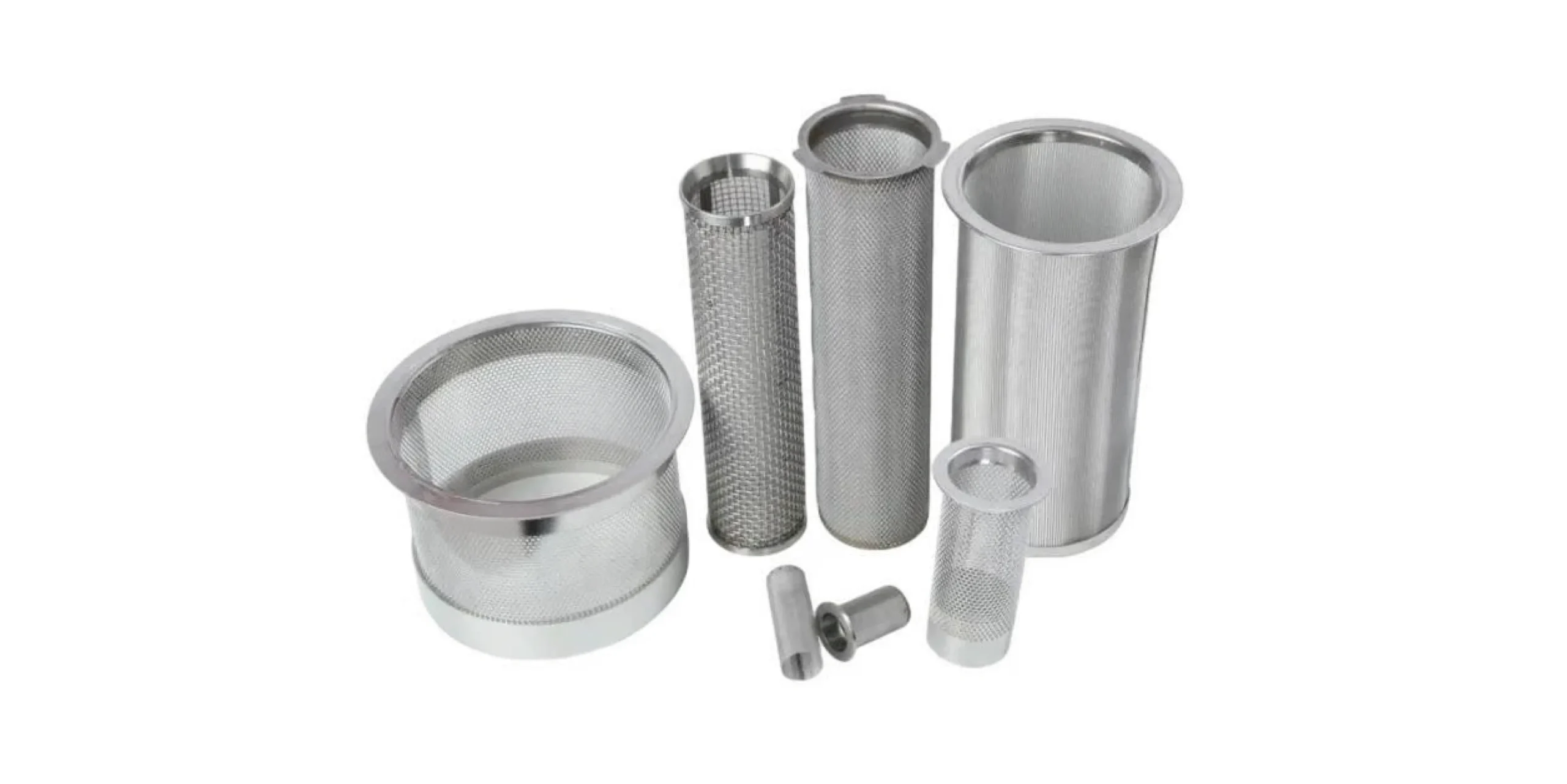
The housing interface comes first. A correctly sized mesh or perforation cannot prevent bypass if the rim does not seat, and a dimensionally accurate body is still unusable if the handle interferes with the cover. SINFT manufactures basket filters and strainers from drawings, old samples and housing dimensions, including standard baskets, slanted baskets, tubes, rims, flanges, handles and combined perforated-and-mesh structures.
Start With the Housing Seat, Not the Pipe Size
Use the basket seating face as the primary dimensional datum whenever the housing construction allows it. This is the surface that controls where the basket rests relative to the cover, inlet, outlet and seal. Mark it clearly as datum A on the drawing, then measure axial lengths and handle height from that plane.
Pipe size, housing model and an old part number are useful identification clues, but they are not a complete basket specification. Different housings with the same line size may use different rim profiles, body diameters, lengths, bottoms or handles. Replacement-basket manufacturers such as Fluid Filtration show separate forms for perforated baskets, mesh-lined baskets, wire-cage baskets and slanted baskets, which confirms that construction details must accompany nominal size.
If the old basket is badly distorted, measure the housing as well. Record the internal seat diameter, cover-to-seat clearance, seat-to-housing-bottom depth and the narrowest insertion path. These dimensions help distinguish the original design from deformation caused by differential pressure, impact or repeated handling.
Replacement Strainer Basket Dimension Checklist
A useful drawing separates fit-critical dimensions from filtration and fabrication details. The following schedule gives a practical minimum for a cylindrical lift-out basket. Slanted, conical, flanged or threaded elements need additional geometry.
| Feature to measure | Where to measure it | Why it matters |
|---|---|---|
| Rim outside diameter | Widest finished rim or flange | Must enter the housing and rest on the intended seat |
| Seating diameter | Contact land that locates the basket | Controls centering and possible bypass clearance |
| Rim thickness and profile | Through the seating section, including steps | Affects cover closure, compression and axial position |
| Basket body OD | At top, middle and near bottom | Reveals taper, ovality or deformation and confirms housing clearance |
| Basket body ID | Where internal clearance or flow path matters | Helps define wall construction and usable volume |
| Overall length | Datum A to the lowest basket point | Prevents bottom contact and locates the basket in the flow path |
| Effective screened length | Active media area only | Distinguishes filtering area from solid rims, bands and bottoms |
| Bottom geometry | Flat, rounded, conical, solid or perforated | Affects clearance, drainage, strength and solids removal |
| Handle height and width | Datum A to highest point, plus outside width | Confirms cover clearance, grip access and lifting path |
| Seal or gasket position | Groove, O-ring or gasket relative to datum A | Controls sealing and bypass prevention where a seal is used |
| Support bands and seams | Location, width and thickness | Affects stiffness, flow blockage and repeatability |
| Insertion and removal clearance | Housing opening, cover and nearby internals | Confirms that the finished basket can be installed and lifted out |
For a round basket, take diameter readings in at least two directions. If the values differ, record both and do not silently average them. For a slanted basket, include the high-side and low-side lengths, rim angle, orientation feature and handle position. For a flanged tube or threaded element, add the flange or thread standard, mating dimensions, engagement length and flow direction.
How to Measure a Strainer Basket Step by Step
Measure the cleanest, least damaged reference surfaces and show exactly where each dimension begins and ends. A photo with handwritten arrows is useful, but a simple dimensioned sketch is better because it removes ambiguity.
- Photograph the old basket beside the open housing, including the seat, cover and inlet/outlet orientation.
- Mark the seating face as datum A and identify the normal flow direction.
- Measure the rim OD, seating land, rim thickness, steps, grooves and gasket details.
- Measure body OD in two directions at three axial locations; record ovality or taper.
- Measure overall length and active media length from datum A.
- Record the bottom form, bottom thickness and any central support or drain feature.
- Measure handle width, wire or bar diameter, pivot points, folded position and maximum height.
- Check the housing’s narrowest insertion diameter, seat depth, bottom clearance and cover clearance.
- Add media, material, operating and documentation requirements to the same RFQ package.
Use appropriate measuring tools for the tolerance involved. Calipers may suit smaller rigid features; diameter tape, straightedges, depth tools or coordinate inspection may be needed for larger or irregular parts. State the units and required tolerances. A number without a tolerance can still produce an uncertain fit.
Do Not Copy Damage Into the New Basket
An old basket is evidence, not automatically the design authority. A collapsed body, bent rim, stretched handle or cracked seam may show why the part failed. If you reproduce those dimensions without comparing them with the housing, the new basket may repeat the problem.
Look for:
- an oval body or inward buckling near the outlet;
- a rim polished on one side, suggesting uneven seating;
- a handle bent by cover interference or difficult lifting;
- torn mesh beside a support edge or weld;
- a bottom worn by contact with the housing;
- corrosion concentrated at seams, crevices or dissimilar-metal contact;
- residue tracks around the rim that may indicate bypass.
When distortion is present, provide both the measured old-part dimension and the housing-derived target. Label any reconstructed dimension as proposed. This lets the manufacturer review the mismatch instead of guessing which value should control production.
Record Filtration Construction Separately From Dimensions
Physical fit and particle retention are different specification layers. After the basket geometry is defined, document whether the active medium is perforated plate, woven wire mesh, sintered mesh or a combined structure.
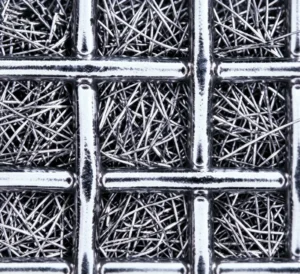
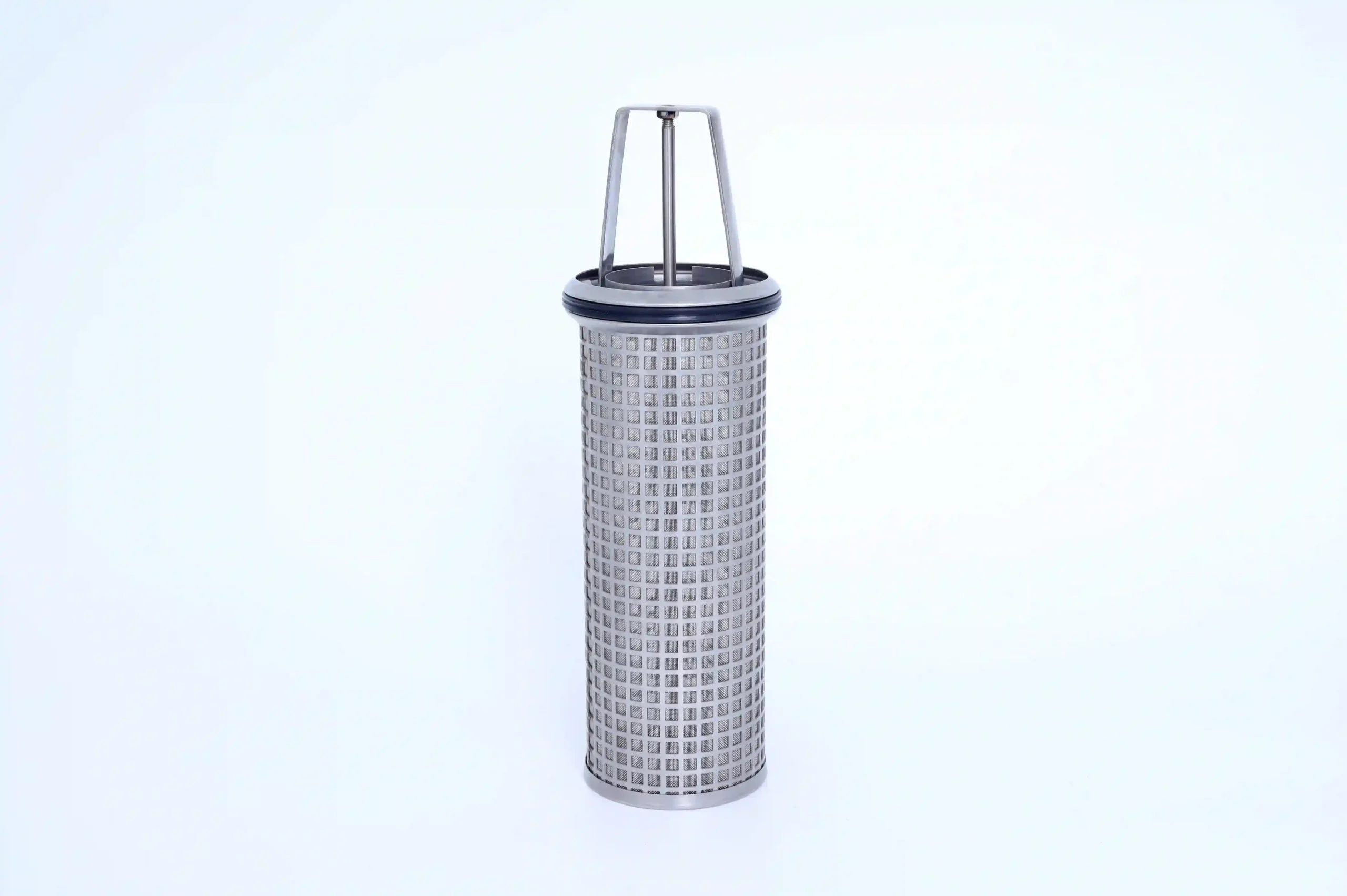
For perforated plate, record material, thickness, hole shape, hole diameter or slot width, pitch, pattern and whether the bottom is perforated. For woven mesh, record mesh count, wire diameter, weave, material and how the liner is attached. If the original opening is unknown, send a close-up image with a scale and state the particle that the basket must retain.
The basket strainer mesh size guide explains why mesh count, opening size and micron rating are not interchangeable. The mesh versus perforated basket guide covers when perforated plate acts as the filtering surface and when it supports a finer liner. Rosedale’s replacement-basket literature likewise distinguishes perforated, mesh-lined and heavy-wire-mesh constructions rather than treating them as one basket type.
Fit, Flow and Strength Must Be Reviewed Together
A dimensional match is only one part of a reliable replacement. Body diameter, active area, hole pattern, liner support, blocked area and solids volume affect clean pressure drop and service interval. The filter pressure drop versus flow rate guide explains why a clean element should be evaluated at the intended fluid, viscosity and flow condition.
If the old basket collapsed or tore, include normal and maximum differential pressure, flow direction and the operating history. If the problem was frequent plugging, include solids type, particle distribution, debris volume and cleaning interval. Fluidtrol’s published basket details show how perforation diameter, pitch and open area change together; that is a useful reminder that hole diameter alone does not describe flow capacity.
Application Questions That Change the Replacement Specification
The same housing dimensions can require a different basket construction when the fluid, debris or maintenance method changes. In water treatment filtration, ask whether the basket captures leaves, scale, sand, biological solids or maintenance debris and whether it will be hosed, brushed or chemically cleaned.
In petrochemical filtration, confirm fluid compatibility, viscosity, temperature, pressure, ignition or contamination controls defined by the plant, and whether the basket protects a pump, nozzle or finer downstream element. For power plant or cooling-water service, also document outage access, lifting limitations and the volume of debris expected between cleanings.
The material cannot be selected from the word “stainless” alone. SINFT offers basket structures in SS304, SS316, SS316L and other confirmed material options, but the final choice should follow the process fluid, contaminants, cleaning chemistry and required documentation.
What Buyers Should Send Before RFQ
For a custom strainer basket replacement, send one organized package containing:
- a dimensioned drawing with datum A, units, tolerances and flow direction;
- clear overall and close-up photos of the basket and housing seat;
- old part number, housing brand/model and equipment drawing when available;
- rim, body, length, bottom, handle, seal and insertion-clearance dimensions;
- perforation or mesh construction, material and surface-finish requirement;
- fluid, viscosity, flow rate, working pressure and temperature;
- clean and terminal differential pressure when known;
- contaminant type, particle size or retention target and solids load;
- cleaning method, lifting method and expected service interval;
- quantity and repeat-order expectation;
- required material certificate, dimensional report, passivation record, packaging photos or batch traceability.
If no old basket is available, send housing dimensions and photos showing the seat, cover, inlet, outlet and available depth. If the old basket failed, mark the damaged areas and explain when the failure appeared. Those details are more useful than asking a supplier to copy an unexplained deformation.
How SINFT Can Help With a Custom Strainer Basket
SINFT can review the basket as a housing-matched assembly rather than a loose cylinder. Available basket constructions include perforated plate, woven mesh, sintered mesh and combined supported liners, with custom rims, rings, flanges, threads, handles, bolted handles and bottom styles.
Through SINFT’s custom filter manufacturer service, replacement work can begin from a drawing, an old sample, housing dimensions or detailed photos. The review can cover fit, material, media, weld layout, cleaning access, dimensional inspection and repeat supply. Send the measurement package through the contact inquiry form for a manufacturing-feasibility and quotation review.
Frequently Asked Questions
Can I order a replacement strainer basket by pipe size alone?
No. Pipe size can help identify the housing family, but it does not define the basket rim, seating land, body diameter, overall length, bottom shape, handle or seal. Housings with the same nominal line size can use different internal geometries. Send the old part number when available, then confirm the fit-critical dimensions against the actual basket and housing before production.
What is the best datum for a replacement basket drawing?
The seating face is usually the most useful axial datum because it locates the basket relative to the cover, inlet, outlet and housing bottom. Mark it as datum A and measure overall length, active length, seal position and handle height from that plane. If the housing uses another positive locating feature, identify that feature clearly and explain how the basket is retained.
Should I measure a damaged old basket or the housing?
Measure both when damage may have changed the original geometry. The old basket shows media, seams, handle and construction details, while the housing provides the undamaged seating and clearance limits. Record ovality, bent rims or collapsed areas instead of averaging them away. On the drawing, separate measured dimensions from proposed dimensions reconstructed from the housing so the manufacturer can review the difference.
How much clearance should a replacement basket have?
There is no universal clearance because it depends on housing geometry, temperature, fabrication tolerance, solids, insertion path and whether the rim or seal centers the basket. Too little clearance can prevent installation; too much can permit movement or bypass. Provide the housing bore, basket OD, seating details and operating temperature, then agree the finished dimensions and tolerances during technical review.
Do I need to specify the handle if it looks noncritical?
Yes. The handle controls lifting access and can also interfere with the cover, vent, inlet or internal hardware. Record its maximum height, outside width, bar diameter, pivot arrangement, folded position and attachment points. Also state the expected loaded weight and lifting method. A handle that fits the basket but cannot clear the housing opening can make routine cleaning impractical.
How do I specify an unknown mesh or perforation?
Send close-up photographs with a scale, record wire diameter and opening where possible, and describe the particles that must be retained. For perforation, include hole shape, diameter or slot width, pitch and plate thickness. For woven mesh, include mesh count, wire diameter and weave. The supplier should confirm retention and support requirements instead of identifying filtration performance from appearance alone.
What information is needed when the old basket collapsed?
Provide photos of the deformation, normal flow direction, operating and maximum differential pressure, cleaning method, body dimensions, support construction and the condition of the rim, bottom and welds. Also report whether the basket was plugged when it failed. This information helps distinguish a fit problem from insufficient support, reverse installation, excessive differential pressure or damage during cleaning and handling.
Can SINFT reproduce a discontinued replacement strainer basket?
SINFT can review a discontinued basket from an old sample, drawing, housing dimensions or detailed photographs. Feasibility depends on whether the critical geometry, material, media, connection and operating conditions can be confirmed. For the most useful review, submit datum-based dimensions, close-ups of the rim and seal, the housing model or drawing, flow direction, contaminant, pressure, temperature, cleaning method and required quantity.
Final Thoughts
Replacement strainer basket dimensions should describe how the element seats, seals, filters and comes out for cleaning. Begin with the housing datum, document the rim and clearances, then add media and operating requirements. If the original drawing is missing or the old basket is distorted, SINFT can compare the sample with housing dimensions and review a custom replacement before production.
Technical References
- Eaton, “Manual Pipeline Strainers”: https://www.eaton.com/us/en-us/products/filtration-solutions/filter-systems/manual-pipeline-strainers.html
- Fluid Filtration Manufacturing Corp., “Replacement Baskets & Screens”: https://www.fluidfiltrationmfg.com/replacement-baskets.php
- Fluidtrol Process Technologies, “Strainer Basket Details”: https://fluidtrol.com/strainer-basket-details/
- Rosedale Products, “Replacement Baskets” technical bulletin hosted by The Cary Company: https://www.thecarycompany.com/media/pdf/adobe/Cary-Basket-Replacement-1.pdf