When a pleated cartridge looks right but fails early, bypasses, plugs too fast, or cannot be cleaned, the mistake usually happened before the purchase order. Length and micron rating are only the visible part of the decision. The real selection must connect particle capture, pressure drop, media area, end connection, seal fit, and cleaning method.
Direct Answer: How to Select a Pleated Filter Cartridge
To select a pleated filter cartridge, define the required particle-removal performance first, then match the media, active area, differential-pressure capability, materials, end connection, seals, and cleaning method to the actual process. Do not start with length and micron rating alone. Two cartridges with the same nominal dimensions can behave differently because their media structure, pleat geometry, core, guard, joints, and sealing interface are different.
For a replacement element, the fastest reliable route is to provide the old cartridge drawing or sample together with the fluid, contaminant, flow, temperature, normal and terminal differential pressure, filtration requirement, and cleaning plan. For a new system, size the element and housing together rather than treating the cartridge as an isolated component.
Pleated Filter Cartridge Selection at a Glance
A complete selection has ten linked checks.
| Check | Define before ordering | Why it matters |
|---|---|---|
| 1. Filtration objective | Protected equipment, product quality, recovery, or clarification | Establishes what the filter must achieve |
| 2. Particle requirement | Size distribution, concentration, shape, hardness, and deformability | Controls capture mechanism and loading behavior |
| 3. Rating definition | Nominal, absolute, efficiency, beta ratio, aperture, or test method | Prevents false comparisons between micron labels |
| 4. Filter medium | Woven mesh, sintered mesh, or sintered metal fiber felt | Determines surface or depth capture, stability, and cleaning behavior |
| 5. Flow and viscosity | Minimum, normal, and maximum flow at operating temperature | Controls clean pressure drop and usable media area |
| 6. Mechanical duty | System pressure, forward and reverse differential pressure, pulsation | Determines core, guard, pleat support, and joint requirements |
| 7. Compatibility | Fluid chemistry, metal grade, seal material, and cleaning chemicals | Prevents corrosion, swelling, embrittlement, and bypass |
| 8. Cartridge interface | OD, ID, length, DOE/222/226/thread/flange, seal location, flow direction | Ensures the element fits and seals in the housing |
| 9. Cleaning strategy | Disposable or reusable; backwash, ultrasonic, chemical, or steam cleaning | Affects media choice, pleat spacing, joints, and life-cycle cost |
| 10. Validation | Pressure-drop curve, integrity, efficiency, dimensions, and documentation | Confirms the finished element meets the duty |
The sequence matters. A cartridge that fits the housing but does not meet the defined efficiency, hydraulic, chemical, or cleaning requirement is not an equivalent replacement.
1. Define the Filtration Duty and Contaminant
Begin with the process result, not the cartridge catalog number.
State whether the cartridge protects a valve, bearing, nozzle, catalyst, membrane, instrument, or final product. Then describe the contaminant:
- Particle-size distribution rather than one assumed particle size
- Solids concentration at normal and upset conditions
- Hard, abrasive particles versus soft or deformable material
- Fibers, gels, agglomerates, or sticky deposits
- Whether the solids form a removable surface cake
- Whether the retained material is waste or a valuable product
Hard particles in a low-solids liquid may suit a high-area surface screen. Fine particles with a broad distribution may benefit from a depth-loading medium. Sticky gel can bridge narrow pleat channels before the theoretical media area is fully used. A high-solids stream may need an upstream basket or another prefiltration stage instead of sending the full load to fine pleated cartridges.
The basket filter vs cartridge filter guide explains when bulk debris removal and fine cartridge filtration should be treated as different stages.
2. Specify Micron Rating as a Measured Performance
A micron number is incomplete unless its rating convention and test basis are stated.
Ask whether the requirement is:
- A woven-mesh aperture
- A nominal retention rating
- An absolute rating with a stated definition
- An efficiency at a defined particle size
- A beta ratio under a recognized test method
- A media grade rather than finished-element performance
For hydraulic filter elements, ISO 16889:2022 defines a multi-pass method for evaluating contaminant capacity, particle-removal characteristics, and differential-pressure behavior. That result is valuable when the application and test conditions match, but it should not be transferred automatically to water, gas, steam, polymer, or another process.
ISO 2942:2018 covers fabrication integrity and first-bubble-point determination for hydraulic elements. Bubble point can help identify a largest pore and detect certain fabrication defects; it is not, by itself, a filtration-efficiency or contaminant-capacity rating.
Use the published filter micron rating chart to separate micron, mesh opening, nominal rating, absolute rating, efficiency, and beta-ratio terminology before comparing quotations.
3. Choose the Pleated Filter Medium
Pleating describes geometry; the medium determines how particles are captured.
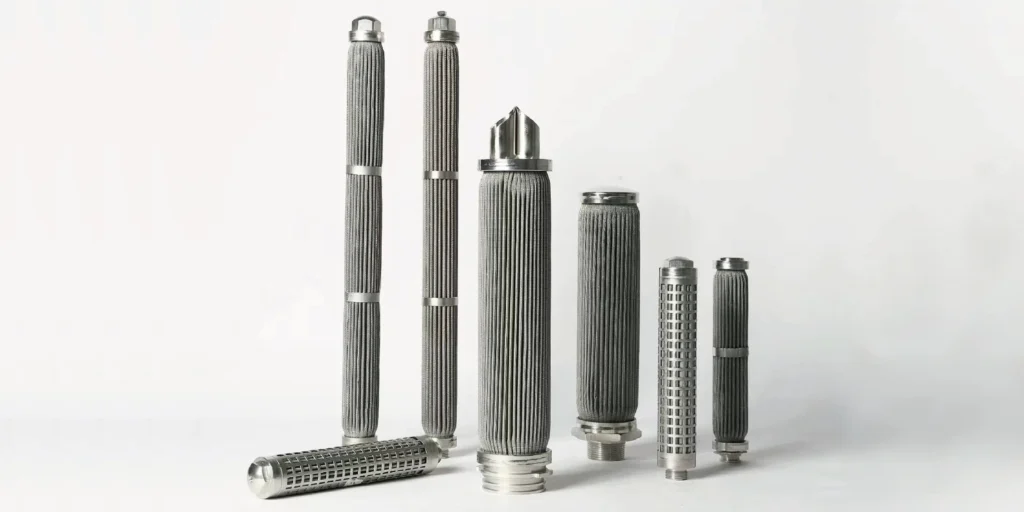
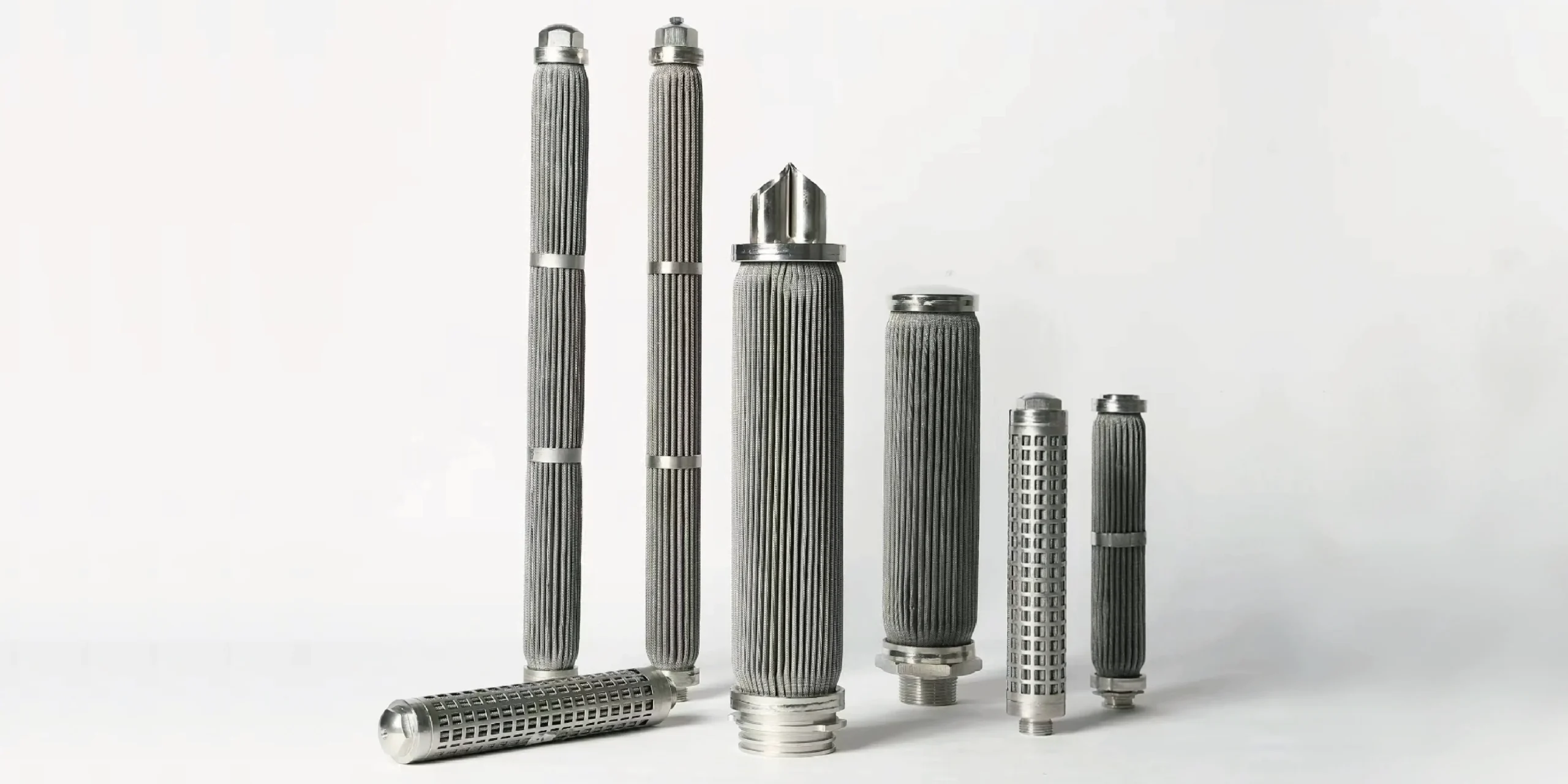
SINFT stainless steel pleated filter cartridges can use woven wire mesh, sintered wire mesh, or sintered metal fiber felt. These media should not be treated as interchangeable.
| Medium | Evaluate it first when | Main selection questions |
|---|---|---|
| Woven wire mesh | A defined screen opening, surface retention, and direct cleaning are priorities | Weave, wire diameter, support layers, aperture stability, and seam construction |
| Sintered wire mesh | Bonded pore structure, mechanical stability, or supported reverse-flow duty is important | Layer construction, permeability, formability, pleat support, and welded-joint integrity |
| Sintered metal fiber felt | Fine-particle depth loading and high porous area are priorities | Fiber structure, efficiency definition, dirt capacity, cleaning recovery, and compression stability |
A sintered-mesh medium can also be pleated. This is why “sintered mesh versus pleated filter” is not always a true alternative. The sintered mesh vs pleated filter guide explains the difference between medium construction and element geometry.
If the decision is really between surface capture and depth capture, use the surface filtration vs depth filtration guide to compare loading, cleaning, inspection, and failure behavior.
4. Calculate Flow, Viscosity, and Clean Pressure Drop
Select active media area from the required flow at operating viscosity and temperature—not from flow rate alone.
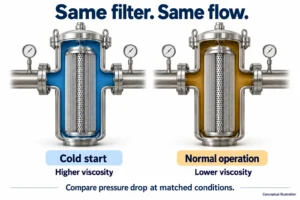
Clean differential pressure is produced by the combined resistance of the medium, support layers, pleat channels, center core, outer guard, end passages, housing ports, and valves. As flow increases, pressure drop usually increases. A more viscous liquid also creates greater resistance through the same porous structure, while temperature can change viscosity substantially.
Pleating can reduce face velocity by increasing area within a fixed cartridge envelope, but calculated sheet area is not always fully active. Effective area can be reduced when:
- Pleats are too tightly packed for the fluid or contaminant
- Adjacent pleats touch, deform, or bridge
- End joints and seams block part of the medium
- The core or guard has insufficient open area
- Flow cannot distribute into deep pleat valleys
- Solids bridge the inlet channels early in the loading cycle
ISO 3968:2017 provides a standardized hydraulic-filter method for evaluating differential pressure versus flow at different flow rates and viscosities. Even outside hydraulic service, it illustrates the correct comparison discipline: use the same fluid condition, element, housing, valves, and measurement boundaries.
Ask the supplier for a clean pressure-drop curve or calculation at your operating fluid condition. Then add realistic housing and downstream losses to the system pressure budget. The filter pressure drop vs flow rate guide explains the variables and curve-reading checks in more detail.
5. Separate System Pressure from Differential Pressure
High line pressure and high differential pressure are different mechanical loads.
System pressure acts on the pressure-containing housing. Differential pressure is the pressure difference across the element and can collapse, burst, or deform the pleat pack if the core, guard, medium, joints, or end caps are inadequate.
Define:
- Normal clean differential pressure
- Expected loaded differential pressure
- Alarm and change-out differential pressure
- Maximum upset differential pressure
- Normal flow direction
- Possible reverse flow or backwash load
- Pulsation, vibration, or rapid valve movement
SINFT’s pleated cartridge product-family reference includes forward and reverse differential-pressure values under stated reference conditions, but those values are not universal ratings for every cartridge. Diameter, length, medium, support design, joint construction, temperature, flow direction, and seals can change the allowable condition. The finished design must be confirmed for the actual duty.
If reverse cleaning is planned, request a reverse differential-pressure limit for the finished cartridge. Do not assume that a cartridge qualified in normal flow can withstand the same load in reverse.
6. Confirm Temperature and Chemical Compatibility
The lowest-rated component controls the permissible process condition.
Check the process fluid, cleaning fluid, contaminants, and any steam or sanitizing exposure against:
- Filter-medium alloy
- Core, guard, end-cap, and weld materials
- Seal or gasket material
- Any nonmetallic joint or support component
- Corrosion products that could contaminate the process
SINFT’s pleated product family includes stainless steel and other metallic-media options, while available seals can include EPDM, silicone, Viton, PTFE, or a metal seal. Availability does not prove compatibility. Seal selection must consider chemistry, temperature, compression set, cleaning cycles, and the housing gland.
ISO 2943:1998 defines a method for verifying the compatibility of hydraulic filter-element materials with a designated fluid by checking structural integrity after exposure. The standard also notes that mounting seals are not included, reinforcing the need to evaluate the element materials and the housing seal separately.
Do not apply a raw-media temperature capability to the complete cartridge. Seals, welds, end construction, and the process environment may impose a lower limit.
7. Size the Pleat Pack and Cartridge Envelope
More pleats are useful only when the channels remain open and the full area can participate in filtration and cleaning.
Define the permitted outer diameter, inner diameter, overall length, active media length, removal clearance, and number of cartridges. Then evaluate pleat height, count, spacing, and support.
SINFT’s confirmed pleated product family includes nominal 5, 10, 20, 30, and 40 inch or custom lengths, nominal 60–70 mm or custom diameters, and a reference effective area of 1.8 ft² (0.17 m²) per nominal 10-inch length for a defined construction. These are product-family references, not guaranteed values for every medium, pleat pack, or end design.
For viscous liquids, fibers, gels, or high solids, open pleat spacing can be more valuable than maximum pleat count. For a relatively clean stream, higher active area may reduce face velocity and extend the loading cycle. Ask for effective media area after allowance for seams, end joints, and blocked regions.
8. Match the End Connection and Housing Seal
An apparently correct cartridge can bypass or fail to install if the interface is not defined dimensionally.
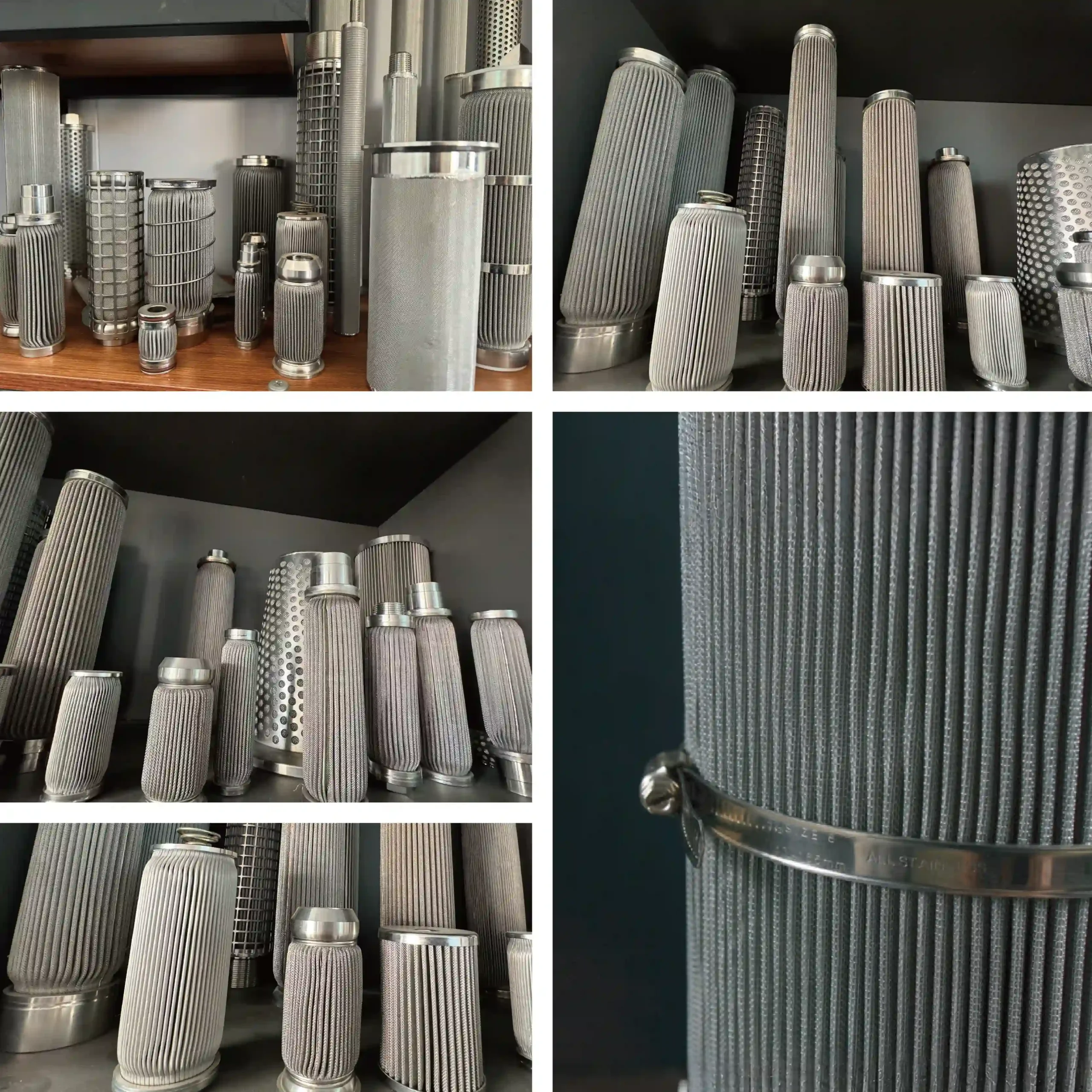
Available interface families can include DOE, 222, 226, threaded, flanged, or a custom welded end. The name alone is not enough for a replacement. Provide:
- Overall and active lengths
- Cartridge OD and ID
- End-cap outside dimensions
- Thread standard, size, pitch, and engagement
- Seal cross-section, material, quantity, and location
- Insertion depth and stop position
- Flow direction
- Adapter, tie-rod, spring, or locking arrangement
- Housing drawing and removal clearance
For 222 or 226 styles, submit the housing dimensions or an approved sample rather than relying on the three-digit description. For threaded or flanged ends, identify the exact standard and sealing face. The old cartridge may also reveal deformation or seal wear that a drawing alone misses.
SINFT’s custom filter manufacturing service can review a sample, drawing, photographs, housing dimensions, medium, pleat geometry, end hardware, welding, and inspection requirements.
9. Design for Cleaning and Reuse
A reusable metal cartridge needs a defined cleaning and acceptance procedure before it enters service.
Depending on the medium, contaminant, joints, and seals, possible methods include forward flushing, backwashing, ultrasonic cleaning, compatible chemical cleaning, and steam cleaning. The correct method must release the foulant without attacking the alloy, seal, welds, or porous structure.
Define:
- Cleaning direction and maximum cleaning differential pressure
- Cleaning-fluid chemistry and temperature
- Ultrasonic frequency, power, time, and fixture where applicable
- Rinse and drying procedure
- How removed solids will be captured
- Clean pressure-drop recovery target
- Visual, dimensional, and integrity acceptance
- Maximum reuse cycles or condition-based retirement rule
The published stainless steel filter cartridge cleaning guide provides a controlled workflow and explains when a cartridge should be retired rather than cleaned again.
10. Validate the Finished Element
Media data is not a substitute for finished-cartridge validation.
Depending on the duty and purchase specification, useful checks can include:
- Dimensional and interface inspection
- Material traceability
- Weld and joint inspection
- Fabrication-integrity or bubble-point testing
- Clean differential-pressure testing
- Filtration-efficiency or multi-pass testing
- Forward and reverse differential-pressure qualification
- Chemical-compatibility evidence
- Post-cleaning flow or integrity comparison
The relevant standard depends on the application. ISO hydraulic-filter methods are useful only within their defined scope and test conditions. A gas, steam, water, polymer, food, or pharmaceutical process may require a different test method, documentation package, or site qualification.
Pall’s Rigimesh sintered metal mesh cartridge provides a manufacturer example of a pleated sintered-metal construction. It demonstrates that bonded metallic media and pleated geometry can be combined, but another manufacturer’s ratings must never be copied to a SINFT cartridge.
Common Pleated Filter Cartridge Selection Mistakes
Most procurement errors come from leaving one operating variable undefined.
Avoid:
- Ordering by length and micron number only
- Treating nominal, absolute, aperture, efficiency, and beta ratio as equivalent
- Choosing the smallest micron rating without checking pressure drop
- Assuming more pleats always provide more usable area
- Using water-test flow data for a viscous process liquid without correction
- Confusing system pressure with differential pressure
- Applying forward differential-pressure capability to reverse flow
- Selecting the metal alloy but ignoring seal compatibility
- Ordering “222,” “226,” or “threaded” without dimensional confirmation
- Assuming every stainless steel cartridge is cleanable by the same method
- Copying a competitor’s rating without matching its construction and test basis
RFQ Checklist for Engineers and Buyers
A complete RFQ reduces redesign, equivalency disputes, and quotation delay.
Provide:
- Fluid or gas composition, concentration, viscosity, and operating temperature
- Contaminant type, particle-size distribution, concentration, and loading behavior
- Required micron rating plus nominal/absolute/efficiency/beta-ratio definition
- Minimum, normal, and maximum flow
- System pressure and allowable clean, terminal, forward, and reverse differential pressure
- Preferred medium or required capture mechanism
- Metal and seal compatibility requirements
- OD, ID, overall length, active length, end connection, and seal dimensions
- Flow direction, housing drawing, old sample, or clear photographs
- Cleaning method, frequency, and post-cleaning acceptance criteria
- Quantity, documentation, inspection, packaging, and traceability requirements
For hydraulic and lubrication systems, review the hydraulic filter element application page together with the system cleanliness and pressure requirements. For process-water duties, use the water treatment filtration application page to frame contaminant, corrosion, cleaning, and operating-condition questions.
To obtain a design review, send the RFQ data, housing drawing, or old cartridge details. Final feasibility, materials, dimensions, rating, pressure capability, and documentation should be confirmed in the supplier quotation.
How SINFT Can Help With Pleated Cartridge Selection
SINFT can help when your pleated cartridge decision needs to be tied to a real housing, process fluid, contaminant, and cleaning method. SINFT stainless steel pleated filter cartridges can use woven wire mesh, sintered wire mesh, or sintered metal fiber felt, with cartridge interfaces such as DOE, 222, 226, threaded, flanged, and custom welded ends.
If you are replacing an existing cartridge, send the old sample, drawing, OD, ID, overall length, active length, end connection, seal position, flow direction, and photos of fouling or damage. If you are designing a new element, send the fluid, contaminant, filtration target, flow, viscosity, pressure-drop limit, temperature, cleaning method, and documentation needs. SINFT can then review the medium, pleat geometry, support core, guard, welds, and interface before quoting a custom pleated cartridge.
Frequently Asked Questions
How do I select the correct micron rating for a pleated filter cartridge?
Define the protected process and required particle-removal efficiency first. Then specify whether the value is nominal, absolute, an aperture, an efficiency at a particle size, or a beta ratio under a stated test method. Compare cartridges only when the definitions and test conditions match. A familiar micron label is not enough for a replacement RFQ.
Which pleated filter medium is best?
There is no universal best medium. Woven mesh is a strong starting point for defined surface screening and cleaning; sintered mesh adds bonded structural stability; sintered metal fiber felt can provide depth loading for fine particles. Choose from the contaminant, efficiency, pressure drop, cleaning, and mechanical duty, then confirm whether the finished pleated construction can support that medium.
Does a higher pleat count always improve performance?
No. More pleats increase theoretical area, but narrow channels can restrict flow distribution, trap viscous foulant, bridge with solids, or become difficult to clean. Effective area and open pleat spacing matter more than the largest possible pleat count. If your contaminant is sticky, fibrous, or viscous, a more open pleat pack may perform better.
What is the difference between system pressure and filter differential pressure?
System pressure is the pressure inside the housing. Differential pressure is the pressure difference across the element. The housing contains system pressure, while the cartridge core, guard, pleats, joints, and end caps must withstand differential pressure. You should never use the housing pressure rating as proof that the cartridge can survive the same differential pressure.
Can every stainless steel pleated cartridge be backwashed?
No. Backwashing requires a medium, support structure, pleat pack, joints, and seals qualified for reverse flow. Request the finished cartridge’s allowable reverse differential pressure and define the cleaning conditions. A metal cartridge may be reusable, but the pleat pack, welds, core, and seals still have to be suitable for your cleaning method.
What details are needed to replace an existing pleated cartridge?
Provide the old cartridge or drawing, OD, ID, overall and active lengths, interface dimensions, seal details, flow direction, medium, rating definition, fluid, contaminant, flow, temperature, pressure, differential pressure, and cleaning method. If the old cartridge failed early, also describe fouling, deformation, bypass marks, cleaning recovery, or seal damage.
Final Thoughts
The correct way to select a pleated filter cartridge is to connect filtration performance, hydraulic behavior, mechanical strength, compatibility, housing fit, and cleaning into one specification. Do not approve an element because its length, appearance, and micron label match. Send SINFT the process conditions, old cartridge, or housing data so the finished pleated cartridge can be reviewed before quotation.