A wedge wire screen may look open after rinsing while deposits still bridge its slots, restrict flow or remain beneath the profile wires. Cleaning harder is not always the answer: the wrong jet direction, brush or chemical can deform a slot, attack a weld or leave harmful residue. A reliable cleaning plan starts with the foulant, the normal flow direction and a measurable acceptance check.
Direct Answer: How Do You Clean a Wedge Wire Filter?
To clean a wedge wire filter, isolate and depressurize the equipment, identify the retained-solids side and foulant, remove loose debris, then clean from the clean side toward the dirty side whenever the assembly permits. Start with low-force water backwash or a nonmetallic brush. Escalate to ultrasonic or compatible chemical cleaning only after confirming the screen alloy, joints, seals and contaminant. Rinse, inspect the slots and welds, and compare clean differential pressure or flow with a known baseline before reuse.
This sequence matters because a reusable wedge wire filter is a precision screen, not simply a piece of open metal. Its profile wires form continuous slots supported by welded rods. The geometry encourages particles to remain near the screen surface and can make reverse-flow cleaning effective, but it does not make every deposit self-releasing.
Why Wedge Wire Cleaning Is Different
The cleaning method should work with the V-slot geometry rather than force contamination deeper into it. In common surface-filtration arrangements, particles are retained at the narrow slot opening while the passage becomes wider away from the filtration face. Reverse flow can therefore push retained solids back along their entry path.
That advantage has limits. Fibers may bridge several slots, soft organic matter can smear across the face, minerals can bond to the metal, and oil can trap fine particles in a persistent film. Flow direction also varies by element design. A cylindrical screen may filter outside-to-inside or inside-to-outside, so you should never infer the correct cleaning direction from its shape alone.
Manufacturers describe the same underlying cleaning behavior. LEEM Filtration notes that smooth screen surfaces support solids release during backwashing or mechanical cleaning. Hendrick Manufacturing likewise identifies backflushing as a way to remove stubborn clogs. These are useful principles, not universal operating settings.
Diagnose the Fouling Before Choosing a Method
Your first decision is not which cleaning machine to use; it is what must be removed. Record the clean and current differential pressure, flow rate, service time and visible deposit before disturbing the element. If there is no clean baseline, compare with a verified spare of the same construction under the same fluid conditions where practical.
| Fouling pattern | What it may indicate | Sensible first method | Main caution |
|---|---|---|---|
| Loose sand, catalyst particles or granular debris | Surface cake or lodged coarse solids | Reverse-flow water rinse or controlled air/water backwash | Confirm the normal flow side and provide a safe debris discharge path |
| Fibers, leaves or stringy solids | Bridging across multiple slots | Manual removal and soft nonmetallic brushing | Do not lever between profile wires |
| Oil, grease or sticky process residue | Film holding fine particles to the surface | Compatible detergent or approved solvent process | Verify alloy, seals, welds, fire controls and disposal requirements |
| Mineral scale or oxide deposit | Precipitation, hard-water scale or process chemistry | Sample-tested chemical descaling procedure | Avoid guessing acid type, concentration, temperature or exposure time |
| Biofilm or biological growth | Organic adhesion and recurring blockage | Plant-approved cleaning and sanitation sequence | Validate hygiene, residue and wastewater requirements |
| No visible fouling but high resistance | Internal blockage, deformed slots, wrong installation or downstream restriction | Inspect and test before stronger cleaning | More cleaning force may hide the real fault or damage the screen |
Take photographs before and after each cleaning stage. The deposit itself can explain a process change, failed upstream separation or an unsuitable slot selection. The wedge wire screen slot size guide explains why retained-particle shape, open area and blinding behavior should be considered together rather than reducing the specification to one slot number.
Wedge Wire Screen Cleaning Methods Compared
Use the least aggressive method that can remove the identified foulant and that your equipment supplier or plant procedure allows. Cleaning effectiveness and risk both rise as you add pressure, mechanical energy, temperature or chemistry.
| Method | Best suited to | Engineering advantage | What must be controlled |
|---|---|---|---|
| Low-force water rinse | Loose surface solids | Simple first step with easy visual control | Direction, water quality, drainage and cross-contamination |
| Water backwash | Reversible surface cake | Acts against the normal filtration direction | Backwash flow, pressure, duration and structural limits |
| Air or air/water backwash | Debris on installed screens designed for it | Can create agitation without removing the screen | System design, compressor controls, discharge and repeated loading |
| Soft brushing | Fibers and adherent surface debris | Targets local bridging visibly | Brush material, direction and force |
| Ultrasonic cleaning | Fine residue on removable elements | Reaches complex surfaces without direct scraping | Frequency, power, time, bath chemistry, cavitation effects and joints |
| Chemical cleaning | Oil, scale, oxide or process-specific deposits | Dissolves contamination that flow cannot release | Alloy compatibility, welds, seals, concentration, temperature, time, rinsing and waste handling |
| Replacement or rescreening | Deformed, cracked, corroded or unrecoverable element | Restores controlled geometry instead of masking damage | Fit, material, slot, flow direction and operating conditions |
U.S. EPA guidance on preliminary wastewater-treatment equipment notes that static and rotating wedge wire screens may require periodic water, steam or degreaser cleaning in that service. This does not provide a universal setting for a removable filter element; instead, it shows why the cleaning method must follow the equipment type and foulant. See the EPA’s Preliminary Treatment Facilities Design and Operational Considerations for that specific operating context.
Step-by-Step Wedge Wire Filter Cleaning Procedure
Build the procedure around controlled escalation and documented acceptance. The following workflow is suitable as a planning framework; your site isolation, confined-space, chemical, sanitation and waste rules remain controlling.
- Record operating evidence. Note flow, differential pressure, fluid temperature, service time, recent process changes and the reason for cleaning.
- Isolate the filter safely. Stop flow, depressurize, drain, cool, decontaminate and apply the site’s lockout and permit procedure before opening equipment.
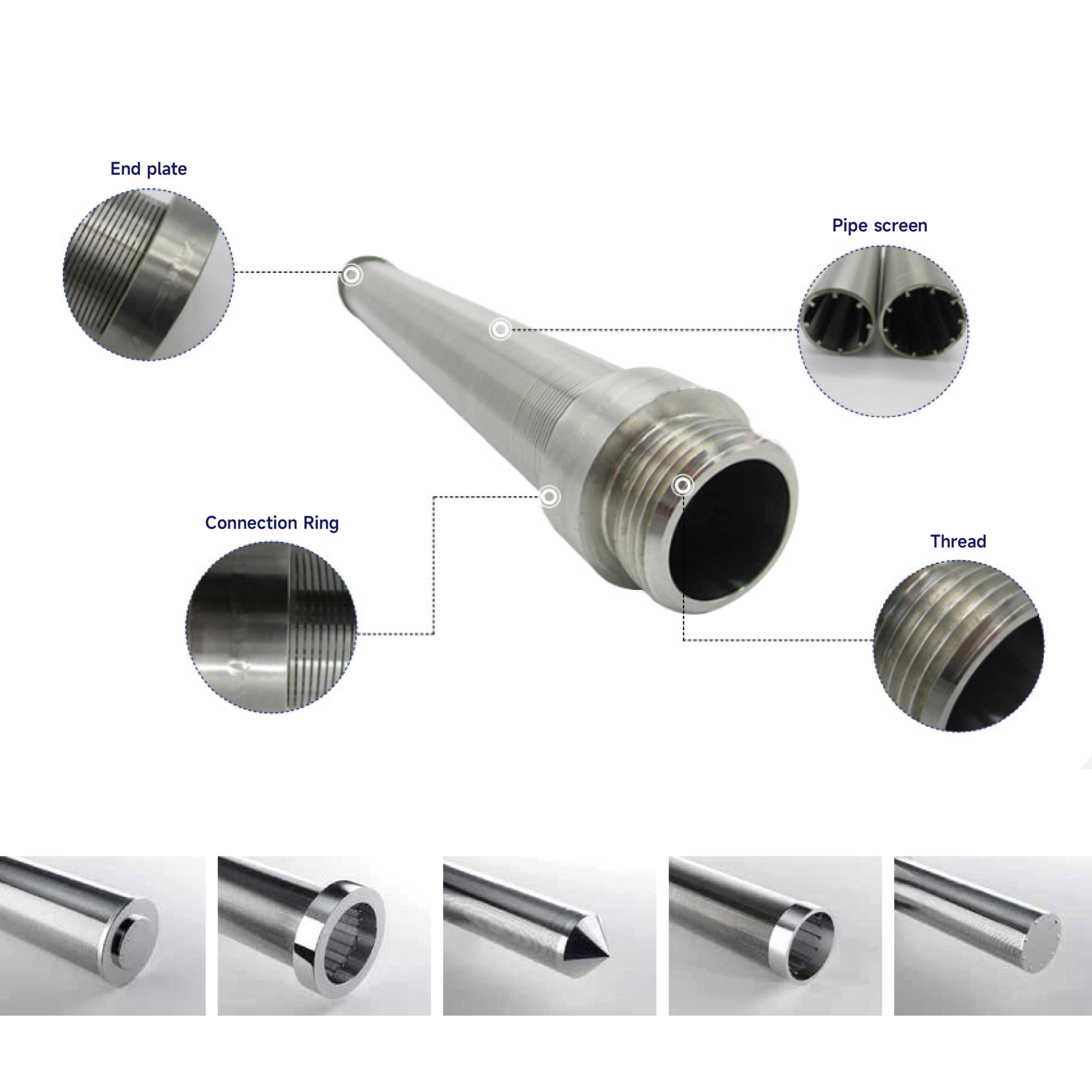
- Identify the screen. Confirm alloy, slot size, profile-wire orientation, normal flow direction, end connections, seals and any supplier cleaning limit.
- Inspect before cleaning. Photograph the filtration face, support rods, seams, end fittings and damaged areas. Collect a deposit sample when its composition is uncertain.
- Remove loose material. Use gravity, gentle rinsing or careful manual removal. Prevent dislodged solids from entering the clean side or another process line.
- Apply the first compatible method. Backwash, rinse or brush in a way that releases solids from the filtration face. Keep the element supported so cleaning loads do not bend it.
- Escalate only when evidence supports it. If residue remains, test ultrasonic or chemical cleaning on a sample, spare element or limited area before treating the full assembly.
- Rinse and dry as required. Remove cleaning agents and displaced contamination using water or another approved rinse compatible with the process.
- Inspect and test. Check slot continuity, wires, welds, joints, seals and hydraulic recovery against the documented acceptance criteria.
- Record the result. Keep before-and-after pressure, flow, images, method, exposure details and reuse decision for the next maintenance cycle.
Backwash in the Correct Direction
Backwash should oppose the normal filtration direction unless the equipment’s validated procedure specifies otherwise. If process flow normally carries solids onto the outside of a cylinder, cleaning flow generally needs to move from inside to outside to lift the cake away. For an inside-to-outside design, the direction reverses.
Do not assume that more backwash pressure guarantees better cleaning. The useful force is the one that releases the deposit while staying within the element, housing, weld and connection limits. Excess loading can open slots, loosen joints or fatigue the structure. A controlled cycle also needs somewhere to carry the released solids; otherwise they may settle back onto the screen.
Installed automatic systems require a different review from removable elements. The backwash filter working principle covers differential-pressure triggers, cleaning zones and cycle logic, while SINFT’s backwash filter cartridges include wedge wire and other cleanable element constructions for system-specific designs.
Use Mechanical Cleaning Without Changing the Slots
Brush across the filtration surface gently; do not drive tools into the slot openings. A soft nylon or other process-compatible nonmetallic brush is generally a safer starting point than a steel wire brush, scraper or pick. Work with the wire direction where that reduces snagging, and support thin panels or long cylinders during cleaning.
Mechanical cleaning should remove deposits, not polish away evidence of damage. Stop if you find lifted profile wire, broken welds, local slot widening, a dented cylinder or an unstable end fitting. A slot that has changed shape may pass oversize particles even if the element looks cleaner and its flow improves.
For large intake screens, mechanical brushing may be built into the installation. For a small removable cylinder, manual brushing may be enough. These cases need different tools and loads, but the acceptance principle is the same: preserve the specified slot geometry.
When to Use Ultrasonic or Chemical Cleaning
Use ultrasonic or chemical cleaning only after a compatibility review and a controlled trial. Ultrasonic energy can help detach fine deposits from a removable screen, but bath chemistry, energy density, element spacing, treatment time and joint construction all affect the result. Inspect welds and attachments after the trial rather than judging success only by bath discoloration.
Chemical selection begins with the deposit and then checks every wetted material. An oil film, carbonate scale, iron oxide and biological residue require different chemistry. The phrase “stainless steel” is not enough: alloy grade, weld condition, dissimilar metals, seals and prior surface treatment can change compatibility.
ASTM A380/A380M addresses cleaning, descaling, pickling and passivation of stainless steel parts and systems and emphasizes procedure selection, rinsing, inspection and contamination control. It is a useful technical reference, but it does not turn one chemical recipe into a universal in-service wedge wire cleaning procedure. Use the current purchased standard, supplier guidance, safety data sheets and your plant’s validated process.
How to Check Whether Cleaning Worked
A clean appearance is not enough; acceptance should combine visual, dimensional and hydraulic evidence. Agree the criteria before cleaning so a damaged element is not returned to service simply because it looks brighter.
Check at least these points:
- slots are visibly open and free of bridged or embedded solids;
- profile wires are not bent, lifted, worn or separated from support rods;
- welds, seams, end rings, threads and flanges show no cracking or movement;
- no chemical residue, loose scale, brush fragment or cross-contaminant remains;
- critical slot width and overall dimensions remain within the approved requirement where measurable;
- clean differential pressure or flow has recovered to the site’s accepted baseline under comparable conditions;
- the element passes any application-specific integrity, cleanliness or sanitation check.
The filter pressure drop versus flow rate guide explains why pressure-drop comparisons require the same fluid, viscosity, temperature and flow basis. If you test one element in water and compare it with a process-fluid value at another temperature, the result may not isolate screen cleanliness.
If the Filter Clogs Again Quickly
Rapid recurrence usually calls for root-cause review, not progressively harsher cleaning. Compare the new run length with previous cycles and inspect the recovered solids. A change in feed composition, upstream equipment, biological growth, precipitation or solids loading may have moved the problem to the screen.
Also review whether the slot is matched to the particle shape. A very small slot may blind too quickly for the available screen area. A slot that is too large may pass the contaminant the process needs to retain. Low effective open area, blocked support zones and poor solids discharge can further shorten the cycle.
If the screen never returns close to its accepted clean baseline, consider internal residue, permanent surface change, slot deformation or an unsuitable cleaning method. At that point, destructive cleaning can cost more than a controlled replacement and may create an uncertain filtration result.
Cleaning Considerations by Application
The acceptable residue and cleaning method depend on what the filter protects. In water treatment filtration, sand, algae, mineral scale and biological growth can demand different cleaning steps even when the screen geometry is identical. Intake screens may use sweeping flow, brushes, water backwash or air-burst systems designed into the installation.
Food, beverage, pharmaceutical and high-purity services may require validated detergents, controlled rinse quality, hygienic handling and documented residue acceptance. Petrochemical and chemical services may add solvent, ignition, toxicity and waste controls. In every case, you should give the supplier the actual fluid and cleaning chemistry rather than requesting a material based only on the word “corrosion-resistant.”
What to Send When Cleaning Is Not Enough
For a replacement or cleaning-oriented design review, provide:
- element drawing, overall dimensions, slot size and profile/support wire details;
- photographs of the clean side, dirty side, ends, connections and failed areas;
- normal flow direction and whether cleaning flow can reverse through the element;
- confirmed alloy and details of seals, gaskets, adhesives or dissimilar-metal parts;
- process fluid, contaminants, retained-particle target and solids loading;
- normal flow, temperature, working pressure and differential-pressure history;
- current cleaning method, water quality, chemicals, cycle time and observed recovery;
- required cleanliness, slot-width, hydraulic or integrity acceptance criteria;
- quantity, equipment access limits and replacement schedule;
- required material, dimensional, passivation, inspection or traceability documents.
This package helps separate a cleaning problem from a screen-area, slot, support, connection or process problem. It also gives a manufacturer enough context to avoid copying an element that was not suited to the operating cycle.
How SINFT Can Support Cleaning and Replacement Decisions
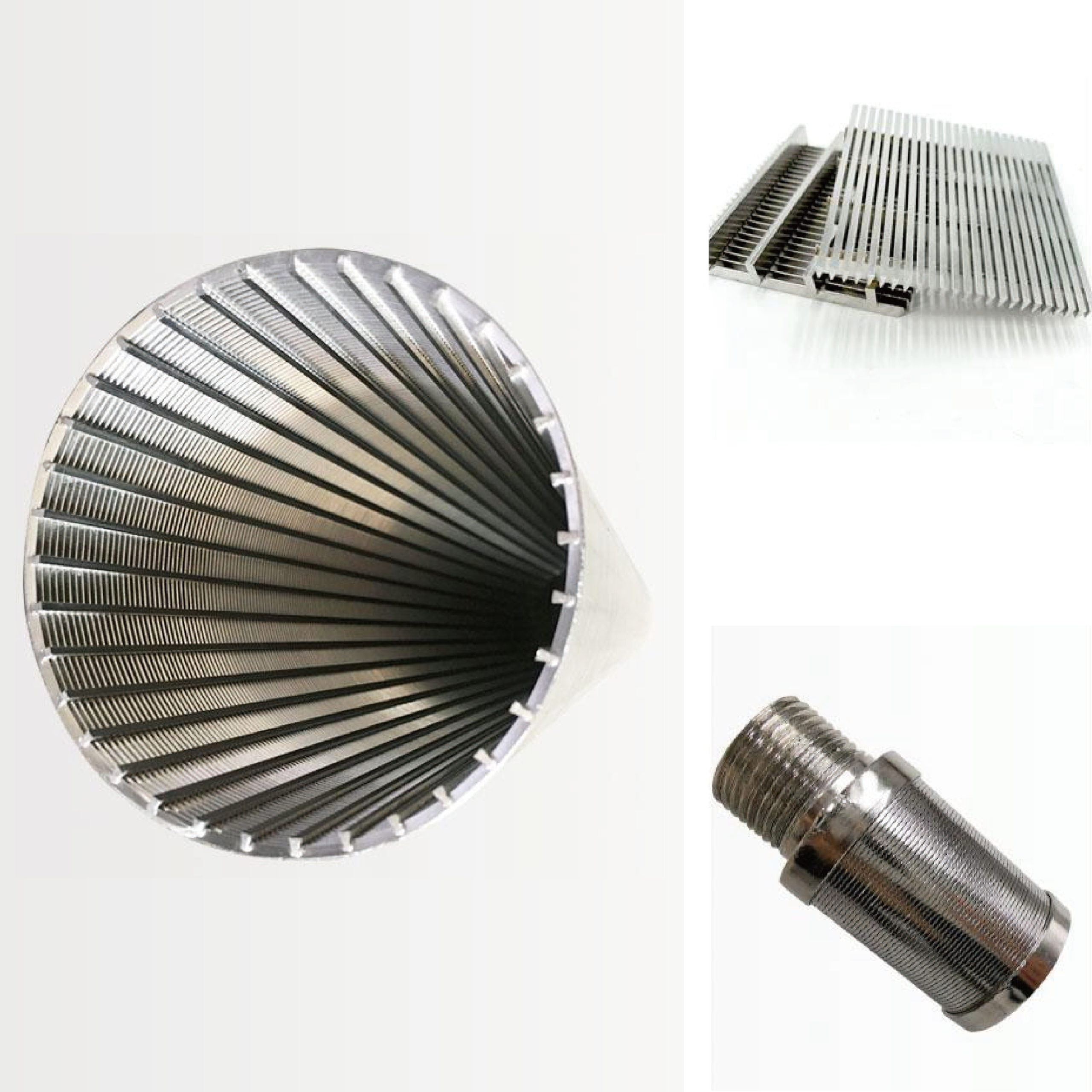
SINFT can review the screen geometry and operating evidence together before a replacement is specified. Wedge wire elements can be manufactured as cylinders, tubes, baskets, flat panels and other custom forms, with material, slot, profile wire, support rod, flow direction and connection selected for the application.
Through SINFT’s custom filter manufacturer service, a project can begin from a drawing, old sample or measured installation. The technical review can address cleanability, backwash direction, slot geometry, support layout, end connections and requested inspection records. Send your drawings, fouling photographs and operating data through the contact inquiry form for manufacturing-feasibility and quotation review.
Frequently Asked Questions
Can I pressure-wash a wedge wire screen?
Only if the screen supplier or validated plant procedure permits the selected pressure, stand-off distance and direction. A concentrated jet can bend profile wires, widen a local slot, damage welds or drive particles deeper when applied from the wrong side. Begin with lower force, support the element, test a limited area and inspect slot geometry afterward. Never choose jet pressure from a generic online value.
Which side of a wedge wire filter should I clean from?
For backwashing, clean from the clean side toward the retained-solids side, opposite the normal filtration direction, when the design allows it. Confirm direction from the assembly drawing, flow arrow or equipment documentation because cylindrical wedge wire elements may filter either outside-to-inside or inside-to-outside. For surface brushing, work on the dirty filtration face without forcing tools between the profile wires.
Can a wire brush be used on stainless steel wedge wire?
A steel wire brush is usually a poor default because it can scratch the surface, distort narrow slots or introduce free-iron contamination. Start with a soft, process-compatible nonmetallic brush and controlled force. If a metallic tool is required by an approved procedure, its alloy, cleanliness and dedicated use need review. Inspect the wires, welds and slot openings before the screen returns to service.
What chemical removes mineral scale from wedge wire?
There is no universal chemical because scale composition and screen construction vary. Identify whether the deposit is carbonate, oxide, silica or another material, then check the proposed cleaner against the exact alloy, welds, seals and process requirements. Validate concentration, temperature, exposure time, rinsing and disposal on a sample or spare element before treating the production screen. Supplier and plant procedures should control the final recipe.
Is ultrasonic cleaning safe for wedge wire filter elements?
It can be suitable for removable elements with fine adherent residue, but safety for the part depends on bath chemistry, ultrasonic power, frequency, duration, element spacing and joint construction. Run a controlled trial and inspect profile-wire welds, end fittings and seals afterward. Hydraulic recovery and slot integrity matter more than how much debris appears in the bath. Do not assume a longer cycle is automatically better.
How do I know when a wedge wire filter should be replaced?
Replace or obtain an engineering review when cleaning does not restore the accepted hydraulic baseline, slots remain blocked, profile wires are bent or worn, welds are cracked, corrosion has reduced section, or end connections are loose. Replacement is also appropriate when recurring fouling shows the existing slot, area or cleaning access is unsuitable. Do not return an element solely because it looks clean from a distance.
How often should a wedge wire screen be cleaned?
Set the interval from monitored performance and process risk, not a universal calendar. Useful triggers include differential-pressure rise, flow decline, product-quality change, a validated time limit or an automatic backwash setpoint. Trend each run’s clean and terminal values. If intervals shorten, investigate feed conditions, solids loading, slot selection and incomplete cleaning instead of simply increasing cleaning frequency or force.
What information does SINFT need for a custom replacement?
Send a drawing or old sample, dimensions, slot size, alloy, profile and support details, end connections and normal flow direction. Add process fluid, contaminant, flow, temperature, pressure, differential-pressure history, current cleaning method and the failure or recovery problem. State quantity and required inspection documents. This allows the replacement review to cover fit, filtration, strength and cleanability rather than duplicating dimensions without operating context.
Final Thoughts
Cleaning a wedge wire filter is a controlled recovery decision, not a contest to apply the most force. Identify the foulant and filtration face, reverse the flow where the design permits, escalate methods only after compatibility review, and verify both hydraulic recovery and slot integrity. When cleaning no longer produces a repeatable result, SINFT can review your existing element and operating data for a custom replacement or more cleanable configuration.