Your replacement element has the same micron label as the previous one, yet the differential-pressure alarm arrives sooner. The obvious explanation is “less dirt capacity,” but the quotation may not contain enough evidence to support it. Filter dirt holding capacity depends on how loading is measured and where the test stops. Understanding those conditions helps you compare elements without mistaking a laboratory capacity number for a guaranteed operating interval.
Direct Answer: What Is Filter Dirt Holding Capacity?
Filter dirt holding capacity describes the contaminant loading associated with a defined endpoint under specified test conditions, often reported as a mass in grams. It must be read together with the test method, contaminant, flow, fluid condition, removal performance and terminal differential pressure. It is not a fixed number of operating hours, and equal micron labels do not establish equal capacity or service life.
For an industrial metal element, ask two separate questions: Does it remove the contamination you must control, and how much relevant loading can it tolerate before the agreed maintenance or process limit is reached? A large capacity number is useful only when the removal requirement and comparison basis are also suitable.
Capacity, Efficiency and Service Life Are Different Measures
Capacity is a loading result; efficiency is a removal result; service life is the operating interval achieved in a particular system. Treating them as interchangeable can produce a replacement that appears attractive on paper but fails the actual duty.
HAWE's technical lexicon describes apparent dirt holding capacity in terms of test contaminant added until a defined differential pressure is reached. This is a useful warning about terminology: ask whether the reported mass is injected challenge, calculated contaminant capacity, recovered retained material or another defined quantity. These labels should not be silently substituted for one another. HAWE: Dirt Holding Capacity
Removal performance matters because an element that passes more contamination may load differently from one that captures it. Before comparing grams, confirm the relevant particle size and efficiency basis. A shared “10 µm” label does not demonstrate that the same fraction of the challenge was retained. Do not improve an apparent capacity result by accepting inadequate downstream protection.
Service life adds the field conditions: contamination arriving over time, flow, viscosity, quality limits, maintenance decisions and any cleaning policy. Pall's March2016 comparison document explicitly cautions against estimating relative life from dirt capacity alone without the test conditions, efficiency and intended operating duty. This is a comparison principle, not an endorsement of that document's product rankings or older standard editions. Pall: Test Procedures and Capacity Interpretation
Read the Endpoint Before Comparing the Grams
A capacity value is incomplete if you do not know when the test ended. An element evaluated to a different terminal differential pressure may have been allowed to continue loading after another test would already have stopped. That alone makes a simple “higher grams wins” comparison unreliable.
Terminal differential pressure in a laboratory report is not automatically your equipment's alarm, cleaning trigger, bypass setting or structural rating. Those limits serve different purposes. The installed system's approved operating limits remain authoritative; never raise a setpoint just to reproduce a brochure's capacity figure. Our filter differential pressure replacement-limit guide explains those distinctions in more detail.
Also check the clean starting condition. If one proposed element starts with greater resistance at the required flow and fluid condition, it may have less usable margin before the approved operating endpoint. That observation does not by itself prove its capacity is lower: the loading behavior still needs evidence. It tells you why both clean resistance and the complete loading result belong in the comparison.
For hydraulic elements, ISO16889:2022 provides a multipass test framework covering contaminant capacity, particle removal and differential-pressure characteristics. Its scope and validated facility range matter. It is not a universal qualification for water, gases or polymer melt, nor does mentioning the standard establish that a SINFT product has been tested to it. Confirm the method and available documentation for the particular element. ISO16889:2022 Public Abstract
A Supplier Comparison Checklist
Compare like with like first, then identify the gaps. Request the supporting report rather than copying a capacity figure from an unrelated element family. The following checklist can be used alongside quotations or during a technical clarification call.
| Comparison field | What to obtain | How to use it |
|---|---|---|
| Tested element | Part identification, dimensions, media grade, supports and connections | Confirm that the evidence applies to the offered construction. |
| Removal performance | Efficiency or beta at the required size, with sizing basis | Do not accept extra passage as a hidden reason for different loading behavior. |
| Capacity definition | Reported mass basis and calculation method | Separate challenge introduced from material retained or recovered. |
| Test conditions | Method/edition, contaminant, concentration, fluid, temperature and flow | Mark mismatches instead of treating all reported grams as comparable. |
| Endpoint | Starting and terminal differential pressure and other stopping criteria | Determine whether the loading interval matches the intended comparison. |
| Loading record | Pressure development and performance information where available | Look beyond the final number for behavior relevant to the duty. |
| Report scope | Date, revision, sample identity and stated limitations | Decide whether more evidence or an application trial is needed. |
If a field is absent, write “unconfirmed” in your internal review. Missing information is not proof of poor quality, but it is not evidence of equivalence either. Ask the supplier to close the gap before approving an alternative.
Area-normalized figures can be informative when their definitions match. However, grams per unit area do not replace total-element capacity, and total grams do not reveal whether the available area was used effectively. Retain both the construction details and the test basis instead of choosing whichever normalization makes a quotation look strongest.
Why Same-Micron Metal Filters Can Load Differently
Media structure and contaminant behavior
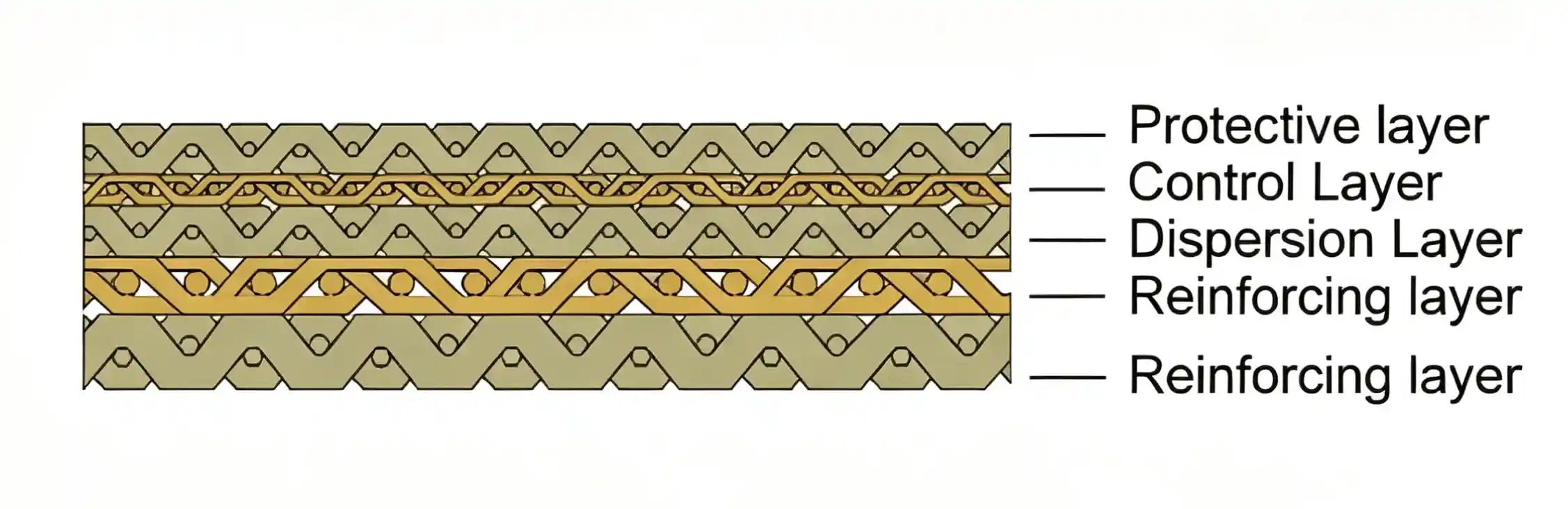
The path available to particles differs between media structures. Surface-oriented capture can build a deposit near the upstream face; a suitable depth structure can distribute loading within its thickness. That distinction is useful when selecting media, but it does not establish a universal capacity ranking for every contaminant and grade.
For example, hard granular material, deformable gels and sticky deposits need not load the same media in the same way. Pall's polymer-media overview distinguishes woven media from depth-type metal fiber constructions. It supports considering capture structure, not copying a competitor's porosity, temperature rating or lifetime advantage into a SINFT specification. Pall: Polymer Filter Media Structures
For the broader structural comparison, see surface filtration versus depth filtration. Here the additional purchasing question is whether the proposed structure has appropriate loading evidence for your actual contaminant, not merely whether it belongs to the “depth” category.
Usable area, pleat spacing and flow distribution
More media can provide additional loading opportunity, but counting pleats is not enough. Check the usable filtration area, drainage paths, support, blocked regions and distribution of flow through the pack. An area claim should describe the finished element rather than only the unassembled sheet.
Two cartridges of the same length may have different media packs. Conversely, adding densely packed pleats does not justify promising a proportional increase in capacity. The useful engineering review asks whether the additional area remains accessible and whether the assembly can deliver the required flow without unsuitable resistance or distortion.
For a replacement, preserve the approved fit and support requirements while investigating area changes. A longer or larger element is not an acceptable capacity improvement if it conflicts with the housing, seals or installation envelope. Likewise, changing support or media thickness should trigger a review of whether the earlier qualification still applies.
Fluid, flow and changing operating conditions
Capacity testing is conducted under defined conditions; production may not be. Higher viscosity or a different flow can consume more differential-pressure margin before a comparable amount of contamination has accumulated. Establish the clean baseline at matched operating conditions before concluding that an early alarm proves poor dirt capacity.
Hydraulic circuits can also expose elements to fluctuating flow and pressure. Donaldson's discussion of hydraulic system function highlights the importance of performance under those changes. A steady-condition headline is therefore only part of the evidence needed for a variable-duty application. Donaldson: Hydraulic System Filtration Conditions
For the resistance side of the comparison, use our filter pressure drop versus flow rate guide. Keep that assessment separate from a claim about how much contaminant was retained.
A Simple Capacity-to-Time Example—and Its Limits
A mass balance can explain the role of loading rate, but it cannot turn an unrelated laboratory result into a service-life guarantee. For a once-through liquid example, the approximate captured mass rate is:
Captured mass rate (g/h) = flow (L/h) × relevant solids concentration (mg/L) × retained mass fraction ÷ 1,000
Illustrative operating time (h) = application-validated usable captured mass (g) ÷ captured mass rate (g/h)
The “retained mass fraction” here is a mass-based fraction for the relevant challenge. Do not insert a particle-count beta efficiency as though it were automatically the same quantity. And do not put injected test-dust mass in the numerator if the denominator describes captured material.
Assume the following fictional teaching conditions, not SINFT test results or recommended design values:
- A once-through liquid flow of 1,200 L/h.
- Relevant suspended solids at 4 mg/L.
- A constant retained mass fraction of 0.75.
- An application-validated usable captured mass of 72 g before its agreed endpoint.
The captured rate is 1,200 × 4 × 0.75 ÷ 1,000 = 3.6 g/h. Under the deliberately simplified assumptions, 72 ÷ 3.6 = 20 hours. If only the relevant solids concentration doubles to 8 mg/L, the rate becomes 7.2 g/h and the illustrative interval becomes 10 hours.
| Hypothetical comparison | Initial condition | Higher solids condition |
|---|---|---|
| Flow | 1,200 L/h | 1,200 L/h |
| Relevant solids concentration | 4 mg/L | 8 mg/L |
| Retained mass fraction | 0.75 | 0.75 |
| Captured mass rate | 3.6 g/h | 7.2 g/h |
| Assumed usable captured mass | 72 g | 72 g |
| Calculated interval under these assumptions | 20 h | 10 h |
The point is that a changed feed can shorten a cycle even when the element is unchanged. Real service may depart from the calculation because contamination varies, deposits behave differently, removal changes during loading or a quality limit is reached first. Use the example to identify the measurements you need, not to set a maintenance interval.
In a recirculating hydraulic system, do not repeatedly count the same reservoir solids as a fresh once-through feed. Contamination ingress, internal generation, reservoir concentration and removal interact over time. A simple flow-times-concentration estimate may describe an instantaneous capture rate under specific assumptions, but it does not by itself model the system's full service interval.
Match the Selection to the Duty
For hydraulic and lubrication service, start with protection requirements. In hydraulic filtration applications, confirm required particle control, oil conditions, flow variation and the approved alarm or changeout criteria. If capacity evidence is missing, do not compensate by selecting a coarser element without equipment-engineering approval.
For polymer melt, define the loading problem precisely. Hard contamination and soft or deformable material may require different evaluation. In polymer melt filtration, ask how media structure, operating temperature, viscosity, usable area and product-quality limits will be assessed together. Hydraulic test-dust capacity cannot simply be carried over as a polymer throughput promise.
For water and chemical liquids, characterize the incoming solids. Record changes between batches, seasonal feed differences and any sticky or precipitating deposits. If contamination reaches the filter in occasional slugs, an average concentration may hide the event that actually ends the cycle. Consider whether upstream process control or appropriately selected prefiltration should be reviewed before redesigning the final element.
For reusable or backwashed service, evaluate the complete cycle. Capacity before cleaning, cleaning recovery, integrity and the next cycle all matter. A design that stores contamination effectively but cannot be cleaned by the approved process may not be the best reusable choice. Do not assume every depth-type metal medium tolerates aggressive reverse flow; the construction and cleaning method need explicit confirmation.
How to Evaluate a Replacement in the Field
Use a controlled comparison, not two unrelated maintenance dates. First define a successful outcome: the required downstream quality, acceptable flow, approved differential-pressure limit and cleaning or replacement criteria. Keep the duty and sampling plan as comparable as practical.
Record the following for the reference element and candidate:
- Part and batch identification, media grade, dimensions, connection and installation check.
- Clean differential pressure at recorded flow, temperature and viscosity where relevant.
- Feed or upstream contamination information, including unusual batches and process events.
- Operating hours and processed volume or production mass, with downtime separated.
- Differential-pressure trend at comparable conditions, plus downstream quality checks.
- Reason the cycle ended: pressure limit, quality issue, scheduled maintenance, damage or another documented cause.
- Cleaning method and post-cleaning results if the element is intended for reuse.
A cycle stopped for scheduled maintenance cannot be treated as proof that the filter reached its full capacity. Similarly, a cycle stopped for a seal problem should not be ranked as a media-capacity failure without investigation. Retain the reason for each endpoint with the data.
For an application with changing feed, compare operating context before attributing every difference to the cartridge. More than one representative cycle may be necessary. Agree the trial duration, sample count and acceptance criteria with the responsible engineer rather than treating a single favorable run as a universal result.
Choosing a SINFT Construction for the Loading Problem
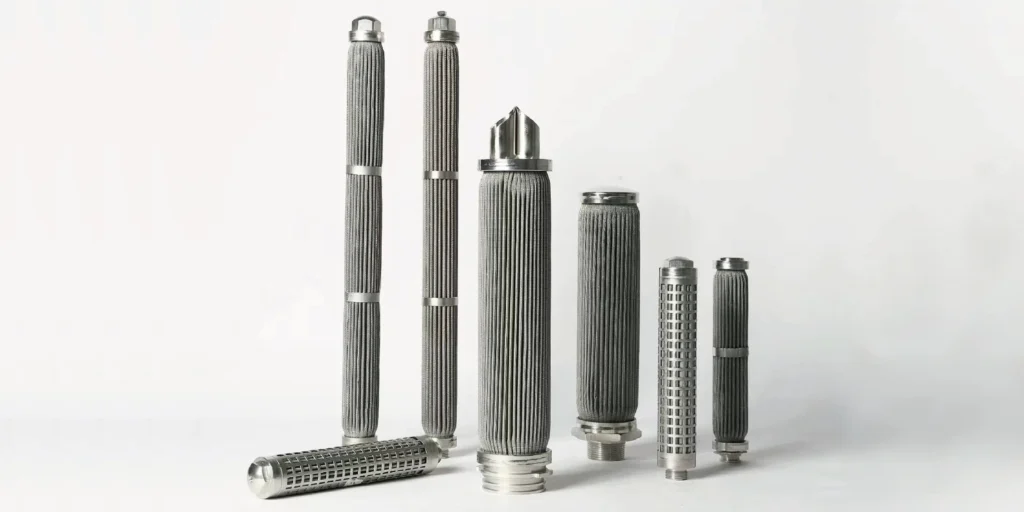
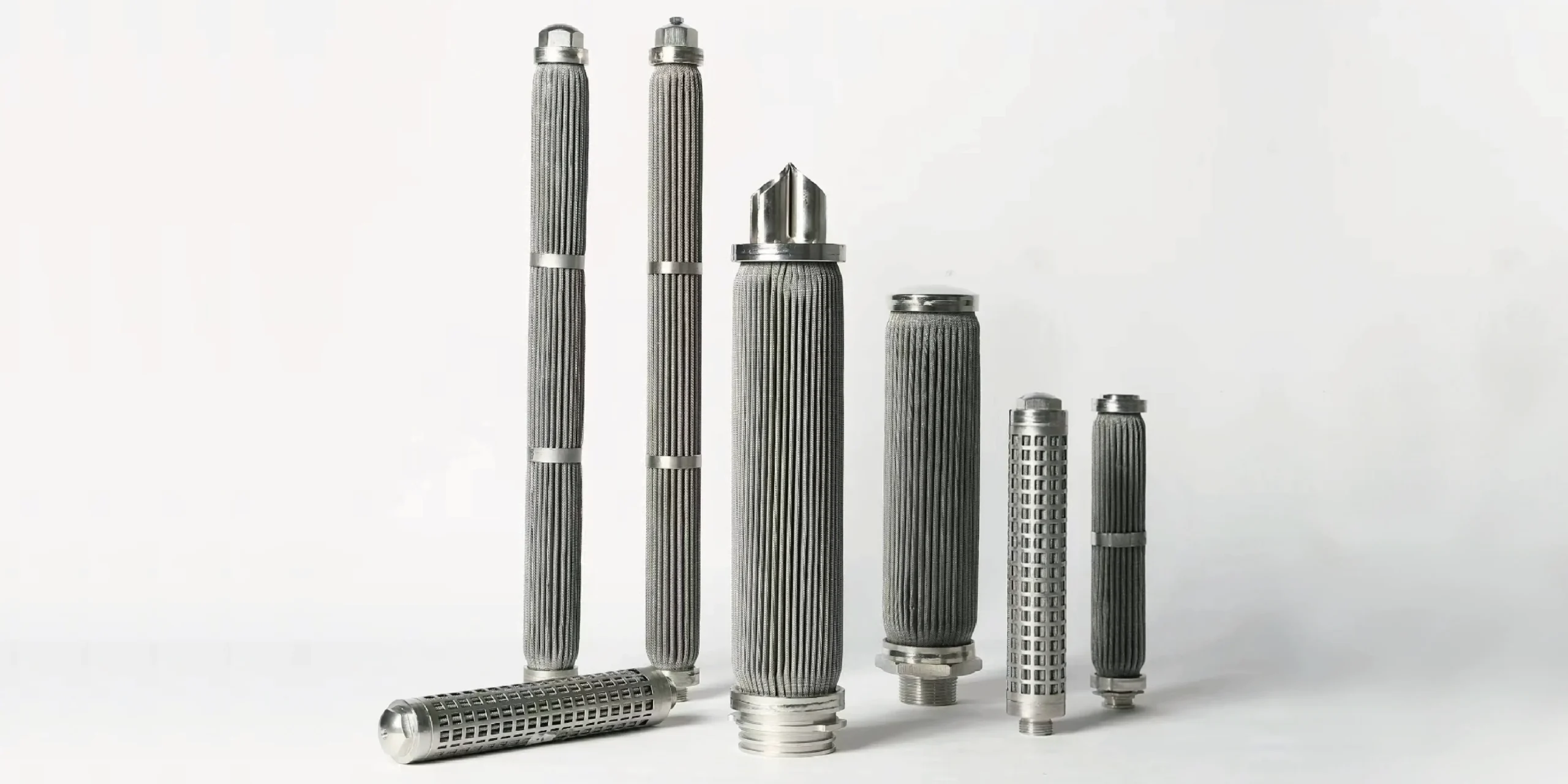
SINFT offers metal media and element forms that can be reviewed against a defined duty. Pleated filter cartridges are relevant when additional filtration area must fit into a constrained housing. Specify the media and usable pack construction as well as the outside dimensions; pleating alone is not a quantified capacity guarantee.
Sintered fiber felt provides a depth-type metal structure for suitable loading applications. Selection still depends on grade, contaminant behavior, support and cleaning requirements. Do not assume its loading advantages automatically make it the correct choice for a strongly backwashed duty.
Sintered mesh filter elements provide a bonded mesh construction for applications where filtration structure, mechanical support and regeneration requirements must be considered together. The relevant question is which construction meets the agreed removal and maintenance duty, not which family can be assigned the largest unsupported capacity number.
For a drawing-based replacement, SINFT's custom filter manufacturing service can review the housing fit, proposed media and operating requirements. Confirm the available testing, qualification arrangements and supplied documents during quotation. This guide does not claim a universal SINFT dirt capacity, a particular ISO16889 capability or a guaranteed service interval.
What to Include in Your RFQ
Send the existing drawing or sample details together with a performance requirement. A useful RFQ includes:
- Fluid or polymer, composition, operating temperature and viscosity where relevant.
- Normal and maximum flow, working pressure and approved differential-pressure limits.
- Required particle control, with the micron and efficiency definitions.
- Contaminant type, particle distribution, concentration or available production history.
- Target operating or cleaning interval, clearly identified as a goal rather than a proven rating.
- Housing dimensions, OD/ID, length, connections, seals, support and flow direction.
- Approved cleaning method and acceptance requirements for reuse.
- Required capacity evidence, test method, endpoint, reporting basis and construction traceability.
You can add this instruction to the quotation request:
State how any quoted dirt capacity is defined and measured. Identify the tested construction, contaminant, fluid conditions, removal performance and endpoint. List differences between the test duty and our application, and confirm what evidence or trial is needed before accepting a service-life expectation.
If the existing specification contains no capacity requirement, do not invent one by copying another manufacturer's unrelated data. Start with the process objective, clarify the available evidence and agree a reasonable qualification route. Send SINFT your drawing and operating history so the discussion addresses both the element construction and the actual loading problem.
Frequently Asked Questions
Is filter dirt holding capacity the same as service life?
No. Capacity is a loading result under defined conditions; service life is the operating interval in an actual application. Feed contamination, flow, viscosity, removal performance and maintenance criteria influence that interval. Use capacity as one part of a comparison, then validate the expected life against the intended duty. A value in grams alone cannot establish hours of operation.
Why do filters with the same micron label have different capacities?
Their removal efficiency, media structure, usable area, flow distribution and test conditions may differ. The label also may not use the same definition. Confirm the required particle-control performance first, then compare capacity reports at matched conditions and endpoints. Do not assume the larger capacity is better if it was obtained by allowing more unwanted contamination to pass downstream.
Can I compare two dirt capacity figures reported in grams?
Only after checking their basis. Obtain the tested construction, removal performance, contaminant, fluid condition, flow and endpoint. Determine whether the mass means injected challenge, calculated capacity or retained material. If those definitions or conditions differ, record the gap and request clarification. Equal units make values look comparable, but they do not make incompatible tests equivalent.
Does more pleated area always mean proportionally longer life?
No. Additional usable area can be beneficial, but pleat spacing, drainage, support and flow distribution determine how the finished element uses it. Actual loading also depends on the contaminant and service conditions. Ask for the relevant construction and supporting evidence. Do not turn a percentage increase in nominal sheet area into an identical percentage increase in operating life.
Is depth filtration always better for dirt holding capacity?
Not for every duty. A suitable depth structure can distribute loading within the medium, but contaminant behavior, removal target and cleaning requirements still matter. A surface-oriented construction may be more appropriate when accessible deposits and regeneration are priorities. Compare the finished designs against the application instead of choosing a media family solely from a general capacity claim.
Will cleaning restore the original dirt holding capacity?
Not necessarily. Residual deposits can reduce the usable structure, while unsuitable cleaning can damage media, supports, seams or seals. Recovered clean flow is useful evidence but does not establish complete recovery of retention or capacity. Follow the approved cleaning process and post-cleaning checks, and evaluate repeated cycles if reusable performance is important to the purchasing decision.
Can I use laboratory capacity to calculate an exact replacement interval?
Not without an application-valid basis. A simplified mass balance can explain loading-rate effects, but the reported mass definition must match the calculation and the operating assumptions must be reasonable. Variable contamination, recirculation, quality limits and fluid changes can invalidate a simple prediction. Establish maintenance criteria from the approved equipment requirements and relevant field validation, not an isolated laboratory number.
What information helps SINFT assess a short filter cycle?
Provide the element drawing or sample details, media specification, fluid, flow, temperature, viscosity and the differential-pressure trend. Include contamination information, downstream quality results and the reason each cycle ended. State the cleaning method if applicable. These records help distinguish a media-loading issue from a changed process, installation problem or incompatible operating condition before a replacement design is discussed.
Final Thoughts
Compare dirt capacity as a defined test result, not a stand-alone lifetime promise. Match removal performance, loading conditions and endpoints before ranking quotations, then validate the proposed construction in the intended duty. For a new or replacement metal element, bring the drawing, operating history and acceptance requirements into the same discussion. SINFT can review those inputs to support a more clearly specified manufacturing inquiry.