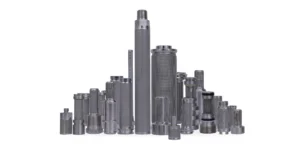
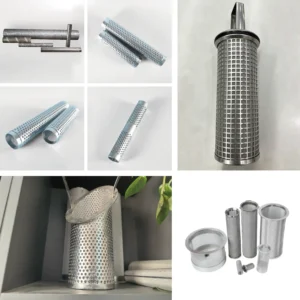
One supplier quotes a pleated filter cartridge; another describes a candle filter. The names can suggest two competing options even when both quotations describe an elongated metal element with folded media. This pleated filter vs candle filter guide helps industrial buyers separate terminology from construction, compare the features that affect service and provide a clearer specification before ordering a replacement or a new element.
Pleated Filter vs Candle Filter: Are They Different Types?
They are not necessarily separate types. Pleated describes a medium folded to accommodate more filtering surface within an envelope. Candle filter often identifies an elongated filter-element format or a supplier's product family. A candle-style element can itself use pleated media.
The terminology must be clarified in the actual quotation. Do not assume that every product called a candle filter has a smooth filtering wall, or that every pleated cartridge shares the same material, support, flow direction or end connection. Compare drawings and operating requirements after identifying what each supplier means.
Porvair's candle-filter description explicitly includes cylindrical and pleated formats in its range. This is evidence that the terms can overlap, not a dimensional standard or a rating for another manufacturer's product.
What Each Name Tells You—and What It Leaves Open
| Description | Useful meaning | What still needs confirmation |
|---|---|---|
| Pleated filter | The medium is folded. | Medium, grade, accessible area, supports, joints and complete duty. |
| Candle filter | An element format or product-family description in the supplier's context. | Whether the wall is plain cylindrical or pleated, the medium and mounting arrangement. |
| Pleated candle filter | Both descriptions can apply to the same element. | All actual construction, performance and interface requirements. |
| Sintered metal filter | A material or construction involving sinter bonding. | Mesh, fiber or another medium; geometry and assembly definition. |
Ask whether the supplier is quoting the individual element, an element assembly or a complete filtration system. A name used for an element should not be treated as a specification for the housing, controls or maintenance arrangement.
For the folded-medium flow path, see the pleated cartridge working-principle guide. This comparison focuses on how to interpret the alternatives offered to a buyer.
A Better Comparison: Geometry, Medium and Assembly
Describe the filtering wall first: plain cylindrical, pleated or another defined form. Then identify the actual medium and its grade. Finally, specify the core, guards, end fittings, seals and joints that turn the medium into a functioning element.
These are different levels of description. A plain cylindrical element and a pleated element may use related media, while two pleated elements can use very different media. A sintered mesh layer stack is also different from a random bonded metal-fiber network, even if the finished parts look similar.
Pall's polymer filter-media overview describes several metal media in its element range. It illustrates why the medium must be identified separately from the shape. Its proprietary grades, retention figures and operating capabilities are not SINFT specifications.
The pleated cartridge media guide explains woven mesh, sintered mesh and metal fiber felt in folded assemblies. Do not select the medium by product-family name alone.
Filtering Area: Compare Definitions Before Numbers
Pleating can accommodate additional sheet medium within a given envelope. That can be useful where an existing housing constrains the element diameter or length. However, the unfolded sheet area is not automatically identical to the area accessible to flow after supports, joints and other features are included.
More geometric area also does not guarantee a proportional increase in capacity or service life. Pleat spacing, media thickness, local contact and contaminant deposition affect how that surface is used. Sticky deposits or channel bridging may limit access to some regions during operation.
For a plain cylindrical alternative, review the actual wall dimensions, medium and support. A change in geometry may alter area, cleaning access and flow distribution together. Do not compare a large plain-wall element with a smaller pleated element and attribute every difference to geometry alone.
Ask how the quoted area is calculated and what it includes. A useful comparison keeps the required removal performance, fluid, flow and available installation envelope explicit instead of relying on a universal area multiplier.
Pressure Drop and Loading
Compare initial pressure drop at the same fluid, temperature, viscosity, flow and measurement boundary. Establish whether the figure describes the medium, finished element or complete housing. A difference in test conditions can be larger than the construction difference the buyer intends to evaluate.
The core, support layers and connections add resistance as well as the medium. Increasing media area cannot automatically eliminate a restrictive outlet or housing passage. Flow direction also affects which supports carry the load and how fluid reaches the filtering wall.
Loaded behavior is a separate question. The contaminant's shape, concentration and tendency to form deposits influence how quickly resistance changes. An element described as a candle filter does not have a universal dirt-holding advantage over a pleated cartridge, especially when the candle itself is pleated.
Use the pleated cartridge pressure-drop guide to establish comparable conditions. Neither low resistance nor a smaller micron label independently establishes acceptable particle-removal performance.
Cleaning Access and Reuse
Plain and folded walls can offer different access to deposits, but neither name guarantees easy cleaning. The medium, contaminant, joints, seals and approved cleaning method determine what can be removed without impairing the assembly.
Deposits can remain between closely spaced pleats, behind guards or within a porous depth medium. A surface that looks clean does not establish that hidden contamination has been removed. Conversely, a visible deposit is not enough to identify a compatible chemical or mechanical cleaning method.
Backwashing reverses the loading direction and needs an appropriate construction. Confirm the reverse differential-pressure duty for the complete element. Do not infer it from the words metal, sintered, candle or reusable. The permitted method and release checks must be defined for the actual assembly.
After cleaning, review condition, comparable flow recovery and the required integrity or performance evidence. There is no general cleaning-cycle count or guaranteed lifetime implied by either category. The pleated cartridge replacement guide discusses when cleaning is no longer enough.
Housing Fit Can Decide the Replacement
A filtering wall can look suitable while the element fails to seat or seal in the housing. Identify the connection type, reference faces, internal passage, retaining features and maximum envelope. Confirm the mating socket, center rod or standpipe and any available axial space.
Nominal length is not a complete fit definition. A projecting threaded adapter, locating shoulder or end feature can change the overall envelope without identifying the sealing location. Record the relevant dimensions between named reference faces.
The seal is part of the interface. Match the specified seal and the mating metal geometry, not only a similar-looking fitting. A worn sample may contain damage or changed seal dimensions that should not be copied into the new design.
The pleated cartridge dimensions guide covers these references. For a replacement, a drawing-based comparison is more useful than deciding that one product name sounds equivalent to another.
Application Context Matters
In polymer melt filtration, identify the polymer, operating temperature, relevant rheology, contaminants, required product result and cleaning plan. Some suppliers use candle terminology in this context, but the label does not establish a particular medium, flow arrangement or residence-time-control feature.
For oil, water, gas or other process duties, the same principle applies: define what must be removed and how the full assembly operates. A design used in one industry should not be carried into another application solely because it fits a similar envelope.
Temperature and chemistry must be reviewed for all wetted components, including seals and joints. Structural capability is also separate from clean pressure drop. Do not combine unrelated maximum figures from media and fitting descriptions into an assumed operating rating.
Compare Two Quotations on a Common Basis
| Item | What both quotations should establish |
|---|---|
| Supply scope | Element, replaceable media assembly or complete system. |
| Geometry | Plain cylindrical or pleated wall, envelope and mounting references. |
| Medium | Material, construction, grade and controlling filtering layer. |
| Removal requirement | Rating convention and relevant performance/test basis. |
| Hydraulic behavior | Comparable clean pressure-drop conditions and area definition. |
| Mechanical duty | Normal direction, supports and forward/reverse differential-pressure requirements. |
| Maintenance | Compatible cleaning method and post-cleaning acceptance evidence. |
| Fit and records | End connections, seals, housing interfaces and agreed documentation. |
If one quotation says only candle filter and the other says only pleated filter, request the missing construction details before comparing price or accepting an equivalent. Clarification early in the RFQ can prevent a physically fitting but functionally unsuitable replacement.
What to Send SINFT
Provide the operating fluid, temperature and flow range, contamination concern and required removal result. State operating pressure and differential-pressure duties separately, including any reverse cleaning or transient cases that matter.
Add the housing or old-element drawing, dimensions, end photographs, specified seals and cleaning requirements. If the old medium or rating convention is unknown, mark that gap explicitly. A sample can help identify construction but does not independently establish its original performance.
SINFT supplies pleated metal cartridges and custom metal elements in multiple forms, subject to review of the construction and duty. The term candle does not by itself establish that SINFT supplies a complete candle-filter system or a competitor's internal features. For drawing-based supply, use the custom filter manufacturer page and the contact inquiry form.
Frequently Asked Questions
Can a candle filter also be a pleated filter?
Yes. Suppliers may use candle to identify an elongated element format and pleated to describe its folded filtering medium. The two descriptions can apply to the same product. Confirm the supplier's drawing, medium and scope of supply before comparing alternatives. Neither name alone establishes the required removal performance, support arrangement, connection or cleaning capability of the complete assembly.
Does candle filter always mean a smooth filtering wall?
No. Candle-style elements can use plain cylindrical or pleated constructions, depending on the supplier and product family. Ask which geometry is being quoted and identify the filtering layer separately from any protective guard. A smooth external guard can also conceal another medium underneath it, so external appearance should not be treated as a complete description of the filtering wall.
Does a pleated design always have lower pressure drop?
Not automatically. Additional accessible area can reduce average media flux under comparable conditions, but medium permeability, thickness, supports, core and connections also affect resistance. Fluid properties and test boundaries must match for a useful comparison. Compare data for the actual assembly rather than assuming a universal pressure-drop advantage from the presence of visible folds alone.
Are candle filters always used for polymer melts?
No universal application can be established from the name alone. The term is used in polymer-processing product ranges, but suppliers may use it in other contexts as well. Identify the actual fluid, contaminant, temperature, flow and required removal result. Confirm the construction and scope instead of transferring one industry's operating assumptions to a different installation because the product name matches.
Can a plain cylindrical element replace a pleated one?
It may be a candidate only after fit, filtration, hydraulic and mechanical requirements are reviewed. Changing geometry can change area, loading and cleaning behavior even if the ends fit the same housing. Define the required performance and compare the complete assemblies. Do not approve an equivalent replacement from nominal length, outside diameter and a shared micron label alone.
Which construction is easier to clean?
That depends on the medium, contaminant, access, support and approved cleaning method. Pleat channels, guards and porous depth structures can affect where deposits remain, while a plain wall is not automatically free of inaccessible regions. Ask how cleaning effectiveness and continued integrity will be verified. Neither candle nor pleated is a guarantee of complete recovery or a fixed number of reuse cycles.
Does the term candle filter specify a flow direction?
No. Establish direction from the actual design and installation information. The core, guard and other supports must suit the normal and reverse loading cases. A visually symmetrical cylinder does not prove equivalent capability in both directions. Confirm the permitted cleaning duty separately rather than reversing an element because the product name or the connection appears compatible with the proposed arrangement.
What should buyers clarify first in an RFQ?
Clarify whether the quotation covers an element or a complete system, then identify wall geometry, medium, rating basis and housing interface. Provide the fluid, flow, temperature and mechanical duty with cleaning requirements. Mark unknown information explicitly. The objective is to compare two defined assemblies against the same process need, rather than choose between product labels that may overlap in meaning.
Final Thoughts
Pleated and candle describe different aspects of an element and can overlap. Start with the actual geometry, medium and scope of supply, then compare area, pressure drop, cleaning and housing fit against the same duty. Send SINFT the process requirements and mating drawing so the replacement or new assembly can be reviewed on its construction and required performance before manufacture.