If you are replacing a cartridge from an existing housing, the number on the end cap is only the start of the check. A 222 and 226 cartridge can look similar in photos, but small differences in O-ring size, tab geometry, closed-end shape, and insertion depth can decide whether the element seals or bypasses.
Direct Answer: What Is the Difference Between 222 and 226?
The main difference between a 222 and 226 filter cartridge is the size of the double-O-ring outlet adapter. A 226 connection commonly also uses locking tabs that engage a compatible bayonet-style housing seat, while a 222 connection is commonly pushed into its matching receptacle without those tabs. However, the O-ring number, locking method, and opposite closed-end shape are separate variables. A 222 cartridge can have a flat or fin end, and manufacturer catalogs also show less-common tabbed 222 and non-tabbed 226 configurations.
Therefore, you should not treat 222 and 226 cartridges as interchangeable. Match the complete connection to the housing: O-ring size and material, adapter geometry, locking tabs, insertion depth, overall length, closed-end style, flow direction, and retention method.
222 vs 226 Filter Cartridge: Quick Comparison
A 222/226 comparison must separate the seal size from the complete end configuration.
| Selection point | 222 filter cartridge | 226 filter cartridge |
|---|---|---|
| Basic format | Commonly single open end (SOE) | Commonly single open end (SOE) |
| Outlet seal | Usually two external 2-222-size O-rings | Usually two external 2-226-size O-rings |
| Relative O-ring diameter | Smaller nominal inside diameter | Larger nominal inside diameter |
| Locking arrangement | Often a push-in adapter without locking tabs | Often two locking tabs for a twist-lock or bayonet seat |
| Opposite closed end | Flat, fin/spear, recessed, or another specified form | Flat, fin/spear, recessed, or another specified form |
| Retention | Depends on the housing, spring, cover, or adapter design | Commonly retained by locking tabs, but housing design still controls |
| Can it replace the other? | No, unless the housing and approved adapter are specifically designed for both | No, unless the housing and approved adapter are specifically designed for both |
These are common industrial arrangements, not a universal coding rule. Pall, Parker, Eaton, Donaldson, and other manufacturers use their own part-number codes around the underlying 222 or 226 connection. Always read the dimensional drawing and housing specification. If you do not have a drawing, photograph and measure the old cartridge before approving a replacement order.
What Does “222” Mean on a Filter Cartridge?
In filter-cartridge terminology, 222 generally identifies an adapter sealed by O-rings corresponding to the 2-222 size family.
The Parker O-Ring Handbook lists 2-222 and 2-226 as different standardized O-ring sizes. The handbook gives the same nominal cross-section family but different nominal inside diameters, so a housing gland designed for one should not be assumed to seal the other.
A typical 222 cartridge has:
- One open outlet end
- Two external O-rings on the outlet adapter
- A closed opposite end
- No bayonet tabs in many common configurations
- A flat, fin, spear, recessed, or other specified closed-end geometry
Pall’s Profile UP cartridge ordering information shows multiple 222 arrangements: flat-top, notched-top, and finned-top versions. This confirms that “222” does not define the closed end by itself.
What Does “226” Mean on a Filter Cartridge?
A 226 filter cartridge generally uses two external 2-226-size O-rings and is commonly paired with locking tabs that engage a compatible housing adapter.
The larger O-ring size changes the outlet adapter and housing receptacle dimensions. Common Code 7-style arrangements combine:
- Single open end
- Two external 226-size O-rings
- Two locking tabs
- A flat or finned closed end, depending on the product
Donaldson describes its Code 7 housing option as using 226 O-rings, bayonet locking tabs, and a locating fin. Pall likewise lists 226 configurations with locking tabs in several product families.
But the tabs are not guaranteed by the number alone. Pall’s Emflon PFRW ordering table includes 226 adapters with locking tabs and a 222 adapter with three locking tabs. A supplier part code or photograph must therefore be checked against the drawing rather than decoded from one visual feature.
Why 222 and 226 Cartridges Are Not Interchangeable
The two connections can differ in seal diameter, adapter diameter, locking geometry, insertion depth, and overall assembled length.
Installing the wrong interface can cause:
- The adapter to stop before the O-rings reach the sealing bore
- Excessive insertion force and damaged O-rings
- Insufficient O-ring compression
- No engagement between tabs and the housing seat
- Incorrect cartridge height under the housing cover
- Loss of axial retention during flow reversal or pressure fluctuation
- Unfiltered-fluid bypass around the cartridge
- Difficulty removing the element after service
An adapter that enters the housing is not necessarily an adapter that seals. If your team can close the housing but the O-rings are not compressed in the correct bore, the cartridge may still bypass. Do not use hand feel, approximate outside diameter, or the ability to close the housing as proof of compatibility.
Parker’s EH single-cartridge vessel data distinguishes between 222 and 226 cartridge configurations and notes a housing-length difference for its 226 arrangement. This is a manufacturer-specific example of why the complete assembly length—not only nominal cartridge length—must be checked.
O-Ring Size Is Not the Same as End-Cap Shape
A correct order must describe at least three separate features: the open-end adapter, the closed-end shape, and the retention method.
1. Open-end adapter
This is the flow outlet and sealing interface. It may use 222, 226, another external O-ring size, an internal O-ring, a gasket, a thread, a flange, or a custom fitting.
2. Closed-end shape
The opposite end may be:
- Flat
- Fin or spear
- Recessed
- Plugged
- Spring-loaded
- Custom machined or welded
The fin can help locate the cartridge or engage a housing feature, but it does not determine whether the open end is 222 or 226.
3. Retention method
The cartridge can be retained by:
- Bayonet or twist-lock tabs
- Housing cover and spring
- Tie rod
- Thread
- Compression plate
- Custom stop or adapter
Parker’s Clariflow-E cartridge ordering table lists both 226 flat/fin and 222 flat/fin end configurations. The combinations demonstrate why “222 fin” and “226 flat” are both valid descriptions.

How to Identify a 222 or 226 Cartridge
Identify the connection dimensionally, not from the fin or cartridge length.
Use this inspection sequence:
- Confirm SOE or DOE. A 222 or 226 cartridge is normally single open end; DOE cartridges have two open ends and usually use end gaskets rather than a single sealed outlet adapter.
- Inspect the outlet adapter. Look for two external O-ring grooves and note the adapter profile.
- Measure the adapter. Record the outlet bore, land diameters, groove diameters, groove width, groove spacing, and distance from the end face to the first groove.
- Check locking features. Record the number, width, thickness, angle, and position of any tabs.
- Record the closed end. Photograph and dimension the flat, fin, spear, recess, spring, or other feature.
- Measure assembled length. Record overall length, active media length, and the distance between the sealing datum and the closed-end datum.
- Identify the seal. Record O-ring material, hardness if specified, color only as supporting evidence, and any backup or support ring.
- Compare with the housing. Measure the receptacle bore, locking slots, stop position, insertion depth, and cover clearance.
Do not identify seal material from color alone. Different elastomers can use similar colors, and service history can discolor an O-ring.
What Is the Difference Between SOE and DOE?
SOE describes a cartridge with one flow opening; DOE describes a cartridge open at both ends.
222 and 226 are commonly SOE connections. Their outlet O-rings seal radially inside a matching housing adapter, while the opposite end is closed. This can reduce the number of potential bypass interfaces compared with a DOE arrangement, but actual sealing depends on correct dimensions, O-ring condition, installation, and housing design.
A DOE cartridge normally:
- Has an opening at each end
- Uses flat gaskets or knife-edge sealing surfaces, depending on the housing
- Is compressed axially by the housing cover, spring, tie rod, or seal plate
- Requires both ends to seat correctly
Neither SOE nor DOE is universally “better.” The existing housing dictates the replacement interface. For a new design, choose from bypass tolerance, service access, retention, cleaning, operating direction, and standardization needs. Connection type is only one decision; filtration rating, media, flow, pressure drop, compatibility, and cleaning must be specified separately.
Does a 226 Connection Have a Higher Pressure Rating?
A 226 connection should not be assigned a universal pressure rating simply because it commonly has locking tabs.
Tabs can provide positive retention in a compatible seat, but the allowable operating condition depends on the complete system:
- Housing design pressure
- Cartridge forward and reverse differential pressure
- Adapter and tab dimensions
- End-cap material and joint
- O-ring material, gland, compression, and extrusion gap
- Temperature
- Flow direction and pulsation
- Cartridge length and support
The connection does not upgrade the collapse or burst capability of the pleated medium, center core, guard, or welds. Use the filter pressure drop vs flow rate guide to distinguish system pressure from differential pressure and to define the operating curve.
For a replacement, request the qualified pressure and differential-pressure limits for the finished element in the specified housing. Do not transfer a rating from a polymer cartridge, another metal cartridge, or another manufacturer’s housing.
How to Select O-Ring Material
The O-ring size establishes geometry; the elastomer establishes chemical and temperature compatibility. Both must match.
SINFT’s confirmed pleated cartridge product family can be supplied with EPDM, silicone, Viton, PTFE, or a metal gasket, subject to the selected construction and application. Availability is not proof of suitability.
Confirm compatibility with:
- Process fluid and concentration
- Cleaning and sanitizing chemicals
- Minimum, normal, and maximum temperature
- Steam exposure where applicable
- Pressure cycling and decompression
- Required extractables, cleanliness, or documentation
- Expected installation and replacement frequency
If the metal element is suitable at a high temperature but the O-ring is not, the seal becomes the assembly limit. For hydraulic service, review the hydraulic filtration application together with the actual oil, additives, temperature, pressure, and seal requirements. For water service, the water treatment cartridge application provides the relevant product-to-application context.
Selecting 222 or 226 for a New Housing
For a new system, select the cartridge and housing adapter as a qualified pair rather than choosing an end code in isolation.
Consider:
- Required control of bypass
- Need for positive rotational or axial retention
- Normal and reverse flow
- Installation access and operator visibility
- Cartridge weight when wet or contaminated
- Number of cartridges in the housing
- Removal clearance
- Seal-material availability
- Standardization with installed equipment
- Risk of operators installing the wrong cartridge
Where several cartridge styles are used at one site, mechanical keying and clear part-number control can reduce mix-ups. A 226 locking arrangement may be useful where positive engagement is required, but the correct choice remains the design approved for the housing and operating conditions.
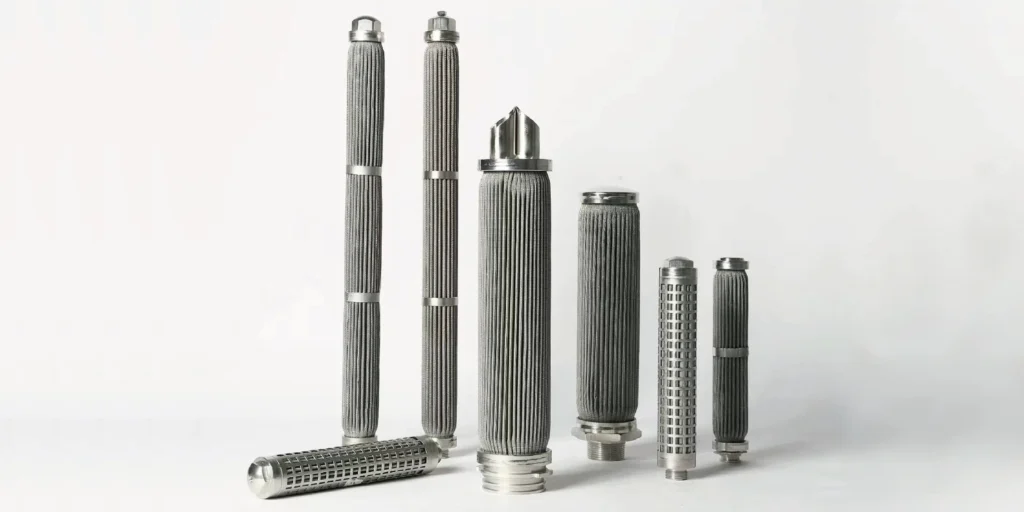
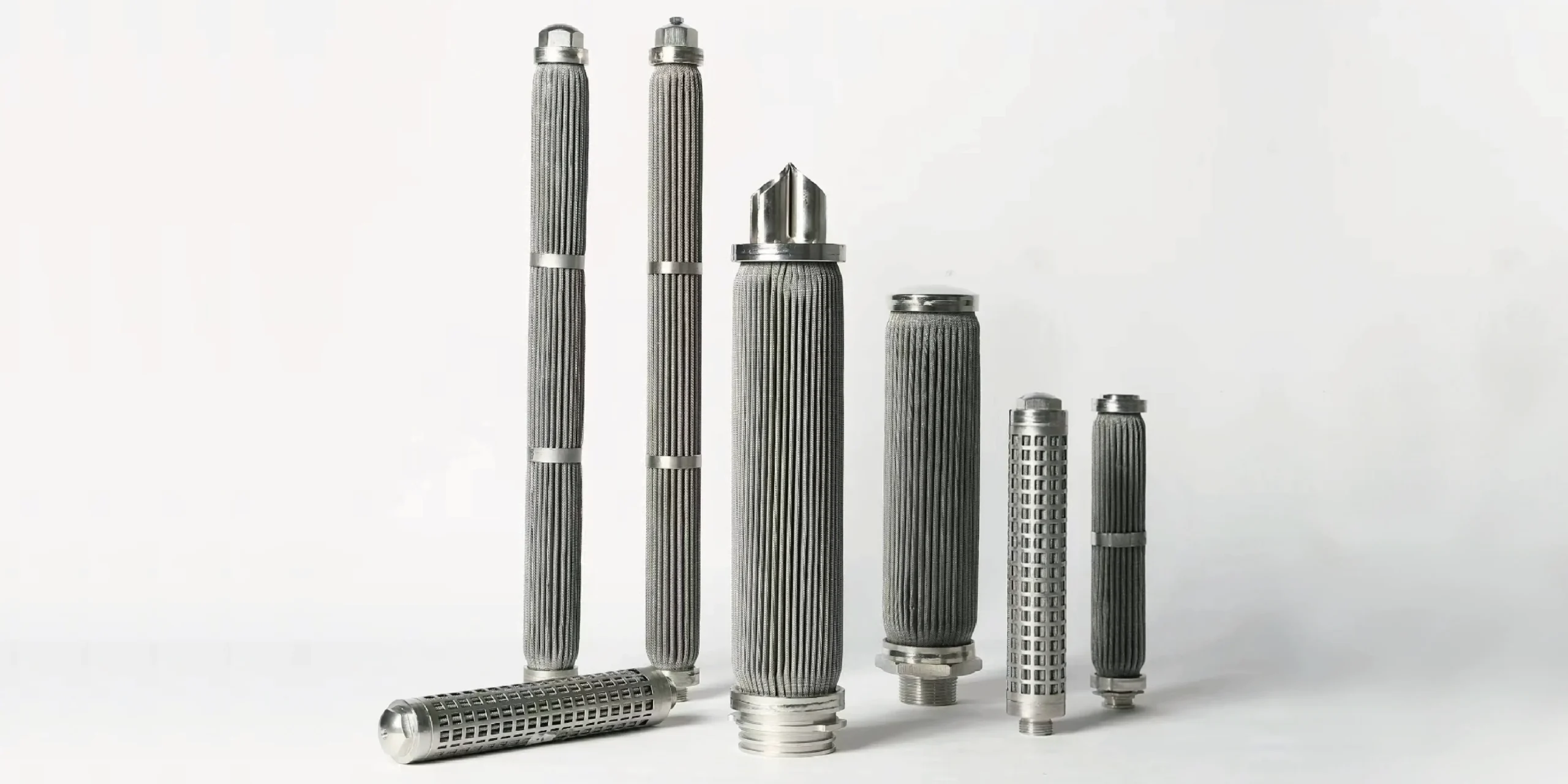
SINFT stainless steel pleated filter cartridges can be manufactured with DOE, 222, 226, threaded, flanged, or custom interfaces. These are available connection families, not a statement that one end style fits every cartridge or housing.
Replacement Cartridge RFQ Checklist
The safest replacement request combines process data with a drawing, housing information, or old sample.
If you want a supplier to check compatibility instead of only quoting a nominal length and micron rating, provide:
- Cartridge part number and housing manufacturer/model, if known
- SOE, DOE, 222, 226, threaded, flanged, or custom interface
- Outlet bore and all adapter and O-ring-groove dimensions
- Number and dimensions of locking tabs
- Closed-end shape and dimensions
- Overall length, active length, OD, and ID
- O-ring material and required documentation
- Normal flow direction and any reverse-flow or backwash condition
- Fluid, concentration, viscosity, and temperature
- Contaminant and required filtration rating with its definition
- Flow rate, system pressure, and allowable differential pressure
- Metal alloy, cleaning method, quantity, and inspection requirements
Use the filter micron rating chart to define the retention requirement and the stainless steel cartridge cleaning guide to define reuse and post-cleaning acceptance.
SINFT’s custom filter manufacturing service can review an old element, drawing, photographs, housing dimensions, and operating conditions. To request an equivalency review, send the connection measurements and process data.
How SINFT Can Help With 222 and 226 Replacement Cartridges
SINFT can manufacture stainless steel pleated filter cartridges with DOE, 222, 226, threaded, flanged, and custom interfaces when the housing and operating requirements are clear. For replacement work, the useful question is not only “Do you make 222 or 226 cartridges?” but “Can this exact interface, seal material, length, media, and support structure match the existing housing and duty?”
If your cartridge must replace an installed element, SINFT can review photos, old samples, drawings, housing dimensions, end-cap measurements, flow direction, filtration rating, cleaning method, and operating data before recommending a stainless steel cartridge construction. This is especially important when a polymer cartridge is being converted to a reusable metal element, or when a plant needs a custom end connection that is close to but not exactly the same as a catalog 222 or 226 style.
Frequently Asked Questions
What is the main difference between a 222 and 226 filter cartridge?
The main difference is the double-O-ring size and the matching housing adapter. A 226 connection commonly adds locking tabs, while a typical 222 connection often uses a push-in adapter, but this is not a universal rule. The complete cartridge drawing should confirm the adapter diameter, O-ring grooves, tab geometry, closed-end style, insertion depth, and housing seat before the replacement is approved.
Can a 222 filter cartridge fit a 226 housing?
Not as a direct replacement. The O-ring and adapter dimensions differ, and the housing may require locking tabs, a different stop position, or a different insertion depth. Even if the cartridge enters the housing, it may not seal correctly. Use only a housing, adapter, or replacement design specifically approved for both connection styles and verified against the actual operating conditions.
Does every 226 cartridge have a fin end?
No. Manufacturer catalogs show 226 connections with both flat and finned closed ends. The 226 designation describes the outlet seal family, not the opposite end shape. A fin can help locate the cartridge in a compatible housing, but it does not define the O-ring size. Always specify the open-end adapter and the closed-end geometry as separate fields.
Does every 226 cartridge have locking tabs?
Locking tabs are common on 226 cartridges, especially Code 7-style configurations, but catalogs also show non-tabbed 226 variants and less-common tabbed 222 arrangements. This is why visual identification can be risky. Confirm the adapter drawing, tab dimensions, housing seat, insertion direction, and retention method instead of assuming the end code tells the full story.
Is a 226 connection better for high pressure?
Not automatically. Positive locking may improve retention in a compatible housing, but pressure capability depends on the housing, adapter, O-ring gland, material, temperature, cartridge structure, and forward or reverse differential pressure. The connection does not by itself define collapse strength, burst resistance, or seal reliability. Ask for limits for the finished cartridge in the specified housing and service condition.
What measurements are needed to copy an existing 222 or 226 cartridge?
Measure the outlet bore, adapter lands, O-ring grooves, groove spacing, tab geometry, insertion datum, overall length, OD, ID, and closed-end profile. Also provide the O-ring material, housing drawing, flow direction, fluid, temperature, pressure, and filtration requirement. If you can send the old sample or clear photos with caliper readings, the supplier can check the interface much more accurately.
What should I send when asking for a custom 222 or 226 replacement?
Send the old part number, housing model, photos of both ends, key dimensions, seal material, filtration rating, fluid, temperature, flow rate, system pressure, allowable differential pressure, cleaning method, and quantity. For non-standard stainless steel replacements, drawings or samples are especially useful because small changes in groove position, tab shape, or overall length can affect sealing and installation.
Final Thoughts
The correct 222 vs 226 filter cartridge choice is a housing-interface decision, not a general performance ranking. Before approving a replacement, match the adapter, O-ring grooves, tab geometry, closed end, seal material, operating direction, differential pressure, filter medium, and rating definition. If the element is non-standard, SINFT can review your old cartridge, drawing, housing dimensions, and process data before recommending a stainless steel pleated or custom filter cartridge.