When an automatic backwash filter does not recover pressure drop after cleaning, the issue is often not the controller alone. The retained solids may not release, the drain path may be weak, or the element may not suit reverse-flow cleaning. Before you buy a backwash element, you need to understand what the cleaning cycle must actually remove.
Direct Answer: Backwash Filter Working Principle
The backwash filter working principle is simple: the filter captures solids on a cleanable screen or metal element during normal flow, then reverses or redirects flow to remove the retained solids through a drain or discharge path. In automatic systems, the cleaning cycle is commonly triggered by differential pressure, time, controller logic, or a manual signal. The goal is to restore usable flow without opening the housing for every cleaning event.
Backwashing is not one single hardware design. It is a cleaning method used in different systems, including screen filters, wedge wire elements, reinforced baskets, sintered mesh elements, and multi-element backwash housings. A reliable design must match the contaminant, slot or mesh structure, flow direction, cleaning pressure, discharge route, valve sequence, and allowable differential pressure.
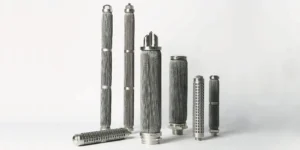
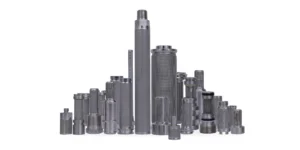
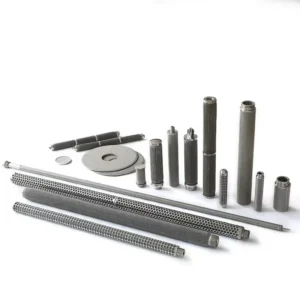
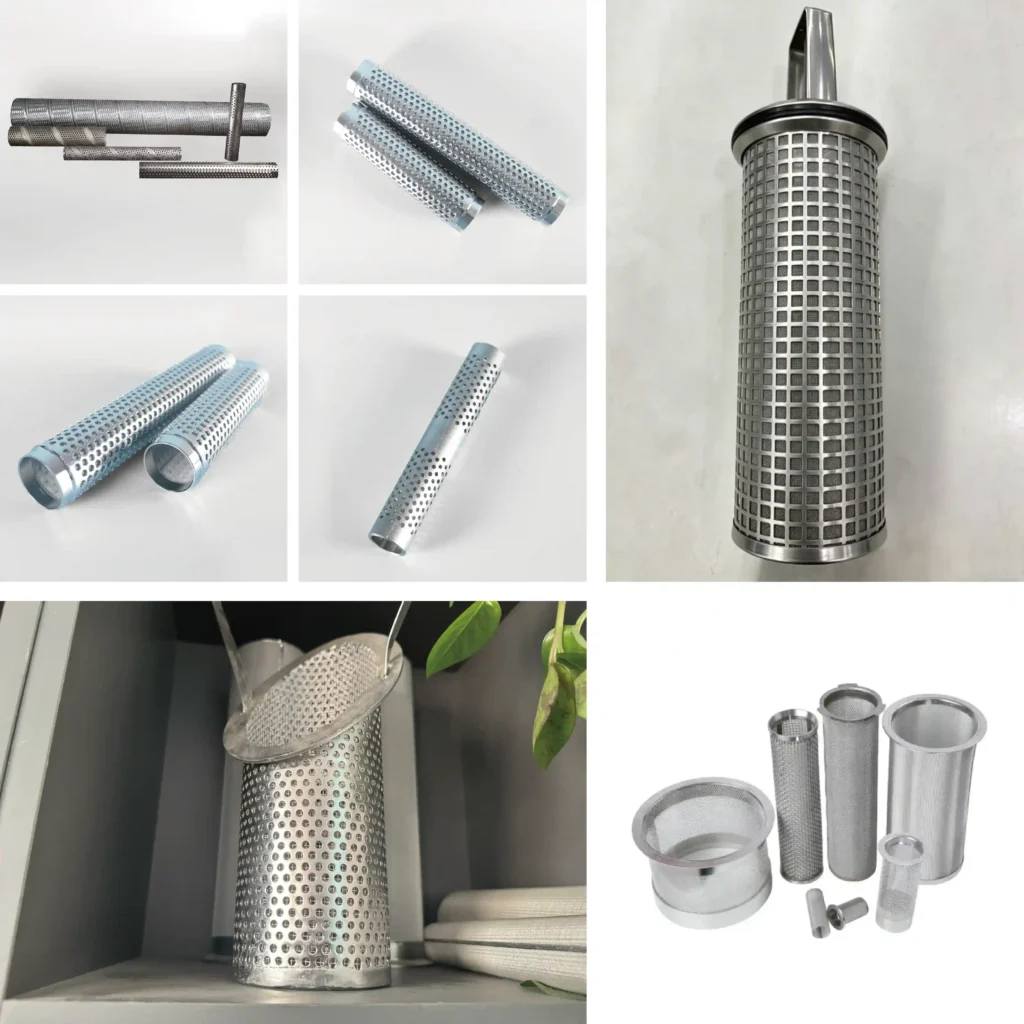
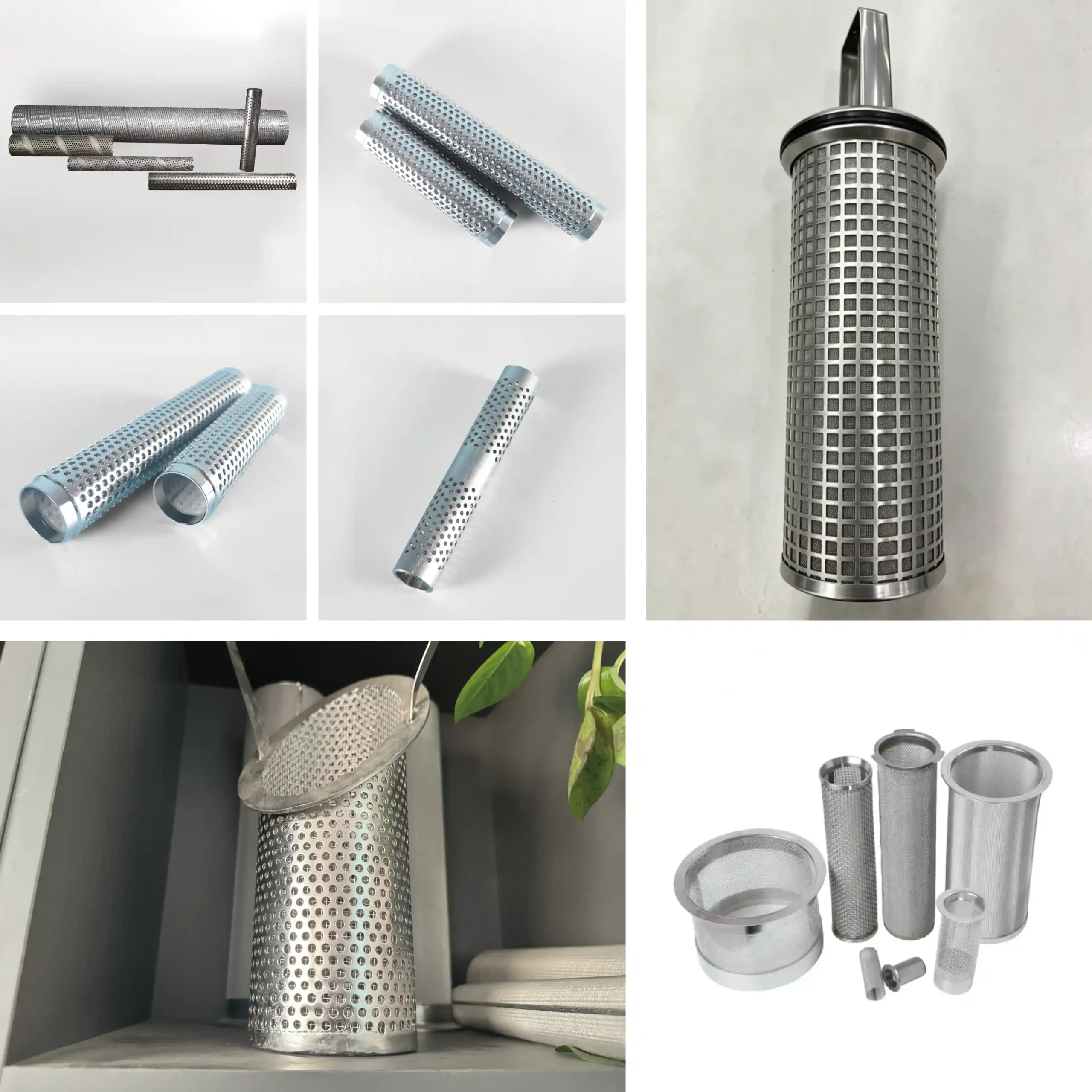
SINFT backwash filter cartridges can use stainless steel mesh, reinforced basket, or slot structures for reverse-flow, air-blowing, and automated backwash service. The confirmed product-family references include 25-500 um for mesh constructions, 0.1-3 mm slot widths, temperatures up to 400 C, differential pressure up to 20 bar, and standard or custom lengths. These are family references; the final design must be checked against the actual element size, alloy, flow direction, cleaning cycle, and housing.
Backwash Filter Working Principle in 6 Steps
A backwash filter works by alternating between normal filtration and a cleaning sequence that removes accumulated solids from the filter surface. The exact valve arrangement depends on the system, but the basic cycle is usually the same.
| Step | What happens | Engineering purpose |
|---|---|---|
| 1. Normal filtration | Process fluid flows through the screen, mesh, slot, or metal element | Solids are retained while clean fluid continues downstream |
| 2. Solids loading | Particles accumulate on the filtration surface or inside a cleanable structure | Differential pressure gradually rises |
| 3. Trigger | A pressure switch, transmitter, timer, controller, or manual command starts cleaning | The system cleans before flow is restricted or downstream protection is lost |
| 4. Backwash flow | Flow is reversed, redirected, pulsed, suction-scanned, or assisted by air depending on design | Retained solids detach from the element |
| 5. Discharge | Dirty backwash liquid or gas leaves through a drain or waste line | Removed solids are separated from the process stream |
| 6. Recovery | The element returns to normal filtration | Pressure drop should fall toward the acceptable operating range |
The important word is “should.” A failed backwash cycle may leave solids on the screen, raise pressure drop after cleaning, damage the element, or send particles downstream. That is why backwash performance must be validated with the actual contaminant, not only the clean water flow rate.
Normal Filtration Stage
During normal filtration, solids are retained by a surface or near-surface structure while the process stream flows through the element. For backwash service, the retained material must be able to release during cleaning.
The filtration medium may be:
- stainless steel woven mesh;
- reinforced basket structure;
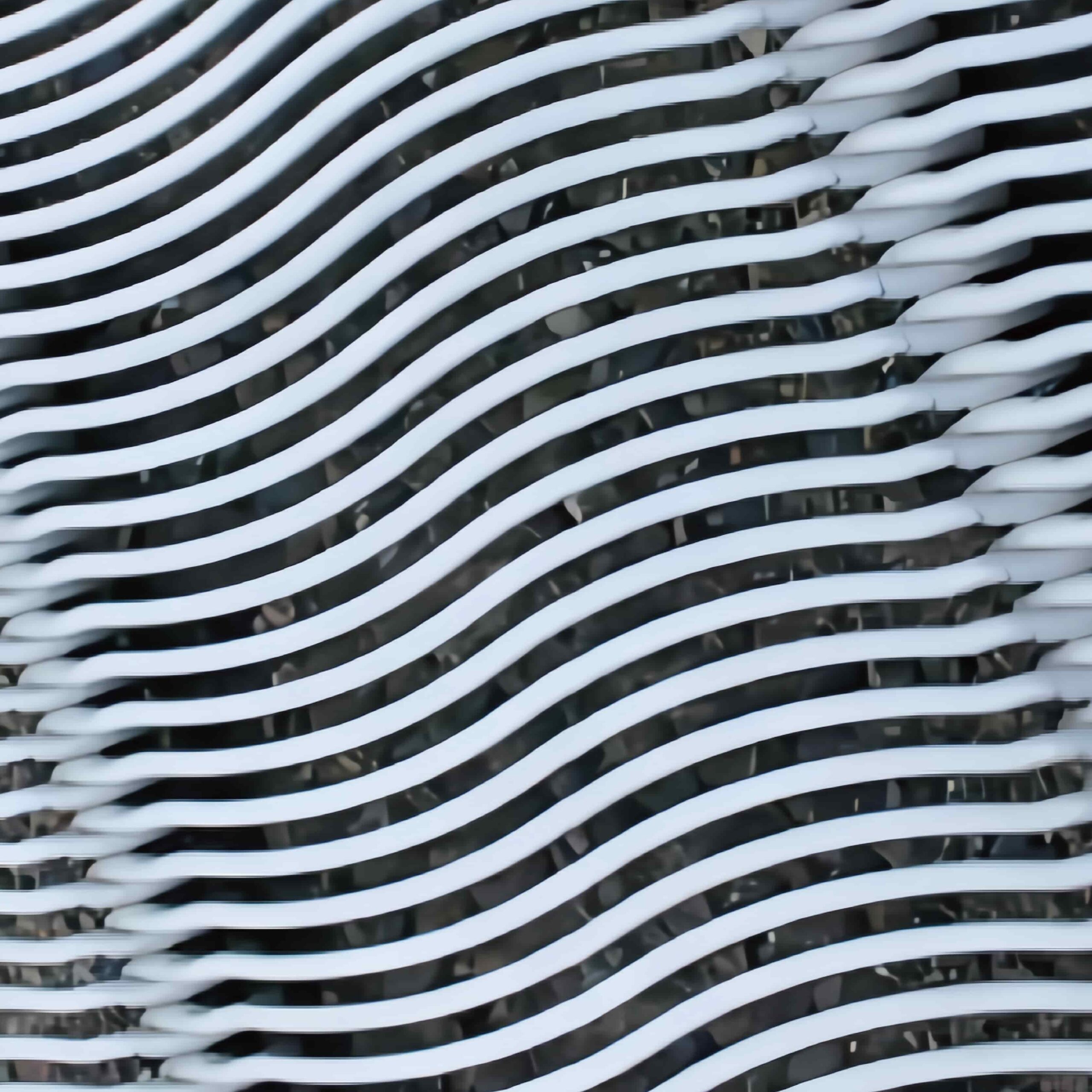
- wedge wire slot structure;
- sintered mesh screen;
- perforated support with a finer liner;
- custom tubular or candle-style element.
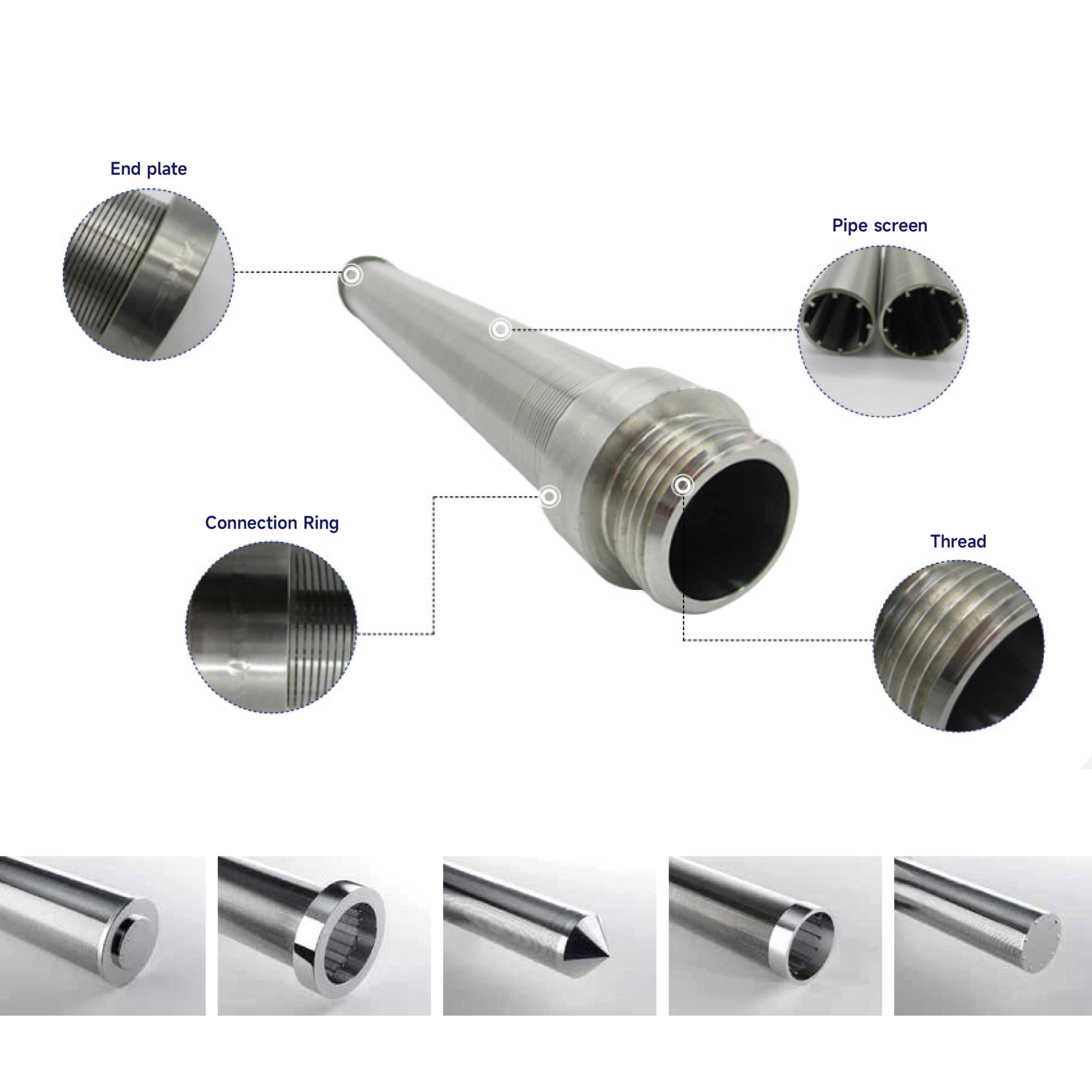
SINFT’s backwash filter cartridge product information lists stainless steel mesh, reinforced basket, and slot structures as available media options. For related high-flow surface screening, SINFT wedge wire filters use triangular profile wire and support rods to form continuous V-shaped slots. For stronger rigid surface filtration, sintered mesh filter elements may be considered when the layer stack and reverse-flow support are appropriate.
The normal filtration stage must be selected from the contaminant. Hard granular solids, soft particles, fibers, gels, resin beads, catalyst fines, biological deposits, and polymer residues do not release in the same way. A surface that works in water intake service may not clean well in viscous oil or sticky process fluid.
Differential Pressure Trigger
Differential pressure is one of the most common backwash triggers because it indicates that the element is loading with retained solids. As solids cover the available open area, the pressure upstream of the element rises relative to the clean side.
An automatic system may start backwashing when:
- differential pressure reaches a set point;
- a timer reaches the planned cleaning interval;
- a PLC or controller receives a process signal;
- an operator starts a manual cleaning command;
- a combined time-plus-differential-pressure rule is used.
Differential pressure is useful, but it is not magic. The set point must leave enough margin for the process to keep operating. If the set point is too low, the system may waste backwash fluid and cycle too often. If it is too high, the element may plug, deform, collapse, or fail to clean fully.
ISO 3968 is commonly referenced for differential pressure versus flow characteristics of hydraulic filter elements. The exact test program depends on the product and application, but the principle is important: flow, fluid, temperature, viscosity, and element condition must be defined before pressure-drop data can be compared.
For the broader relationship, see SINFT’s filter pressure drop vs flow rate guide.
Reverse Flow, Suction Scanning or Air Assistance
Backwashing removes solids by applying a cleaning force opposite to, or different from, the normal filtration direction. The method depends on the housing, valves, element shape, and deposit behavior.
Common cleaning modes include:
| Cleaning mode | How it works | Best fit |
|---|---|---|
| Reverse flow | Clean fluid or process fluid flows backward through the element | Deposits that release from a surface without aggressive mechanical action |
| Air blowing | Compressed air helps dislodge retained solids | Dry or drainable systems where air is compatible with the process |
| Suction scanning | A scanner or nozzle creates local reverse flow across part of the screen | Continuous or semi-continuous screen cleaning with reduced flow interruption |
| Drain flushing | A valve opens a discharge route to carry loosened solids away | Systems with a defined waste path and acceptable loss volume |
| Manual assisted cleaning | Operator removes or washes the element periodically | Lower automation level or backup maintenance after incomplete cleaning |
BOLL & KIRCH’s automatic backwash filter overview provides a manufacturer example of automated debris flushing. Amiad’s explanation of automatic self-cleaning screen filters describes a differential-pressure-triggered cleaning cycle using a suction-scanning concept. These examples show why “backwash filter” should be understood as a cleaning principle plus a specific mechanical design, not one universal device.
Why Media Selection Controls Cleaning Success
A backwash filter succeeds only when the retained solids release from the selected medium during the cleaning cycle. This is why media choice is as important as slot size or micron rating.
| Medium or structure | Backwash behavior | Main caution |
|---|---|---|
| Wedge wire | Continuous V-shaped slots can help surface release | Sticky, fibrous or deformable solids can still bridge or smear |
| Woven mesh | Many aperture options and removable screen designs | Fine mesh can blind quickly or deform if undersupported |
| Reinforced basket | Good for larger debris and robust handling | Coarse structures may not protect fine downstream clearances |
| Sintered mesh | Stable multilayer surface and stronger bonded media | Layer stack and reverse-flow strength must be checked |
| Sintered fiber felt | Good depth loading in other duties | Usually not the first choice for aggressive backwash because particles can embed |
For the broader surface/depth decision, see surface filtration vs depth filtration. If the project also needs a common language for mesh, slot, and micron discussions, the filter micron rating chart can help align engineering and purchasing teams before RFQ.
What Happens During the Backwash Cycle
During the backwash cycle, the system must detach solids and remove them from the housing before normal filtration resumes. If the solids are loosened but not discharged, they can redeposit immediately.
A practical backwash sequence should answer:
- Which valve opens first?
- Is flow interrupted, reduced, or maintained through parallel elements?
- What pressure source provides the reverse flow?
- How much backwash liquid or gas is consumed?
- Where does the dirty discharge go?
- How long does the cycle last?
- What confirms that cleaning worked?
- What alarm occurs if differential pressure remains high?
Some systems clean one element at a time while others clean the whole screen area. Some require flow interruption; others maintain process flow through parallel chambers or multi-element arrangements. Do not assume “automatic” means no effect on production flow. Ask whether the system provides continuous flow during cleaning, reduced flow, or a brief interruption.
When Backwashing Fails
Backwashing fails when the cleaning force cannot remove the retained deposit or when the discharge path cannot carry it away. The result is rising residual pressure drop after each cleaning cycle.
Common failure modes include:
- solids are too sticky, soft, fibrous, oily or gelatinous;
- particles wedge into slots or mesh openings;
- flow direction is wrong for the element structure;
- backwash pressure is too low;
- drain valve or waste line is undersized;
- cleaning cycle is too short;
- screen area is too small for the solids load;
- differential pressure trigger is set too high;
- element support is damaged by reverse load;
- media is selected for fine retention but not for release.
This is why a backwash filter is not automatically better for every high-solids application. It is a strong choice when the solids form a releasable surface deposit and the plant can provide a clean discharge route. It is a weaker choice when contaminants embed into depth media, smear across the surface, harden during shutdown, or require chemical soaking instead of simple reverse flow.
Application-Based Design Notes
The same backwash principle must be adjusted for the application. Water, oil, slurry, chemical fluid and gas streams create different cleaning problems.
| Application condition | Backwash design priority | Engineering caution |
|---|---|---|
| Water treatment and intake screening | High open area, surface release, drain capacity | Biological fouling, fibers and scale may control cleaning interval |
| Petrochemical or oil and gas process streams | Alloy compatibility, safe discharge, continuous operation | Sticky hydrocarbon deposits may not release like sand |
| Hydraulic or lubrication systems | Low pressure drop and reliable cleanliness protection | Cold oil viscosity can raise pressure drop and affect trigger settings |
| Slurry or abrasive solids | Strong support, wear resistance and large discharge path | Abrasion can damage wires, welds and support surfaces |
| Resin trap or bead retention | Slot smaller than beads, stable support, easy release | Broken fines may require downstream polishing filtration |
| Power generation service | Reliable differential pressure monitoring and maintenance access | Temperature, corrosion and shutdown cleaning should be reviewed |
For water projects, see SINFT’s water treatment filters page. For oil systems, see the hydraulic and lubrication filtration page. For self-cleaning sintered mesh applications, see sintered mesh filters for self-cleaning and backwash systems.
Control and Instrumentation Questions
Automatic backwash performance depends on controls, not only the filter element. A good filter element in a poor valve sequence can still fail.
Confirm:
- differential pressure measurement points;
- pressure switch or transmitter range;
- timer logic and manual override;
- valve type and actuation speed;
- drain valve size and discharge route;
- interlock with pump or process control;
- alarm for failed cleaning;
- cycle count or maintenance record;
- bypass or isolation strategy;
- cleaning confirmation after backwash.
If the system serves a critical process, ask what happens when the drain valve sticks, backwash pressure is unavailable, the controller fails, the element is damaged, or differential pressure does not recover. That failure mode matters more than the word “automatic.”
Backwash Filter Cartridge RFQ Checklist
A useful RFQ should describe the cleaning duty as well as the filtration target. SINFT can review custom filter media, slot structures, reinforced baskets, end connections, dimensions, materials, cleaning methods, weld feasibility and seal requirements through its custom filter manufacturer service.
Send these details:
- Fluid, gas, oil, slurry or chemical name
- Flow rate per element or total system flow
- Operating pressure and allowable differential pressure
- Operating temperature
- Viscosity or density if available
- Contaminant type, solids load and particle size distribution
- Whether solids are hard, soft, sticky, fibrous, abrasive or deformable
- Required mesh rating, slot width or micron target
- Normal flow direction and expected backwash direction
- Cleaning method: reverse flow, air blowing, suction scanning, drain flushing or manual assist
- Backwash pressure, available clean fluid and discharge path
- Element OD, ID, length and housing fit
- End connection: DOE, 222, 226, threaded, flange or custom welded end
- Material requirement: SS304, SS316, SS316L, Titanium, Hastelloy or other alloy
- Seal material and compatibility
- Required inspection documents or test records
If you are replacing an existing element, include drawings, old samples, damaged element photos, housing dimensions and the observed pressure-drop trend. Use SINFT’s contact form to submit the operating data.
How SINFT Can Help With Backwash Filter Element Selection
SINFT can help when the backwash question is about the cleanable metal element, media structure, and replacement fit. SINFT backwash filter cartridges can use stainless steel mesh, reinforced basket, or slot structures for reverse-flow, air-blowing, and automated backwash service. SINFT can also review wedge wire filters and sintered mesh filter elements when surface release, slot geometry, or bonded media stability matters.
If you are replacing an element, send the old sample, housing dimensions, OD, ID, length, connection, seal position, flow direction, slot or mesh target, and photos of fouling or damage. If you are specifying a new duty, send the fluid, contaminant, solids load, flow rate, temperature, pressure-drop limit, cleaning method, backwash pressure, discharge route, and expected cycle. SINFT can then review whether the media, support, opening, and custom geometry suit the cleaning principle.
Final Thoughts
A backwash filter works best when the contaminant forms a releasable surface deposit, the element can tolerate reverse cleaning, and the system has enough pressure and discharge capacity to remove solids. It is not simply a finer cartridge with an automatic valve.
Use a backwash filter when:
- solids load is recurring;
- manual opening is too frequent or costly;
- retained solids can release from a surface;
- drain or waste handling is acceptable;
- differential pressure can be monitored;
- the element is built for reverse load and cleaning cycles.
Use another format, or a staged system, when fine polishing, contaminant containment, depth loading, chemical cleaning, or simple planned replacement is more important. SINFT’s backwash filter vs cartridge filter guide compares these system-level choices in more detail, and SINFT can review the custom element data before quotation.
FAQ
What is the backwash filter working principle?
A backwash filter captures solids during normal filtration, then uses reverse flow, redirected flow, suction scanning, air assistance or flushing to remove retained solids through a drain or discharge path.
What triggers an automatic backwash filter?
Common triggers include differential pressure, timer settings, controller logic, manual command or a combined rule. Differential pressure is widely used because it shows that solids are restricting the element.
Is a backwash filter the same as a self-cleaning filter?
Backwashing is one type of self-cleaning method. Other self-cleaning filters may use suction scanning, mechanical scraping, rotating screens, vibration, air assistance or combined cleaning methods.
Does backwashing fully restore the original pressure drop?
Not always. Recovery depends on the contaminant, media, cleaning pressure, cycle time and discharge path. Sticky, fibrous, deformable or embedded solids may leave residual resistance after cleaning.
Which filter media are suitable for backwash service?
Wedge wire, woven mesh, reinforced baskets and selected sintered mesh structures are common starting points. Depth media such as sintered fiber felt may not be ideal for aggressive backwash because particles can embed in the media.
What data is needed to size a backwash filter cartridge?
Provide flow, pressure, allowable differential pressure, temperature, fluid, viscosity, contaminant type, solids load, slot or mesh target, cleaning method, flow direction, material, dimensions, connections and seal requirements.
Is automatic backwash always better than cartridge replacement?
No. Automatic backwash is useful for recurring releasable solids and frequent cleaning duty. Cartridge replacement may be better for fine polishing, low solids load, contaminant containment or simpler equipment.