When a reusable metal filter fails too early, the problem is often not only the micron rating. The filter may be using a rigid surface medium where a depth-loading medium is needed, or a soft-loading porous medium where a stronger cleanable mesh structure would work better. Before you request a quote, compare sintered fiber felt and sintered mesh as different media behaviors, not just two stainless steel options.
Direct Answer: Sintered Fiber Felt vs Sintered Mesh
Choose sintered fiber felt when the duty needs high porosity, depth loading, fine-particle holding, and lower clean resistance in a porous metal matrix. Choose sintered mesh when the duty needs a rigid multilayer woven structure, stable openings, mechanical support, backwash resistance, and a more defined surface filtration behavior. Both can be stainless steel sintered media, but they solve different loading and cleaning problems.
SINFT sintered fiber felt filters use a random metal fiber matrix, normally SS316L, with optional SS304, FeCrAl, Hastelloy, Inconel, Nickel, and Titanium for specific duties. SINFT sintered mesh filter elements use sintered stainless steel woven mesh, commonly in multi-layer structures, with SS304, SS316, SS316L, Hastelloy, Monel, and Inconel options. The final choice depends on particle behavior, retention target, flow rate, pressure drop, temperature, cleaning method, support, and finished-element geometry.
Quick Comparison Table
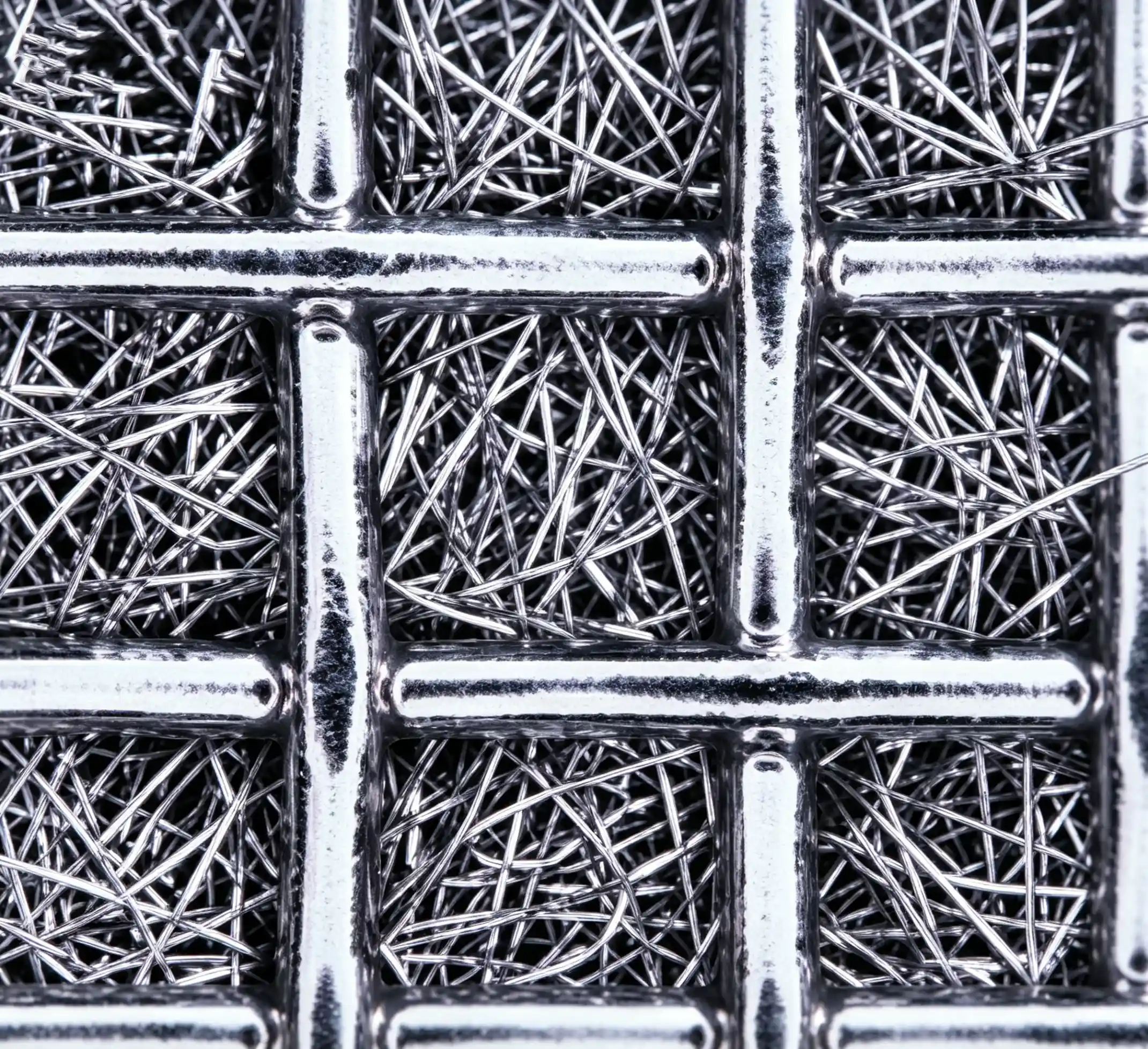
The simplest distinction is depth loading versus rigid layered screening. Fiber felt distributes particles through a porous fiber matrix; sintered mesh uses woven layers that are diffusion-bonded into a stable porous laminate.
| Selection factor | Sintered fiber felt | Sintered mesh |
|---|---|---|
| Main structure | Random metal fibers sintered into a 3D porous matrix | Woven wire mesh layers diffusion-bonded into a rigid laminate |
| Filtration behavior | Mainly depth filtration | Mainly surface or near-surface filtration through defined woven layers |
| Best starting point | Fine particles, high dirt loading, lower resistance, depth capture | Stable openings, strength, backwash, support, shape retention |
| Cleanability | Cleanable, but deeply embedded solids may be harder to remove | Often better for backwash or surface release when solids stay on the surface |
| Mechanical support | May need protection mesh or support depending on duty | The bonded layer stack provides stronger structural stability |
| Pressure-drop behavior | Controlled by porosity, thickness, fiber grade, support, and loading depth | Controlled by aperture, weave, layer stack, thickness, support, and cake loading |
| Typical product forms | Cartridge, pleated element, candle, disc, sheet, custom assembly | Cartridge, tube, disc, cone, panel, basket, custom welded assembly |
| RFQ focus | Dirt-holding, porosity, grade, support mesh, cleaning recovery | Layer structure, weave, micron rating, pressure direction, backwash duty |
If you are comparing these media for purchasing, do not ask only “which one filters finer?” Ask which medium can hold the contaminant, survive cleaning, maintain acceptable pressure drop, and fit the housing.
What Sintered Fiber Felt Does Better
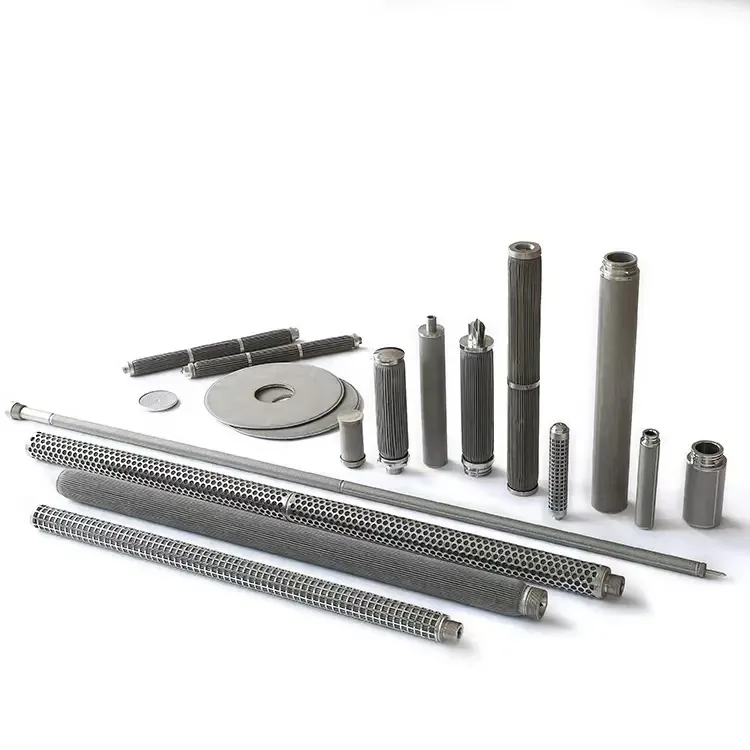
Sintered fiber felt is usually selected when the contaminant should be distributed through a porous depth matrix instead of held mainly on a screen surface. The random fiber network creates many flow paths and can offer high porosity, which helps when fine particles need to load gradually through the medium.
SINFT’s confirmed Sintered Fiber Felt product information lists:
| Item | SINFT confirmed product-family reference |
|---|---|
| Standard material | SS316L random fiber matrix |
| Optional materials | SS304 / SS316L / FeCrAl / Hastelloy / Inconel / Nickel / Titanium |
| Product-page nominal range | 0.5-50 um |
| Technical table typical range | 1-60 um typical; custom grades available |
| Porosity | Up to about 85%, depending on grade and structure |
| Temperature | Stainless steel fiber felt up to 600 C; FeCrAl for higher-temperature service |
| Differential pressure | Up to 10 bar differential |
| Forms | Cylindrical / pleated / candle / disc / sheet / custom welded assembly |
These are product-family references, not a universal promise for every grade, alloy, thickness, support, pleat design, seal, flow direction, or contaminant. For fiber felt, the main purchasing question is how much contaminant the medium must hold before cleaning or replacement, and whether the embedded solids can be removed enough for reuse.
ISO 4003 covers bubble test pore size for permeable sintered metal materials and notes that the bubble test is a quality-control test rather than a method for defining exact filter grade or pore-size distribution. ISO 4022 covers fluid permeability of permeable sintered metal materials. These references reinforce why porosity, permeability, test method, and filter grade should be discussed separately in an RFQ.
What Sintered Mesh Does Better
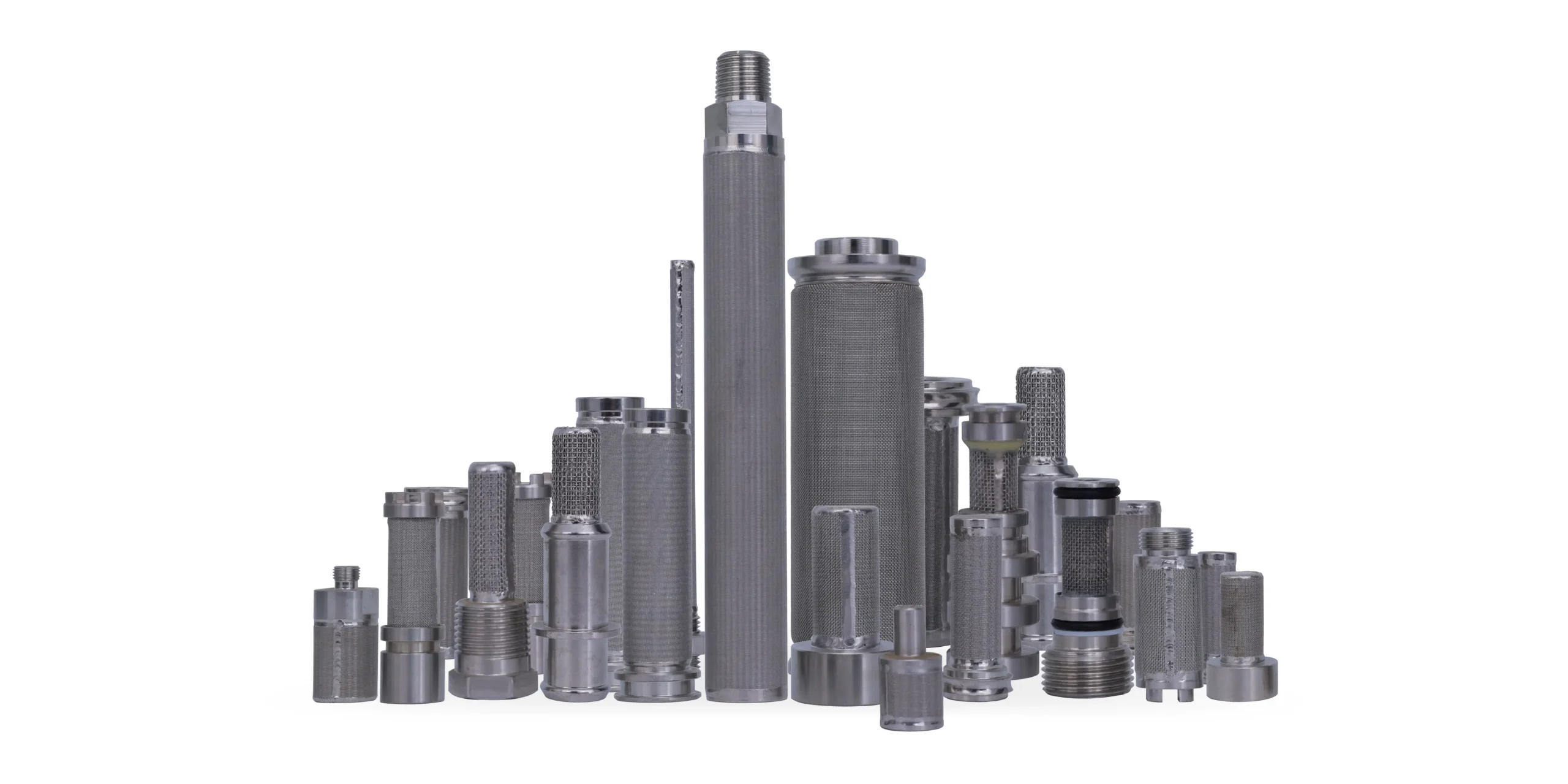
Sintered mesh is usually selected when the process needs a rigid, cleanable, multilayer metal structure with stable woven openings and mechanical support. It is useful when the element must resist deformation, support differential pressure, be formed into a cartridge or panel, or release surface-loaded solids during cleaning.
SINFT’s confirmed Sintered Mesh product information lists:
| Item | SINFT confirmed product-family reference |
|---|---|
| Filter media | Sintered stainless steel woven mesh |
| Materials | SS304 / SS316 / SS316L / Hastelloy / Monel / Inconel |
| Layer count | 2-7 layers; common standard five-layer structure |
| Filtration range | 1-200 um |
| Common thickness | 0.5-5.3 mm |
| Working temperature | -268 C to +371 C |
| Differential pressure | Up to 50 bar, depending on structure, size, and flow direction |
| Connections | DOE / 222 / 226 / threaded / flange / custom welded ends |
| Structures | Square weave / twill weave / Dutch weave / perforated-metal supported |
Sintered mesh is not simply “wire cloth.” The layers are bonded into a stable porous laminate. The fine control layer, protection layers, dispersion layers, and reinforcing layers each affect pressure drop, strength, cleaning, and retention. For a layer-by-layer explanation, see SINFT’s 5-layer sintered wire mesh guide.
ISO 9044 defines terms and technical requirements for industrial woven wire cloth for screening purposes. It is useful context for aperture and wire-cloth language, but a finished sintered mesh element still needs its own laminate structure, forming, welding, support, and performance checks.
Filtration Mechanism: Depth Loading vs Stable Layered Openings
Fiber felt and sintered mesh can overlap in micron range, but their particle-loading behavior is different. A similar nominal rating does not mean the two media will load, clean, or fail in the same way.
Sintered fiber felt captures particles through a three-dimensional fiber network. That can help when fine particles arrive gradually and the goal is to use the depth of the medium before pressure drop becomes excessive. However, if the particles are sticky, deformable, or deeply embedded, cleaning recovery may be limited.
Sintered mesh relies more on a defined woven structure and bonded layer stack. It can be stronger and easier to validate mechanically when the design needs backwash, reverse flow, forming, support, or surface release. However, if the solids blind the surface quickly, a rigid mesh can reach its cleaning point faster than a depth medium with more internal loading volume.
For a broader mechanism discussion, see SINFT’s surface filtration vs depth filtration guide.
Pressure Drop and Dirt Holding
Pressure drop is not determined by micron rating alone. Fiber felt and sintered mesh should be compared under the same flow, fluid, temperature, viscosity, contaminant load, and element geometry.
Clean pressure drop is influenced by:
- media porosity or open area;
- fiber diameter, felt thickness, mesh aperture, and wire diameter;
- layer stack and support mesh;
- pleated or cylindrical geometry;
- active filtration area;
- fluid viscosity and density;
- flow direction;
- end caps, cores, supports, seals, and housing transitions.
Operating pressure drop also depends on how particles load. Fiber felt may accept distributed fine-particle loading before the entire element reaches its service limit. Sintered mesh may clean better when the retained solids form a releasable surface cake. ISO 16889 for hydraulic filter elements describes multi-pass testing used to evaluate contaminant capacity, particulate removal, and differential pressure characteristics under defined conditions. It is not a shortcut for every industrial process, but it shows why test conditions matter.
For sizing context, see SINFT’s filter pressure drop vs flow rate guide.
Cleaning and Reuse
Choose the medium from the cleaning failure mode, not only from the initial filtration target. Reusable metal media are valuable only if the retained contaminant can be removed without damaging the element or leaving unacceptable residual blockage.
Sintered mesh is often the better starting point for:
- backwash or reverse-flow cleaning;
- repeated surface cleaning;
- high mechanical support;
- rigid cartridge, disc, panel, basket, or welded assemblies;
- applications where shape retention and support are critical.
Sintered fiber felt is often the better starting point for:
- fine-particle depth loading;
- high porosity;
- high dirt-holding demand;
- hot gas, steam, polymer melt, or high-particle-load liquid duty;
- applications where clean pressure drop and distributed loading matter more than aggressive backwash.
Fiber felt can be cleaned, but embedded particles may not fully release if the contaminant is sticky, carbonized, polymerized, or deformable. Sintered mesh can be cleaned, but surface blinding may return quickly if the media area is too small or the particle cake is not releasable. SINFT’s stainless steel filter cartridge cleaning guide explains why cleaning method, inspection, and replacement limits must be tied to the actual element.
Application-Based Choice
The best medium depends on what the filter must protect and how the contaminant behaves. Industry names are useful, but the real decision comes from solids shape, loading rate, viscosity, temperature, pressure drop, and cleaning cycle.
| Application condition | Better starting point | Engineering caution |
|---|---|---|
| Polymer melt or synthetic fiber filtration | Sintered fiber felt | Confirm temperature, viscosity, gel behavior, support mesh, and cleaning recovery |
| Hot gas, steam, or high-particle-load fluid | Sintered fiber felt | Check alloy, oxidation risk, pressure drop, and dust loading |
| Hydraulic or lubrication protection | Sintered mesh or pleated metal media | Confirm beta ratio, pressure drop, collapse strength, and housing fit |
| Backwash or self-cleaning system | Sintered mesh | Retained particles must release from the surface during cleaning |
| Rigid disc, panel, cone, basket, or welded element | Sintered mesh | Layer structure, support, forming, and weld design affect strength |
| Fine polishing with high dirt holding | Sintered fiber felt | Cleaning may be less complete if particles embed deeply |
| Replacement for an old metal cartridge | Depends on old sample | Match media, dimensions, flow direction, seal position, and test requirement |
For application context, see SINFT’s polymer melt filtration, hydraulic and lubrication filtration, sintered fiber felt for polymer melt, and sintered mesh filters for self-cleaning backwash.
What to Confirm Before RFQ
A useful RFQ should let the manufacturer compare media behavior, not guess from a micron number. If you send only “10 um stainless steel filter,” the supplier still does not know whether fiber felt or sintered mesh is the safer structure.
Send these details:
- Required retention target and whether it is nominal, absolute, beta ratio, mesh aperture, or supplier grade
- Fluid, gas, steam, polymer, oil, chemical, or slurry name
- Flow rate per element and total system flow
- Operating pressure and allowable differential pressure
- Operating temperature and cleaning temperature
- Viscosity, density, and chemical compatibility risk
- Contaminant type, particle size distribution, and solids load
- Whether particles are hard, soft, sticky, deformable, fibrous, gel-like, or carbonized
- Cleaning method and expected cleaning cycle
- Required element form: cartridge, pleated, candle, disc, sheet, cone, panel, basket, or custom assembly
- OD, ID, length, active area, support core, and end connection
- Seal material and seal position
- Flow direction and reverse-flow expectation
- Old sample, drawing, housing photo, part number, or failed-element photos
- Required inspection report, material certificate, bubble point, permeability, pressure test, or batch traceability
How SINFT Can Help With Media Selection
SINFT can help when your decision depends on media behavior, finished-element geometry, and replacement fit rather than a catalog keyword. SINFT manufactures sintered fiber felt filters, sintered mesh filter elements, and pleated filter cartridges using stainless steel and special alloy media for industrial applications.
If your duty involves polymer melt, hot gas, steam, hydraulic oil, backwash cleaning, fine polishing, or an old element that needs to be replaced, send the operating data and photos through SINFT’s custom filter manufacturer service. For a custom recommendation, submit the RFQ details through the contact form.
Final Thoughts
Sintered fiber felt and sintered mesh are both valuable reusable metal filter media, but they should not be selected by micron rating alone. Fiber felt is stronger for high-porosity depth loading and fine-particle holding; sintered mesh is stronger for rigid layered support, stable openings, forming, and backwash-friendly service. The right purchase decision starts with contaminant behavior, pressure drop, cleaning method, and element geometry.
FAQ
What is the main difference between sintered fiber felt and sintered mesh?
Sintered fiber felt is made from randomly arranged metal fibers bonded into a three-dimensional porous matrix, so it is mainly used for depth loading and fine-particle holding. Sintered mesh is made from woven mesh layers bonded into a rigid laminate, so it is usually chosen for stable openings, mechanical support, forming, backwash, and surface or near-surface filtration.
Is sintered fiber felt always finer than sintered mesh?
No. The listed micron ranges can overlap, and “finer” depends on grade, test method, media thickness, support, and finished-element design. SINFT’s fiber felt product page lists 0.5-50 um nominal range and 1-60 um typical table values, while sintered mesh lists 1-200 um. The correct comparison should use the required retention definition and test basis.
Which has lower pressure drop, sintered fiber felt or sintered mesh?
There is no universal answer. Fiber felt can offer high porosity and distributed flow paths, which may help clean pressure drop in suitable grades. Sintered mesh pressure drop depends on aperture, wire diameter, layer stack, open area, and support. The finished element area, fluid viscosity, flow rate, loading pattern, and housing also strongly affect pressure drop.
Which medium is better for backwash cleaning?
Sintered mesh is often the better starting point for backwash or reverse-flow cleaning because the bonded layer structure is rigid and retained solids may remain closer to the surface. Sintered fiber felt can be cleaned, but deeply embedded or sticky particles may not release completely. The final choice should be validated against the real contaminant and cleaning method.
When should I choose sintered fiber felt?
Choose sintered fiber felt when the duty needs fine-particle depth loading, high porosity, high dirt holding, and distributed contaminant capture. It is often reviewed for polymer melt, hot gas, steam, high-particle-load liquids, and fine polishing applications. You should still confirm alloy, support mesh, cleaning recovery, temperature, pressure drop, and finished-element geometry before ordering.
When should I choose sintered mesh?
Choose sintered mesh when the duty needs rigid support, stable woven openings, repeatable forming, welded construction, backwash resistance, or surface release. It is often reviewed for hydraulic, water treatment, petrochemical, backwash, disc, panel, basket, cartridge, and custom welded elements. Confirm layer structure, weave type, flow direction, differential pressure, and cleaning cycle in the RFQ.
Can SINFT combine fiber felt and mesh in one filter element?
Yes, some metal filter elements use support mesh or protection mesh around fiber felt, and pleated cartridges can be built with different metal media depending on the duty. The structure should not be guessed from the product name. Send drawings, old samples, flow data, pressure-drop limits, contaminant details, and cleaning expectations so SINFT can review the feasible construction.